
FSR 4.1 on RX 7000: Better Image Quality, but Slower Than FSR 3.1 in New Benchmarks
Lower-end RDNA3 hardware including the Steam Machine benefits from FSR4.1 despite more limited GPU resources.
Hardware by Nahe Yan on Jul 01, 2026
Upscaling has long been a weak point for older Radeon graphics cards, with machine-learning-based techniques from competitors delivering noticeably better results than AMD's offerings on previous-generation hardware. A new Adrenalin driver has changed that equation by bringing FSR4.1 to the Radeon RX 7000 series, giving RDNA3 owners access to the same upscaling technology previously available only on newer RDNA4 hardware.
Early benchmarks across several titles show how much of a difference that upgrade makes, and what tradeoffs remain for older architecture. We ran a set of benchmarks on the Radeon RX 7900 XTX, the flagship RDNA3 card, starting with Cyberpunk 2077 at native 4K using the Psycho-ray tracing settings, which are close to the highest available before enabling path tracing.
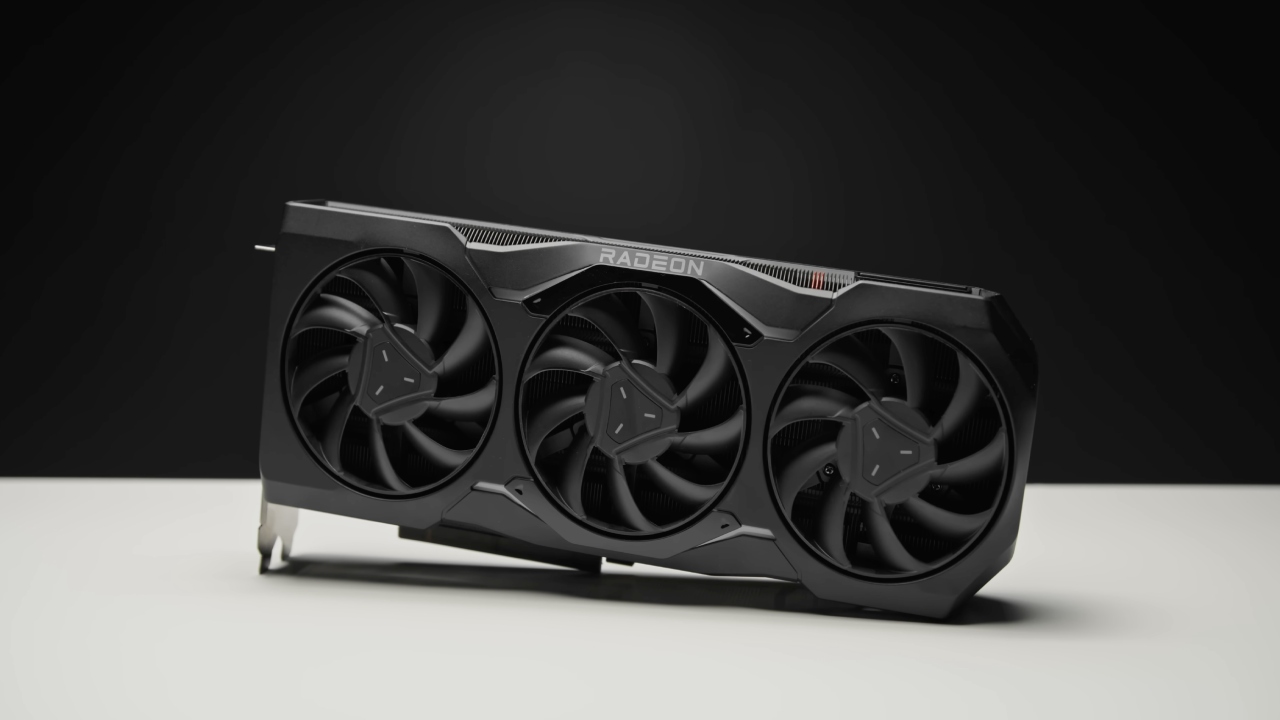
Testing FSR4.1 on the Radeon RX 7900 XTX
FSR4 quality mode produced 35.4fps, a slight drop of about 8% compared to FSR3 quality mode, but with a clear improvement in image quality. FSR4 performance mode reached 52.19 fps, a gain of about 168% over native, and its image quality actually surpassed FSR3 quality mode due to the more advanced upscaling approach.
That combination makes FSR4's performance mode faster and better-looking at the same time, which is a difficult combination to beat. We also tested FSR4 Ultra Performance, which upscales from 720p to 4K, reaching an average of 77.8fps, roughly 4 times faster than native.
That level of performance offers one of the few ways to reach a locked 60fps in a title like this on older hardware, particularly in an era where variable refresh rate displays are common. As a first impression, FSR4 on RX 7000 performs close to how it runs on RDNA4 hardware, and it beats the quality level of the community-enhanced version of the previously leaked FSR4 files that circulated over a year ago.
Resident Evil Requiem Shows Similar Gains
Resident Evil Requiem, a considerably less demanding title for the RX 7900 XTX, even at maximum settings, including maximum ray tracing, averaged 36 fps at native resolution in the tested scene. FSR3 quality mode was raised to 64.8 fps, an increase of about 80%. FSR4 quality mode came in at 57.9 fps, a 11% drop from FSR3 quality mode.
Dropping to FSR4 performance mode still delivered better image quality while reaching 78.8 fps, a gain of about 120% over native. Results like these represent close to the best-case scenario performance, since they come from the strongest AMD GPU of that generation.
Steam Machine and RX 7600 Benefit From Lower-End Scaling
FSR4.1 extends beyond the flagship RX 7900 XTX to lower-end hardware, including the RX 7600, which served as the entry-level RDNA3 card until the Steam Machine's hardware arrived. Gains on lower-end GPUs are more limited than on flagship hardware. However, you can still run the Steam Machine at 1440p using FSR4 performance mode with a 720p internal resolution, achieving an image that holds up well at the higher output resolution and a meaningful frame rate improvement over native rendering.
In Cyberpunk 2077, running PlayStation 5-style performance settings and outputting at 1620p with dynamic resolution scaling between 50% and 100% looked strong, even on the Steam Machine's more limited GPU. This kind of flexibility gives you a genuine tool for balancing image quality against performance.
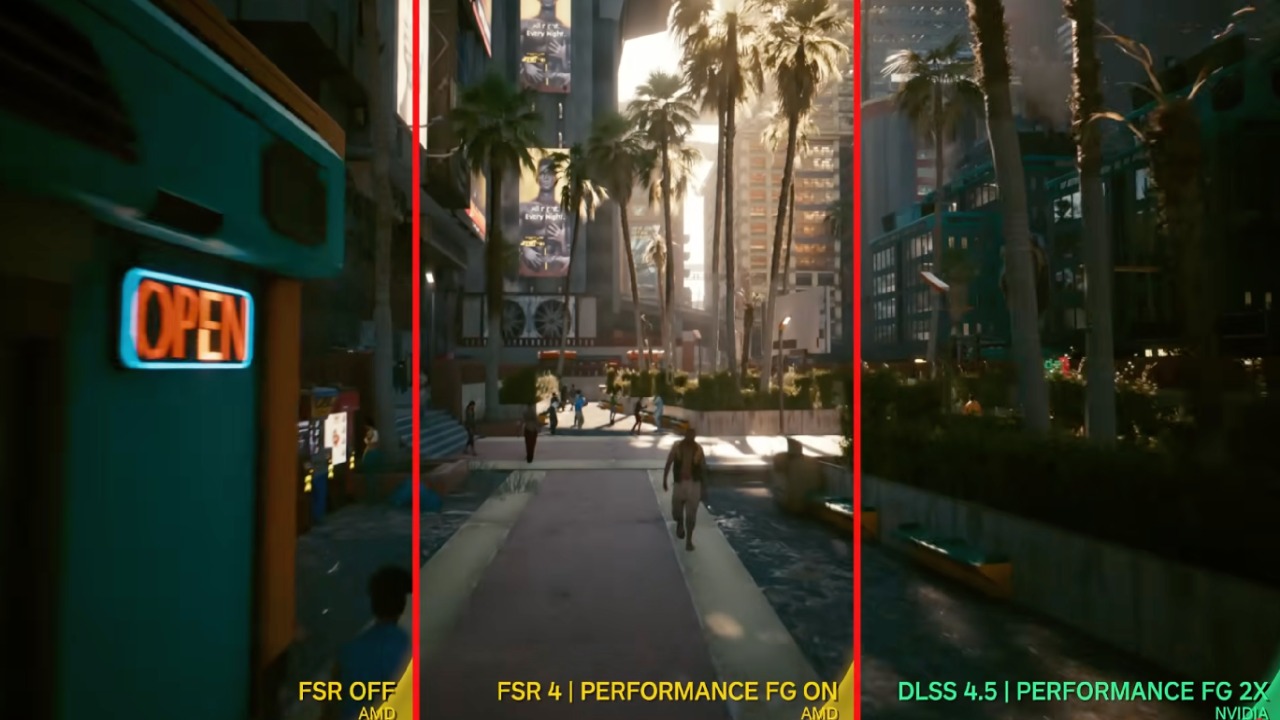
If you previously used FSR3 quality mode, switching to FSR4 performance mode delivers a comparable or better image while freeing up performance that can be applied to other settings. No one is forced into a specific setting, making the addition a win regardless of how you use it.
It is also worth noting that this kind of tradeoff, dropping resolution while maintaining image quality at 1440p, is not something the standard PlayStation 5 is capable of, since it lacks the machine learning hardware required. However, that limitation does not apply to the PlayStation 5 Pro.
AMD's Messaging Problems Around Older GPU Support
The comparison between the new FSR4.1 release and the previously leaked DLL is notable, since AMD is being compared not just against the original leak but against its community-enhanced version, and still comes out ahead with better image quality and roughly a 7% performance advantage. That said, AMD could have released a refined version of the leaked file much sooner, since the leak itself demonstrated solid characteristics well before this official release.
AMD has also been inconsistent in communicating its plans for older hardware. After releasing FSR4, the company did not provide clear messaging about whether support would extend to RDNA3, RDNA2, or handheld devices, and its public statements on handheld support have shifted between possible, uncertain, and undecided.
That kind of unclear communication does not serve the existing user base well, especially when a competitor continues shipping its upscaling technology across a wide range of older graphics hardware, even when that hardware is not ideally suited to run it.
FSR4.1 does not resolve every limitation of RDNA3 architecture, including CPU constraints tied to single-channel DDR5 memory and general RAM and VRAM limitations. Still, it meaningfully improves image quality in console-caliber titles that might otherwise look weaker on this class of hardware.
Footage from Cyberpunk 2077 running on the Steam Machine still looked reasonable.
The situation for RDNA3.5 handhelds remains unresolved. The current plan reportedly involves a lightweight version of FSR4 built specifically for handheld processors, an approach similar to what worked well for other handheld devices. However, RDNA3.5 also includes higher-performance hardware like Strix Halo, which may not require the same lightweight treatment.
Testing will be needed to confirm how that plays out. Overall, the release gives Steam Machine users and other RX 7000 owners another meaningful option for balancing performance and image quality, and it removes the need to rely on Optiscaler for titles that already support FSR4's dynamic library.
Titles that have not adopted that library, including Alan Wake 2 and the newest 007 First Flight game, still require Optiscaler. However, RDNA3.5 hardware can still benefit from the new model, even with significant performance trade-offs.
Editor, NoobFeed
Gaming Hardware Updates
No Data.