
PlayStation’s New Advertising Job Raises Concerns About More Ads in Games
Sony Interactive Entertainment is looking to grow its advertising business, and a new job listing for PlayStation hints that paid games could one day be another way for brands to reach gamers.
News by Tahmid Mahi on Aug 15, 2026
There have been several changes to PlayStation over the last few years, and the latest move has sparked concerns that advertising will play a larger role in gaming. Sony Interactive Entertainment has posted a new job opening for Director of Client Partnership Sales, a position that is specifically focused on expanding the company’s advertising business.
This position is not just part of Sony’s wider portfolio of businesses; the ad appears under the PlayStation section of Sony Interactive Entertainment. Its placement in that specific section is noteworthy, as the company is currently investigating innovative methods for integrating advertising into its gaming ecosystem.
The role includes helping develop and execute growth strategies to grow Sony. Interactive Entertainment’s media solutions and advertising business.
It specifically refers to working with non-endemic brands, which pretty much means companies that aren’t traditionally associated with gaming. This role will help scale demand across programmatic advertising, FAST/CTV, and emerging advertising solutions.
The language used in the listing is what makes this situation particularly compelling. Product placement in video games is not new, and you have probably seen real-world brands appear in games before.
A vehicle manufacturer might have its cars featured in a game, while another company could have its products incorporated into a character’s environment or the wider world. These types of partnerships can work because the game integrates the product into its world rather than directly interrupting your experience.
The transcript points to examples such as Porsche being associated with the upcoming Intergalactic and Porsche appearing in Resident Evil: Requiem. These types of integrations are relatively easy to understand because a car can naturally exist within a fictional world.
You can imagine a character driving a Porsche or a spaceship being designed by a real-world manufacturer without necessarily feeling like you have just been shown a commercial. The concern with PlayStation’s new job listing is that the company appears to be interested in going beyond this kind of basic product placement.
The listing talks about expanding non-endemic advertising partnerships across industries, including consumer packaged goods, retail, automotive, financial services, telecommunications, and entertainment. That means PlayStation could potentially work with companies that have little or no connection to gaming and find ways to bring those brands into its games and services.
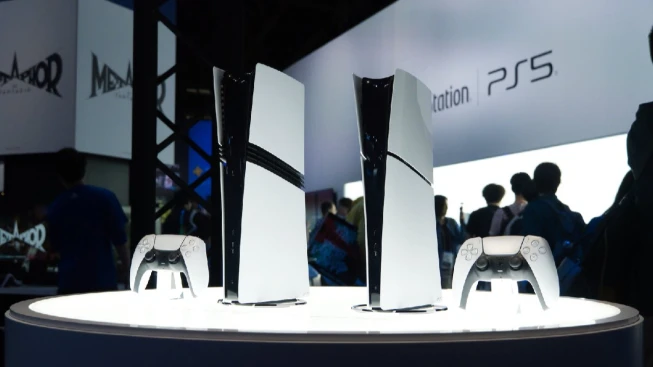
The position also asks for someone with a proven track record of scaling advertising sales organizations during periods of platform expansion.
It specifically mentions programmatic, CTV, FAST video, and data-driven advertising solutions, showing that PlayStation is looking for someone with serious experience in the advertising industry. The job is therefore not presented as someone who would occasionally arrange a product placement.
The salary attached to the role also highlights how seriously the position is being treated. The listed compensation range is around $224,000 to $336,000 per year, which is a substantial amount for a position focused on advertising sales and partnerships.
If PlayStation only wanted to arrange the occasional product integration, there would be less reason to create such a major role around advertising growth. The size and responsibilities of the position instead suggest that advertising could become a more important source of revenue for the company.
That is where the possibility of more traditional advertisements inside games becomes a concern. You could already see how a brand might fit naturally into a game without interrupting the experience, but a more aggressive advertising system could work very differently.
Instead of simply seeing a branded vehicle or product in the environment, you could eventually encounter advertisements on billboards, menus, loading screens, or other parts of a game. The biggest issue would be whether those advertisements actually belong in the world or exist primarily because an outside company paid for the space.
This becomes especially noticeable when you consider PlayStation’s focus on cinematic single-player games.
Many of the company’s major releases are third-person adventures built around storytelling, atmosphere, and carefully constructed fictional worlds. You can spend hours becoming immersed in a game’s setting before suddenly seeing branding that has nothing to do with the story.
Sports games provide a different example because advertising is already a normal part of real-world sports. When you watch a sporting event on television, you expect to see sponsors, advertisements, and branded environments surrounding the action. Putting those same types of advertisements into a sports game can therefore feel more natural because the virtual experience is designed to resemble the real thing.
The concern becomes even clearer when you imagine applying this approach to one of PlayStation’s major fictional franchises. You could theoretically be playing a game such as God of War and suddenly encounter a modern Toyota advertisement in the middle of the experience.
A product placement that fits naturally into the environment is one thing, but an advertisement designed specifically to sell you something would be entirely unique. The more unrelated the brand is to the game’s setting, the more obvious it becomes that the primary purpose is generating additional revenue.
The broader issue also connects to the industry’s continued movement toward digital games. As physical releases become less important, more players are buying games digitally and playing them via online services. This shift provides publishers more control over how they sell, update, and monetize games post-launch.
You could therefore end up paying for the console, paying for an online service, buying a game digitally, and then seeing advertisements within that game.
That is different from watching free online content that includes a sponsor because you are not required to purchase a specific device and software before accessing that content. With a paid game, you have already spent money before the advertisement appears.
The concern does not stop with the advertisements themselves, either. If publishers can make substantial amounts of money from advertisers, they could potentially become less dependent on game sales. A game would still need to attract a large enough audience to make advertising worthwhile, but the publisher would have another source of revenue beyond the copies sold.

This is particularly relevant as companies continue investigating how to make expensive games profitable. PlayStation has already spent heavily on its live-service strategy during the current generation, only to reconsider parts of that approach after several projects struggled or were canceled.
EA gives an example of how advertising can be more appropriate in some kinds of games. Its sports games already mimic real sporting environments in which sponsorships and advertisements are a normal part of the experience, so it therefore seems less jarring to see brands around a virtual stadium than to see a random commercial within a fictional adventure.
This doesn't imply that every PlayStation game will soon include commercial breaks. The job advertisement provides no details about where the advertisements would appear or confirms that traditional commercials will be placed in the forthcoming titles.
What it does indicate is that Sony Interactive Entertainment is making an effort to develop its advertising business and to form partnerships with companies from outside the gaming industry. However, the exact way in which this expansion will eventually take shape is not clear from the listing alone.
Yet the listing indicates that the company regards advertising as a serious business opportunity.
Since games are costly to develop, publishers are under pressure to achieve higher returns, and companies keep seeking further sources of income, advertising provides them with an additional means of making money because brands can pay to gain access to large gaming audiences while publishers still earn money from the sale of games and from their services.
At this stage, the job advertisement gives only a partial view of PlayStation's intentions. It appears that Sony Interactive Entertainment is taking advertising seriously and wishes to establish partnerships in several key sectors, such as automotive, retail, financial services, telecommunications, and entertainment.
This does not mean your next PlayStation game will be filled with advertisements, but it does suggest the company sees potential for growth in advertising. As the industry continues to move toward digital distribution, live services, and new revenue streams,
Editor, NoobFeed
Related News
No Data.