
Intel Nova vs. AMD Zen 6: Cache, Efficiency, and Next-Gen Gaming Performance
AMD’s adoption of the 2nm process promises greater efficiency and performance improvements across its next-generation RDNA 5 GPUs.
Hardware by Masaru Hoshino on Oct 19, 2025
When the next generation of GPUs comes out, AMD's might have a big advantage over Nvidia's. AMD's MI 450 GPU will employ a 2nm production node, whereas NVIDIA's RTX 60 series is slated to use TSMC's 3nm technology.
While this presents a potential power and efficiency advantage, it's important to remember that the overall performance depends on the combination of process node and architecture. A good foundation matters, but how the rest of the GPU is designed is equally critical.
.jpg)
Rumors indicate that everything about AMD's next-generation GPUs looks promising. Data compression improvements, specialized ray tracing cores, and a modular chiplet design could deliver substantial gains in gaming performance.
AMD's chiplets, including the XCD (accelerator core die), the active interposer die, and the media interface die, will utilize 2nm and 3nm variants. The XCD will house compute units, stream processors, ray tracing units, and TMUs, forming the core of gaming performance.
The active interposer die and media interface die further reinforce AMD's modular design, a concept partially planned for RDNA 4. While dual XCDs are unlikely for the immediate future, the XCD itself will scale and could eventually be combined for RDNA 6 and beyond.
AMD has reportedly been experimenting with multi-die graphics solutions to iron out latency and performance issues. However, dual-die gaming GPUs are not expected just yet. Nvidia's RTX 60 series will probably stay a single die for gaming versions, but it's not clear when they will switch to a multi-chip module design.
Intel's Nova Processors Show Promising Gaming Performance
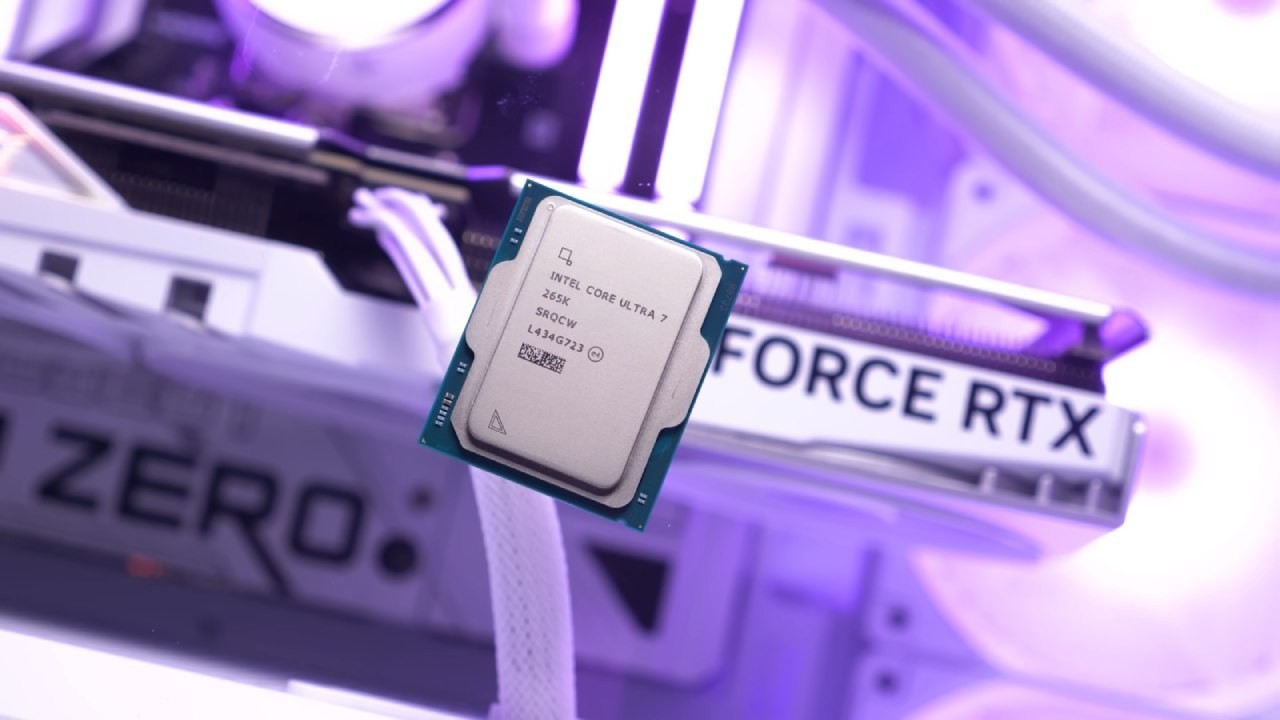
Intel's upcoming Nova processors are attracting attention for their high core counts and architectural improvements. The processors feature 52 cores in a hybrid configuration, combining performance and efficiency cores.
Additional cache, similar to VCH technology, is expected to improve performance in both multi-threaded and gaming workloads. Early Geekbench estimates suggest potential multi-core gains of around 2.2x, which could surpass those of AMD's Zen 6 and Apple's M4 processors. Single-core performance improvements are also expected due to architecture enhancements and higher clock speeds.
While these figures are optimistic, it's important to consider memory bandwidth and real-world performance, which may not scale linearly with core count. The PC cores in Nova Lake are expected to see moderate improvements. In contrast, the efficiency cores could deliver substantial gains for multi-threaded tasks.
Intel's focus on both performance and efficiency may make Nova Lake highly competitive, especially in gaming scenarios where cache and memory optimizations are crucial.
AMD's Zen 6 Architecture: Efficiency and Performance
It is thought that Zen 6 will give IPC increases of between 10–15% and somewhat higher clock speeds, maybe up to the low 6GHz level. The IOD and overall memory bandwidth will get better, which will make performance even better. AMD balances power efficiency with speed.
The enhancements to the CPU, along with new chiplets and caches, should help AMD stay ahead in desktop computing while still being able to compete with Intel's new processors.
AMD has achieved a lot of progress in the past by making daring decisions on architecture, such using chiplets and X3D cache technology.
Each new generation—from original Zen to Ryzen 3000 and beyond—has demonstrated AMD's willingness to innovate, ultimately creating high-performance and efficient CPUs that challenged Intel's dominance. Zen 6 continues this trend, and early expectations suggest strong single-thread and multi-thread performance gains.
The Competitive Landscape and Future Outlook
The markets for next-generation GPUs and CPUs are going to be very competitive. The MI450 from AMD has 2nm technology, modular chiplets, and powerful ray tracing cores. It could establish a new bar for gaming performance and power economy.
Intel's Nova Lake CPUs, on the other hand, may be able to compete with or even beat Zen 6 in gaming and multi-threaded tasks because they have more cache and a hybrid core architecture.
It's good that Intel is becoming more competitive again. The industry benefits when more than one company pushes the limits. Gamers, multimedia makers, and PC lovers will be happy to hear about AMD's new architecture and Intel's anticipated improvements.
How well these processors perform in real life, especially when playing games, will determine how well each company's approach works.
.jpg)
Final Thoughts
AMD is using 2nm technology, and Intel is coming up with new ideas like hybrid cores and more cache. The next generation of computer hardware is going to be great. It's an exciting time for the business because both companies are working for better performance, efficiency, and modularity.
Gamers and PC fans will benefit from better performance, more efficiency, and more features. At the same time, ongoing competition ensures rapid innovation across the CPU and GPU markets.
Also, Check Our Other Articles:
- AMD Ryzen 9 9950X3D Review: Setting The Standard For 2025 Gaming CPU
- AMD Ryzen 7 9800X3D Review: 3D V-Cache Goes God Mode with Stunning Gaming Performance
- AMD RX 9070 Performance Review: Thermals, Clocks, and Real-World FPS
- AMD Ryzen 5 7600 Review: Best Budget Gaming CPU of 2025?
- AMD Radeon RX 7800 XT Review: RDNA 3 Power For Midrange Gaming
- Sapphire NITRO+ AMD Radeon RX 9070 XT Review: The Ultimate 4K Gaming GPU
- AMD Ryzen 7 7800X3D: Delivers Gaming Performance Far Beyond Expectations
- AMD Ryzen 9 7900X Review: Powering the AM5 Era with DDR5 & PCIe 5.0
- ASRock Radeon RX 7800 XT Challenger OC Review: Best Price-to-Performance GPU of 2025
- Intel Core i9‑14900K vs. AMD Ryzen 7 7800X3D: Power Profiles & Gaming Benchmarks
Editor, NoobFeed
Gaming Hardware Updates
No Data.