
Intel Razer Lake and Titan Lake: Intel’s Next Steps Toward CPU Dominance
Next-generation CPU architectures from AMD and Intel signal major performance gains, efficiency improvements, and evolving hybrid core strategies.
Hardware by Masaru Hoshino on Apr 08, 2026
AMD has mostly been ahead of Intel in the last few generations. That doesn't mean that Intel hasn't made good chips. The 265K is quite popular with gamers, and the 285K is also very good. AMD has, however, made several shrewd early bets, including the move to chiplets, Zen 2, X3D V-Cache, and the ongoing development of the Zen architecture.
Intel's roadmap, on the other hand, is changing quickly. New projects like Serpent Lake, Titan Lake, and Razer Lake are showing promise for the future. More competition is good in the long run, especially as PC gaming gets more expensive.
It's not good for the industry as a whole when one big company controls the market. Also, if Intel's foundry gets better, it will be less dependent on TSMC, which is better for the industry as a whole.
It's crucial to understand the current refresh cycle and the next-generation designs coming out before discussing future architectures.
Current Refreshes: Incremental but Important
The next updates from AMD and Intel aren't likely to impact the overall balance that much. The designs for Zen 5 and Arrow Lake refreshes are mostly the same, with only small changes.
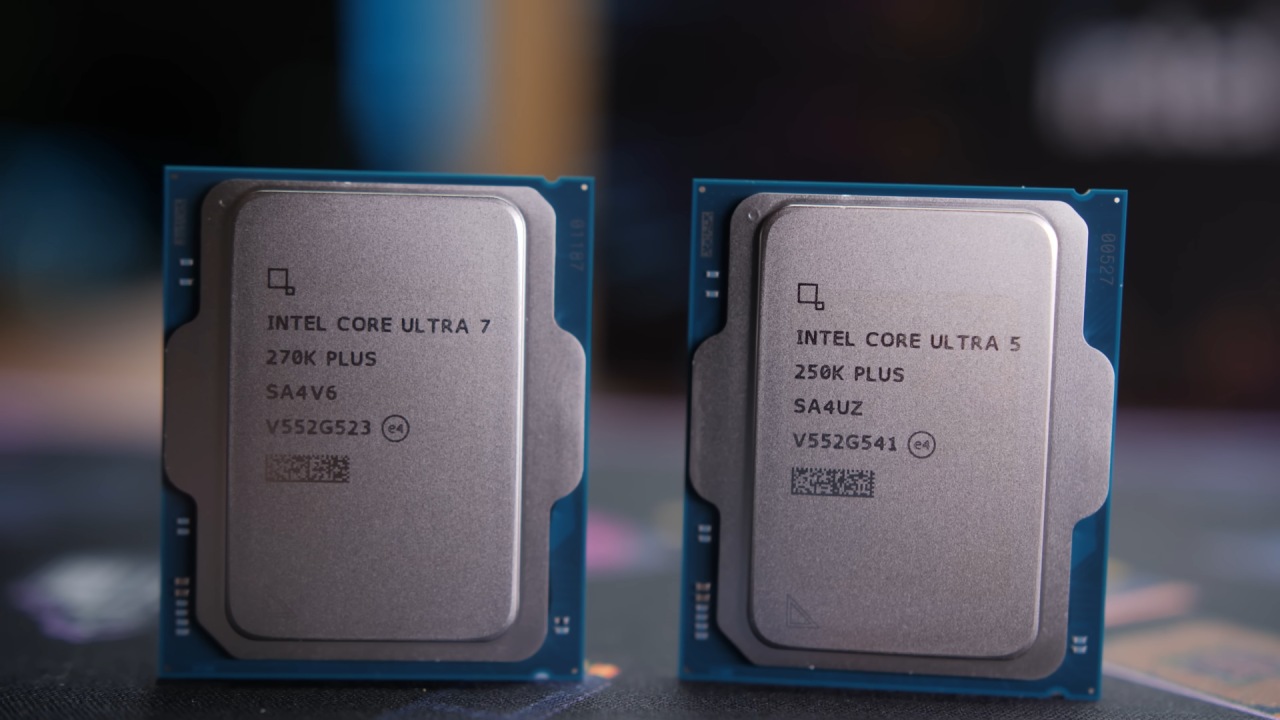
Intel has made improvements, such as supporting more memory (up to 7200), faster clock speeds on both P-cores and E-cores, and, in some SKUs, more cores, especially E-cores. The 270K, for instance, is very similar to the 265K but has four more E-cores.
AMD, on the other hand, has confirmed the 9850X3D, which is just a better version of the 9800 with slightly faster clock speeds. There are also signs of a possible 9950X3D version with two CCDs that would benefit from X3D V-Cache. Even though the gaming advantage may not be very big, these kinds of setups could help with productivity tasks a lot.
Zen 6 and Nova Lake: Next-Generation Architectures
Zen 6 and Nova Lake are big moves forward for the future.
Nova Lake is very important because of its core design. The most powerful version is projected to include 16P cores, 32E cores, and 4 LP cores, all on two computing tiles. In dual-tile arrangements, each tile has 144 MB of BLLC, for a total of 288 MB of extra cache. There should also be a single-tile version with 8P, 16E, and 4 LP cores.
There are significant performance improvements, with sources saying P-cores get at least a 15% IPC boost. But dual-tile BLLC models are likely to be pricey, with prices ranging from $1200 to $1500. Even though these chips operate well, they are still on mainstream platforms, which means they have fewer PCIe lanes and dual-channel memory. This makes them less suitable for demanding workstation applications.
Zen 6, also called Medusa, is intended to boost AMD's performance and efficiency by up to 70%. Zen 6 looks very promising because it can have up to 24 cores and 48 threads, and its integer units have been rewritten. Another big plus is that it remains compatible with AM5, making it easy to upgrade from Zen 4 systems.
Titan Lake: Evolution Rather Than Revolution
The idea of Titan Lake has changed since it was first thought of. It was initially thought to be a single architecture. Still, it is now believed to be an improved version of Razer Lake.
Titan Lake is mostly for mobile devices. It has an Xe3P-based iGPU with about 12 execution units for more powerful setups, improvements to the SoC, possible support for LPDDR6 or LPDDR5X memory, and a new NPU.
Instead of a complete overhaul, Titan Lake is best thought of as an iterative upgrade, much like prior mobile generations improved existing architectures without making big changes.
Razer Lake: Performance Gains and Core Focus
Razer Lake is based on Nova Lake and has a similar core setup, with 16 P-cores, 32 E-cores, and 4 LP cores.
The architecture's goal is to deliver a substantial double-digit IPC boost, with P-cores improving by about 15%. But the E-cores are likely to improve considerably, making them even more crucial to Intel's design philosophy.
This change shows that efficiency and scalability are becoming increasingly important, and that E-cores are playing a bigger role in overall performance.
Hammer Lake: The Future of Unified Core Design
Intel has a long-term plan for Hammer Lake, which isn't likely to happen until 2029 or later.
This architecture is intended to be a single-core model, unlike the usual technique of separating P-cores and E-cores. Instead, it will use a more flexible approach, like AMD did with Zen and its offshoots.
There will still be core segmentation, but instead of having completely different core types, changes will be made through cache settings, instruction sets, and feature tweaks. The current E-core development teams have a big impact on the design.
There is some doubt about hyperthreading. It might return to mainstream products, but it's more likely to stay in server-focused designs.
Serpent Lake: Intel and Nvidia Collaboration
Intel and Nvidia worked together on Serpent Lake, which is one of the most exciting discoveries.
It looks like this product will use an Intel CPU and an Nvidia GPU, probably based on a Rubin variation. It might be made on TSMC's N3P process, but that could change.
The design is similar to ideas like Strix Halo or Medusa Halo, and the CPU architecture is likely based on Titan Lake. This kind of integration enables powerful laptops, tiny PCs, and handheld gaming systems.
Market Outlook and Price Predictions
The next several generations of AMD, Intel, and Nvidia will be quite competitive. This rivalry is especially important given the rising prices of hardware.
Some forecasts say memory prices will stabilize, with some predicting they will improve in the second half of 2026 and others suggesting they may remain unchanged until 2027. Prices are expected to improve by the time Zen 6, Zen 7, and architectures like Serpent Lake come out.
Overall, the changing CPU landscape points to many new ideas in the future, as competition pushes for better performance and lower prices.
Also, check our other hardware articles:
- AMD Ryzen 9 9950X3D Review: Setting The Standard For 2025 Gaming CPU
- Amazon Luna 2025 Review: Is Prime Gaming's Cloud Service Your Go-To For Casual Fun?
- AMD RX 9070 XT Review: AMD's RDNA 4 Champion for 1440p Gaming
- GeForce Now Ultimate: Ditching Your Gaming PC For Cloud RTX 4080 Power?
- NVIDIA GeForce RTX 5080 Review (2025): Still A 4K Gaming Powerhouse?
- Intel Core Ultra 9 285K Review And Performance Breakdown (2025)
- AMD Ryzen 7 9800X3D Review: 3D V-Cache Goes God Mode with Stunning Gaming Performance
- Intel Core Ultra 9 285K vs AMD Ryzen 7 9800X3D: In-Depth Gaming Performance and Benchmark Comparison
- NVIDIA GeForce RTX 5080 Super Performance In Cyberpunk 2077: Path Tracing & DLSS 4.0 Tested
- AMD Radeon RX 9070 XT In Cyberpunk 2077: Ray Tracing & FSR 4.0 Tested
- Intel Arc B580 Review: The $250 GPU Revolutionizing 1440p Gaming
- Intel Arc B570 Vs. B580: Value, Specs, And Real-World Gaming Performance
- RTX 5090 Laptop Vs. M4 Max MacBook Pro: Ultimate Raw Performance Vs. Battery Endurance
- Intel Arc b580 Vs. RTX 4060: Game Performance And Value Analysis
- RTX5090 Hell Is Us Demo 4K Ultra Benchmark: DLSS Vs. Native Performance Guide
- NVIDIA RTX 5070 Review: Mid-Range Muscle or Marketing Hype?
- Nintendo Switch 2 Review: Handheld Performance, Features & Value Breakdown
- RTX 5070 Ti Review: Performance, Thermals & Power Efficiency Tested
- Samsung Odyssey OLED G81SF Review 2025: Ultimate 32-Inch QD-OLED Gaming Monitor
- AMD RX 9070 Performance Review: Thermals, Clocks, and Real-World FPS
- AMD Ryzen 5 7600 Review: Best Budget Gaming CPU of 2025?
- AMD Radeon RX 7800 XT Review: RDNA 3 Power For Midrange Gaming
- Asus ROG RTX 5090 Astral OC Vs. Founders Edition: The 4K Gaming Benchmark
Editor, NoobFeed
Gaming Hardware Updates
No Data.