
Intel XeSS3 Multiframe Generation Launch Exposes AMD’s Software Struggles
Intel XeSS3 introduces multiframe generation and advanced rendering features, exposing slower software innovation across competing GPU ecosystems.
Hardware by Masaru Hoshino on Jan 31, 2026
AMD still doesn't have the ability to make many frames at once, but XeSS3 can. Intel keeps making progress on the software side, even if it only has a small part of the discrete GPU market.
The rollout shows how much Intel is spending on graphics features, while competitors with far greater market shares move more slowly.
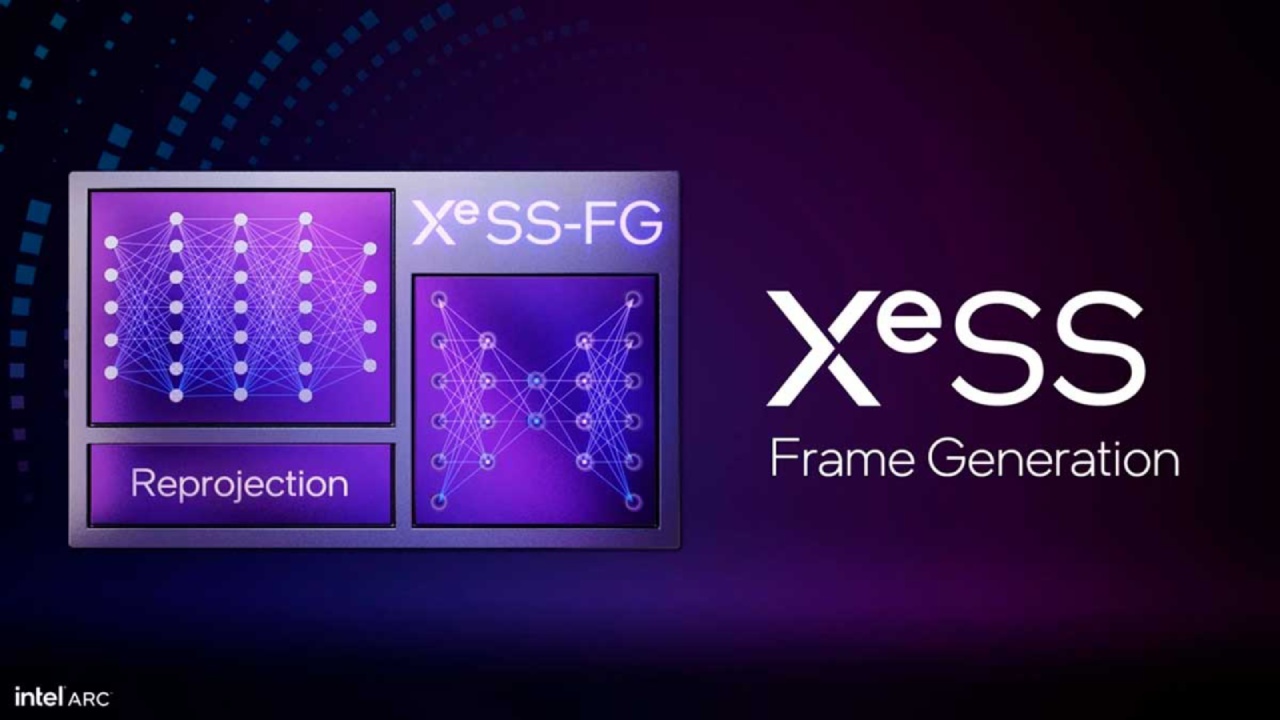
Intel Rolling Out Features Faster Than AMD
Intel, which has about 0.5% to 1% of the discrete GPU market share, is now releasing more features than AMD. Intel has put out a new driver that lets XeSS3 make multiple frames. Right now, this driver only works with modern integrated graphics, including the ARC B390 and B370 graphics that come with Panther Lake systems.
Intel has said that next month, ARC B-series discrete GPUs will also be able to support XeSS3 multiframe generation. That means testing will have to wait a little longer, but help is on the way.
Panther Lake Core Ultra 300 CPUs with built-in graphics are the only platform that works right now. Later, support will also be added for Core Ultra 200V, 200, 100, B-series, and A-series products.
Improvements in modern rendering and image quality
XeSS3 makes modern rendering better, with ray tracing and global illumination making lighting seem better. People also expect improvements in the quality of upscaling. XeSS2 and XeSS2.1 already do a fantastic job, especially on Intel GPUs that use the XMX channel instead of DP4A. However, they still don't do as well as DLSS4, DLSS4.5, and FSR4 when it comes to upscaling quality.
XeSS3 should make things look clearer, have better textures, bigger shapes, and run more smoothly. The major focus is on multiframe creation, although better upscaling is probably included as well.
Intel vs AMD on Frame Generation
Intel was the first company to make frame generation based on machine learning with XeSS. AMD didn't add machine learning frame generation until recently, with FSR Redstone. It took them years to accomplish so. Intel is ahead again because it was the first to release multiframe generation.
This is especially surprising given how small Intel's share of the GPU market is. Still, Intel keeps adding new functionality at a quicker rate. XeSS3 is the first time that Intel's multiframe generation technology has been made available to the public. This technology has been talked about for a while around Panther Lake.
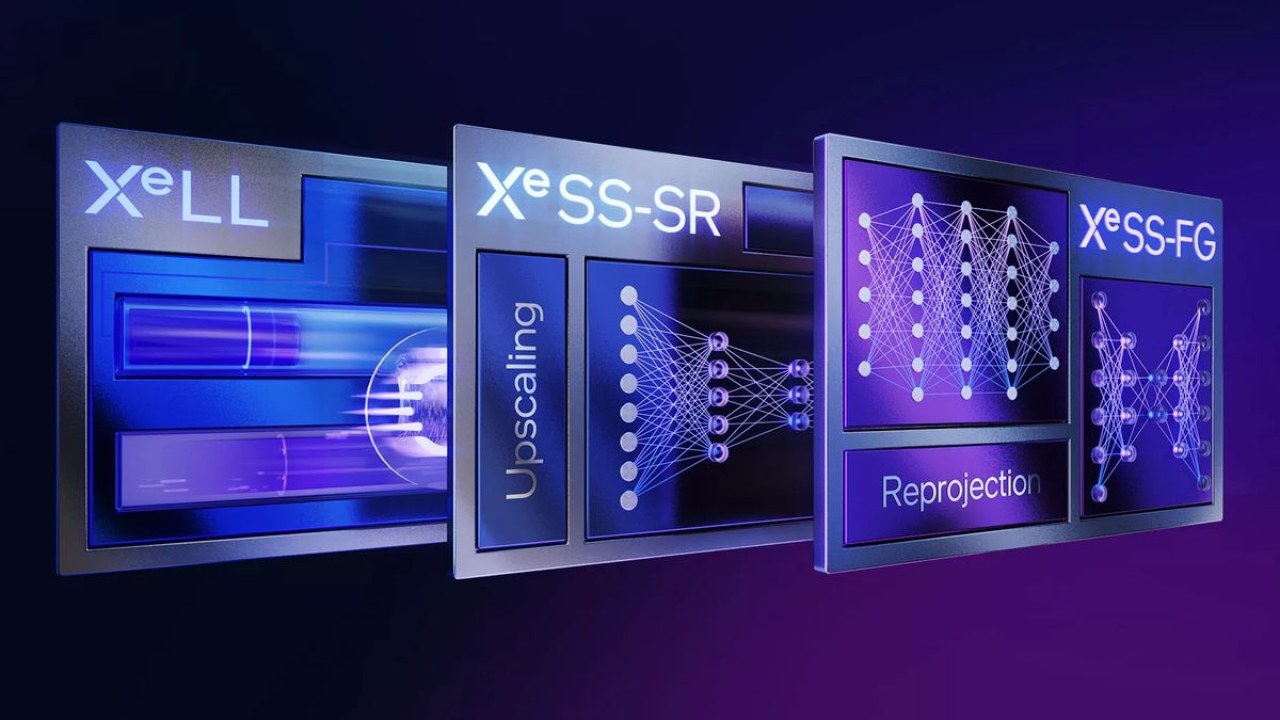
Scaling Performance and Driver Behavior
Intel presentations indicate that XeSS3 can make up to three more frames, which can make the frame rate up to four times faster in some situations. These things normally happen when the CPU is the limiting factor and not the GPU.
Intel drivers are known to put extra strain on the CPU, which can make CPU bottlenecks happen more quickly. When this happens, frame rate scaling can go up to about 4x. In most real-life situations, performance boosts of about 3.5x are more likely.
User Control and Software Overrides
Intel Graphics Software now has an XeSS frame generation override on the software side. If a game already supports XeSS frame generation, you can change the mode to 2x, 3x, or 4x multiframe generation. This means that developers don't have to wait for them to add multiframe generation directly, although it's not always the best choice.
Intel's earlier briefings confirmed that XeSS3 is still compatible with XeSS2 titles. Depending on the game, Intel's graphics program can show user controls. It still depends on which XeSS features each game shows and uses in the game, which is a fair way to do things.
Driver Updates and Platform Limitations
These updates are in the most recent WHQL drivers, versions 8425 and 8362. But right now, the multiframe creation part only works on Panther Lake. People know about this limit and expect it to go away as support grows for more GPUs.
A look at XeSS Technologies
There is a distinct change in Intel's XeSS technology stack. The initial XeSS added cross-vendor super resolution, which needed Shader Model6.4 and worked with GPUs that weren't made by Intel. The XMX-optimized approach gives greater image quality on Intel GPUs.
With XeSS2, you can now use machine learning to create frames and have minimal latency. Intel has had machine learning frame generation for a long time, while AMD just added it.
Low Latency and AMD Anti-Lag Concerns
Anti-Lag2 is one of the AMD features that is least used. It's strange that so few games support it, given how big and powerful AMD is. More games already use Intel's XeSS low-latency support than AMD's Anti-Lag2.
This makes people wonder what AMD is focusing on when it comes to investing in its Radeon branch. Even though Intel doesn't have many GPUs, it nonetheless pushes software features harder than AMD does.
XeSS3 Shows AMD's Software Flaws
Intel now offers multiframe generation with XeSS3, while AMD still doesn't have it, even though it has a much larger market share and resources. This difference makes AMD's sluggish improvement stand out even more.

Final Thoughts
In general, Intel isn't completely better than AMD, although it does have more XeSS functions than FSR. AMD's FSR Redstone had a lot of huge promises when it came out, but it didn't offer anything in real life. Ray regeneration was only in one game, and months later, there is still no support for it in more games.
Radiance caching was supposed to happen in early 2026, but it hasn't happened yet. In several cases, machine learning frame generation also had problems with frame pacing.
FSR still does a great job of upscaling, while XeSS now does a great job of making frames and making many frames. That balance makes Intel's progress even more amazing because it doesn't have a lot of market share in the GPU industry.
Also, check our other Intel chips Articles below:
- Intel Core Ultra 9 285K Review And Performance Breakdown (2025)
- Intel Core Ultra 9 285K vs AMD Ryzen 7 9800X3D: In-Depth Gaming Performance and Benchmark Comparison
- Intel Core i5-13400F Gaming Performance: Still Worth It in 2025?
- Intel Core i9‑14900K vs. AMD Ryzen 7 7800X3D: Power Profiles & Gaming Benchmarks
- Intel Core i9 14900K: Specs, Benchmarks, and Competitor Comparison
- Intel Core Ultra 5 245K Review: Gaming, Productivity & Power Efficiency Tested
- Intel Core Ultra 9 285 K's iGPU Gaming: In-Depth Benchmarks & Analysis
- Intel vs. AMD Gaming Laptop: Performance, Thermals & Battery Life Compared
- AMD Ryzen 7 9800X3D vs.7800X3D vs. Intel Core Ultra 7 265K: Gaming, Thermals & Price Analysis
Editor, NoobFeed
Gaming Hardware Updates
No Data.