
Legion Go 2 Z2 Extreme Delivers Big Gains Over Legion Go Z1 Extreme in Forza Horizon 6
Forza Horizon 6 highlights substantial handheld gaming improvements between the original Legion Go and the newer Legion Go 2.
Hardware by Tanvir Kabbo on May 23, 2026
The technology behind portable gaming devices is still evolving, and newer AMD processors offer improved frame rates, more efficiency, and smoother gameplay with the latest games. Lenovo’s original Legion Go Z1 Extreme already established itself as one of the most capable Windows gaming handhelds available, but the newer Legion Go 2, powered by the Z2 Extreme processor, pushes performance even further.
Forza Horizon 6 is one of the clearest examples where the gap between the two devices becomes immediately noticeable, especially when comparing multiple TDP profiles and resolution settings.
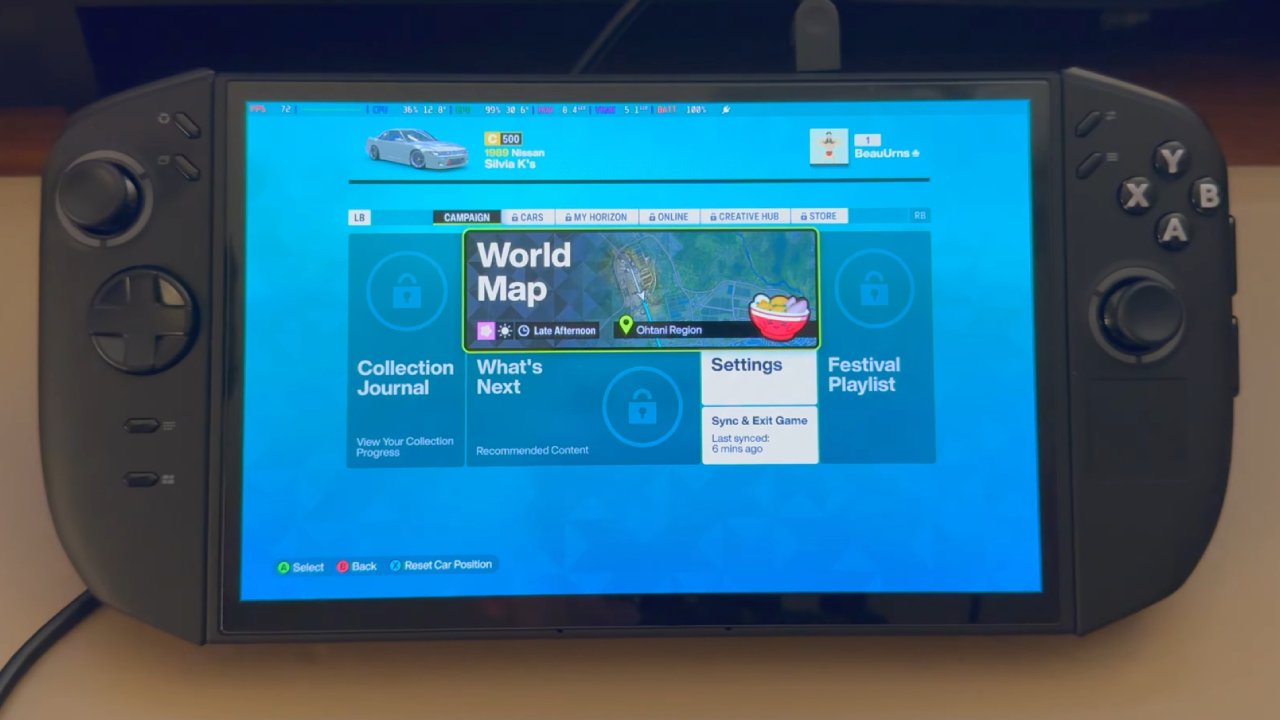
Legion Go Hardware Differences Become Clear
A good amount of time has been spent playing Forza Horizon 6, leading to a direct comparison between the original Legion Go Z1 Extreme and the newer Legion Go 2 Z2 Extreme. The new one has 32 GB of RAM, but the original one has 16 GB. But in this game, the extra memory doesn't appear to matter much.
Even at the maximum settings on the original Legion Go, VRAM utilization is around 5GB, suggesting that Forza Horizon 6 isn't particularly memory-intensive. System resources remain fairly balanced on both handhelds, but the Legion Go 2 still manages to produce a clear lead in gaming performance.
When testing handheld gaming systems, we often see that certain titles deliver only small improvements from one generation to the next. Other games, however, create a much wider gap between older and newer hardware. Forza Horizon 6 falls firmly into the second category.
17W and 25W TDP Testing Shows Major Improvements
Most of the testing focuses on 17W and 25W TDP modes using both 1200p and 800p resolutions. Low- and medium-level graphical presets were tested across both devices to provide a more accurate side-by-side comparison.
The Legion Go 2 consistently pulls ahead of the original Legion Go during benchmark sequences. The performance improvements are evident at 17W, but are even more pronounced when both handhelds are set to 25W. The Z2 Extreme CPU is more efficient under heavy load and delivers higher frame rates in games.
The improvements are most obvious during difficult racing sequences, high-speed driving passages, and larger open-world areas, when the GPUs and CPUs are under greater stress. The original Legion Go occasionally struggles to maintain consistency, while the Legion Go 2 is more consistent overall.
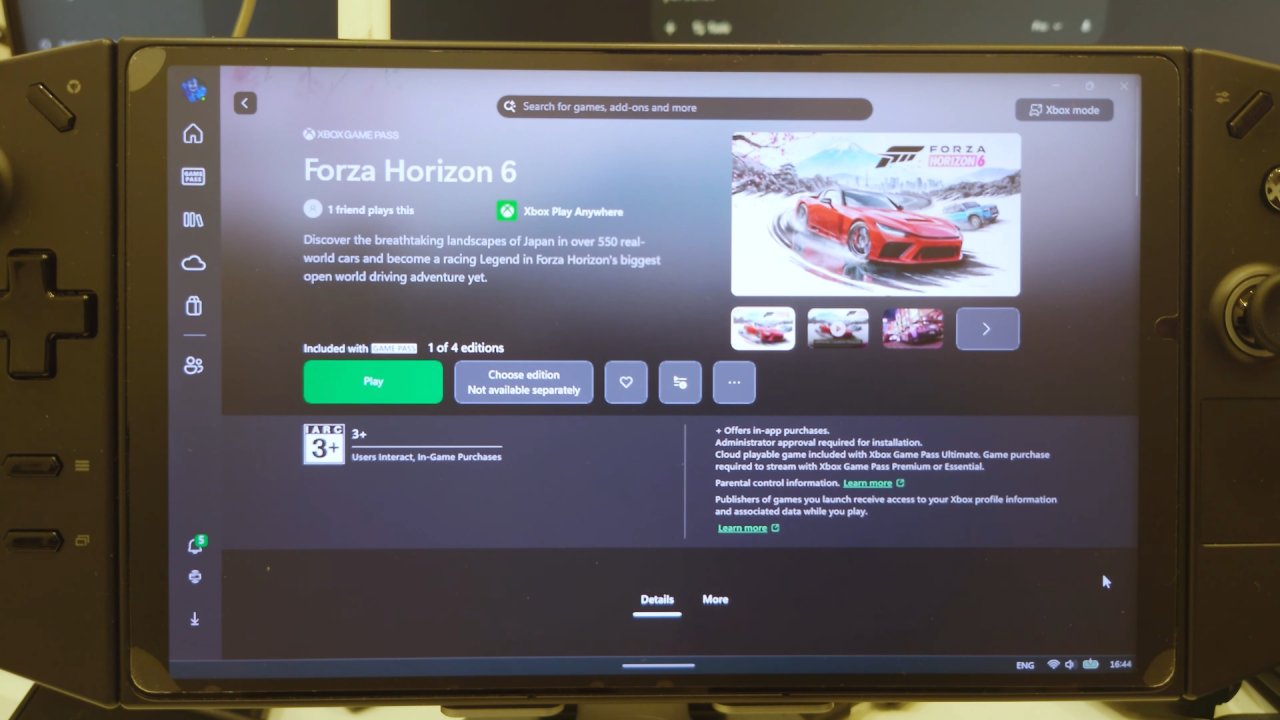
Real-World Gameplay Aligns with the Benchmark
In addition to benchmark numbers, real-world race scenarios were used for additional gameplay comparisons. Unlike purely synthetic test data, these tests help better understand the performance of both systems in real play.
During gameplay sessions, Legion Go 2 continues to hold its advantage. To make the performance difference clearer, especially when switching between 1200p and 800p resolutions, set both handhelds to the same settings.
Most comparisons are done for the 1200p low and medium settings and for the 17W and 25W power profiles. These are examples of realistic mobile gaming applications that most players would face in their daily use.
In some games, the Z1 Extreme and Z2 Extreme might not seem that different. With Forza Horizon 6, though, it looks like they prefer the latest Legion Go 2 hardware. The newer handheld offers slightly smoother gameplay, a more consistent frame rate, and better overall responsiveness on tougher levels.
As the final comparison reveals, the Legion Go 2 Z2 Extreme is the superior gaming handheld for Forza Horizon 6, especially at high power limits and resolutions.
Senior Editor, NoobFeed
Gaming Hardware Updates
No Data.