
Legion Go 2 Pricing Uncertainty Adds to Growing Concerns
Rising Legion Go 2 prices push handheld gaming into premium territory, limiting accessibility and reducing overall consumer value proposition.
Hardware by Tanvir Kabbo on Apr 16, 2026
The market for handheld games has changed quickly in the last few years. High-end devices are pushing the limits of performance, display quality, and mobility. But recent price changes are raising doubts about the value, accessibility, and future of high-end handhelds, especially Lenovo's Legion Go range.
Rising Prices Across the Legion Go 2 Lineup
We want to talk a little bit about the Legion Go 2 devices because this has been on our minds and has been discussed with other creators as well. These price increases on the three devices—the Go 2 Non-Extreme, the Go 2 Extreme 1TB, and the Go 2 Extreme 2TB—are pretty extreme. It really begs the question of who these devices are even for anymore. Can they still be recommended, or are they simply too expensive now?
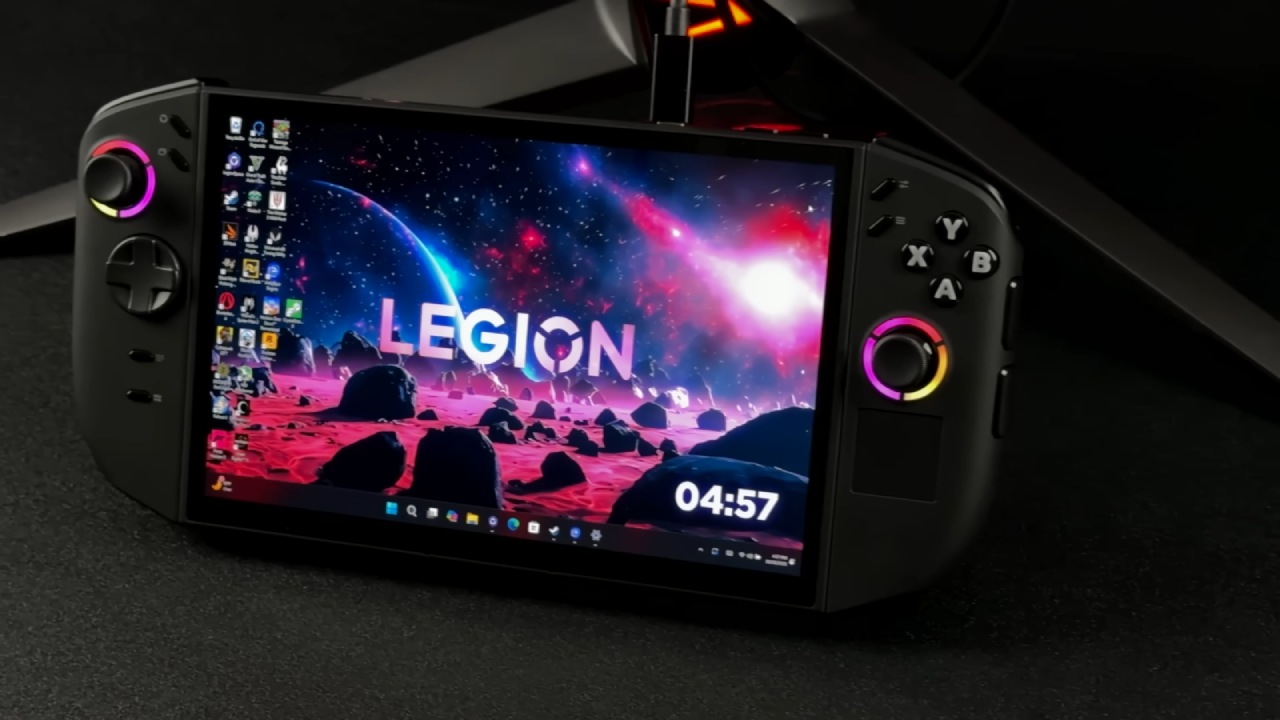
Things are very different now than they were in 2023, when Lenovo first unveiled the Legion Go. Back then, that was a good deal. A new computer with 512GB costs $699, which is a wonderful bargain that is still good today.
Over the past six months, a lot has changed with these Legion Go 2 devices. The Legion Go 2 Z2 Non-Extreme model, which is essentially a renamed Z1 Extreme in the new GoTo design with an OLED screen, launched at $1149 and has now increased to $1499.
The Legion Go 2 Z2 Extreme 1TB model with 32GB RAM launched at $1349 and is now sitting at $1999. The Legion Go 2 Z2 Extreme with 32GB RAM and 2TB storage launched at $1479 and has now jumped to $2849, marking the most dramatic increase for just a 1TB storage difference.
Market Pressures and Industry-Wide Impact
These increases are significant, even when accounting for rising RAM and storage costs driven by global events and the AI boom. Lenovo is not the only company affected, as price hikes are being seen across Android handhelds and other gaming devices. However, as one of the more mainstream brands that initially delivered a cost-friendly handheld, Lenovo is drawing more attention for these changes.
Even competing devices have been impacted. Some manufacturers have reportedly canceled upcoming handhelds because producing and selling them at reasonable prices is no longer viable in the current market. This highlights just how volatile and expensive the segment has become.
Hardware Quality Remains Strong
Even though the prices are a problem, the Go 2 devices are still great. They are really well-made and have one of the greatest displays on a handheld. The OLED screen on all three versions is quite good, and using them every day still feels high-end.
But there are still worries. There haven't been many software upgrades, although there have been some, including new GPU drivers and BIOS updates. Even if things are getting better, they aren't quite what you'd expect for smartphones in this price range.
Pricing vs Practical Value
Pricing is still the largest problem. Even when it came out, $1349 seemed hard to justify. The value proposition gets tougher to defend at prices of $1999 and up. You might easily think of high-end laptops with OLED screens or powerful desktop configurations that deliver much more performance at these prices.
These handhelds cost between $2000 and $2849, which puts them in direct competition with full-fledged computers. The $1500 Z2 model, which has 16GB of RAM and is basically the same as the Z1 Extreme, can't really justify its price. Handhelds naturally cost more because they are portable, but the current prices seem too high.
Who Are These Devices For?
This raises a critical question: who are these devices actually for now?
Realistically, they are only suitable for a very small group of enthusiasts who are not concerned about cost. For most users, it becomes difficult to recommend any of these models. There are numerous alternatives available under $1000, both new and used, that deliver solid handheld gaming experiences.
Other handheld consoles, and even alternatives in the $1000 bracket, are better deals altogether. They may not have features like OLED screens or detachable controllers. Still, they satisfy the demands of most users without costing much.
Potential Impact on Sales and Market Interest
These price increases will likely lead to a big decline in sales. High costs may force companies to cut back on production, which makes individuals less likely to buy and hinders market growth.
Less sales could also change how much stuff is made and how much the community is involved. If fewer people acquire these products, fewer people are interested in them. This changes how people talk about things, how they review things, and how the ecosystem grows over time.
.jpg)
Uncertainty Around the SteamOS Model
Another big question is about the next version of SteamOS for the Legion Go 2. Earlier estimates put the price between $1199 and $1299, about $150 less than the first model's price when it came out.
With the current pricing structure, that seems unlikely. It would not make sense to offer a SteamOS variant at $1299 while the Windows version sits at $1999. If the SteamOS model also increases to around $1700 or more, it risks being dead on arrival due to poor value.
Future of Legion Go 2
The Legion Go 2 series still has great hardware, a high-quality build, and an OLED display that stands out. But the price has risen so much that it's hard for many people to buy.
These devices are likely to remain niche goods unless prices drop or the market stabilizes. People who are really into them might still like them, but it doesn't seem likely that more people will buy them at their present prices.
Also, check our other hardware articles:
- AMD Ryzen 9 9950X3D Review: Setting The Standard For 2025 Gaming CPU
- Amazon Luna 2025 Review: Is Prime Gaming's Cloud Service Your Go-To For Casual Fun?
- AMD RX 9070 XT Review: AMD's RDNA 4 Champion for 1440p Gaming
- GeForce Now Ultimate: Ditching Your Gaming PC For Cloud RTX 4080 Power?
- NVIDIA GeForce RTX 5080 Review (2025): Still A 4K Gaming Powerhouse?
- Intel Core Ultra 9 285K Review And Performance Breakdown (2025)
- AMD Ryzen 7 9800X3D Review: 3D V-Cache Goes God Mode with Stunning Gaming Performance
- Intel Core Ultra 9 285K vs AMD Ryzen 7 9800X3D: In-Depth Gaming Performance and Benchmark Comparison
- NVIDIA GeForce RTX 5080 Super Performance In Cyberpunk 2077: Path Tracing & DLSS 4.0 Tested
- AMD Radeon RX 9070 XT In Cyberpunk 2077: Ray Tracing & FSR 4.0 Tested
- Intel Arc B580 Review: The $250 GPU Revolutionizing 1440p Gaming
- Intel Arc B570 Vs. B580: Value, Specs, And Real-World Gaming Performance
- RTX 5090 Laptop Vs. M4 Max MacBook Pro: Ultimate Raw Performance Vs. Battery Endurance
- Intel Arc b580 Vs. RTX 4060: Game Performance And Value Analysis
- RTX5090 Hell Is Us Demo 4K Ultra Benchmark: DLSS Vs. Native Performance Guide
- NVIDIA RTX 5070 Review: Mid-Range Muscle or Marketing Hype?
- Nintendo Switch 2 Review: Handheld Performance, Features & Value Breakdown
- RTX 5070 Ti Review: Performance, Thermals & Power Efficiency Tested
- Samsung Odyssey OLED G81SF Review 2025: Ultimate 32-Inch QD-OLED Gaming Monitor
- AMD RX 9070 Performance Review: Thermals, Clocks, and Real-World FPS
- AMD Ryzen 5 7600 Review: Best Budget Gaming CPU of 2025?
- AMD Radeon RX 7800 XT Review: RDNA 3 Power For Midrange Gaming
- Asus ROG RTX 5090 Astral OC Vs. Founders Edition: The 4K Gaming Benchmark
Senior Editor, NoobFeed
Gaming Hardware Updates
No Data.