
Meta Quest 3 Gets $100 Price Increase Amid Growing VR Hardware Costs
Meta Quest 3 price increases signal rising VR hardware costs across the industry amid global component shortages and inflation pressures.
Hardware by Masaru Hoshino on Apr 19, 2026
The virtual reality industry is changing in significant ways. The cost of gear is going up, platforms are changing, and new experimental technologies are changing the way people experience VR. This week has been full with both problems and exciting new things in the VR environment, like changes to prices, new software, and new ways to use your senses.
Increasing Prices in VR Hardware
Do you recall when things got cheaper over time? That was particularly true of tech products. As production scale increased, costs decreased, and older models became cheaper. That trend is changing.
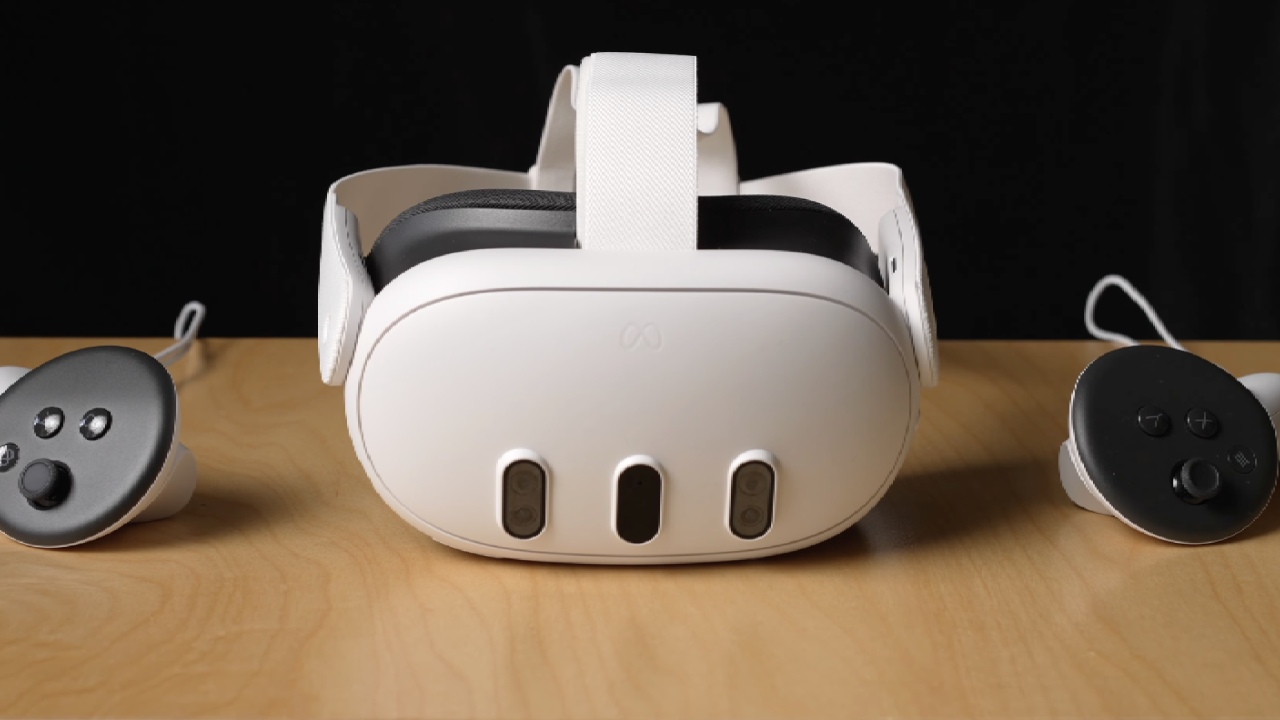
Meta is raising the prices of its headsets across the board. The Quest 3 is going up by $100, while the Quest 3S sees a $50 increase. The Quest 3S 128GB model moves from $300 to $350, and the 256GB version rises from $400 to $450. Meanwhile, the Quest 3 512GB jumps from $500 to $600. Even used units are not spared, and prices are rising across the board.
This is because the world has been experiencing rising component costs. The prices of memory and storage have soared, not only of VR hardware but also of PCs, consoles, and other devices. These headsets were already being sold at cost or even at a loss, and the price change was virtually unavoidable.
This could be the time to buy or consider the used market to evade the higher prices. Quest 3 remains the better choice compared to Quest 3S because of its better lenses and display quality.
Concerns Around Valve's Steam Frame
These price hikes are worrying about future hardware, especially the Steam Frame by Valve. The headset has been said to be delayed because of the increasing cost of production, particularly in memory and storage components.
The Steam Frame will have the following advanced features: several Wi-Fi antennas to enhance PCVR streaming, eye tracking to support foveated rendering and encoding, and wireless connectivity. Nevertheless, it is still based on a 2160x2160 resolution per eye, which is not revolutionary in comparison with the existing high-end PCVR headsets.
Pricing will be critical. When the device is priced above 1,000, it will be at risk of losing its popularity, particularly when other devices are available with higher resolution and comfort at the same price. A price of around 800 would be much more competitive, given that the Quest 3 is currently at 600 with good capabilities and a big game library.
New VR Games and Expanding Experiences
Software-wise, there is a positive momentum. Microsoft Flight Simulator is getting a new beta release that supports PSVR2 in full VR. The update features complete 3D worlds, interactive cockpits with Sense controllers, and enhanced performance with eye tracking and foveated rendering.
The other interesting title is EXD, which was created by an Italian team. It is a PCVR game featuring physics-based combat, puzzle-solving, and a narrative that begins in a delivery company before transitioning into a magical 3D world. The initial impressions are positive in terms of graphics and captivating gameplay.

Samsung and Google XR Updates
The Samsung Galaxy XR and the wider Google XR platform have received a long-awaited update. Real-time 3D conversion is the highlight feature, which enables 2D content to be displayed in a layered 3D space.
The feature is compatible with a range of applications, such as streaming platforms, which transform regular movies into 3D. Although it is impressive when working, it is not consistent, as it tends to break when windows are resized and reconfigured after a device restart.
The platform itself still feels underdeveloped. The headset is a bit uncomfortable, and PCVR performance is not consistent. The ecosystem seems to be limited and somewhat neglected at the moment, with only one major device.
The Future of VR: Cost vs. Innovation
The VR market is at a crossroads. Hardware is getting costlier, and the trend of cost reduction with time is being broken. Meanwhile, innovation persists in software, platforms, and sensory technologies.
The price-to-capability ratio is more than ever before, whether you are looking to upgrade your headset today or you are looking to upgrade it in the future.
Also, check our other hardware articles:
- AMD Ryzen 9 9950X3D Review: Setting The Standard For 2025 Gaming CPU
- Amazon Luna 2025 Review: Is Prime Gaming's Cloud Service Your Go-To For Casual Fun?
- AMD RX 9070 XT Review: AMD's RDNA 4 Champion for 1440p Gaming
- GeForce Now Ultimate: Ditching Your Gaming PC For Cloud RTX 4080 Power?
- NVIDIA GeForce RTX 5080 Review (2025): Still A 4K Gaming Powerhouse?
- Intel Core Ultra 9 285K Review And Performance Breakdown (2025)
- AMD Ryzen 7 9800X3D Review: 3D V-Cache Goes God Mode with Stunning Gaming Performance
- Intel Core Ultra 9 285K vs AMD Ryzen 7 9800X3D: In-Depth Gaming Performance and Benchmark Comparison
- NVIDIA GeForce RTX 5080 Super Performance In Cyberpunk 2077: Path Tracing & DLSS 4.0 Tested
- AMD Radeon RX 9070 XT In Cyberpunk 2077: Ray Tracing & FSR 4.0 Tested
- Intel Arc B580 Review: The $250 GPU Revolutionizing 1440p Gaming
- Intel Arc B570 Vs. B580: Value, Specs, And Real-World Gaming Performance
- RTX 5090 Laptop Vs. M4 Max MacBook Pro: Ultimate Raw Performance Vs. Battery Endurance
- Intel Arc b580 Vs. RTX 4060: Game Performance And Value Analysis
- RTX5090 Hell Is Us Demo 4K Ultra Benchmark: DLSS Vs. Native Performance Guide
- NVIDIA RTX 5070 Review: Mid-Range Muscle or Marketing Hype?
- Nintendo Switch 2 Review: Handheld Performance, Features & Value Breakdown
- RTX 5070 Ti Review: Performance, Thermals & Power Efficiency Tested
- Samsung Odyssey OLED G81SF Review 2025: Ultimate 32-Inch QD-OLED Gaming Monitor
- AMD RX 9070 Performance Review: Thermals, Clocks, and Real-World FPS
- AMD Ryzen 5 7600 Review: Best Budget Gaming CPU of 2025?
- AMD Radeon RX 7800 XT Review: RDNA 3 Power For Midrange Gaming
- Asus ROG RTX 5090 Astral OC Vs. Founders Edition: The 4K Gaming Benchmark
Editor, NoobFeed
Gaming Hardware Updates
No Data.