
NVIDIA Consumer CPUs Revealed Amid Delays for Next-Gen GPUs
Nvidia delays next-generation GPUs while simultaneously confirming powerful consumer CPUs designed for high performance and AI acceleration.
Hardware by Tanvir Kabbo on Feb 10, 2026
NVIDIA has publicly announced that its next Super GPUs and next-generation graphics cards would be delayed. This confirms months of conjecture in the PC hardware world. The Super refresh range, which Nvidia calls "Kicker" internally, has apparently been delayed because Nvidia's management changed its intentions in December without giving a new release date.
According to industry insiders, several factors led to the decision. Memory shortages, higher production costs, and Nvidia's strong focus on AI accelerators are all making it harder to advance consumer GPUs. These problems don't just affect Nvidia; the company's huge market share in AI makes it easy to see how it decides what to focus on first.
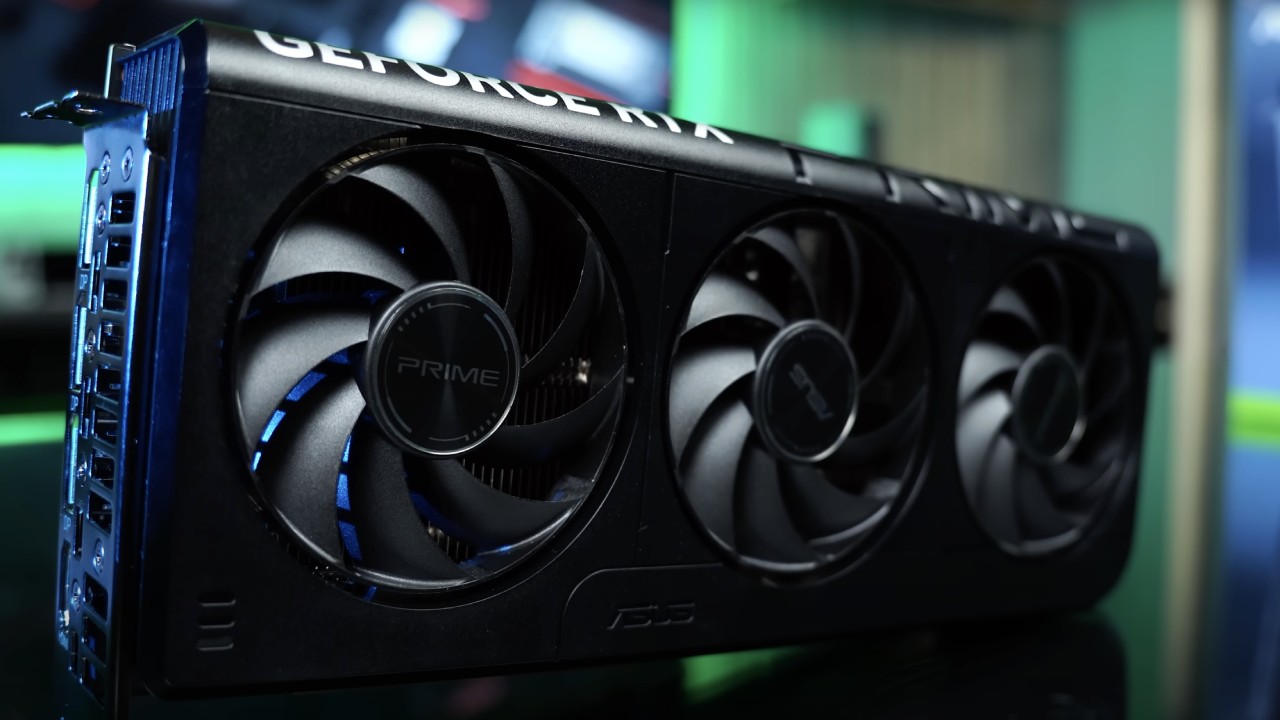
The confirmation aligns with past suspicions that the RTX 50 Super series would not launch when originally planned. The Super lineup is currently on hold for an undetermined period, rather than a mid-cycle refresh intended to fix performance issues and keep up with the competition.
The delay could hurt Nvidia's next-generation RTX 60 series, which is more worrying for long-term planning. Before, internal roadmaps stated that mass production would start around the end of 2027. New forecasts show that this timescale could slide into 2028, meaning the current generation will last longer than expected.
This delay could give competitors a chance to go ahead. AMD could, in theory, release its next-generation graphics architecture sooner and capitalize on Nvidia's sluggish pace. But because AMD has had trouble with execution, availability, and market positioning in the past, any competitive edge is still up in the air.
NVIDIA Confirms Plans for Consumer CPUs
Even though much of the news about GPUs has been bad, Nvidia made a big, good announcement by formally confirming its new consumer CPUs, the N1 and N1X. This confirmation puts to rest any doubts about whether Nvidia really wanted to get into the consumer CPU market outside data centers and specialist platforms.
NVIDIA says the N1X is for desktop computers, while the N1 is for laptops. However, shipment data has already shown that N1X silicon is showing up in a laptop platform. This suggests that the eventual separation between desktop and mobile may be more flexible than first thought.
CEO Jensen Huang said the CPUs work well at low power levels, which aligns with designs that emphasize efficiency these days. Not unexpectedly, Nvidia also talked about AI capabilities, but this seems more like a marketing trend than a distinct feature set. Almost all current CPUs are now called "AI-ready" since Microsoft Copilot PCs and AI acceleration are becoming common topics of conversation.
The chips are outstanding from a technical standpoint. The architecture is based on Nvidia's DGX Spark processor. It is said to have 20 ARM CPU cores and an integrated GPU with 6,144 CUDA cores. This is interesting since it has the same number of CUDA cores as the desktop RTX 5070, which is an extraordinarily strong setup for an integrated system.
NVIDIA's CPUs might be especially appealing for small PCs, notebooks, and systems where separate GPUs aren't practical or are too expensive, thanks to their many cores and strong built-in GPUs. These chips could change the way standard laptops and entry-level desktops are built if they are priced and available competitively.
Demand from businesses is still the strongest
When you put Nvidia's GPU delays and CPU announcements together, they show a bigger trend in the industry. Enterprise and AI-driven demand are becoming more important than consumer demand for GPUs, CPUs, and gaming gear. AI accelerators deliver higher profits, faster returns, and long-term contracts, making it hard for firms to put them on the back burner even when consumer markets suffer.
This change has real effects on people who love PCs. Prices rise, and advancements between generations occur more slowly when launches are delayed, supply is limited, and competition is less fierce. The consumer hardware market is becoming less stable and more unpredictable as many providers face the same problems.
The next several months will be quite important for anybody who wants to construct or upgrade a new PC. Changes in prices, availability, and the timing of product launches can significantly affect value propositions. If you wait too long, you might have to pay more for old hardware, and if you rush, you might miss out on better opportunities later.
NVIDIA is still trying to find a balance between its consumer legacy and its AI-driven future. The gap between what businesses want and what gamers want is getting harder and harder to ignore.
Also, check our other hardware articles:
- AMD Ryzen 9 9950X3D Review: Setting The Standard For 2025 Gaming CPU
- Amazon Luna 2025 Review: Is Prime Gaming's Cloud Service Your Go-To For Casual Fun?
- AMD RX 9070 XT Review: AMD's RDNA 4 Champion for 1440p Gaming
- GeForce Now Ultimate: Ditching Your Gaming PC For Cloud RTX 4080 Power?
- NVIDIA GeForce RTX 5080 Review (2025): Still A 4K Gaming Powerhouse?
- Intel Core Ultra 9 285K Review And Performance Breakdown (2025)
- AMD Ryzen 7 9800X3D Review: 3D V-Cache Goes God Mode with Stunning Gaming Performance
- Intel Core Ultra 9 285K vs AMD Ryzen 7 9800X3D: In-Depth Gaming Performance and Benchmark Comparison
- NVIDIA GeForce RTX 5080 Super Performance In Cyberpunk 2077: Path Tracing & DLSS 4.0 Tested
- AMD Radeon RX 9070 XT In Cyberpunk 2077: Ray Tracing & FSR 4.0 Tested
- Intel Arc B580 Review: The $250 GPU Revolutionizing 1440p Gaming
- Intel Arc B570 Vs. B580: Value, Specs, And Real-World Gaming Performance
- RTX 5090 Laptop Vs. M4 Max MacBook Pro: Ultimate Raw Performance Vs. Battery Endurance
- Intel Arc b580 Vs. RTX 4060: Game Performance And Value Analysis
- RTX5090 Hell Is Us Demo 4K Ultra Benchmark: DLSS Vs. Native Performance Guide
- NVIDIA RTX 5070 Review: Mid-Range Muscle or Marketing Hype?
- Nintendo Switch 2 Review: Handheld Performance, Features & Value Breakdown
- RTX 5070 Ti Review: Performance, Thermals & Power Efficiency Tested
- Samsung Odyssey OLED G81SF Review 2025: Ultimate 32-Inch QD-OLED Gaming Monitor
- AMD RX 9070 Performance Review: Thermals, Clocks, and Real-World FPS
- AMD Ryzen 5 7600 Review: Best Budget Gaming CPU of 2025?
- AMD Radeon RX 7800 XT Review: RDNA 3 Power For Midrange Gaming
- Asus ROG RTX 5090 Astral OC Vs. Founders Edition: The 4K Gaming Benchmark
Senior Editor, NoobFeed
Gaming Hardware Updates
No Data.