
Nvidia DLSS 4.5 Explained: Magic Upscaling vs. Hardware Limitations
DLSS 4.5 transforms extremely low-resolution games into playable 4K visuals using powerful AI upscaling technology.
Hardware by Mitsuba Miyu on Feb 23, 2026
It was thought that Nvidia's DLSS was good, but it's gotten even better. But there's a big problem with it that no one is talking about. Yes, the new updates show that DLSS is almost like magic. However, there is a rising worry that everyone should be aware of, along with what can be done to address it.
The technology looked really cool when DLSS 4.5 was first introduced, with its second-generation Transformer model and up to 6x frame generation. NVIDIA has since put out a full, stable version, and the effects are crazy. To determine when the picture is usable, games have had to render at very low internal resolutions and then upscale to 4K with DLSS 4.5.
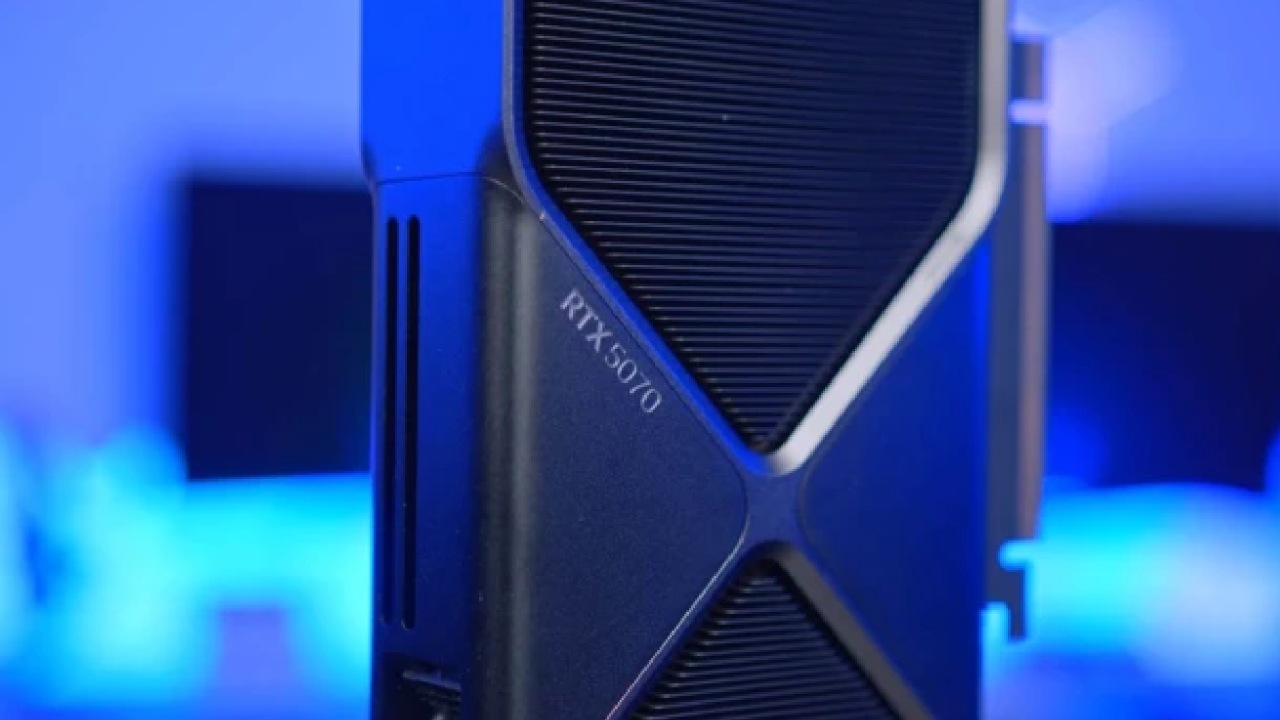
Resolutions as low as 38x22, or about a 1% image scale of 4K, are what we're talking about. It looks awful at that level. At 136x76, though, the picture is light-years better than the original model. It truly shocks me. It doesn't look that bad, even at 764x430, which is only 20% of 4 K resolution. Not great, but it looks like it could be fun to play. That's when things get scary.
Performance Claims and the Asterisk Problem
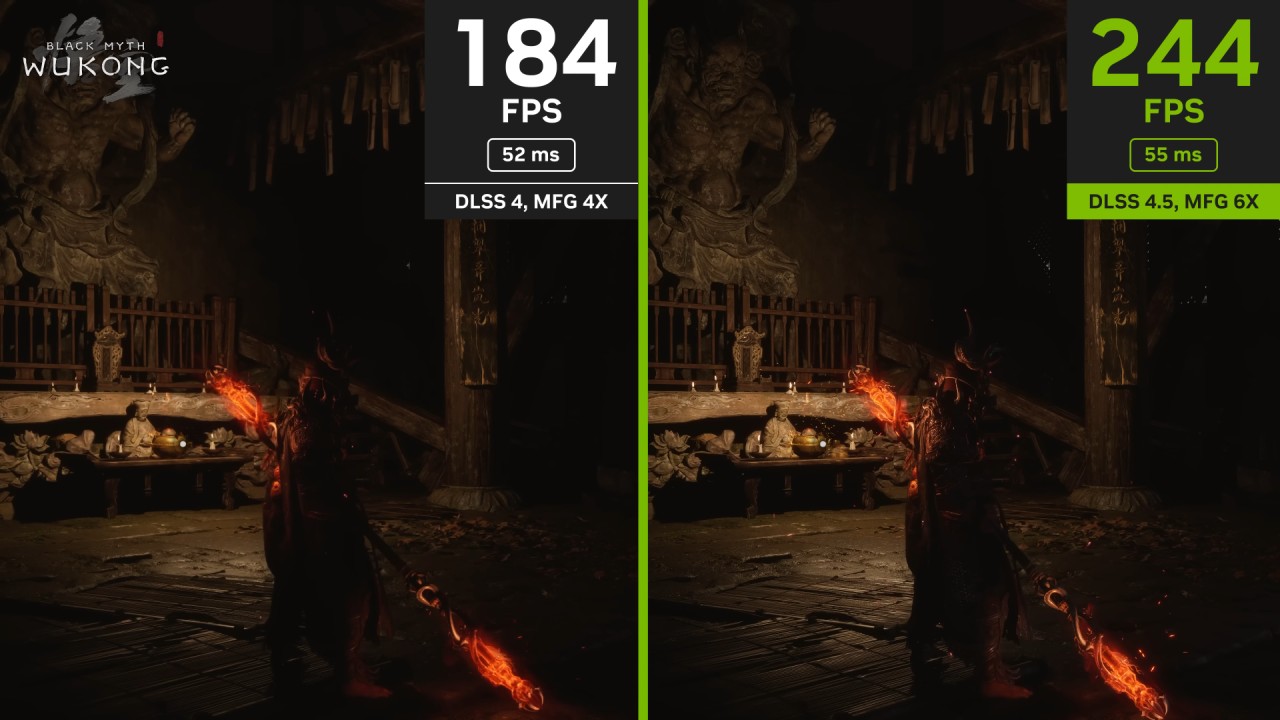
When Nvidia first released the RTX 4000 series, it made many big speed claims. A lot of people were excited, but it turned out those numbers only appeared when they used their new frame-creation technology. The same thing happened again with the 5070, which cost only $549 and made speed claims based on the new multi-frame generation.
We've already seen how easily these claims get mixed up. Some people didn't understand at first that the performance numbers were based on software features instead of hardware gains. Now, everyone knows that these kinds of claims should have had a big mark next to them. It's a concern that Nvidia seems set to continue this trend, which could cause significant problems for players and hardware in general.
Why Hardware Is Getting Harder
Moore's law is dead, plain and simple. Even though it was never really a rule, PC hardware performance gains are indeed getting harder to make. Companies have come up with amazing ways to get around problems, such as chiplet technology and newer packaging like 3D V-Cache. But they still need smaller transistors, and that costs more money.
It looks like TSMC's 2nm node will cost twice as much as their 5nm node. The higher population helps to cover some of that cost, but it doesn't solve the whole problem. Everything about the process is harder than ever, and the tools cost more.
On top of that, ray tracing is getting a lot of attention. While gamers are not necessarily the ones pushing for it, ray tracing is the logical next step in graphics. It basically makes a scene look like it has natural light.
Shadow maps and fake reflections are rasterization tricks that can get light close to real life, but they will never be able to make it look completely real. Some players prefer stylized art to realistic art. Still, the industry trend is certainly moving toward art that looks more like real life. Ray tracking is needed for that, but it takes a lot of computing power.
We have two big issues. It is very hard and expensive to make even small improvements to GPUs, and we need them to be much faster than they are now. It makes sense for Nvidia, AMD, and Intel to release tools like frame generation and upscaling. They work out a lot of these issues in unique ways.
When the Solution Becomes the Crutch
When the answer turns into a crutch, that's when things go wrong. We already know that some game makers use DLSS to make their games run better without having to tweak them as much. Imagine if card makers did the same thing to their cards to make them look better than they are.
It's easy to find ways to encourage people to improve DLSS instead of hardware. It is hard and expensive to make technology better. In contrast, training AI models is much easier at scale. If you're in business, why spend a lot of money trying to get around physical problems when software can do the trick?
You may believe that it doesn't matter as long as the FPS goes up. But imagine spending $1,000 on a card that is basically the same speed as a 3050 and only supports the newest DLSS, while the older generation didn't. That's the real problem that might happen soon. NVIDIA would have many reasons to move in that direction, as they could make a lot of money.
DLSS shouldn't be the main thing; it should be a perk. When software is the main selling point, hardware isn't needed.
Role of Competition
Competition leads to new ideas and lower prices. NVIDIA will set its own price if it can. It's the same for AMD and Intel. We now know how competition changes the market. Think about it: Would Intel really be putting out a 52-core CPU if AMD hadn't put pressure on them with their X3D chips? Of course not.
You want the other brands to do well, even if you like one more. GPUs will indeed get worse if a single company wins. Companies might rely on software tricks to achieve better FPS without paying attention to important hardware improvements.
Even though we can't completely stop market competition, we can still affect it by what we know and what we buy.
What We Can Do
First, we shouldn't let any company speak and make false promises about how well GPUs work. Both upscaling and frame generation are very important and very cool tools. But companies shouldn't make claims about hardware based solely on software features without being very clear about what they mean. It should be very clear if speed numbers depend on DLSS or multi-frame generation.
The second thing we should do is fight back against misunderstanding. It is likely intentional that things feel confusing when it comes to what is natural performance and what is AI-assisted performance. We need to ask for answers.
Last but not least, we choose what we buy. This doesn't mean getting a rival's item just to be mean. If AMD improves its upscaling more than Nvidia, they might try the same plan. We should instead tell the company that they are wrong about a GPU and explain why we are not buying it.
Final Thoughts
There's no doubt that DLSS 4.5 is amazing. The fact that something that can be played at 764x430 can be blown up to 4K shows how powerful AI-driven rendering has become. We need to be careful, though. It's cool when software changes, but it should never replace hardware changes.
When we allow software to become the core selling factor, then hardware advancement may come to a complete stop. As gamers and customers, we must remain conscious, insist on transparency, and buy what has actually been made, but not as a result of an amazing marketing campaign.
Also, check our other NVIDIA articles below:
- NVIDIA GeForce RTX 5080 Review (2025): Still A 4K Gaming Powerhouse?
- NVIDIA RTX 5070 Review: Mid-Range Muscle or Marketing Hype?
- RTX 5070 Ti Review: Performance, Thermals & Power Efficiency Tested
- ASUS GeForce RTX 5090 LC Liquid Cooled GPU Review: Unmatched Silence & Speed
- MSI GeForce RTX 5090 32GB SUPRIM SOC Review: Power Efficiency, Cooling, and Gaming Performance
- INNO3D RTX 5060 Ti 16 GB X2 Review: Gaming Benchmarks, Temps, and Power Efficiency
- HP Omen 45L Review: RTX 5090 Performance, Thermals, and Value Analysis
- ASUS TUF Gaming GeForce RTX 5060 Ti Review: DLSS 4, Power Efficiency, and Gaming
- ASUS Prime RTX 5060 Ti OC 16GB Review: DLSS 4, Ray Tracing, & Thermals Tested
- NVIDIA GeForce RTX 5060 Review: Specs, Gaming, and Cost per Frame
- MSI GeForce RTX 5090 GAMING TRIO OC Review: A Monster Power GPU
Editor, NoobFeed
Gaming Hardware Updates
No Data.