
NVIDIA DLSS 5 AI Lighting Explained: Real-Time Neural Rendering Changes Game Graphics
NVIDIA DLSS 5 introduces machine learning based lighting reconstruction that transforms visual realism in modern game engines.
Hardware by Nahe Yan on Mar 17, 2026
A new DLSS 5 demo shows how machine learning can be applied directly to lighting in modern video games. The goal of the technique is to improve lighting behavior in current gaming engines so that graphics look more like real life. The system doesn't rely solely on standard hardware upgrades to enable new rendering techniques. Instead, it employs AI to rebuild and improve how light interacts with surfaces, characters, and landscapes.
DLSS 5 is shown as another part of the DLSS ecosystem, along with frame generation and super resolution. The method operates on the base image and uses an advanced lighting model that mimics how materials and lighting interact in the real world. The end result is a changed presentation that leaves the original geometry and assets the same, but changes the lighting effects.
.jpg)
What DLSS5 Does: DLSS5 is an addition to Nvidia's DLSS technology stack. The model doesn't change the geometry or textures; instead, it focuses on illumination reconstruction. To add new lighting effects such as ray tracing or path tracing, traditional rendering methods require increasingly powerful GPUs. DLSS5 tries to get around such hardware-driven advancement by using a neural model on images that have already been generated.
It is an effort to use machine learning to move one or two generations ahead of present lighting methods. The model looks at the base render and improves how light interacts with different materials, reflections, and surfaces. The lighting varies a lot, yet you still have the same geometry and texture elements.
Resident Evil Demo Shows How Lighting Changes
The first demo showcases a part of Resident Evil Recreum. The original version uses path tracing to make the lighting look real. When DLSS5 is used, the lighting looks very different.
We saw that the character's face looked more lifelike. Skin has more accurate specular highlights and diffusion. Hair strands that are closer to the scalp show stronger occlusion, and eye reflections look sharper. The materials used to make clothes also respond better to light.
The things in the background also alter. Objects such as lamp posts reflect light more realistically, especially in wet conditions. The lighting model makes the image look different from the original render, even though the shapes and textures are the same.
The technology does not replace assets. It uses a different lighting interpretation on the same scene data instead.
Setting up the hardware and what to expect from its performance
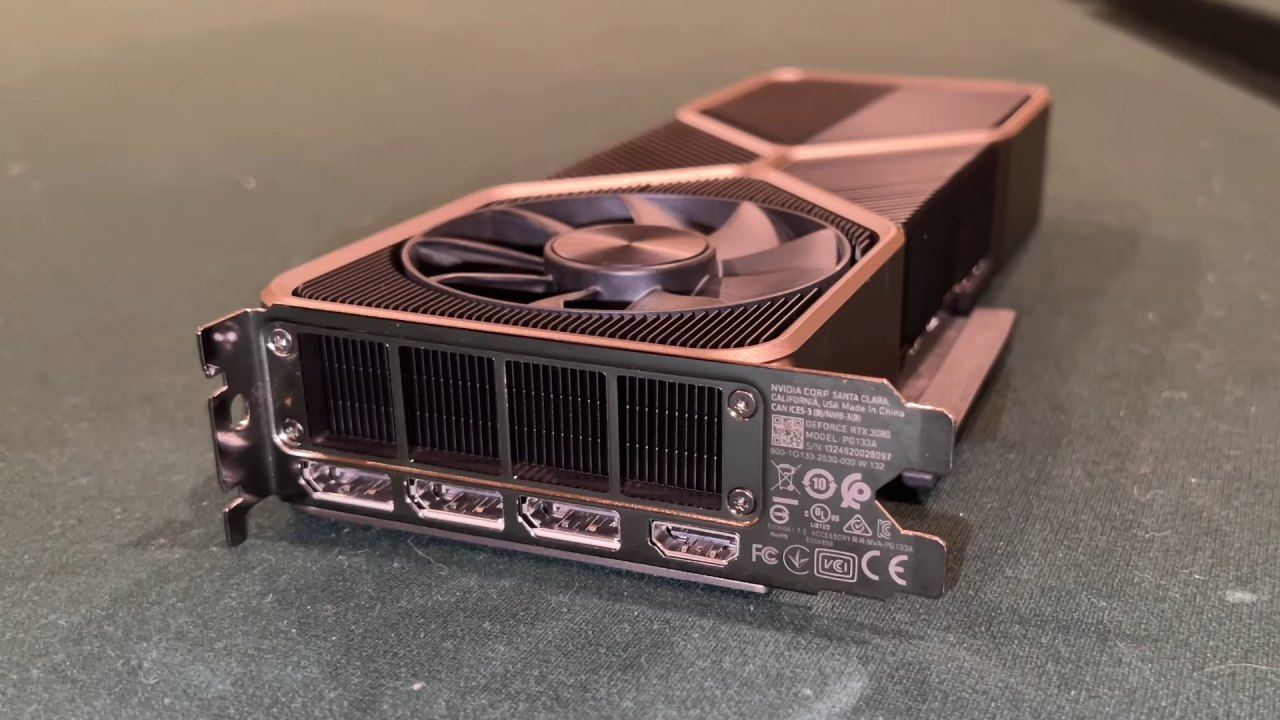
The first test runs with two RTX 5090 GPUs. One GPU renders the scene originally traced, while the other GPU performs the DLSS5 processing pass.
The development team says the dual-GPU arrangement is still in the early stages. Internal builds already run the process on one GPU, and optimization work is still ongoing. When it comes out in the fall of 2026, the idea is to put the technology on a single consumer GPU.
For now, memory needs are still low enough for consumer devices. The example requires two GPUs, but the goal is to run the feature in a single-GPU setup in real time.
Starfield Demo Improves Lighting That Isn't Ray-Traced
Starfield is another example that doesn't employ ray tracing for its illumination. The initial presentation often appears flat because the lighting model lacks advanced global illumination features.
DLSS5 improves the base image by rebuilding the details in the lighting. Character materials have better reflections and brighter highlights. Adding subsurface scattering and improved shadowing around the eyes and teeth improves facial rendering.
The outcome looks like what you would expect from path-traced rendering, even though the original game doesn't use that technique. The approach still relies on the basic render, though, and can have problems with screen-space techniques like reflections or ambient occlusion.
An example of Unreal Engine with Oblivion Remastered
Another example is Oblivion Remastered, which was made with Unreal Engine 5. Lumen is used for global illumination in the original edition. When you turn on DLSS5, lighting detail improves significantly. Shadows look crisper and more focused around buildings.
Brick-and-stone buildings provide better occlusion and contact shadows. Windows that used to look flat now have more realistic reflections and transparency. Character models also indicate that they respond better to light. Even simpler models are better off with more accurate shadowing and material behavior.
Improvements to the lighting in Assassin's Creed: Shadows
Another example of how environmental illumination can change is in Assassin's Creed: Shadows. The base game already has rich settings, but shadow mapping and foliage lighting demonstrate their limits.
DLSS5 makes shadows more accurate and adds more depth to lighting on flora and terrain. Fog fits better with the scene, and the way light interacts with leaves and surfaces looks more complex.
In some lighting situations, the resulting image seems like a real forest landscape. The model recreates lighting effects that look like ray-traced shadows, even if the original render doesn't have them.
NVIDIA Streamline for Integration
DLSS5 works with NVIDIA Streamline, which is the framework for DLSS technology. Developers can adjust settings to improve the lighting model in their games.
The modding community can also test the feature, as the system operates as a post-process layer on top of existing renders. If the right data inputs are available, tools like Optiscaler can enable functionality in games that don't support it. The system needs the game engine to give it base color information and motion vectors. The model can rebuild the illumination as long as those inputs are there.
Works with More than Just Modern AAA games
The approach can be used with more than just big AAA games. Engineers who worked on the project say that the system can work with simpler games as long as the necessary rendering inputs are available.
For instance, the DLSS5 model may add lighting effects to Minecraft that are similar to those in Minecraft RTX. That capacity suggests the technology could work with many different games, regardless of their graphics complexity.
Questions About the Artist's Intent
The method starts a conversation about what the developer wanted. The last image comes from a neural model that interprets the base render instead of the original engine illumination.
Some developers like the idea because it makes the graphics look more like what they want. Some people wonder if the AI's interpretation fits with their artistic aspirations.
There will also be arguments about how the technology works with stylized games. Some games may not benefit from AI-driven realism if they have a specific visual style, and developers may choose not to make the feature available in those circumstances.
Scaling Across Different GPUs and Resolutions
The demonstrations right now are mostly about RTX 5090 hardware, but NVIDIA thinks the technique will work on other types of GPUs as well. Users will still be able to set different combinations of DLSS features in the graphics settings, because DLSS5 works independently of frame generation and super resolution.
Neural Rendering: The Next Step in Graphics
The experiments indicate a transition from conventional graphics pipelines to neural rendering. The system doesn't fully simulate lighting with programmed methods. Instead, it uses a machine learning model trained on how lighting works to understand the generated images.
The game engine provides the foundation for graphics and movement data. Then, the AI model infers how lights interact with each other based on what it has learnt about how real-world materials and light interact.
During demonstrations, the scenes play out in real time instead of as pre-recorded videos. The AI lighting layer updates in real time, while gameplay input controls the camera and surroundings.
Final Thoughts
The technology is still under development. Demonstrations reveal significant changes in how things look, though optimization work is still underway. Before the feature is released, one of the main goals is to ensure it runs on a single GPU with consistent performance.
The mechanism still works in real time across several games at this point. Existing titles get new lighting without changing their original assets or geometry. More testing and tweaking will show how developers add the feature to their games and how hardware needs change before the release.
Also, check our other hardware articles:
- AMD Ryzen 9 9950X3D Review: Setting The Standard For 2025 Gaming CPU
- Amazon Luna 2025 Review: Is Prime Gaming's Cloud Service Your Go-To For Casual Fun?
- AMD RX 9070 XT Review: AMD's RDNA 4 Champion for 1440p Gaming
- GeForce Now Ultimate: Ditching Your Gaming PC For Cloud RTX 4080 Power?
- NVIDIA GeForce RTX 5080 Review (2025): Still A 4K Gaming Powerhouse?
- Intel Core Ultra 9 285K Review And Performance Breakdown (2025)
- AMD Ryzen 7 9800X3D Review: 3D V-Cache Goes God Mode with Stunning Gaming Performance
- Intel Core Ultra 9 285K vs AMD Ryzen 7 9800X3D: In-Depth Gaming Performance and Benchmark Comparison
- NVIDIA GeForce RTX 5080 Super Performance In Cyberpunk 2077: Path Tracing & DLSS 4.0 Tested
- AMD Radeon RX 9070 XT In Cyberpunk 2077: Ray Tracing & FSR 4.0 Tested
- Intel Arc B580 Review: The $250 GPU Revolutionizing 1440p Gaming
- Intel Arc B570 Vs. B580: Value, Specs, And Real-World Gaming Performance
- RTX 5090 Laptop Vs. M4 Max MacBook Pro: Ultimate Raw Performance Vs. Battery Endurance
- Intel Arc b580 Vs. RTX 4060: Game Performance And Value Analysis
- RTX5090 Hell Is Us Demo 4K Ultra Benchmark: DLSS Vs. Native Performance Guide
- NVIDIA RTX 5070 Review: Mid-Range Muscle or Marketing Hype?
- Nintendo Switch 2 Review: Handheld Performance, Features & Value Breakdown
- RTX 5070 Ti Review: Performance, Thermals & Power Efficiency Tested
- Samsung Odyssey OLED G81SF Review 2025: Ultimate 32-Inch QD-OLED Gaming Monitor
- AMD RX 9070 Performance Review: Thermals, Clocks, and Real-World FPS
- AMD Ryzen 5 7600 Review: Best Budget Gaming CPU of 2025?
- AMD Radeon RX 7800 XT Review: RDNA 3 Power For Midrange Gaming
- Asus ROG RTX 5090 Astral OC Vs. Founders Edition: The 4K Gaming Benchmark
Editor, NoobFeed
Gaming Hardware Updates
No Data.