
NVIDIA Vera Rubin Could Make SSDs More Expensive as TLC NAND Supply Tightens
NVIDIA’s Vera Rubin AI infrastructure is creating unprecedented TLC NAND demand that could eventually raise consumer SSD prices.
Hardware by Masaru Hoshino on Aug 16, 2026
NVIDIA's AI hardware expansion is creating consequences far beyond GPUs, HBM, and networking equipment. The company's aggressive Vera Rubin production ramp is now putting additional pressure on the TLC NAND supply chain, with the latest market data showing the spot price of 512Gb TLC NAND climbing to $21 after slipping below that level during the June downturn.
For PC builders, this matters because the same underlying NAND ecosystem feeds the enterprise SSDs used by AI data centers and the consumer NVMe drives installed in gaming PCs, workstations, and everyday desktops. NVIDIA isn't directly buying the NAND inside every consumer SSD. Still, the sheer scale of AI infrastructure is changing how much flash manufacturers need to allocate to high-density enterprise workloads.
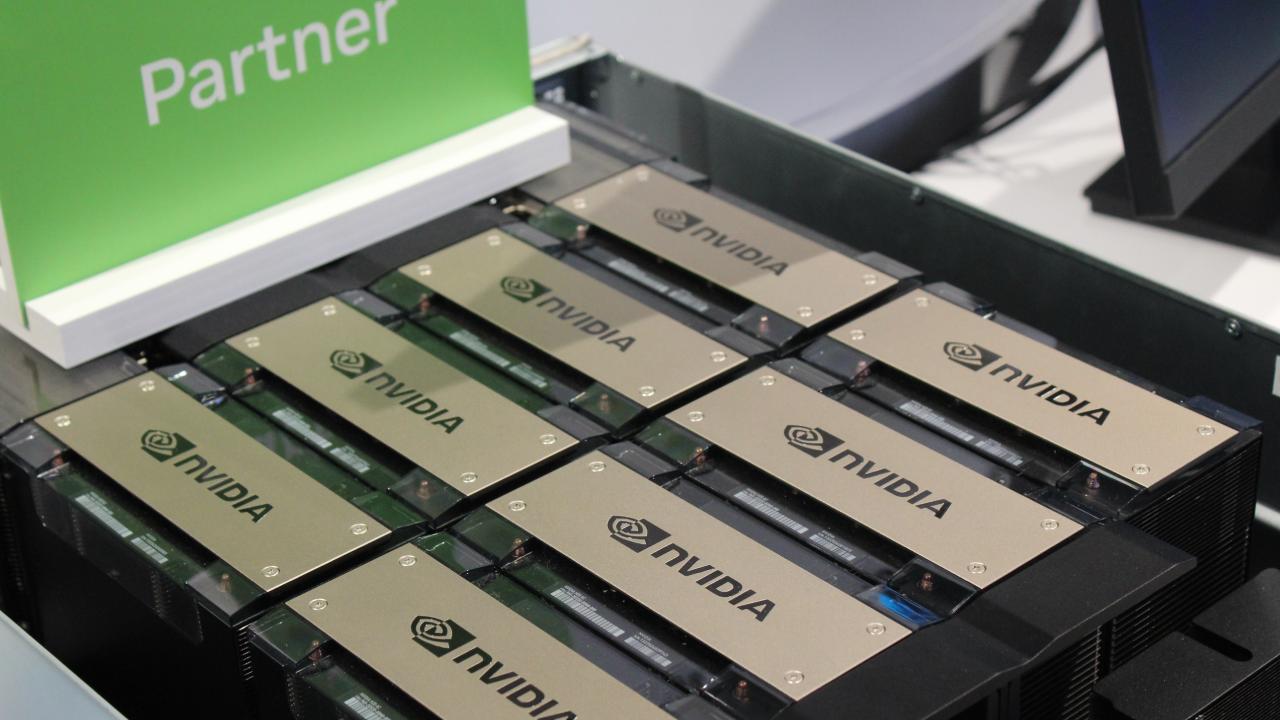
The key development behind this shift is NVIDIA's new Context Memory eXtension (CMX) architecture. Designed for the Vera Rubin generation, CMX adds another layer to the memory hierarchy, placing large amounts of flash storage between ultra-fast HBM and conventional networked storage. NVIDIA describes the technology as an AI-native context tier optimized for the temporary, latency-sensitive KV cache generated by modern inference workloads.
What is Context Memory eXtension (CMX)?
The problem NVIDIA is trying to solve comes from the rapidly increasing amount of context generated during AI inference. Large language models maintain a Key-Value, or KV, cache that contains the information needed to continue processing long prompts, conversations, and agentic workloads.
As context windows grow, keeping everything inside expensive GPU HBM becomes increasingly difficult. Rubin therefore expands the memory hierarchy rather than treating HBM as the sole high-performance location for this data. CMX provides a dedicated, shared storage tier that can keep frequently reused inference context close to the GPU infrastructure without consuming all of the system's HBM capacity.
NVIDIA says its CMX architecture is designed to provide a high-bandwidth path for the KV cache and can deliver up to five times more tokens per second and five times better power efficiency than traditional storage approaches.
The storage density involved is extraordinary by consumer PC standards. A single 2U CMX server can contain roughly 600 TB of TLC flash, with four BlueField-4 DPUs managing the context-memory resources and connecting the storage infrastructure through NVIDIA's Spectrum-X Ethernet ecosystem. At the pod level, the architecture can scale to approximately 9,600 TB (9.6 PB) of flash capacity.
That number changes the way the NAND market needs to be viewed. A 600 TB storage server is not merely another enterprise SSD deployment. Multiplying that requirement across large AI factories, relatively small changes in AI infrastructure deployment can translate into enormous additional NAND consumption.
TLC NAND Supply Chain is Feeling the Pressure
The latest $21 spot price for a 512Gb TLC NAND component matters because spot pricing provides insight into immediate supply-and-demand conditions. The increase follows a drop below that level during the June slump, suggesting the market has regained upward momentum.
However, the headline number should not be interpreted as meaning a consumer 2TB SSD will suddenly cost $21 more. NAND pricing works through several stages, and an SSD's eventual retail price depends on controller costs, manufacturing, packaging, drive capacity, contracts, inventories, and retailer margins.
The more important signal is the direction of supply. NVIDIA's CMX requirements arrive as hyperscalers and other data-center operators expand their purchases of high-density enterprise SSDs. Enterprise customers generally operate through large-volume procurement agreements, meaning NAND manufacturers can commit substantial portions of production to predictable, high-value customers before that flash ever reaches the open market.
That can leave considerably less flexibility in the spot market. When supply tightens, spot prices can react quickly even if consumers have not yet seen an equivalent increase on store shelves.
AI Is Turning NAND Into Infrastructure
This is a significant change from the early stages of the AI boom. Initially, the primary concern centered on the enormous bandwidth requirements of HBM, DRAM, and accelerators. NVIDIA's Rubin architecture shows the memory hierarchy expanding outward: AI systems increasingly need not only faster memory but far more capacity at multiple levels.
NVIDIA itself has positioned CMX as a new storage tier specifically designed to extend GPU context capacity across an AI pod. The company's Vera Rubin architecture combines Rubin GPUs with BlueField-4 processors and Spectrum-X networking to create an infrastructure where storage becomes an active component of inference performance rather than simply a place to store persistent data.
That distinction is crucial. Traditional storage demand is largely driven by applications, operating systems, databases, and archived data. AI inference introduces a different kind of demand: enormous quantities of temporary information that must remain accessible at high speed while models are working.
The result is a new category of flash storage that sits between conventional enterprise storage and accelerator memory. As AI deployments scale, NAND manufacturers have another major customer segment competing for the same underlying flash capacity.
.jpg)
What This Means for Consumer NVMe SSDs
For PC builders, the immediate takeaway is that you shouldn't expect an overnight storage-price catastrophe. Consumer SSDs are insulated, to some extent, from enterprise NAND demand because manufacturers manage different product allocations and maintain inventory across multiple channels.
The longer-term risk is more straightforward. If enterprise AI deployments continue absorbing huge volumes of TLC NAND while hyperscalers simultaneously increase conventional eSSD purchases, manufacturers gain stronger pricing power. That can eventually work its way through the NAND supply chain and into consumer SSD costs.
This is particularly relevant for high-capacity drives. Higher capacities, such as 2TB or 4TB Gen5 NVMe SSDs, require significantly more NAND than standard 1TB models; therefore, continued increases in flash costs are more clearly reflected in higher capacities. At the same time, consumer SSD pricing is quite competitive, so manufacturers and retailers may absorb some of the rise at first rather than passing the full cost directly to buyers.
Another major distinction is between spot and contract prices. Much of the NAND destined for large enterprise deployments can be secured through longer-term agreements. At the same time, spot-market movements reflect the balance of immediately available supply. Consequently, the $21 figure is better viewed as an early warning signal than a direct forecast for retail SSD pricing.
Editor, NoobFeed
Gaming Hardware Updates
No Data.