
Rising RAM Prices and How They Impact PC Gaming, VRAM Use, and Scalability
Rising RAM costs continue shaping hardware capabilities, software demands, and the overall direction of modern PC gaming technology.
Hardware by Tanvir Kabbo on Jan 22, 2026
There are continuing questions surrounding RAM prices, foundry resource limitations, and the impacts these pressures may have on technologies shown at CES, including Nvidia ACE and DLSS 4.5, as well as broader concerns about game development costs, performance scalability, and hardware accessibility.
Rising RAM Prices and New Technologies
All right, Alex, that's enough reflecting on CS. We want to reflect on something much more important than CS, which is RAM prices. RAM prices are motivating a lot of this discussion about like, can Valve launch the Steam Machine for a price that's not going to put us out of business?
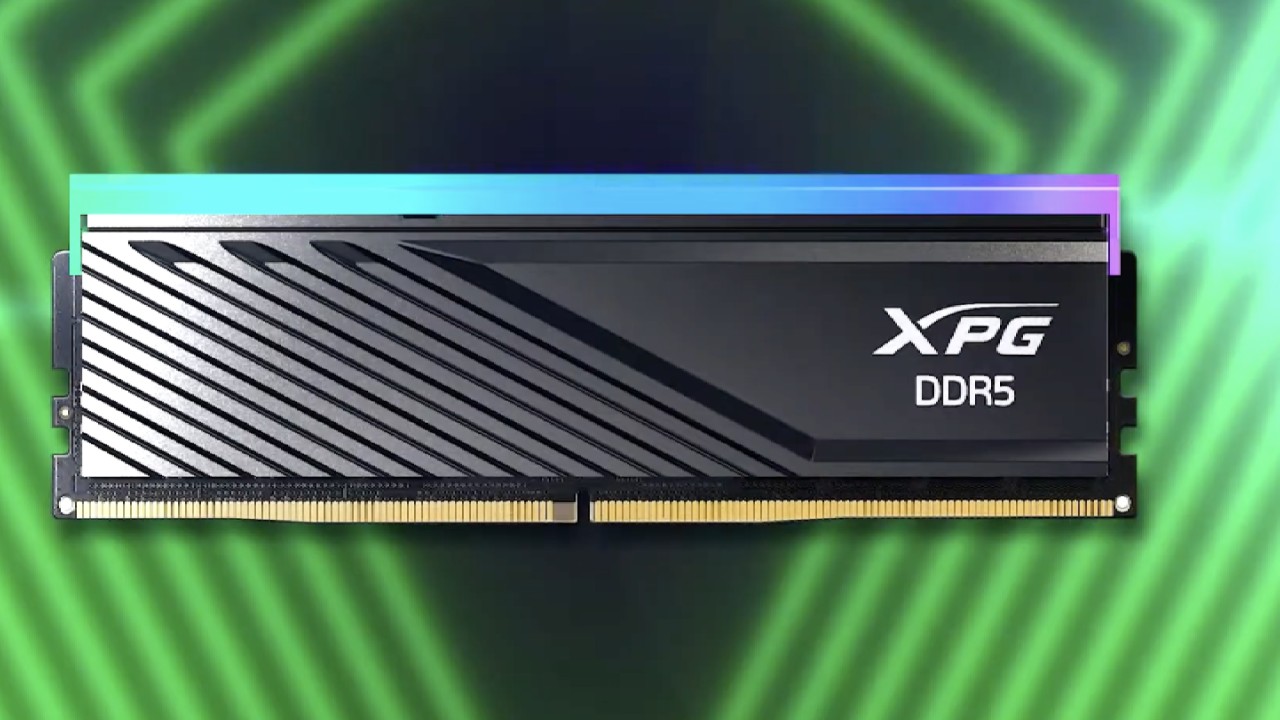
Can these products actually hit the market with a price that consumers are willing and able to bear? And that's exactly what Pesky has asked essentially very interesting name. Hi DF team with the current dilemma about foundry resources which affects all sorts of RAM right now. How does this bode for new tech that was shown at CES for example Nvidia ACE and DLSS 4.5 with increased VRAM usage?
Well, all right to say the least. It does as soon as in software VRAM requirements, we wouldn't say actually VRAM requirements, but as soon as there are more capabilities to turn up how much VRAM is being utilized, it does seem like it is standing in the way of the fact that right now RAM prices are going to be increasing across the board for the industry.
We have yet to see how that'll be affecting GPUs directly, but that will probably be happening in the future. But so that is the truth of it and Pesky here points it out but at the same time things such as DLSS 4.5 and Nvidia ACE which is basically shipping in almost no products at the moment are very completely optional technologies.
And one of the beauties of at least PC gaming is that you can turn things on and off depending upon your hardware level. So we really don't think DLSS 4.5's increased VRAM usage if that is a thing. We have to measure that ourselves. It would be getting in the way of performance in games.
But the great thing is you could just turn it off or use a different DLSS preset if that is a thing. And just don't play a game with Ace right now. Like that's one of the great things about PC is we actually like it when they allow you to turn up the graphics even if it only affects a small subset of users because that's kind of what PC's always allowed you to do and you get a glimpse at the future that way. So we're completely fine with this. We don't see it as a big problem.
We think to us there's a certain question about exactly how RAM heavy are these new technologies because when you look at something like DLSS 4.5 it is meaningfully more RAM hungry but does it matter a whole lot in most titles we'd say probably not right Alex?
It really depends on what your depends yeah but just because if you're like if you're on like a 12GB GPU and you're already like in like an Indiana Jones with like path tracing on like maybe it could push you over the edge but that's also like a smaller scenario. It's not a high percentage scenario. So we still think this requires more testing, but we also just think you can just turn a different setting on.
Alex has raised a very good objection. Alex is completely correct here, but we'd also say like with regards to like the AI stuff the models are getting better all the time. They're getting slimmer all the time. They're fitting into reduced memory footprints all the time.
And indeed, if you're trying to ship a game with like, let's say, some autonomous AI nonsense as a fundamental feature, you're going to be fitting that into 8GB of VRAM. We're just going to say like to target a reasonable audience. Right now 8GB cards are everywhere.
Computers with relatively low memory capacities are everywhere. People will try to accommodate you for a long time to come. That's probably the expectation here.
.jpg)
Scalability, Costs, and Performance Concerns
Another question on similar grounds from Kate. With everinccreasing RAM prices, which is shifting to price increases for almost all major PC components alongside games being more expensive and taking years to develop, layoffs, and the cost of living crisis.
Are we reaching an inflection point where the current focus of pushing maximum fidelity becomes no longer sustainable? Don't get us wrong, we think the latest gaming technologies like rateracing are incredible, but we can't help but think if we should f shift the focus somewhat more towards performance and scalability on more inexpensive hardware.
We take a little bit of offense, a little bit of an objection to the idea that ray tracing is one of the latest gaming technologies. We think it's actually a pretty aged gaming technology at this point, at least in its hardware accelerated form. But what do we make of that question, Alex? Should we focus less on fidelity and more on frame rate and lower budget hardware?
Alex responds that the amount of games produced each year that are only fidelity chasers is actually a pretty small portion of all games produced. So we don't think it's actually like an industry sickness or something like that and that it's affecting everything. A lot of our favorite games don't have very good graphics at all.
And even new releases don't have the best graphics at all. Alex also says that ray tracing for example is technically not one of the biggest sinks in terms of what is making games so expensive. Rather it is asset production and iteration over assets. You have to employ so many artists working really hard to make all these very beautiful high density geometry and textures and scenarios in games and that is a very expensive thing to do.
That's where we really think if that is one of the biggest things making games so much more expensive then it's fine if games don't have such high quality textures or as diverse worlds and if games are actually a bit smaller in that regard. We're pretty fine with that. If it does become such a big deal for so many games ray tracing is not the problem necessarily.
We've also seen recently that a lot of games beyond some UE5 really problematic titles scale surprisingly low. Battlefield 6, Arc Raiders, Kingdom Come: Deliverance 2 this year. We're seeing games stripped back to run on Switch 2 and handheld PCs with a degree of grace.
So we think we're seeing greater scalability across hardware than we've seen in the past for a long time. There was a point where you couldn't have a PC that was 3 years old and run a game. It would literally not run or would run so poorly you wouldn't consider it playable.
Nowadays, you can have an RTX 2060 base model and still play a game at 60fps. That's something that wasn't there in the past and that's a very old GPU now. So we'd say scalability is higher than ever before and maybe that is also expensive to ensure for titles.
We think this might be a little controversial, but we take a little bit of an objection to the framing of the question because like Alex said, we have extraordinary scalability in software now. Even titles like Doom with RTGI scale all the way down to a Steam Deck at a playable 30fps.
Maybe there is a conflict in needing a certain baseline capability to run ray tracing, and that extends to cards realistically produced past 2020 for AMD or back to 2018 for Nvidia. That's a long span and that’s discounting software ray tracing, which can run on a 5700 or GTX 1080 or 1080Ti.
So we're not sure we agree with the question. The ray tracing part doesn't fit into it. The aspect of massive asset production does matter. It's thorny. We don't think ray tracing is the problem. It might be emblematic of a certain approach, but it could also be part of the solution for some titles.
Also, check our other NVIDIA articles below:
- NVIDIA GeForce RTX 5080 Review (2025): Still A 4K Gaming Powerhouse?
- NVIDIA RTX 5070 Review: Mid-Range Muscle or Marketing Hype?
- RTX 5070 Ti Review: Performance, Thermals & Power Efficiency Tested
- ASUS GeForce RTX 5090 LC Liquid Cooled GPU Review: Unmatched Silence & Speed
- MSI GeForce RTX 5090 32GB SUPRIM SOC Review: Power Efficiency, Cooling, and Gaming Performance
- INNO3D RTX 5060 Ti 16 GB X2 Review: Gaming Benchmarks, Temps, and Power Efficiency
- HP Omen 45L Review: RTX 5090 Performance, Thermals, and Value Analysis
- ASUS TUF Gaming GeForce RTX 5060 Ti Review: DLSS 4, Power Efficiency, and Gaming
- ASUS Prime RTX 5060 Ti OC 16GB Review: DLSS 4, Ray Tracing, & Thermals Tested
- NVIDIA GeForce RTX 5060 Review: Specs, Gaming, and Cost per Frame
- MSI GeForce RTX 5090 GAMING TRIO OC Review: A Monster Power GPU
Senior Editor, NoobFeed
Gaming Hardware Updates
No Data.