
Ryzen 9700X and Core Ultra 7265K Tested: Are 8 Cores Still Enough for Creative Work?
Comparing eight-core CPUs like Ryzen9700X with higher-core options shows real-world performance gaps in creative workloads.
Hardware by Mitsuba Miyu on Dec 20, 2025
As time goes on, it's more and more important to ask how many CPU cores artists really need in 2025. The 8-core standard for PC CPUs, which used to be seen as high-performance, is no longer in use.
It used to be common to see processors with eight or fewer cores. Now, though, the industry has switched to hybrid designs with more cores and new performance standards.
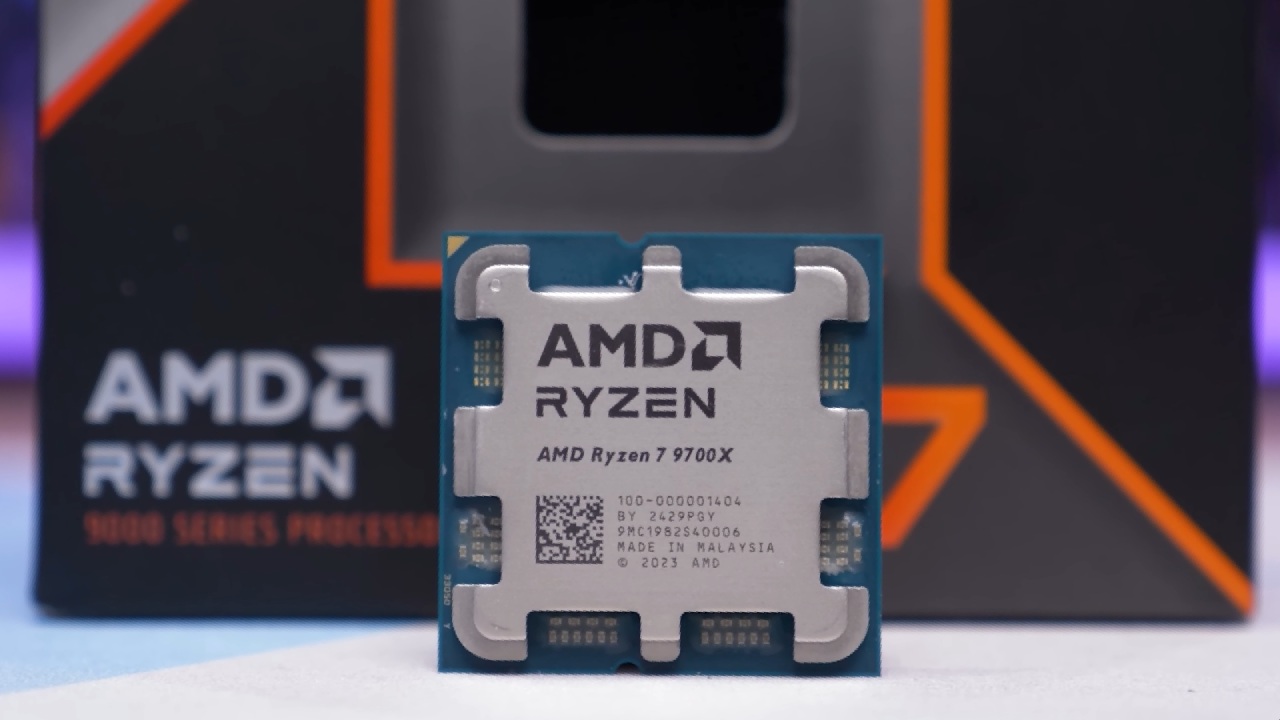
The Ryzen 9700X is an example of an eight-core CPU that AMD markets as a mid-range choice. The AM5 platform has a great way to add more features, but the real question is whether eight cores are still enough for current creative work.
Test Bench Configuration
Instead of gaming-only standards, we looked at how much work the creators had to do. This changed how we did the tests. The Asus X870 Pro Creator Wi-Fi motherboard, an RTX 4090 GPU, and 64GB of DDR5 memory running at 5600 MT/s were used to test the AMD Ryzen 9000-series CPUs.
A 360mm AIO handled cooling, and there was a separate SSD for the operating system, as well as a Samsung 980 Pro project drive for storage.
The Intel Core Ultra platform test used the Gigabyte Z890 AERO motherboard with 48GB of DDR5 running at 8000MT/s. It had the same RTX4090 GPU, cooling system, and SSD setup.
Even though the RAM speeds differ, both setups were tested with memory speeds that are legally supported. This is how things are really used, and it shows how different built-in memory drivers can be, with Intel currently in the lead.
Specifications and Architectural Differences
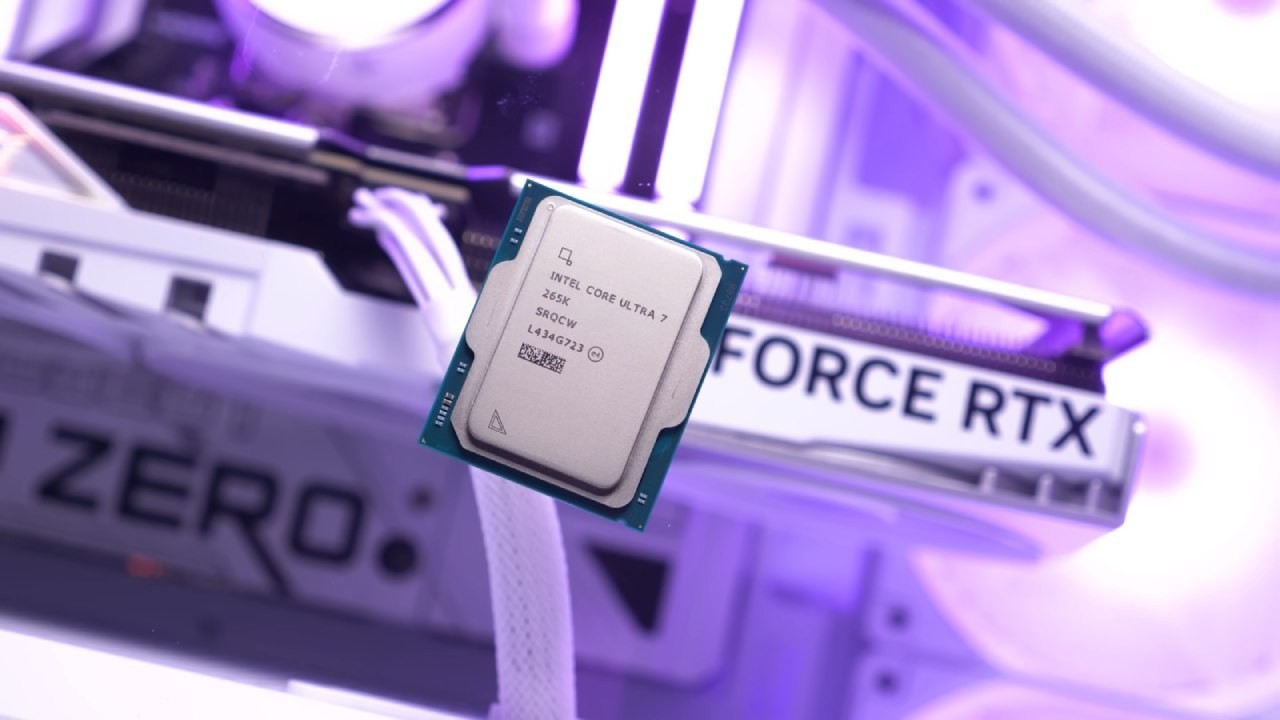
The Ryzen 9700X has eight cores with boost clocks up to 5.5GHz, which is the same as the Core Ultra 7 265K's peak performance. Base clocks have some small differences, but the bigger difference is in design.
Intel uses a mix of speed and efficiency cores in its design. Some people call these "fake cores," but a better name would be specialized cores that are optimized for different types of work.
While Intel uses a 3nm TSMC process, AMD uses a 4nm process. This lets Intel fit more transistors into a smaller space, making things more efficient and boosting speed. In theory, these differences mean that core count isn't a good way to measure speed anymore.
Synthetic Benchmarks Overview
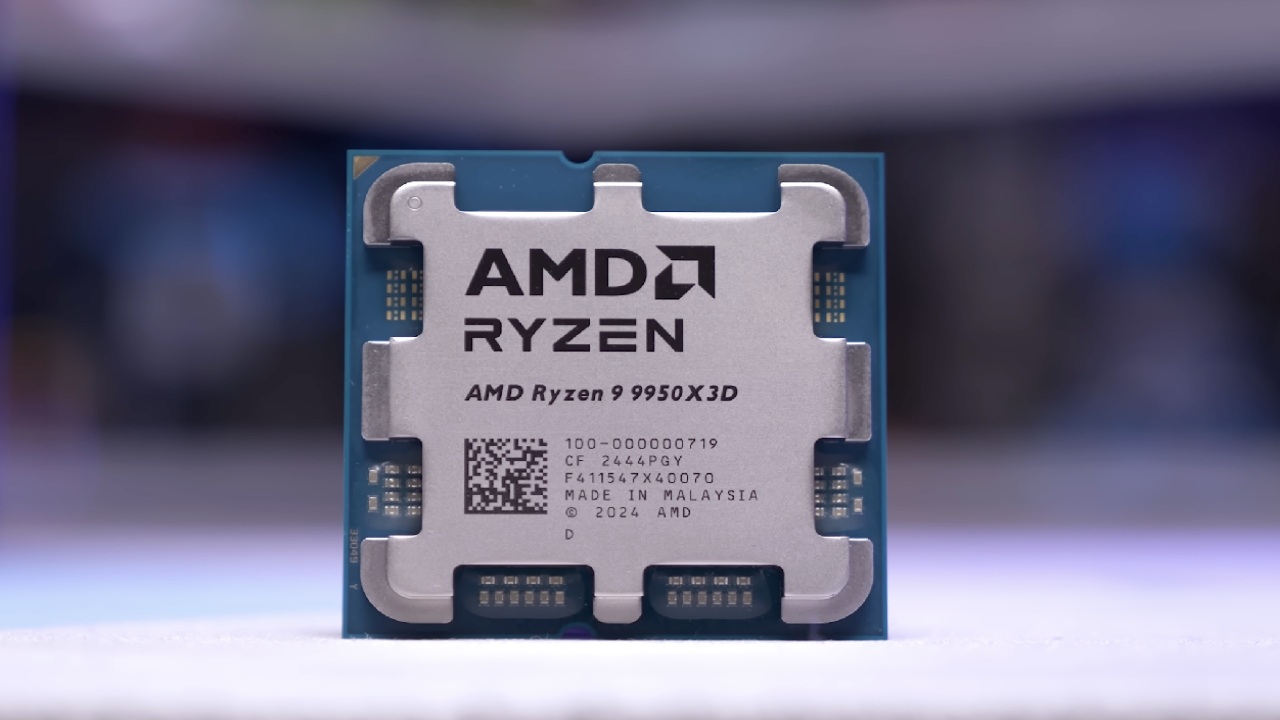
The Ryzen 9700X performed well in single-core tests when CinebenchR24 was used as a benchmark, but it fell behind significantly in multi-core tests. The 9800X3D had about the same single-core speed as the 7800X3D, but it was better at multi-core tasks.
Adding twice as many cores with the Ryzen 9 9500X almost doubled the multi-core speed, a strong example of strong scaling.
The Core Ultra7265K had faster single-core scores and multi-core performance that was about the same as, or better than, the 9950X. Geekbench 6 showed a similar pattern, with Intel performing very well in multi-core work and remaining competitive in single-core performance.
Creative Application Performance
The Ryzen 9700X held its own in Adobe Photoshop, working well against more expensive CPUs. But this was one of the only times that the eight-core chip looked good.
In Lightroom Classic, the gap got much larger. The 9700X fell way behind Intel's Core Ultra7265K and AMD's higher-core CPUs.
Tests with Premiere Pro showed that bigger core counts and better cache configurations are useful. The 9800X3D performed much better in interframe workloads, and the 9950X had good overall performance.
Intel's Core Ultra 7 265K was the clear winner in this area. It did better than even much more expensive CPUs in several Premiere Pro tests.
After Effects made the trend even stronger. The 9950X had big wins over the 9700X, but the Core Ultra7265K always had better scores. This shows how well Intel's architecture works for complex creative tasks.
3D Rendering and DaVinci Resolve
GPU acceleration in DaVinci Resolve helped close some performance gaps, but the number of cores still made a difference. Doubling the cores made a big difference, especially in RAW and interframe work.
Overall, Intel stayed ahead, but some long-GOP tasks didn't always give the same results, probably because of how the software was set up.
In Blender and V-Ray, CPU-based 3D rendering clearly worked better with more cores. The Ryzen 9950X worked more than twice as well as the 9700X. Intel's Core Ultra 7265K was still competitive, but in these jobs, it wasn't as good as AMD's best CPU.
Power Draw and Efficiency
Power usage adds another level to the conversation. The Ryzen 9700X was very power-efficient, using only about 88W even under full load, making it easy to cool. The 9800X3D and 9950X used a lot more power, and the Core Ultra7265K used about 210W at its peak.
But only looking at high power draw can give you the wrong idea. Most producers spend less time rendering at full load and more time working. Intel's platform shows great efficiency with idle and light workloads. This might even out the overall effect of higher peak usage over time.
Pricing and Value Perspective
The Ryzen9700X has a hard time explaining why it costs over $300. In most artistic tasks, Intel's Core Ultra 7 265K usually costs less and works better than the competition. On the Intel platform, motherboards and memory options are usually cheaper, which adds to the total value.
AMD still makes the best high-end CPUs, which work really well and are worth the money. But in the middle range, especially around $300, eight cores aren't enough to compete on price-to-performance.
Final Thoughts
These days, eight-core CPUs aren't always enough for artistic work. While they can still do a good job with lighter work and some applications, the general trend is moving toward more cores, better memory support, and more efficient designs. The Ryzen 9700X is efficient and will last a long time, but it's not a good value because of its high price.
For creators who care about speed per dollar, the Intel Core Ultra7265K currently offers a better balance. These days, speed isn't just about how many cores there are, and eight cores at a high price just don't offer enough to stand out.
Also, check our other AMD articles below:
- AMD Ryzen 9 9950X3D Review: Setting The Standard For 2025 Gaming CPU
- AMD Ryzen 7 9800X3D Review: 3D V-Cache Goes God Mode with Stunning Gaming Performance
- AMD RX 9070 Performance Review: Thermals, Clocks, and Real-World FPS
- AMD Ryzen 5 7600 Review: Best Budget Gaming CPU of 2025?
- AMD Radeon RX 7800 XT Review: RDNA 3 Power For Midrange Gaming
- Sapphire NITRO+ AMD Radeon RX 9070 XT Review: The Ultimate 4K Gaming GPU
- AMD Ryzen 7 7800X3D: Delivers Gaming Performance Far Beyond Expectations
- AMD Ryzen 9 7900X Review: Powering the AM5 Era with DDR5 & PCIe 5.0
- Intel Core i9‑14900K vs. AMD Ryzen 7 7800X3D: Power Profiles & Gaming Benchmarks
Editor, NoobFeed
Gaming Hardware Updates
No Data.