
Steam Pushes Game Optimization With New Performance Tools and FPS Estimator
User reviews and hardware data create accountability for developers and improve purchasing decisions across the platform.
Hardware by Shinji Okazaki on May 05, 2026
Some people in the PC gaming industry don't like how hardware prices are rising and how games are performing. Hardware is still expensive and hard to upgrade, but developers are increasingly focused on making systems run better and faster across a wider range of platforms.
This change makes it more important to find people who are good enough with the hardware they have now, rather than waiting for it to keep getting better. On the one hand, there is a hardware deficit, where everything seems unaffordable and challenging.
However, the industry is realizing that players are not updating as often, that games need to run well on existing systems, and that there is an increased need to motivate optimization and improve performance criteria.
We could applaud developers who would take technology to the next level without sacrificing performance. In the recent past, several games have not been doing so well in this regard. Others do not even manage to generate 1080p60fps on a mainstream machine, whereas some titles only recommend frame generation to reach 60fps.
Game engines have also introduced challenges, with some releases showing poor optimization for modern hardware. In other situations, the problem of players has influenced their reception, leading to mixed comments and a decrease in engagement.
Why PC Optimization is a Challenge
PC gaming differs from console gaming due to the diversity of hardware. Not all players use the same configuration, so developers cannot predict how the systems will be configured. Though this flexibility will enable customization and improved value, it will pose challenges to uniform performance.
Valve is paying more attention to performance awareness and accountability. A single step involves an FPS monitoring tool that isolates actual frames and generated frames. This enables players to see the real performance and identify latency caused by frame generation.
The Steam Hardware Survey is like the first one in that it provides creators with information on how to set up their systems. Most users have mid-range gear, such as GPUs with 8GB VRAM, 16GB of system memory, and CPUs with 6 cores. This knowledge helps developers focus on performance levels that are achievable.
Feedback, Refund, and Player Feedback
Steam has extensive user reviews that help players assess whether a game will run well on their system. These reviews also incorporate actual user experiences rather than relying solely on critic scores, unlike some platforms.
The refund program also helps the consumers. Almost any reason will qualify a player to request a refund for the money spent on the game, provided they have played it for less than 2 hours.
Such a policy establishes a precedent and requires developers to work towards providing stable performance at launch. Users can also add hardware specifications to their reviews. This helps others learn how a game performs on similar systems, whether high-end or budget.
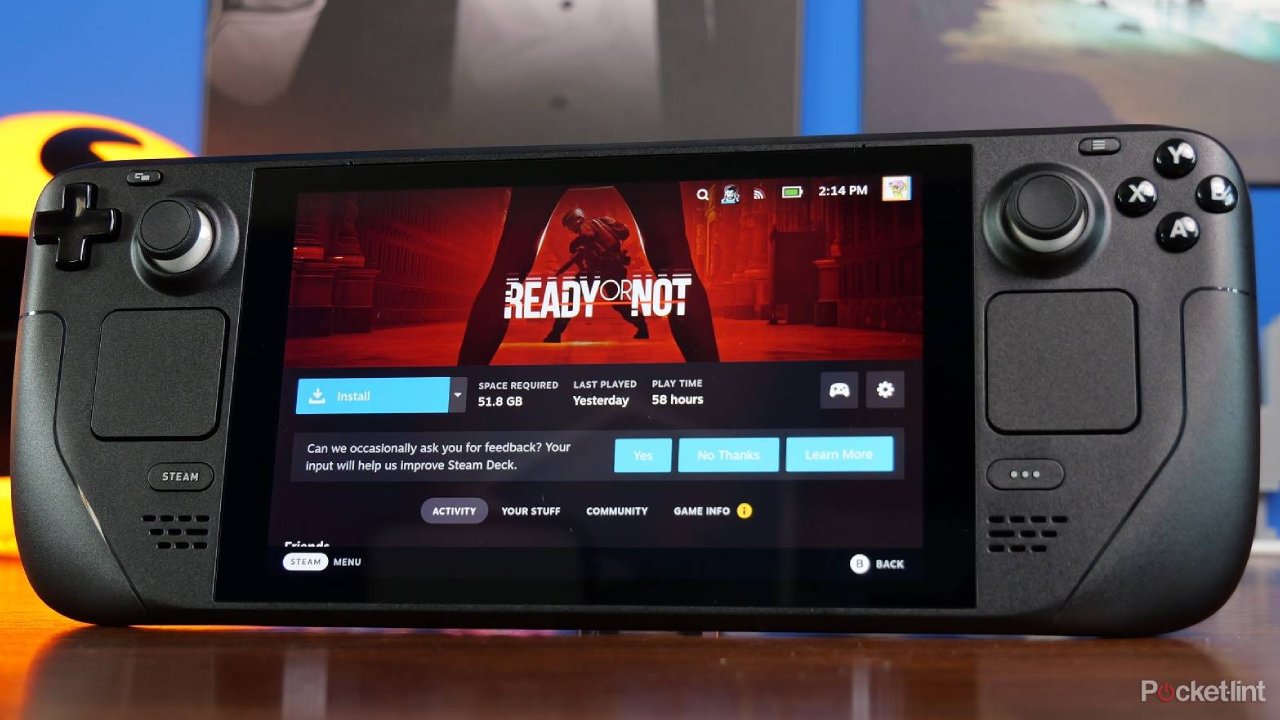
Steam Deck Compatibility and Performance Labels
Valve has already introduced performance criteria for the Steam Deck compatibility system. Games are classified by how well they execute, with clear labels for verified, playable, or unsupported.
These labels provide information such as controller support, text readability, and performance. It is a system that provides the player with a clear expectation for a game's release and immediately indicates optimization issues.
The Upcoming Performance Estimator
Valve is working on a performance estimator that predicts a game's performance on a specific PC. The system relies on aggregated FPS data from other users with similar hardware setups.
Using this feature, players can determine expected performance and then purchase a game. This makes developers accountable, as performance becomes quantifiable and visible to everyone.
The system is probably based on average FPS data obtained during gameplay. It can exclude extremes and not count menus or non-intensive scenes to give a better representation. Although it cannot follow in-game settings, even large data samples can yield valid averages.
Advantages and Possible Disadvantages
This system enhances transparency and helps players make informed decisions. It also puts pressure on the developers to optimize games to work with commonly used hardware rather than using high-end systems.
Nevertheless, it has a potential downside. Developers may also be overly concerned with optimizing for current hardware, thereby restraining innovation and slowing the adoption of new technologies. When performance expectations are still pegged to older systems, there may be a limitation on future progress in this respect.
Other Features and Ecosystem Enhancements
Valve is also launching an in-built price tracker that will enable users to track game prices directly on the platform. This reduces reliance on external tools and helps players make better purchasing decisions.
Valve's main goal is to improve user experience and reduce returns, and these traits can be understood in that context. People are less likely to buy something that doesn't live up to their hopes if they are given more information at the beginning.
Valve is raising the bar for PC gaming speed by making things more open and accountable.
Tools like FPS tracking, hardware-based reviews, compatibility labels, and performance estimates help players get a better idea of how games will run on their systems.
Such a strategy will improve optimization and help users avoid bad experiences. It is an indicator of a balance between platform incentives and player satisfaction to make the PC gaming environment more stable and predictable.
Editor, NoobFeed
Gaming Hardware Updates
No Data.