
NVIDIA RTX Spark Laptops Bring Grace CPU and Blackwell Graphics to Windows
NVIDIA RTX Spark pairs an NVIDIA-designed Grace CPU with Blackwell graphics, marking Nvidia's first laptop processor platform.
Hardware by Shinji Okazaki on Aug 04, 2026
NVIDIA enters the laptop CPU business with a built-in processor architecture system, rather than Intel's, AMD's, or Qualcomm's. RTX Spark's graphics on NVIDIA's Blackwell chip combine with an ARM-based Grace CPU to create a Windows laptop platform unlike anything available today.
The requirements focus on desktop-level AI capabilities, a cohesive memory space, and power efficiency. NVIDIA's laptop offerings traditionally consisted of GeForce RTX graphics cards, with Intel, AMD, and even Qualcomm chipset makers providing processors for the past several years.
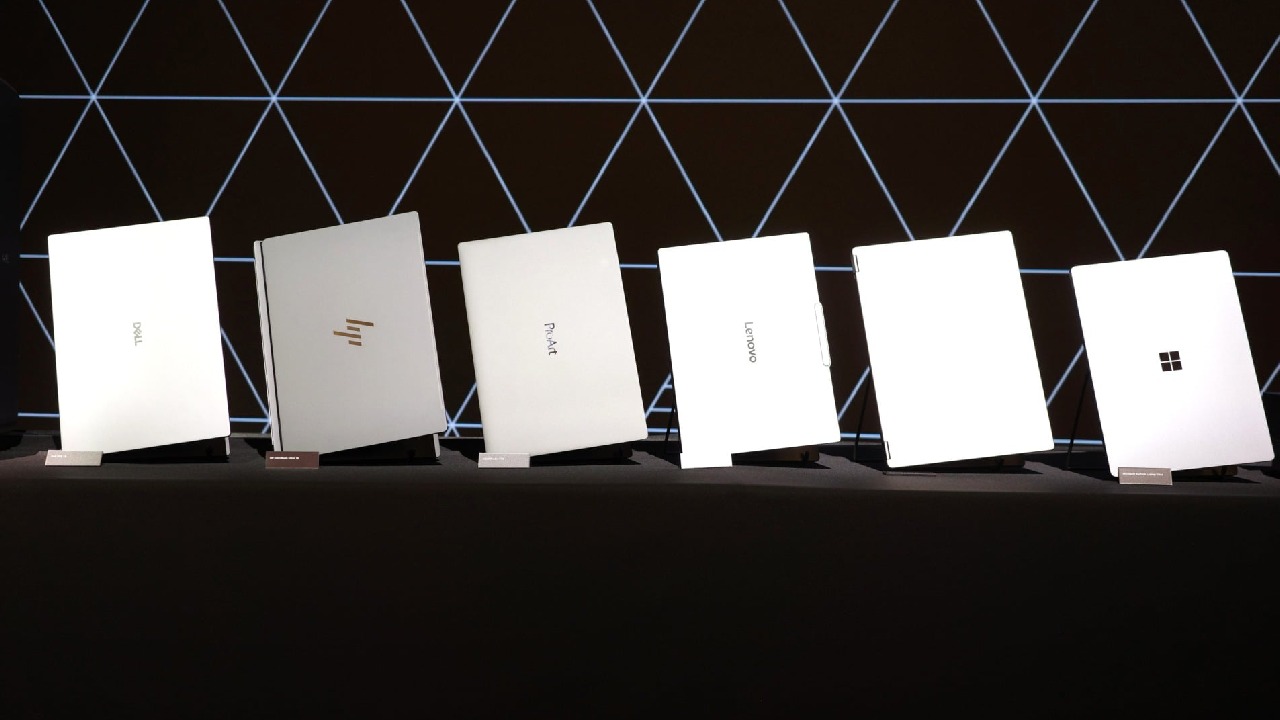
RTX Spark turns that dynamic on its head by pairing NVIDIA's designed Grace CPU with Blackwell graphics in a single platform.
New Formula for Windows Laptops
It's not just any Windows laptop processor. NVIDIA is aiming at AI development, content creation, engineering, and other heavy workloads for professionals. The platform's memory, CPU, and GPU are designed together, making it more efficient to communicate with the system than a laptop made up of separate parts.
Laws and Laws of War are two distinct tiers of configurations. Laws and Laws of War are two very different tiers of configurations. NVIDIA will unveil an RTX Spark for two purposes. The standard model packs 12 Grace CPU cores, Blackwell graphics similar to an RTX5050 laptop GPU, and 64GB of unified LPDDR5X memory.
The mid-range N1X boosts the CPU to 20 Grace cores, and the GPU to approximately RTX5070 laptop performance, with over 6,000 CUDA cores. Memory is also doubled to accommodate unified memory up to 128GB.
It may seem like too much memory for now. Still, NVIDIA believes that future AI workloads, creative software, and workstation applications will increasingly rely on large shared memory pools instead of individual system and graphics memory.
Unified Memory is More Important
While graphics performance is often the most talked about feature, unified memory could be the more significant benefit of RTX Spark laptops. Conventional Windows laptops have separate memory and graphics memory. Therefore, data is often transferred between the CPU and GPU.
Because of unified memory, both processors access the same memory pool, reducing the overhead and helping to optimize workloads that frequently access vast volumes of data.
That is helpful for AI model development, 3D rendering, large video editing, CAD software, simulations, and other professional applications. The benefit is much smaller with regular activities like web browsing, watching videos, or working in the office.
Most people's concerns with RTX Spark aren't about its hardware. The predicted cost will be. The estimates from Morgan Stanley after talking to the vendors at Computex 2026 suggest entry-level RTX Spark laptops might be priced at around $1,800, even with 16GB of unified memory. N1X models will begin at about $2,900, and the more premium the model, the higher its price tag will be.
RTX Spark is a great option for gamers looking to get into the high end of the gaming laptop market at this price point, as well as for those looking to build workstations on the go. RTX Spark is a good choice for gamers who want to enter the premium gaming laptop market at this price point and creator gamers who want to make workstations on the go.
Entering a Crowded Field
NVIDIA is entering a fiercely competitive space at a very critical time. RTX Spark laptops are anticipated to be released in 2026 and will be available more widely later this year. Intel is developing Nova Lake processors, AMD is rolling out its next-generation Zen 6 processors, and Qualcomm is developing its next-generation chips with the Snapdragon X2 Elite.
This comes at a time when NVIDIA will not only have to face off against existing laptops. There will be several new platforms to consider, along with performance, battery life, software compatibility, and price. There's one thing that remains to be clarified.
Software compatibility will be closely monitored, as RTX Spark runs on ARM-based Grace processors. The new NVIDIA laptops will support existing Windows-based applications, and Windows on ARM has had mixed results in the past.
It is still uncertain whether software is compatible with the new platform.
Still, NVIDIA CEO Jensen Huang has said he's confident it will be capable of that. Microsoft has done a lot of work to improve application emulation, but not all older applications and specialty workstation software run as well on the virtual machines. Overall, it's hard to determine the experience until independent reviews can test retail hardware.
RTX Spark is the most ambitious that NVIDIA has ever made in years. NVIDIA's unified platform of GPUs, unified memory, and AI acceleration promises to redefine the premium Windows laptop for creators and professionals. These systems are expected to begin at about $1,800 and will approach $3,000 in price - they must perform well in practice to justify that price tag.
If NVIDIA's claims aren't exaggerated by the company, the RTX Spark could prove to be one of the more important laptop launches this year. Otherwise, the buyer might end up purchasing something more affordable that provides greater overall value.
Editor, NoobFeed
Gaming Hardware Updates
No Data.