
How AMD Rebuilt Its Business With Ryzen and EPYC?
AMD transformed its business through Zen, Ryzen, EPYC, and chiplet technology after years of financial losses and competition with Intel.
Hardware by Nahe Yan on Nov 03, 2026
AMD's journey from financial losses to competing in the CPU, server, and data center markets is one of the semiconductor industry's major turnarounds. In 2015, the company was struggling to compete with Intel, and its future depended on more than offering cheaper processors. It needed a new architecture, a different business strategy, and products that could change how customers viewed the company.
In 2015, AMD lost $660 million. Intel was the giant next door, and AMD needed more than a cheaper chip. It needed a reason for people to believe in the company again. Inside AMD, engineers were working on something that would change the argument. It was not another marketing campaign or a new product sticker. It was a processor design called Zen.

AMD's Financial Struggles and the Beginning of Zen
To understand the decision, look beyond the stock chart and consider the computer on your desk. When software asks for work, the processor has to deliver it. If the competition handles that work better, a discount can only take you so far. Nobody enjoys saving $50 on a machine that spends the next 5 years thinking about opening a spreadsheet. AMD had to change the product, not just the price.
Changing a processor design takes years, while the bills arrive much faster. Lisa Su became AMD's chief executive in October 2014. She had joined the company in 2012, bringing experience from companies including IBM and Freescale. This was an engineer taking charge of an engineering problem, but the turnaround was not a solo effort.
It depended on engineering teams, partners, earlier investments, and customers willing to give AMD another chance. The financial pressure was real. Revenue fell to about $4 billion in 2015, down 28% from the previous year. However, AMD still had to fund its next generation of processors. Cutting too deeply would protect the company's current cash position while putting future products at risk.
That did not make manufacturing somebody else's problem. AMD still needed dependable suppliers and enough production capacity, but the separation changed where the company could focus its efforts. Its comeback would depend on processor designs that customers wanted, manufactured through a broader ecosystem.
Ryzen Brought AMD Back Into the CPU Market
At the end of 2016, AMD introduced the Ryzen name. The new processor family would bring Zen to personal computers. In 2017, Ryzen hit the market, giving AMD a new platform to rebuild its position. The promise was not that every AMD processor would win every benchmark. Computer performance depends on the task, software, power budget, and the rest of the system.
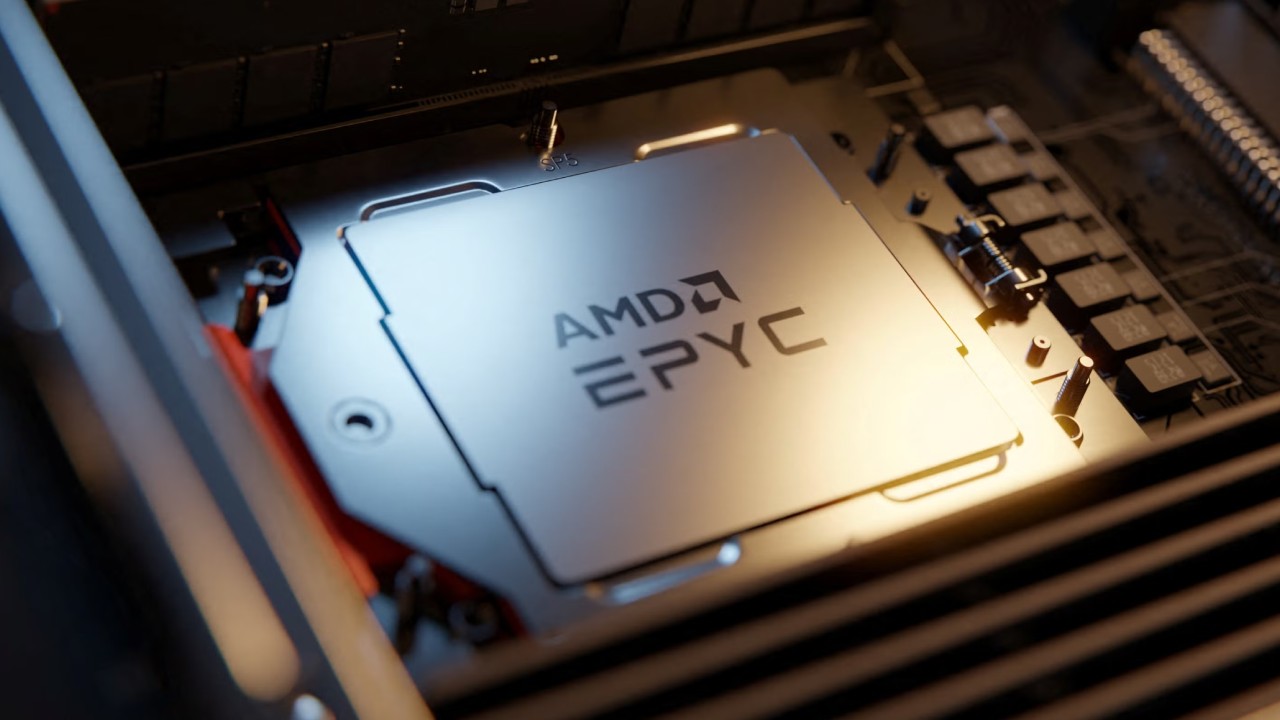
The important change was that AMD could make a serious case for high-performance computing again. However, the comeback was about more than gamers comparing frame rates. In June 2017, AMD launched EPYC for servers. The first generation offered up to 32 Zen cores. Microsoft Azure and Baidu were among the customers announcing deployments at launch.
Server customers are not simply looking for a new processor to put inside a desktop computer. They consider performance, memory, power consumption, compatibility, and the risks of changing systems. Their idea of a romantic evening is probably a successful validation report. Ryzen helped AMD reopen the conversation in the consumer market, while EPYC asked whether the company could turn that conversation into infrastructure.
To compete across different markets, one successful processor would not be enough.
AMD needed an architecture that could grow and support different products. Imagine a processor as one large piece of silicon. Now, consider splitting some of its functions across smaller pieces connected inside a single package. That is the basic idea behind chiplets, which AMD made central to its Zen 2 generation.
Companies can combine smaller building blocks into different products instead of treating every larger processor as an entirely new piece of silicon. This approach matters because a defect can spoil an entire die. With smaller dies, more usable pieces can remain available from a wafer. The company can also choose the right manufacturing technology for different functions instead of putting everything on the most expensive process.
However, chiplets are an engineering trade-off, not a free solution. Connections between the individual pieces still consume power, add complexity, and need to operate quickly. The business opportunity was flexibility. Related designs could serve desktop buyers and data center customers while the product family continued to evolve. AMD was no longer trying to win a single benchmark. It was building a repeatable way to compete.
Editor, NoobFeed
Gaming Hardware Updates
No Data.