
22GB RTX 2080 Ti Mod Delivers Up to 73% More Performance
22GB RTX 2080 Ti exposes how insufficient graphics memory can restrict otherwise capable GPUs in modern high-resolution gaming workloads.
Hardware by Tanvir Kabbo on Nov 03, 2026
Hardware modification keeps uncovering possibilities that graphics card makers rarely explore. With each new generation of NVIDIA GPUs, hobbyists are finding ways to keep outdated hardware alive with novel tweaks. The latest example is particularly striking: the eight-year-old GeForce RTX 2080 Ti has received a major VRAM boost, leading to performance gains of up to 73% in selected 4K gaming benchmarks.
NVIDIA announced the RTX 2080 Ti in 2018, based on its Turing architecture, with 11GB of GDDR6 RAM. That capacity was massive at launch, but newer games are putting increasing demand on graphics RAM, especially at 4K resolutions. Testing published by German Publication PC Games Hardware shows how limited VRAM may become a severe performance bottleneck, even when the underlying GPU still has tremendous processing capacity.
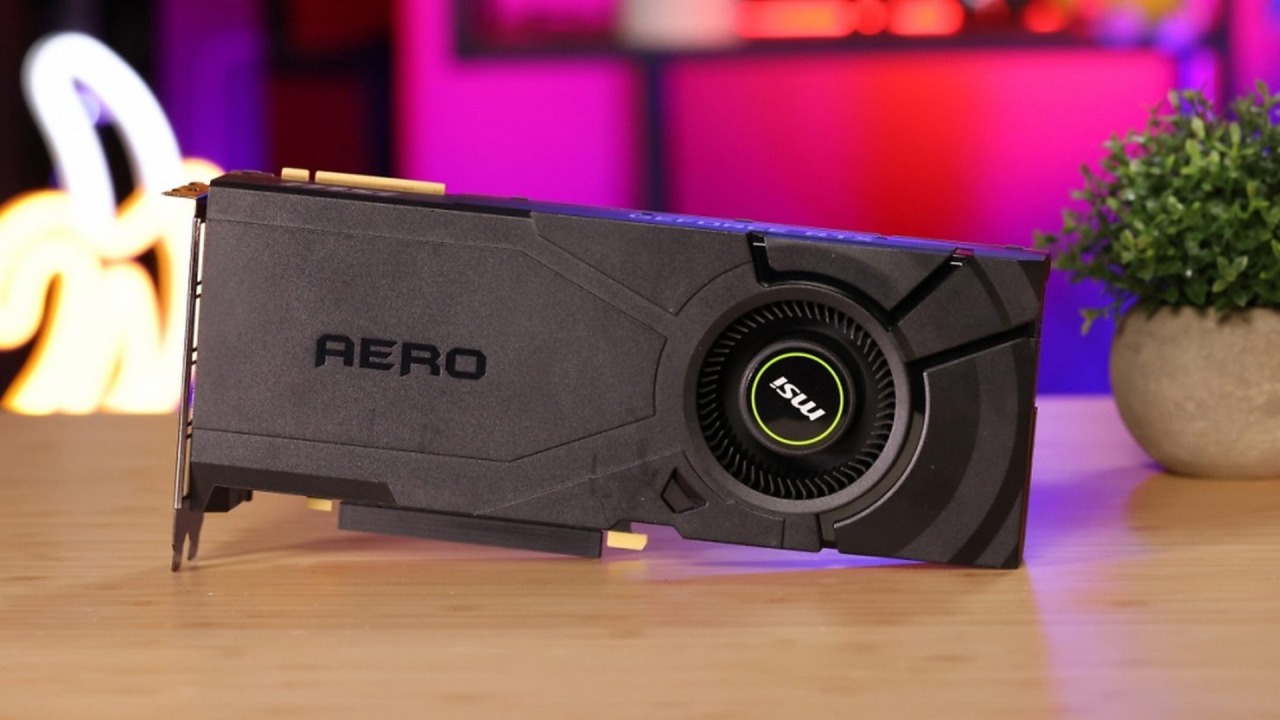
Image Credit: PCGamesHardware
22GB RTX 2080 Ti Modification Doubles VRAM Capacity
They did this by physically swapping out the original 1GB GDDR6 memory modules for larger capacity 2GB Samsung GDDR6 chips. This basically quadrupled the RTX 2080 Ti's memory capacity from 11GB to 22GB, without modifying the original GPU silicon.
This is a beautiful piece of hardware, but definitely not a run-of-the-mill improvement. Replacing graphics memory is a complicated process that involves special tools, precision soldering, and careful attention to compatibility. Incorrect installation may permanently damage the graphics card.
Importantly, the redesigned GPU keeps its original TU102 architecture, 352-bit memory interface, and around 616GB/s of memory bandwidth. Simply put, it increases memory capacity, not computing power or bandwidth.
4K gaming benchmarks reveal huge performance gains
The most intriguing findings come from comparing both configurations at 4K. The initial 11GB capacity is a problem for many newer games, especially at higher graphics settings that strain memory.
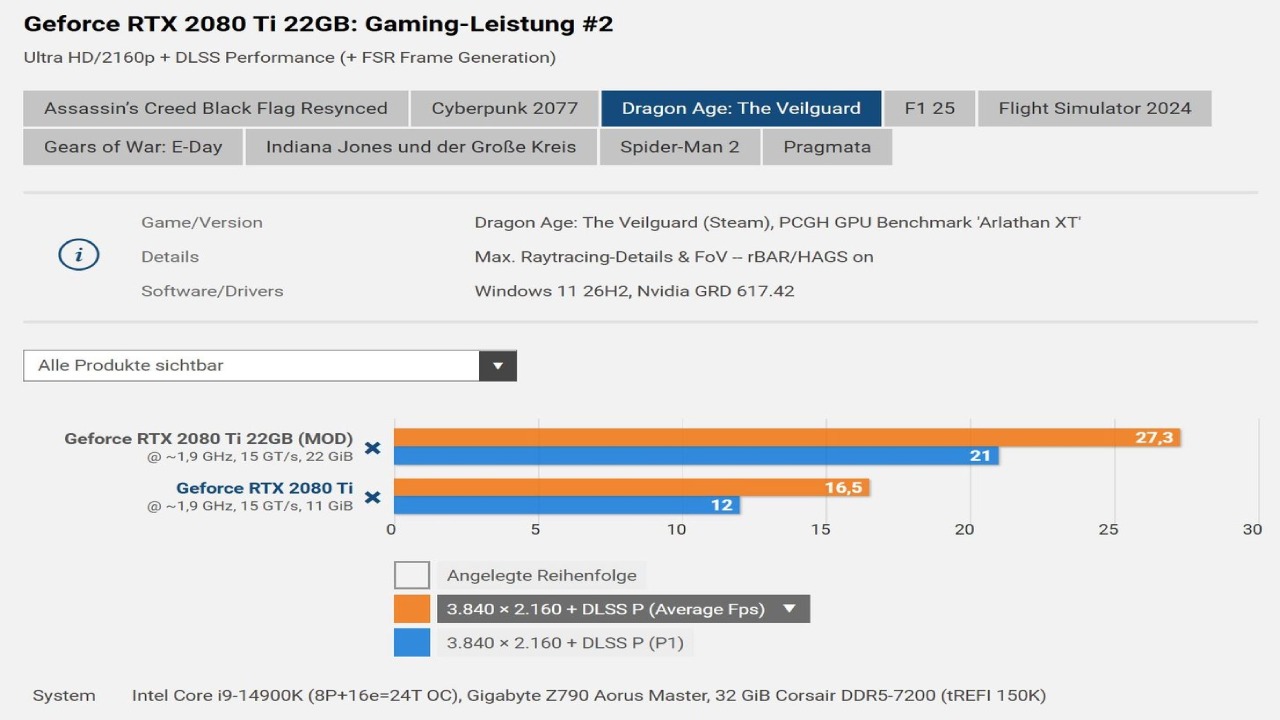
The biggest winner was Microsoft Flight Simulator 2024, with the RTX 2080 Ti seeing an insane 73% performance jump after some tweaking. Next up was Spider-Man 2 with a 64% jump, and Dragon Age: The Veilguard had a 68% surge.
These results show that adding more VRAM can substantially increase speed when a game exceeds available memory. The benefits, however, aren't universal. For games with less demanding memory requirements, improvements are much more modest.
Why Additional VRAM Makes Such a Difference
When a graphics card runs out of VRAM, it must shift or evict resources and may transfer graphical content through system memory over PCIe. System RAM is much slower for GPU tasks. This process can add latency, cause uneven frame delivery, and lead to major performance losses.
The tweaked RTX 2080 Ti overcomes some of those constraints by holding more textures and graphical materials in its dedicated memory.
This is especially true at 4K because higher-resolution assets use a lot more VRAM. The GPU silicon is the same, which makes the results even more fascinating. The CPU wasn't necessarily sluggish, but its memory capacity limited its potential.
Beyond Gaming, AI Workloads Also Benefit
The extra memory also apparently boosted performance in AI workloads. With more VRAM, applications can use bigger models and store more intermediate data without constantly hitting memory limits.
The customized card doesn't have the architectural benefits of current AI-focused GPUs, but its 22GB capacity makes it more versatile for some local AI applications.
Senior Editor, NoobFeed
Gaming Hardware Updates
No Data.