
Steam Machine Pricing Expectations Based on Component Costs
Steam machine pricing expectations evolve as manufacturing costs stabilize and component availability continues shifting across the hardware market landscape.
Hardware by Tanvir Kabbo on Nov 16, 2025
Following the latest hardware releases, the price of Valve's upcoming Steam machine has become one of the most closely followed and essential features. Now that production information is out there, we have a better idea of what the possible pricing strategy, estimated expenses, and competitive landscape will be.
The discussion encompasses manufacturing estimates, market positioning, ecosystem considerations, and projected retail price windows that could influence the device's success in the broader hardware market.
Manufacturing Costs and Pricing Landscape
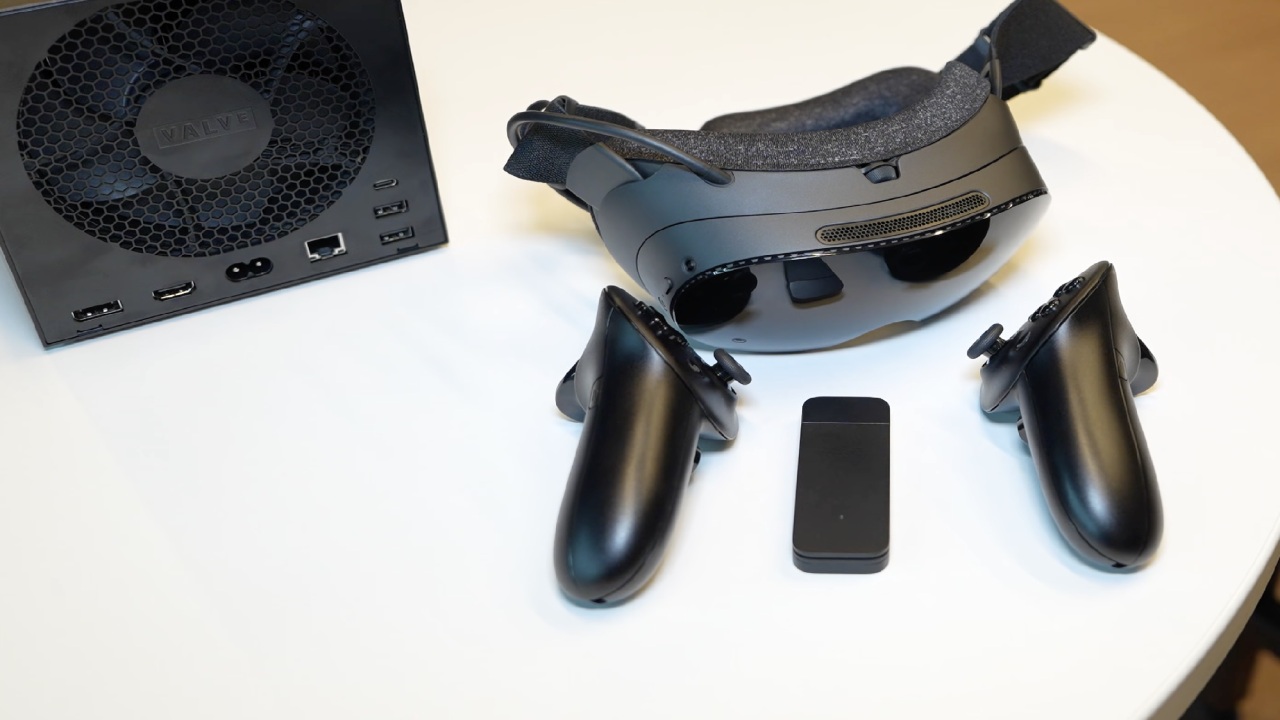
Upon examining the current situation, we now have a better understanding of the costs associated with Valve's Steam Machine manufacturing. That naturally raises the question of where the retail pricing will settle. We see guesses all over the map, often influenced by personal agendas.
People upset about Xbox Magnus getting beaten to market expect a high price around $700 or $800, using it as criticism. People excited about the device go unrealistically low, with numbers like $350 or $400.
We now have solid evidence, including information directly from Valve. In Dave2D's interview, Valve stated that they are not targeting a console price point, but rather a small form factor PC price point. That phrasing gives them a massive window, especially since console prices range widely—from around the mid-$300s up to the $700 range in the US. Small form factor PCs are even more variable depending on components.
Due to part shortages, tariffs, DDR5 RAM issues, and supply chain unpredictability, Valve is waiting until the last moment to reveal the price. That ensures they don't lock themselves into a figure only to see costs shift. Based on Tom's research at Moors Law is Dead, we see that the Steam Deck's cost breakdown provides context, and the Steam machine's manufacturing cost is around $425. Selling it at that price would result in a significant loss once shipping, packaging, logistics, and storefront costs are factored in.
Potential Retail Price Window
We see a realistic high-end target of $599. While we would pay $599, it opens Valve up to criticism because the current specs appear to position the machine between the Xbox Series X and PS5, sometimes even slightly below them, and it doesn't reach PS5 Pro territory. At $600, it would sit uncomfortably among those competitors.
Sony users won't abandon their library built over multiple generations, so Valve is not competing for that audience. On the Xbox side, however, people are uncertain about future compatibility, and some are ready to switch platforms. At $600, the Steam machine sits too close to the Xbox Series X, the actual point of comparison, since the Series S is not considered at this moment.
We see far more attractive possibilities in the $450 to $500 range. Tom's estimates suggest $450 is the lowest Valve could go while breaking even or making a small profit. $450 also lands in impulse-buy territory, where we might buy two—one for the living room and one for a workspace. It places the Steam machine only slightly above the Steam Deck and directly against the Nintendo Switch 2's price in the US.
At $500, we see a still-strong price point that feels natural. Hardcore users would jump in, and most people would see it as fair value. At $550, the price begins to feel awkward. It doesn't feel like a useful middle ground and doesn't carry the psychological appeal of $500 or $450. As a result, $450, $500, and $600 appear to be the only realistic options, with $450 being the ideal choice and $500 being a comfortably safe option.
SteamOS and Ecosystem Strategy
Another major selling point here is SteamOS, which Valve has built into an excellent operating system. They've partnered with companies like Lenovo and openly welcome other hardware manufacturers, allowing them to use SteamOS without licensing fees. That helps reduce MSRP for third-party devices, and Valve benefits by expanding Steam's presence everywhere.
If we want the boutique version—faceplates, LED light bar, optimized thermals, driver tuning—Valve will offer the official Steam machine. However, suppose we prefer to build our own PC with a 9800X3D and a 9070XT. In that case, Valve encourages us to install SteamOS and enjoy the ecosystem.
Valve also handles AMD driver customizations internally for supported devices, ensuring stability and consistency across all devices. That level of optimization shows that Valve plays games on its own devices, identifying issues early.
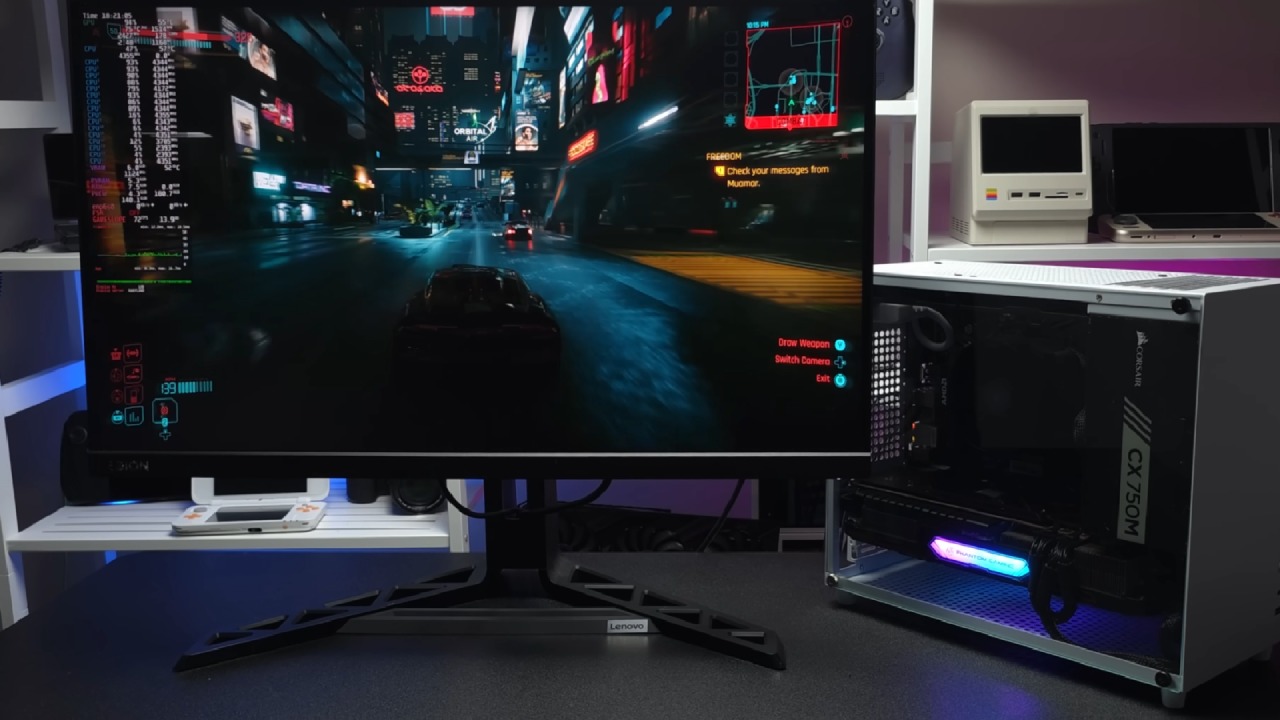
Recent showcases illustrated that point. Instead of relying on easy-to-run games like Cyberpunk, Valve demonstrated Unreal Engine 5 titles. Silent Hill F, a well-optimized Unreal Engine 5 game, ran smoothly. For comparison, they also showed Metal Gear Solid Delta, which was poorly optimized, and it performed well nonetheless.
Based on personal experience with SteamOS and AMD GPUs, shader caching effectively resolves most Unreal Engine issues, and Valve appears to be aware of these benefits.
Optimism Around the Final Price
We see some people reading Valve's silence on pricing as a negative sign, assuming prices as high as $900 or $1,000. That interpretation appears disingenuous. The realistic explanation is simple: parts are fluctuating rapidly. Today, it costs $425 to manufacture the machine, which is a great deal. But if a component spikes overnight and raises costs to $475, Valve would lose money after announcing a $450 retail price.
That is why Valve is waiting. We feel optimistic that the final price will be $450. If it ends up being $500, that's still a great price point. What matters most is that the machine enters the market competitively and shows what Valve believes the future of their hardware can be.
.jpg)
Final Thoughts
We believe the Steam machine will be priced in an appealing range, with $450 being ideal, $500 being strong, and $600 being realistic but less desirable. Tom's extensive examination of parts and costs suggests that the retail price is reasonable and competitive.
SteamOS, support for custom drivers, and Valve's evident interest in trying out new hardware all make the device a strong candidate for the future.
Also, check our other hardware articles:
- AMD Ryzen 9 9950X3D Review: Setting The Standard For 2025 Gaming CPU
- Amazon Luna 2025 Review: Is Prime Gaming's Cloud Service Your Go-To For Casual Fun?
- AMD RX 9070 XT Review: AMD's RDNA 4 Champion for 1440p Gaming
- GeForce Now Ultimate: Ditching Your Gaming PC For Cloud RTX 4080 Power?
- NVIDIA GeForce RTX 5080 Review (2025): Still A 4K Gaming Powerhouse?
- Intel Core Ultra 9 285K Review And Performance Breakdown (2025)
- AMD Ryzen 7 9800X3D Review: 3D V-Cache Goes God Mode with Stunning Gaming Performance
- Intel Core Ultra 9 285K vs AMD Ryzen 7 9800X3D: In-Depth Gaming Performance and Benchmark Comparison
- NVIDIA GeForce RTX 5080 Super Performance In Cyberpunk 2077: Path Tracing & DLSS 4.0 Tested
- AMD Radeon RX 9070 XT In Cyberpunk 2077: Ray Tracing & FSR 4.0 Tested
- Intel Arc B580 Review: The $250 GPU Revolutionizing 1440p Gaming
- Intel Arc B570 Vs. B580: Value, Specs, And Real-World Gaming Performance
- RTX 5090 Laptop Vs. M4 Max MacBook Pro: Ultimate Raw Performance Vs. Battery Endurance
- Intel Arc b580 Vs. RTX 4060: Game Performance And Value Analysis
- RTX5090 Hell Is Us Demo 4K Ultra Benchmark: DLSS Vs. Native Performance Guide
- NVIDIA RTX 5070 Review: Mid-Range Muscle or Marketing Hype?
- Nintendo Switch 2 Review: Handheld Performance, Features & Value Breakdown
- RTX 5070 Ti Review: Performance, Thermals & Power Efficiency Tested
- Samsung Odyssey OLED G81SF Review 2025: Ultimate 32-Inch QD-OLED Gaming Monitor
- AMD RX 9070 Performance Review: Thermals, Clocks, and Real-World FPS
- AMD Ryzen 5 7600 Review: Best Budget Gaming CPU of 2025?
- AMD Radeon RX 7800 XT Review: RDNA 3 Power For Midrange Gaming
- Asus ROG RTX 5090 Astral OC Vs. Founders Edition: The 4K Gaming Benchmark
- Intel Core i5-13400F Gaming Performance: Still Worth It in 2025?
- ASUS GeForce RTX 5090 LC Liquid Cooled GPU Review: Unmatched Silence & Speed
- ASUS ROG Ally X Handheld Review: Double the Battery, Double the Comfort
- Lenovo Legion Go S Review: The Ultimate Steam Deck 2 Alternative
- Sapphire NITRO+ AMD Radeon RX 9070 XT Review: The Ultimate 4K Gaming GPU
- Alienware 16 Area 51 Review: The Ultimate 2025 Gaming Laptop
- Alienware Area-51 Review: Unmatched 4K, Thermal, and Acoustic Performance
- AMD Ryzen 7 7800X3D: Delivers Gaming Performance Far Beyond Expectations
- AMD Ryzen 9 7900X Review: Powering the AM5 Era with DDR5 & PCIe 5.0
- Intel Core i9‑14900K vs. AMD Ryzen 7 7800X3D: Power Profiles & Gaming Benchmarks
- Intel Core i9 14900K: Specs, Benchmarks, and Competitor Comparison
- ASRock Radeon RX 7800 XT Challenger OC Review: Best Price-to-Performance GPU of 2025
Senior Editor, NoobFeed
Gaming Hardware Updates
No Data.