
Iwakura Aria Review
Nintendo Switch
In the stillness of a 1960s mansion, love blooms between shadows, secrets, and the ache of being truly seen.
Reviewed by Asura Kagawa on Aug 15, 2025
Fans of visual novels will recognize the name MAGES. They are a company that makes deep, emotional stories like Steins;Gate and Chaos;Child. They've always been great at making emotional and complicated stories with interesting characters, but Iwakura Aria takes them in a slightly different direction. This is their newest yuri mystery, set in a private, slow-burning Japanese house in the 1960s.
Iwakura Aria came out in Japan on June 27 of last year. For the Western release, PQube took over as publisher. It is available on Nintendo Switch, Steam, and in a physical form for fans who want the collector's edition. Even if you don't usually like visual novels, Iwakura Aria has a way of drawing you in slowly, like a surprise friend who sits down at your table and starts telling you a story you can't stop listening to.
.jpg)
It has beautiful art, the possibility of love, and a feeling of unease that you may recognize if you've played The House in Fata Morgana or Paranormasight. The game is not just about a love story; it's also about trust, being trapped, and how beauty can hide something very scary. The story is about a young woman named Ichiko Kitagawa who quits a toxic job where she was constantly blamed for mistakes she didn't make.
Even though she's good at many things, no one in her life has really noticed how good she is until a rich stranger sees her work and hires her as a live-in maid. She thinks it's going to be a new start as soon as she walks into the Iwakura house, but something doesn't feel quite right.
Later, two characters are introduced who live in the mansion: Amane Iwakura, the polite but unreadable father, and his sad daughter and heiress, who at first thinks of Ichiko as just the house help. That changes when Aria sees Ichiko's art. They go from politely avoiding each other to quietly getting close. They are pulled to each other because they both feel trapped—in different ways, but with the same locked door.
Set in the 1960s, the outside world is full of change, but the house seems stuck in time and keeps its secrets close. There is an unspoken tension in conversations with the residents, and small things like a father and daughter's loaded look or a carefully chosen word make you wonder what's really going on behind the nice exterior.
It was a surprise how early the first big twist came. From that point on, you don't wonder if something is wrong; you wonder how far down the rabbit hole it goes. What makes the story interesting is how Ichiko and Aria feel about each other. It's not just a love story; it's also about two people learning how to see and be seen. In the middle of a story that keeps changing what you think will happen, it's soft, hesitant, and complicated.
.jpg)
At its core, Iwakura Aria is a normal visual novel: you read dialogue, sometimes make decisions, and sometimes look around different places in the mansion. But every choice you make is important. There are nine possible endings, so the story you read and the Ichiko you create can be very different. You might miss out on an important moment with Aria if you make certain choices, but other choices could lead to brand-new scenes.
It's easy and fun to look around the house. Red-marked rooms must be visited in order to finish tasks. Other rooms can be entered for optional interactions. You could find a letter tucked away in a drawer or a quiet scene in the yard that puts things in a new light. It's not about getting loot at these points; it's about getting puzzle parts that help you understand the characters better.
Iwakura Aria also makes it easy to play again and again. Fast saves and loads are available at all times, and important saves can be locked to keep them from being overwritten. You can also go back to key moments to see how a different choice would have turned out. With this method, it's easy to go after more than one ending without having to start from scratch.
Iwakura Aria doesn't have any fighting, but it does have a puzzle-like structure that you can find in its branching story. Every choice you make is like a puzzle piece that fits into a bigger picture. If you change one choice, it can change the mood of a later scene or the whole chapter's direction. It can be hard to figure out which choices are the most important for getting the ending you want, since Iwakura Aria doesn't always let you know how important they are until a long time later.
The delicacy works well here. There isn't a clear "good" or "bad" answer, and the choices feel natural instead of planned. This makes the first time you play feel real, since you're actually Ichiko and not just cheating the system. One problem is that some ends, especially the "bad" ones, can come sooner than you think they will, making you feel like you were caught off guard. The quick-save feature makes it easy to try new things, which makes the sudden ending less painful.
There is no traditional XP grinding here. Progress is based on stories, and you "grow" by experiencing different emotional results. Ichiko's journey has many endings, and each one shows how the choices she makes now will affect her decades from now. One of the most interesting things about the game is how it skips ahead in time and shows Ichiko 30 years later, changed by the love, betrayals, and chances she took or didn't take.
You can tell right away that Iwakura Aria isn't going for a typical cartoon look as soon as it loads. You can see the beauty of the art that was drawn by hand. They have a lot of small details and soft, muted colors. Every place feels like a work of art, with soft colors when things are going well and dark shadows when things are getting tense.
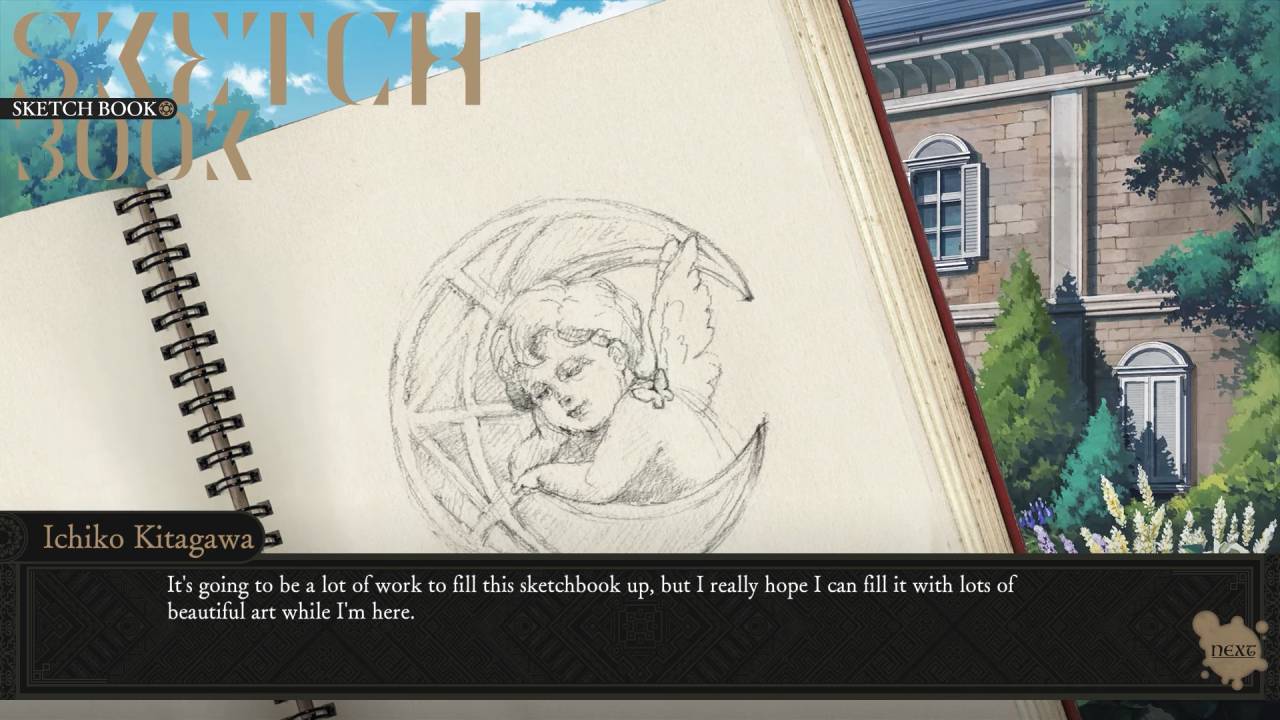
The change to rough pencil sketches in some scenes, which is a visual nod to Ichiko's own art, is one of the most emotionally charged parts of the picture. It's a smart way to help you see things from her point of view. It's almost like Aria is made of porcelain—she's fragile, cold, and attractive in a way that makes you want to protect her even though you're not sure if you should.
There is no lag or stuttering on PC or the Nintendo Switch consoles. The style of the graphics stays the same, and the load times are quick enough to keep you interested.
One of the best things about Iwakura Aria is the voice acting. There are Japanese voices for every line except Ichiko's inner thoughts. This gives the story more depth and feeling, even if you don't understand the language. Small things, like a pause before speaking or the tiniest shift in tone, are more powerful because of how they are said.
The music fits, but it's the only thing that Iwakura Aria doesn't do quite right. There are short loops of music in the background, and since you spend a lot of time in the same places, the repetition can be heard. It doesn't completely break the immersion, but the music could have had more variety to match the depth of the visuals in this game.
.jpg)
Iwakura Aria is not a game that you have to play quickly. It takes time, feels like meditation at times, and rewards patience. You're hooked by the early twist, but what keeps you playing late at night is how relationships, intentions, and truths slowly fall apart.
Its love story is soft and complicated, based on shared pain as well as desire. The puzzle is complex, giving you enough to think about while never letting you be sure. With its nine endings and time-skip endings, the branching structure turns replaying from a chore into an interesting experience.
Some of the ends feel rushed, and the music could be better, but these are only small flaws in a beautifully made mirror. Iwakura Aria is like a mansion: it makes you feel welcome with its luxury, keeps you interested with its mysteries, and makes you think about the people you met long after you leave.
Staff Writer, NoobFeed
Verdict
A hauntingly beautiful visual novel that blends yuri romance with a layered mystery, Iwakura Aria rewards patience with emotional depth and stunning art. Its subtle choices and nine endings make it a story worth revisiting.
90
Related News
No Data.