
The Last Gas Station Review
PC
Slow, cozy management sim where mundane work gradually becomes a lingering mystery.
Reviewed by Tahmid Mahi on Apr 28, 2026
The Last Gas Station is an indie sim game by Alawar. A forgotten roadside gas station now belongs to you as its new owner. In the story, it's the near future, and electric vehicles have mostly replaced gasoline cars, and your station is one of the few still selling fuel. From the very beginning, the game places you into a hands-on demo experience where you’re not just observing systems but actively running them.
There is no long cinematic buildup or heavy exposition. Instead, the game quietly drops you into a working environment and lets you learn through action. You’ll start with basic tasks like fueling cars, cleaning the station, and restocking shelves. From the first moments of the game, it is obvious that this experience is not about saving the world or dealing with high-stakes conflict.
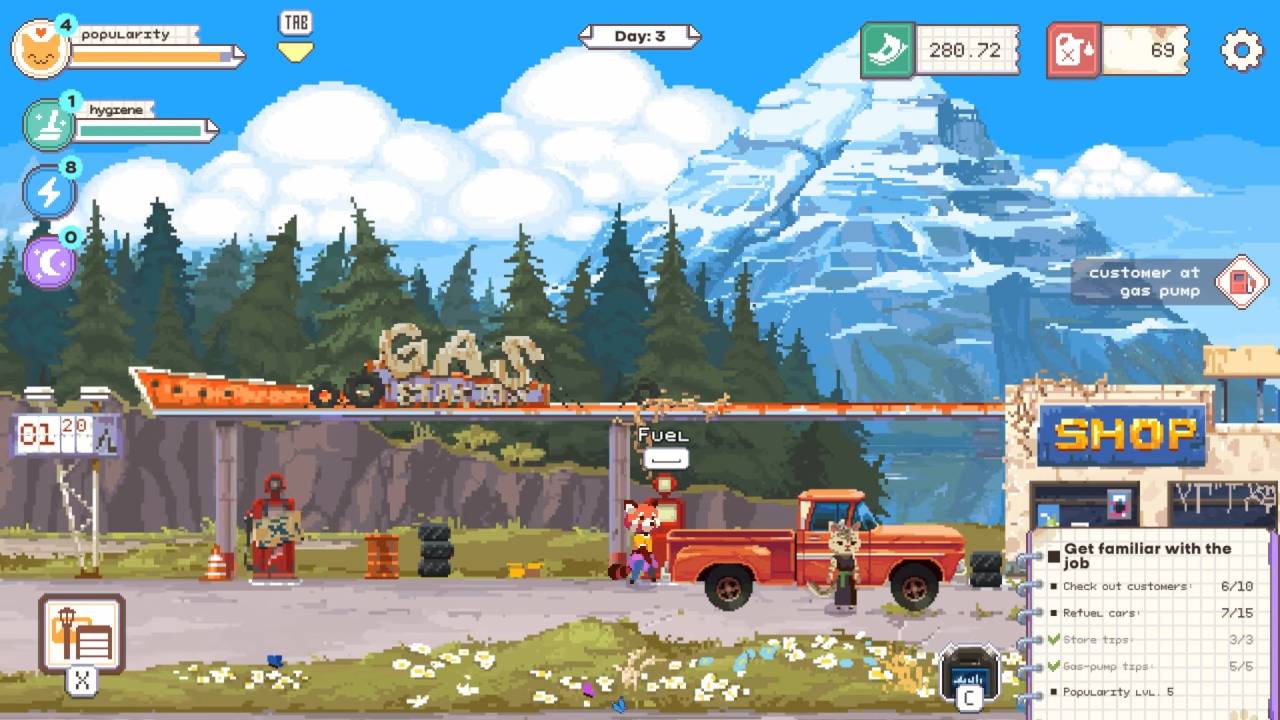
The developers are trying to make a grounded simulation that feels tactile and personal.
You are physically interacting with the station, not working it through abstract menus. It places importance on the simplest of actions, making the ordinary seem important. But there are also subtle hints of a story beginning to emerge, implying that there is a history to the station you are entering rather than starting from scratch.
You arrive as the new owner of an abandoned gas station that has clearly been left unattended for some time. The previous owner vanished without explanation, and no one has fully replaced their presence until now. The station is in a quiet street, surrounded by nature and solitude. Only occasional visitors pass by.
At first, all you care about is keeping the business going. However, little bits of dialogue and environmental detail begin to suggest that something is wrong. Sometimes, customers mention the previous owner disappearing without a trace, and locals suggest strange happenings have been linked to the station for years. These details do not come in big lumps of narration but emerge naturally in the course of short exchanges and passing comments.
As you continue working, the world slowly builds its identity around you. The station is not just a workplace; it feels like a location with a past that has not been fully explained. The game avoids direct storytelling and instead relies on atmosphere and implication. Such an approach makes you curious without locking you down to explicit story sequences.
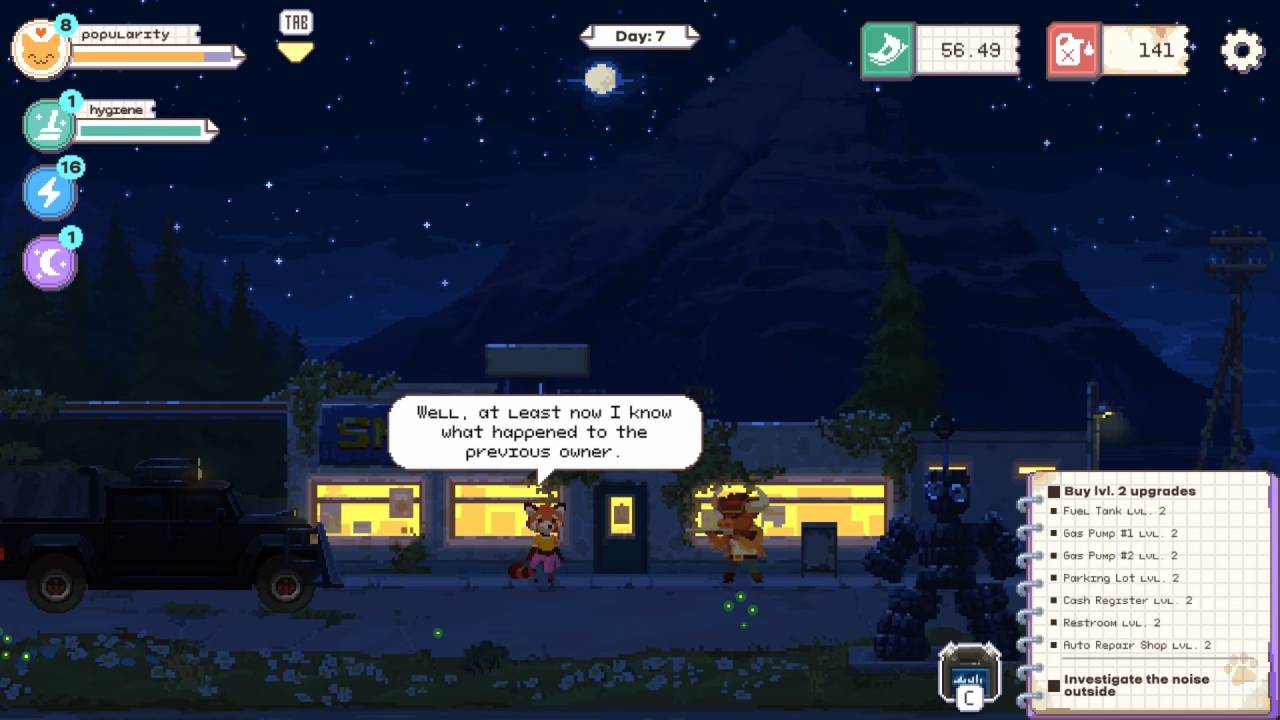
There is also a great contrast between day and night. The station during the day seemed functional, even inviting in its own way. Customers come in, routines are set, and all seems manageable. But at night, things are different. You are warned not to go outside after dark, and the world outside the station becomes less familiar and more unsettling.
These narrative elements are subtle throughout the experience.
Instead of pushing a central plot forward aggressively. The game lets you exist inside its world while slowly revealing that there may be more going on beneath the surface. While the demo experience never fully explains it, the disappearance of the former owner remains one of the central mysteries.
Gas Station Simulator is all about the day-to-day running of a gas station. Every day starts with preparation, including checking supplies, cleaning the environment, and preparing for incoming customers. The game uses a first-person, hands-on approach, meaning you physically interact with objects like fuel pumps, shelves, and cash registers.
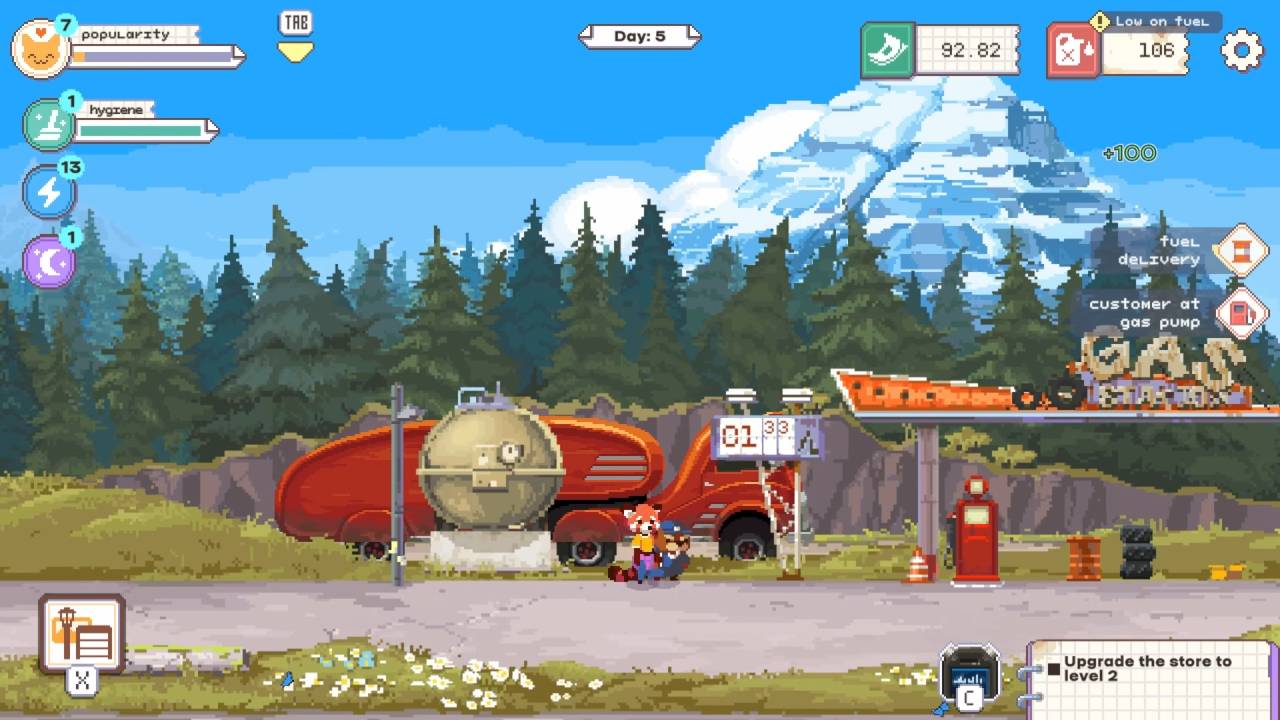
Fueling vehicles is one of the central mechanics. The customers come in and ask for fuel, and you manually control the fuel-pumping process. You connect the nozzle, begin fueling, monitor the flow, and then decide when to stop. The goal is to get the right amount, without over- or under-filling. The more you try to optimize your speed and accuracy, the more fun this simple mechanic gets.
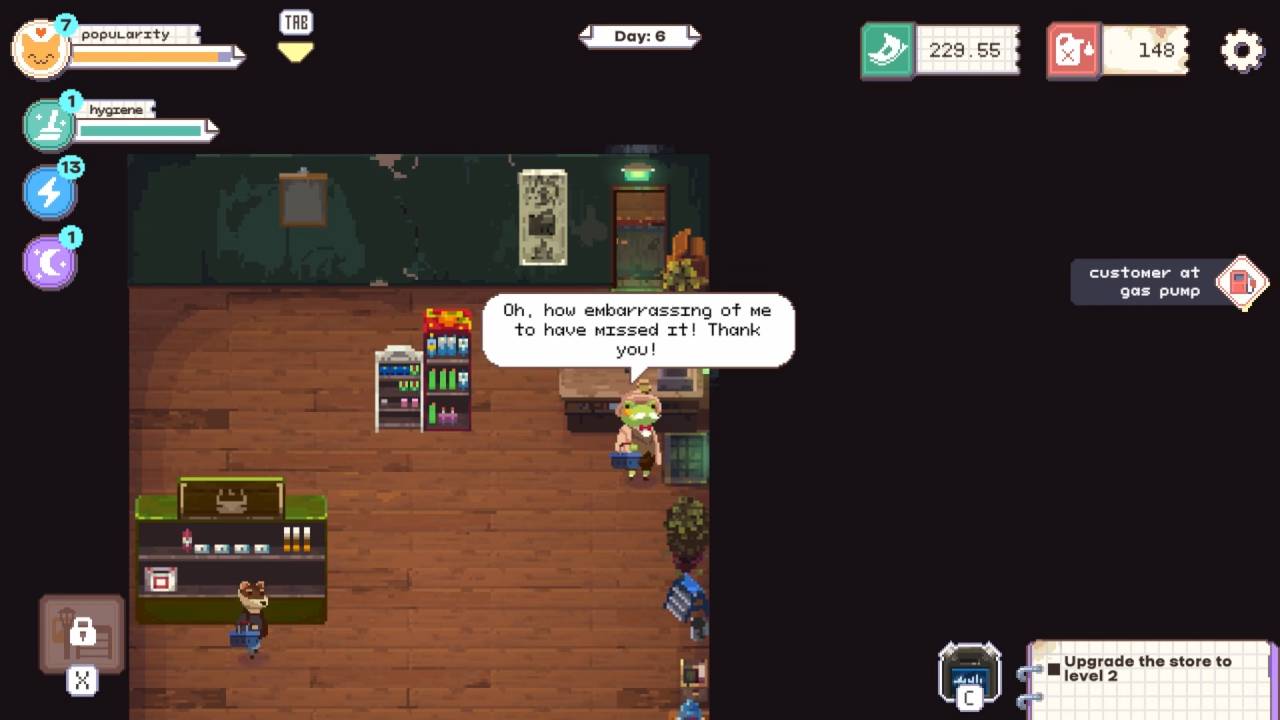
Inside the station, you manage your inventory through a computer system. You can order fuel, buy goods, and invest in upgrades with this system. Prices are changing every day, and you have to decide when to buy supplies. There’s also a storage limit that makes you think twice about what you stock and how much you order at one time.
Even the gameplay itself is largely affected by the shop. You put all sorts of products on the shelves. Drinks to other stuff. You decide where each product goes. Placement matters because customers interact with the store physically. They walk in, browse shelves, pick items, and bring them to the register. This helps the space to feel dynamic and responsive rather than static.
Regularly performed is also cleaning.
If trash builds up and you don’t keep your station clean, you will hurt the popularity of your station. You need to pick up the trash, bag it, and take it out. This mechanic is simple, but it makes the point that station upkeep is a continuous process, not something done once.
There is also a subtle role of time management. You may need to move from pumping gas to serving customers at the counter and stocking shelves during busy times. And the game manages to balance these tasks so they feel manageable, not stressful, but still require attention and prioritization.
The gameplay changes slightly at night. The station is silent. The stream of customers has dried up quickly. We spend this time preparing rather than serving. You restock supplies, reorganize shelves, and plan upgrades. The outside world becomes less accessible, and the game emphasizes the notion that nighttime isn't for normal operations.
The game features no traditional combat system. The challenge lies not in the hard puzzles but in managing systems that are linked and function as soft puzzles. These systems rely on efficiency, timing, and resource allocation rather than direct conflict.
Fuel management is one of the main puzzle-like aspects. You need to be careful about how much fuel you give each customer. The more accurate you are, the happier they will be. Overfilling or underfilling can cause tips to break or negatively affect your performance. This approach creates a small but consistent layer of precision-based decision-making.
Inventory management is also a strategic issue. Storage space is limited, so you have to decide which goods to store. There is a balancing act involved in deciding what to order and when, between cost, demand, and available space. This system becomes increasingly complicated as your station grows.
Added to that is layout optimization. You'll start experimenting with how your shop is laid out, with the ability to change shelves and place items wherever you like. Good placement helps with workflow, but poor placement can slow down customer interactions.
Together, these systems create a steady rhythm of problem-solving, not high-pressure challenges. It’s not the enemies or combat encounters but the challenge of managing multiple responsibilities all at the same time. “The systems aren’t too complex, but they do require consistent attention.
The progression system subtly affects these mechanics.
The tasks become more efficient, and new options become available as you level up your station. While it will reduce friction in some areas, it will also increase it in others. The result is a slow evolution of the gameplay rather than sudden spikes in difficulty.
The visual style is based on pixel art, with a clean and readable presentation. The atmosphere during the day is soft and inviting, with a background of natural landscapes, such as mountains, trees, and a lake. The station itself is scrappy and run-down, but as you upgrade it, it becomes more organized.
Lighting is a major factor in setting the mood. Daytime visuals are bright but not overly saturated, providing a calm, grounded feel to the world. Lighting changes drastically at night. The environment grows darker, the shadows deepen, and visibility outside the station decreases significantly. This comparison highlights the game’s quiet mood shift.
The character and vehicle designs are also stylized. Customers are depicted as anthropomorphic animals, adding a dash of charm and personality to every interaction. The cars are different, some normal, some strange, some battered, and it feels like a changing world.
The sound design is just as important to shaping the experience. The game has its own distinct audio feedback for everything, from filling up a gas tank to scanning at a register. The sounds are simple but satisfying, and even the minor interactions are weighted. The music is soft and peaceful during the day, fitting the game's slow pace.
It's a little quieter at night. The silence is deafening, and the stillness intensifies the sense of isolation. A change in sound, or a pause, can produce suspense without the usual horror. It's a game of restraint, not jump scares, and it sets its mood accordingly.
The Last Gas Station is a casual atmospheric simulation game that mixes everyday business management with light storytelling. It’s about menial tasks like fueling cars, restocking shelves, and cleaning, but these mechanics have a subtle sense of mystery that becomes more apparent over time. It’s an earthy, deliberate experience, with a pace deliberately set to reward a steady hand over a hurried one.
The game excels at making simple actions feel meaningful, but it also creates an undercurrent of unease. It doesn’t depend on action or conventional conflict; instead, it employs atmosphere, repetition, and small narrative clues to keep you invested in what might be happening beneath the surface.
Editor, NoobFeed
Verdict
This quiet, in-depth gas station sim offers a great atmosphere, consistent progression, and a subtle mystery that keeps you entertained without rushing the experience.
72
Related News
No Data.