
Moonsigil Atlas Review
PC
A clever deckbuilder that turns every turn into a puzzle.
Reviewed by Maisie Scott on May 28, 2026
Nowadays, most new deckbuilder roguelikes come with a familiar promise. Once the cards start flying, the underpinnings typically seem pretty similar, even though there may be a different visual style, a new scenario, or a distinct cast of characters. Drawing a hand, using energy, blocking incoming damage, and searching for potent combos that can finish a run are all part of the process.
It's a formula that works, but it also doesn't often surprise people these days. Moonsigil Atlas succeeds in doing what many other games in the genre fail to do: it takes a tried-and-true template and adds a system that actually alters how each fight is fought. The game asks you to consider space rather than limiting activities with mana or energy.
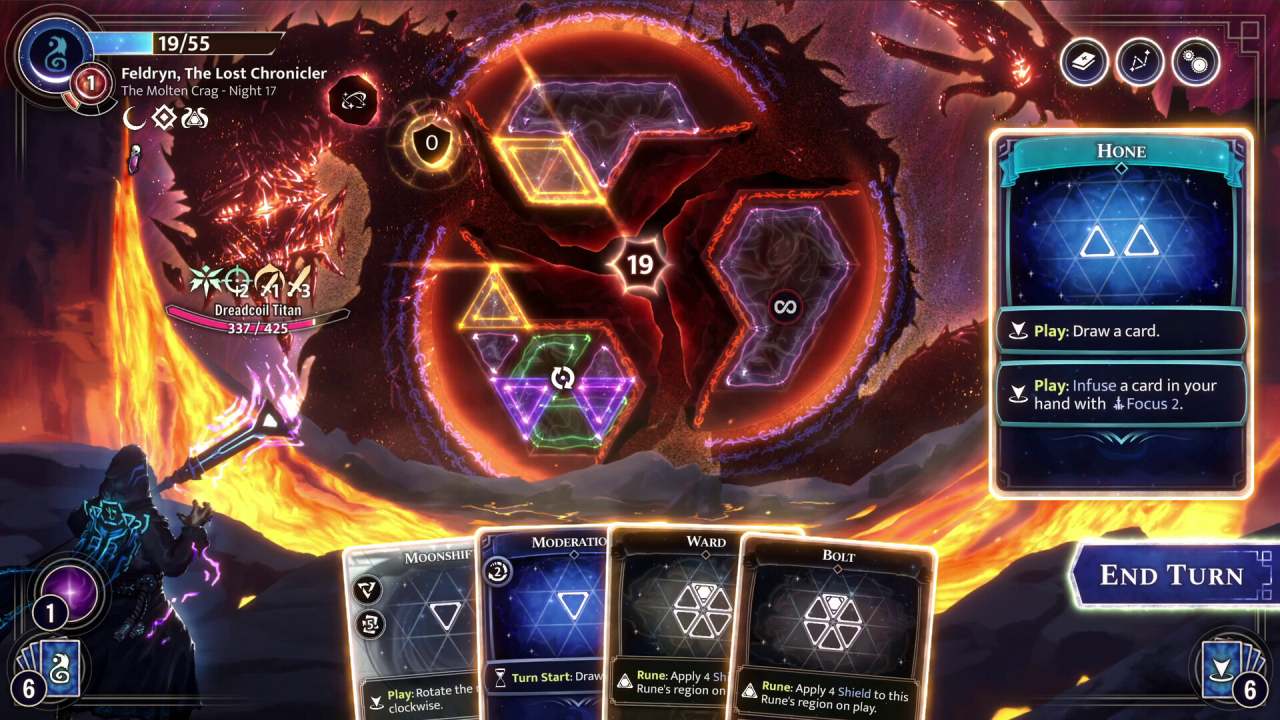
Each card has a shape connected to it, and each turn is a challenge of fitting those shapes onto a board shaped like a circular moon. When put into a sentence, it seems like a minor twist. It becomes evident after a few fights that this concept has formed the foundation of the entire game.
Moonsigil Atlas's universe has a strong cosmic fantasy bent. Celestial forces summon three magicians to protect the moon from star-eating monsters and hideous Titans that endanger life itself. Although the narrative never takes center stage, it offers enough background to give the trip a sense of purpose.
The game depends on ambiance, card descriptions, enemy designs, and little bits of backstory strewn across runs rather than bombarding you with dialogue.
Beneath the surface is an intriguing realm. Cosmic horrors, ancient powers and strange celestial beings all come together to make a scenario that seems to be much bigger than what is being played out. There seems, at times, to be a deeper plot just waiting to be revealed. What you seek from the genre will determine if that is a strength or a problem.
There is enough here to pique your interest if you like assembling lore on your own. You could find yourself wanting more if you are searching for a story-heavy experience.
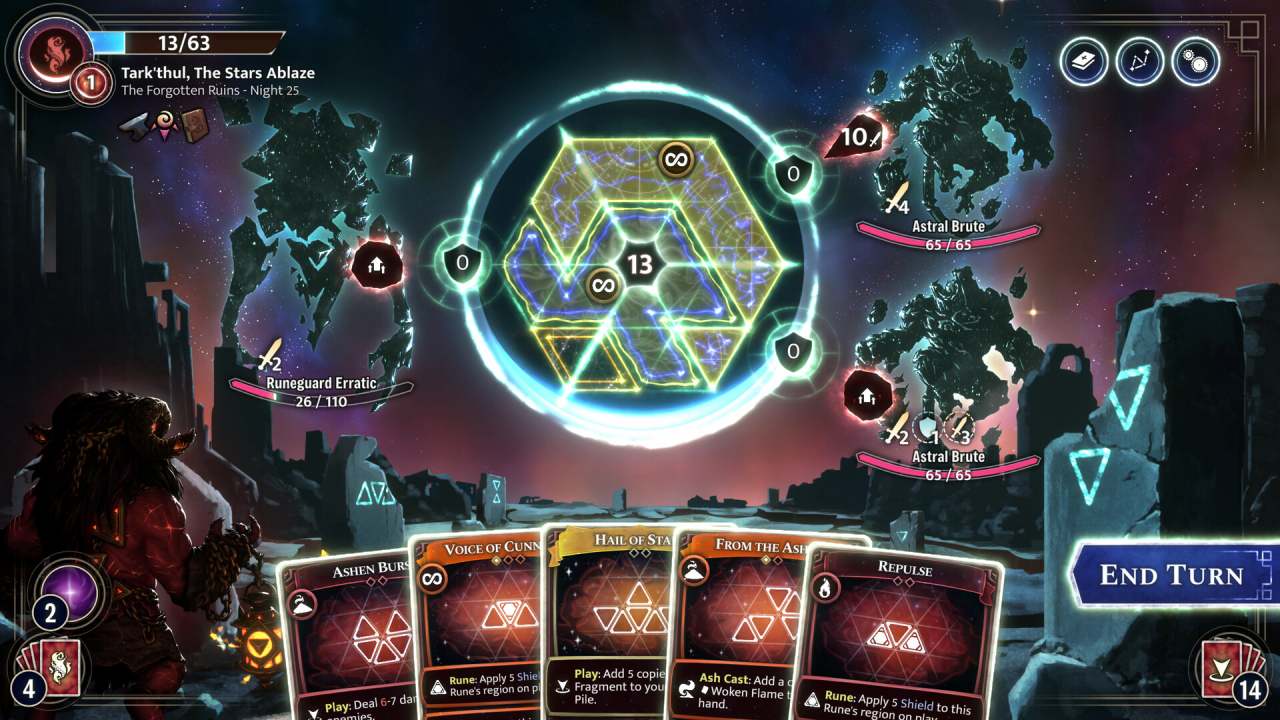
Combat is where Moonsigil Atlas really shines. Every meeting is changed by the lack of an energy system. Moonsigil Atlas asks if you can physically put a card into your moon, not if you can afford to play it. Some cards fit easily into odd gaps and take up small places. Others need careful preparation and occupy significant portions of the board. You may have a strong attack at your disposal, but if you use it at the wrong moment, your board may be filled with useless places.
Battles are fascinating because of this ongoing balancing effort. You never just look at numbers. You look at shapes, placement, potential outcomes and the right order to play cards. Choosing the right card and filling the moon effectively are equally important. Finding the ideal order that makes use of every available area is surprisingly satisfying.
When opposing mechanics begin to interfere with the board itself, the system becomes even more intriguing. Parts of the moon are blocked by some adversaries. Some penalize particular places. Some encounters make you reconsider strategies that were effective in earlier fights. For example, bosses are excellent at transforming well-known mechanics into novel challenges.
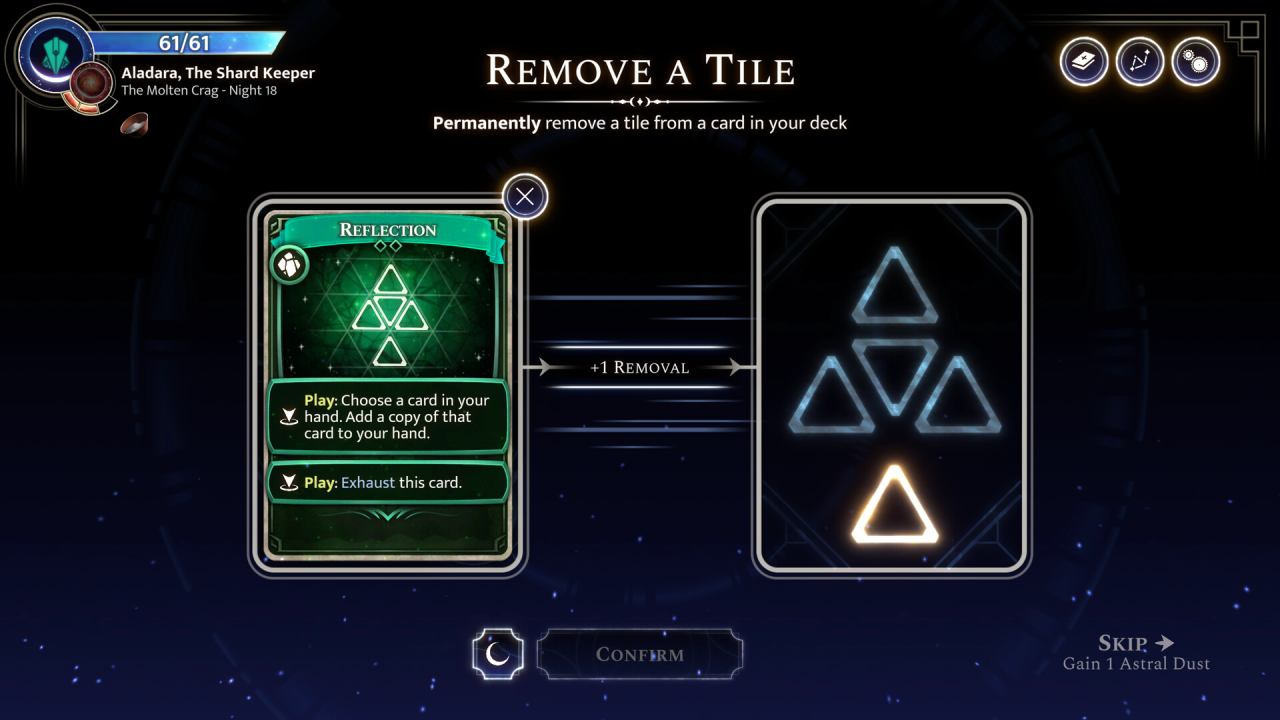
They actively challenge how you use space rather than just having bigger health bars.
This is where Moonsigil Atlas sets itself apart from a lot of its rivals. The board is more than just an aesthetic addition to conventional card warfare. It affects almost every choice you make. Defense operates in a similarly deliberate manner. It's not always easy to protect oneself by using a shield card. Positioning is important. Time is of the essence.
The intentions of the enemy are important. Surviving a turn might sometimes feel more like solving a puzzle under pressure than handling statistics.
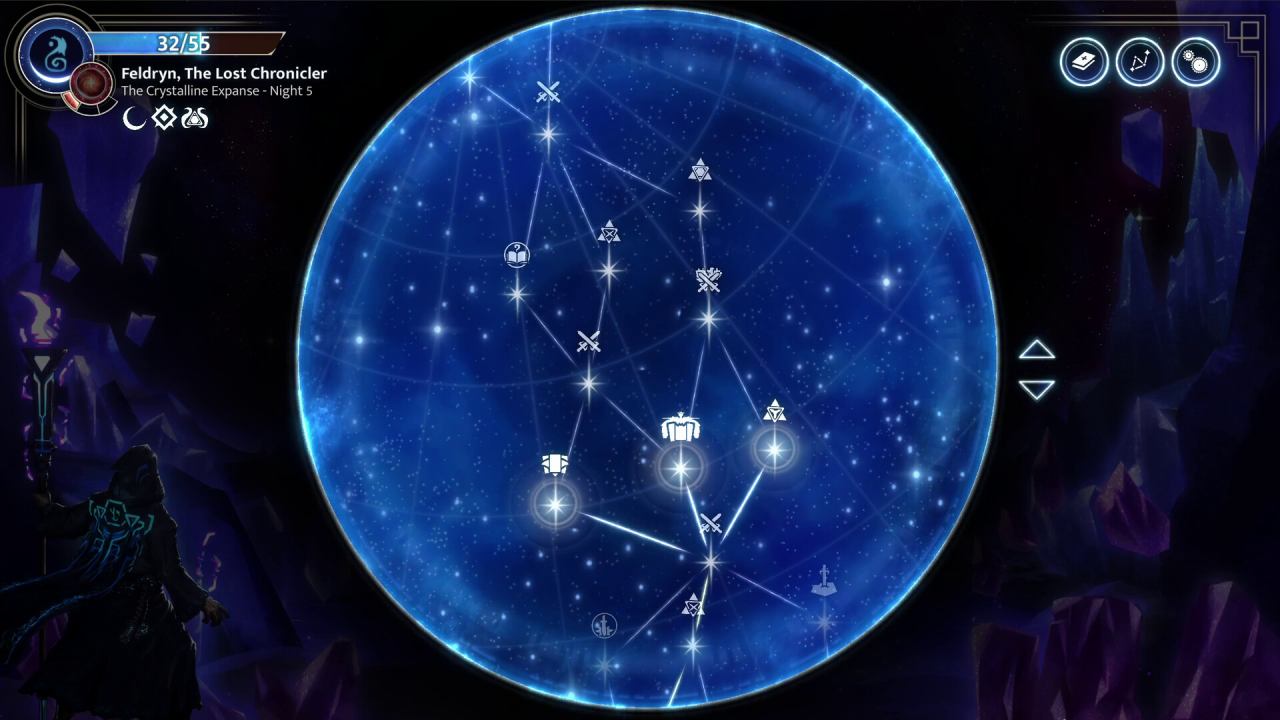
In order to further increase the strategic options, the game also incorporates runes, keywords, relics, and card interactions. In between turns, a few cards stay on the board. Bonuses from nearby postings are given to others. When put together properly, some combinations can produce extremely strong chains.
The seamless integration of these mechanics is noteworthy. Nothing seems overly difficult. You may build strategies without being overloaded with knowledge because new systems are presented at a comfortable pace. Additionally, the three playable characters contribute to the novelty. They all take various methods to fighting, which encourages experimenting with completely different playstyles.
While one character encourages aggressive combinations and quick damage output, another may reward meticulous defensive strategy. Changing between them alters not only the initial deck but also your perspective on the board.
Because Moonsigil Atlas is based on replayability, that variation becomes particularly crucial. Failure is expected, just like in other roguelikes. runs come to an end. Plans go awry. Promising constructs are destroyed by bosses. The distinction is that losses are seldom felt as a waste.
Each character gains more cards through a mastery system. There are more chances for experimenting as new possibilities gradually make their way into the card pool. Even if a run is unsuccessful, it still makes a contribution. This strategy won't appeal to everyone. Some players would rather learn strategies right away and have instant access to every card.
The slow sense of development will be appreciated by others. In any case, the unlocks offer a constant supply of motivation to continue playing.
Another area where Moonsigil Atlas provides a great deal of flexibility is the card upgrade system. You can change cards during runs in a number of ways, such as adding keywords, changing forms, and improving numerical values. A straightforward damage increase is frequently less valuable than the ability to alter a card's placement on the board.
Gradually turning a mediocre card into the focal point of a whole construct has a rewarding effect. The best upgrade choices feel significant since they have an impact on the card's functionality rather than just increasing the number.
But not all upgrades have that kind of effect. For some opportunities for improvement, they seem a bit too minor. Sometimes a reward node appears, and the available improvements don’t have the thrill you would expect after a tough fight. While not a major issue, it sometimes results in the progression between fights being less satisfying than it should be.
Another aspect is still randomness. While skill is a big factor in success, card draws and the availability of upgrades can have a less desirable effect on a run’s trajectory. The good news is that the game provides plenty of tools for making adjustments, so you rarely stay irritated for long.
Moonsigil Atlas has a simple, distinctive aesthetic. It doesn’t go for ostentatious animations or dazzling effects. Instead, it focuses on mood and clarity. The presentation is carried by the cosmic concept. Enemies often look like monsters transported from forgotten dimensions or far-off universes.
The art is a beautiful, unnerving blend and makes many interactions feel dreamlike, with particularly memorable Titan designs that convey a real sense of scale and danger. The card art also deserves credit. Even in challenging conflicts, the cards remain easy to understand.
While it may seem like a minor detail, Moonsigil Atlas handles readability well for a strategy-focused game.
It’s easy to get into the interface, following the familiar deckbuilder conventions. There are a lot of quality-of-life features, information is easily available, and the tooltips are useful. The minimal friction between the player and the mechanics is a testament to the strategic depth.
The music, while not as good as the gameplay itself, is still a good part of the experience. The soundtrack is comprised of ambient songs that fit the mood and complement the celestial setting. But longer sessions do show some repetition. Sound effects do their job without stealing the show; they provide enough feedback, but attacks, abilities and card activations don’t often have a great deal of impact.
The absence of voice acting is understandable given the magnitude of Moonsigil Atlas but does make the world feel a little less alive than it could have. Still, none of these flaws ruin the overall experience.
In the end, Moonsigil Atlas stands out for its unwavering devotion to its main concept. Many games have brilliant mechanics, but they don’t develop significant frameworks around them. Geographical decision-making is important here. The character designs, foes, upgrades and battle all support that vision.
The end result is a deckbuilder roguelike that feels truly unique while still holding onto the qualities that made the genre popular in the first place. It gets the draw of card-based strategy games and puts a new spin on each turn. There’s certainly room for growth. Deeper narrative elements, more characters, and more content would all be appreciated.
Even yet, Moonsigil Atlas is one of the most creative new works in the genre in recent years. This is the kind of game that's worth seeing if you've played a lot of deckbuilders and feel like you've seen every variant of the model. Although it doesn't totally reimagine the genre, it modifies enough of the framework to give each fight a new flavor. It's simple advice, just based on that.
Editor, NoobFeed
Verdict
Moonsigil Atlas uses deft spatial physics to transform a well-known roguelike formula. It’s one of the genre’s most welcome shocks, with smart combat, strong replay value, and an unforgettable cosmic atmosphere.
71
Related News
No Data.