
Valve Steam Machine vs. Nintendo Switch 2: Which Console Wins in Real Gameplay Testing
A color calibration issue with HDR enabled made early testing between the two consoles harder to compare fairly.
Hardware by Nahe Yan on Jul 19, 2026
When thinking about the price-and-performance philosophy, it's a comparison between the Steam Machine and Nintendo's Switch 2 platform. One is a mini-PC focused on raw power, and the other is an access-priced portable console focused on accessibility. Playing each game on both systems reveals which games benefit from no price differential and which have a price difference that can no longer be ignored.
First up, the Steam Machine's unboxing experience was quite remarkable. The packaging was modular and well considered, and the opening process made the console look great. The unit itself is compact and has a Gamecube-like shape, and swapping out face plates will allow for a degree of customization without being gratuitous.
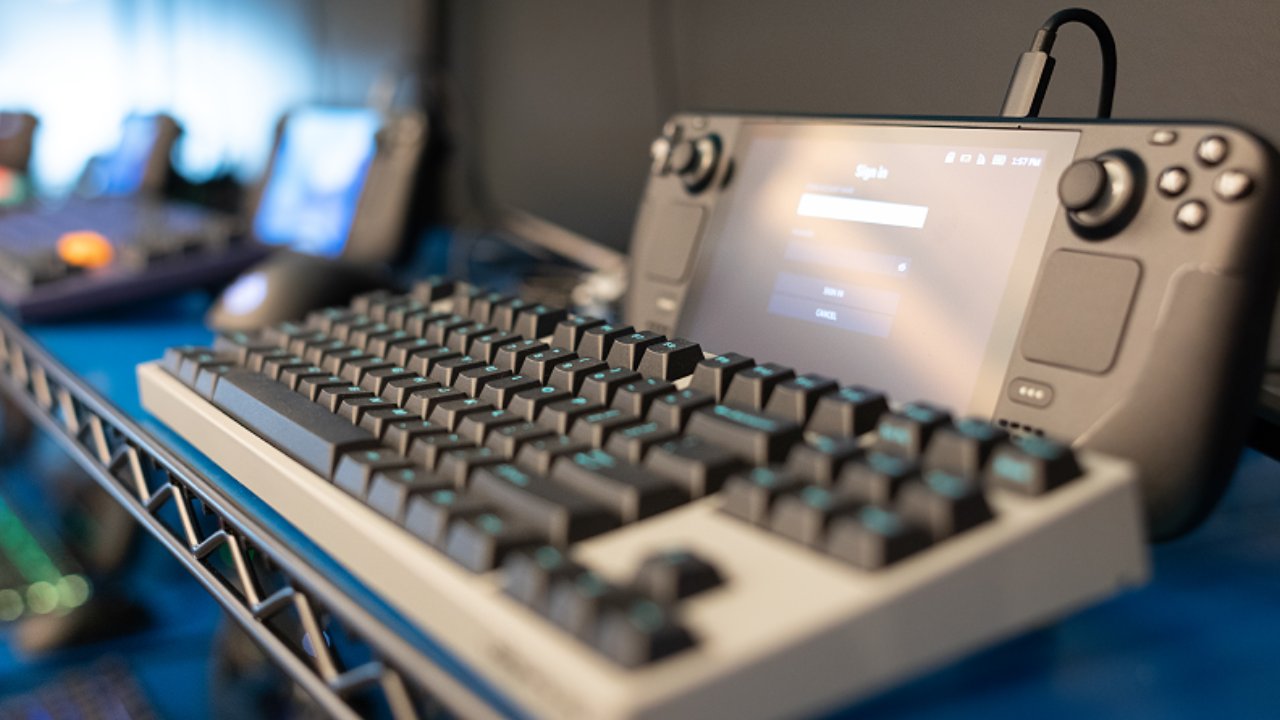
Unboxing and Design
The wood-grain face plate added a nice touch to the console, complementing a wide range of setups. Easy to place with USB front and rear, Ethernet, power & HDMI output. A blue light bar along the front provides a few extra visual cues, particularly during downloads, when it reflects off a TV screen.
Less dramatically, the included Steam Controller also features a few things that put a fine finish on it. The initial positioning of the trackpads on the controller is close to the thumbsticks, but this isn't noticeable during longer play. Two cables (HDMI and power) are the only ones required for the setup, and the console even comes with a charging puck as a simple stand.
When running SteamOS, the Steam Machine's console appearance is felt even though it's a PC beneath. You can play games straight from the interface; the store is simple to navigate, and most day-to-day tasks are effective. One of the biggest problems with it is that, unlike on a console, the graphics and resolution of every new game are still a bit hit-or-miss and will need some fine-tuning.
That trade-off is a two-way street. On consoles such as PlayStation and Xbox, you can only choose from quality or performance settings with little flexibility to change them, and if you do, you never have to wonder whether you've got the settings set just as they should be. Be it 3D or 2D, that background tinkering never truly leaves the Steam Machine, even though the whole experience is more reminiscent of a console than a gaming PC.
Gaming Performance Comparison
This wasn't the case in Cyberpunk 2077. This was a new build for Switch 2 and isn't simply a port of the other version. Despite that, I ran it with the Steam Machine at 1440p and low ray tracing and 60 fps, and the performance gap was evident. Switch 2 version doesn't sound like a cut-down version of the game, even with that in mind.
With price and portability taken into consideration, the comparison is more even, but overall, the Steam Machine still outshines the other on purely visual and performance criteria. The difference between the two was greatest with The Witcher 3. Switch 2 was never released as a specific version of the game; instead, it is played via the original Switch port, which cannot display it correctly.
When running The Witcher 3 on the Steam Machine at 1440p on the maximum setting (with the ray tracing disabled because of visual glitches), the results were much closer to the original game. Steam Machine's ability to render some scenes in greater detail, such as a wheat field that seemed more like a muddy swamp than a field of wheat, was very apparent.
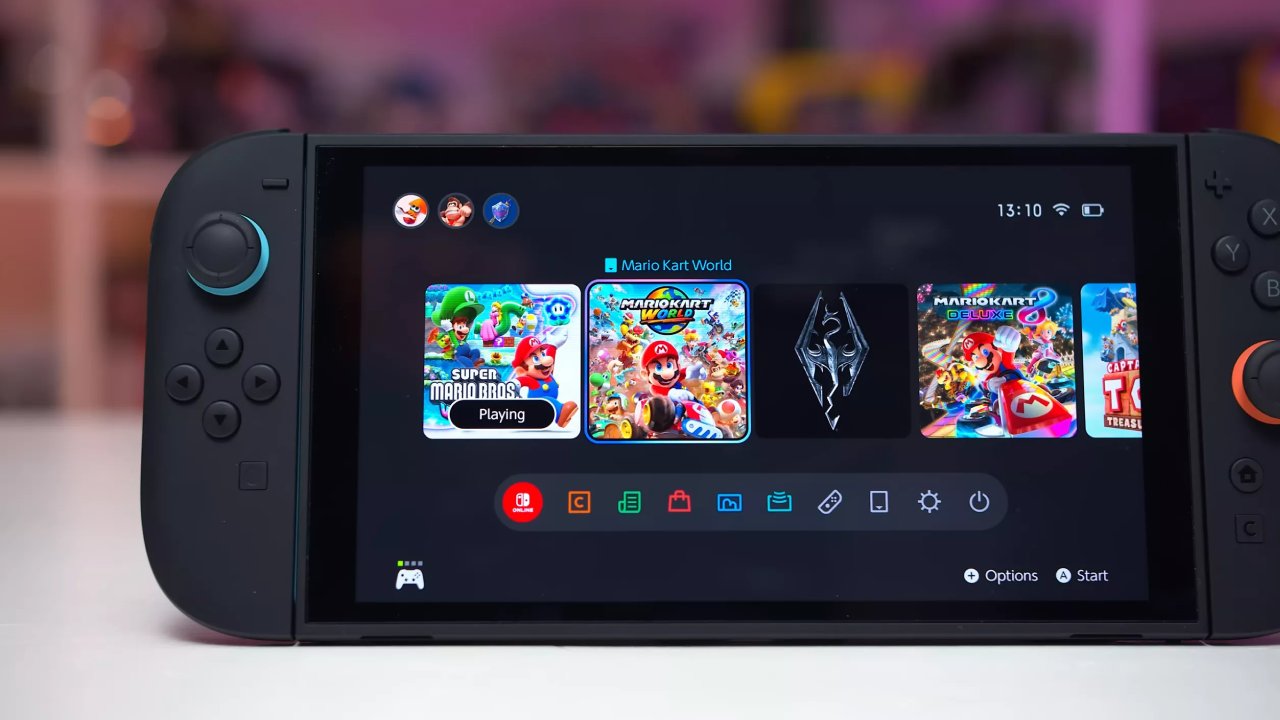
By default, Red Dead Redemption 2 runs at ultra and medium settings, and even at 1440p, testing showed 60 fps with no dropped frames. The outcome is especially noteworthy, as the game doesn't include a 60 fps patch for PlayStation 5, which runs at 30 fps instead.
But that is a huge plus for Steam over fixed console hardware, as performance and settings can be tweaked without waiting for the developer to patch the console. The balance is still the same as price – the Steam Machine's entry-level price is comparable to that of a PlayStation 5 Pro.
Steam Machine's base price is $1,050, but the more accessories you add, the higher the price will go.
That's a price that doesn't seem like a lot given its merits, and it doesn't seem to have been Valve's exclusive choice. This has led to consistently rising component prices, such as memory prices, across the industry, and console prices from PlayStation to Xbox to Switch have been on the rise.
If it had been around the $700-$800 mark, it would have been a lot easier to recommend the Steam Machine without hesitation. The graphics are solid when purchasing for the current price, and in several games, it's easy to see that the performance is in no way inferior to a fixed console – it's quite the opposite, in fact.
The compact design is also very suitable for a second player's console replacement rather than a main gaming PC, and that's if you're buying it new, since build quality improves over time. In simpler games, such as No Man's Sky, the Steam Machine always showed its potential for its size. But the cost makes it not a definite recommendation for everyone.
Editor, NoobFeed
Gaming Hardware Updates
No Data.