
AMD Ryzen 7 7700X3D: AM5's Most Affordable 3D V-Cache Chip
AMD launches the Ryzen 7 7700X3D at $329 alongside renewed production of the older Ryzen 7 5800X3D chip.
Hardware by Nahe Yan on Jul 17, 2026
AMD keeps rolling out new additions to its X3D lineup, adding one targeted at gamers seeking value on the AM5 platform. In 2026, memory prices and shortages have changed the PC-building landscape, and this new release plays a major role in that regard, too, offering the 3D V-Cache performance of a PC without requiring the fastest, most expensive memory kits.
Ryzen 7 7700X3D is also based on the Zen 4 architecture, which is older than AMD's more recent Zen 5 architecture, and is paired with the return of the Ryzen 7 5800X3D, an older AM4 chipset that AMD has revived for production. It has returned to help lower prices on the secondary market, where prices had spiraled out of control before then.
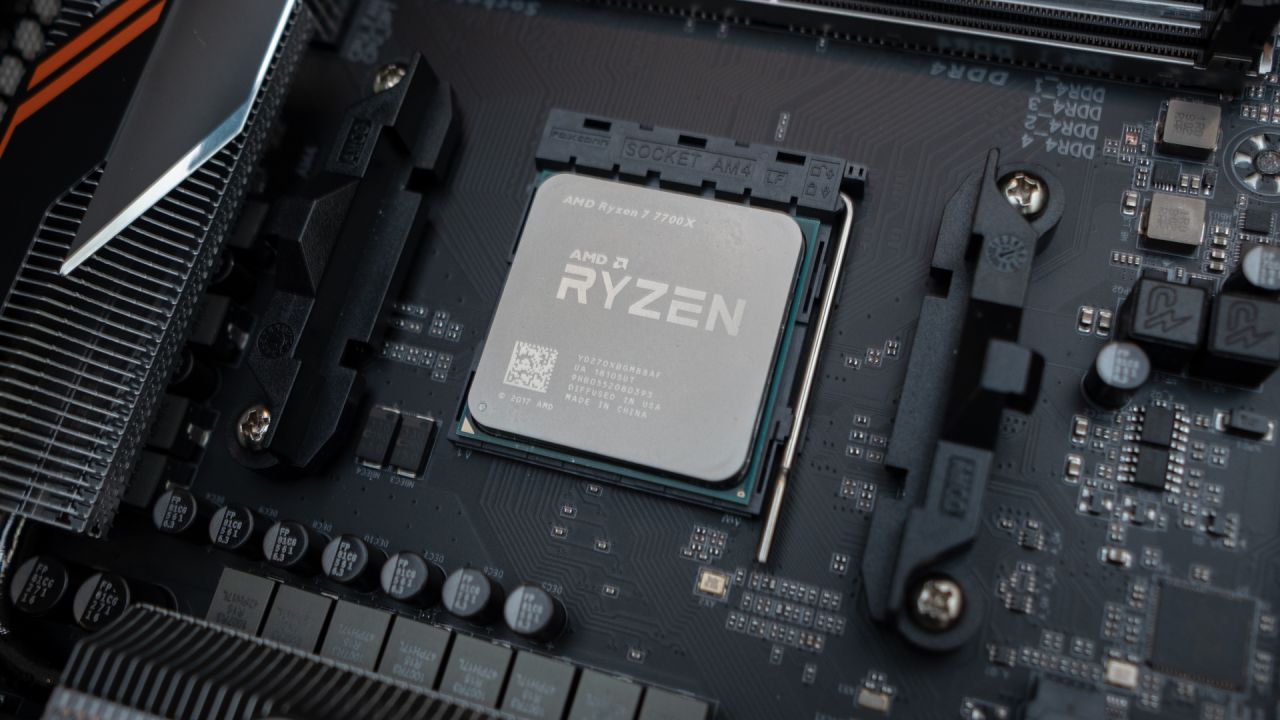
Specs for Budget AM5 Builds
With its eight cores and 16 threads, 120W power rating, the 7700X3D can work well with entry-level AM5 motherboards, which aren't always equipped with a big power delivery. With a 3D V-Cache design, it adds 104MB of total cache and supports AMD EXPO memory profiles; it was tested here with a DDR5-6000 CL26 kit from G.Skill.
Ensuring that much of the workload resides in the stacked cache helps the chip perform well even with slower memory or a single memory module, a desirable feature at a time when memory kits are expensive and scarce. On the 7800X3D, AMD's markup on the $329 price was clearly designed to beat overcharged prices on the secondary market – a time when components are still in short supply.
7800X3D doesn't need such a high clock rate for silicon, and it seems the company decided to do just that by down-binning silicon that it wasn't using for the 7800X3D. The 7700X3D also retains the 8-core configuration, where you would've expected to experience a significant drop in availability with a budget X3D, but you won't have to worry about that going forward.
Synthetic Benchmark Results
Compared to the Intel Core Ultra 7 270K Plus, the Geekbench multi-core scores are 22,000 for the 7700X3D and 15,000 for the Intel chip, while the 7700X3D's 4.5GHz peak clock slows it down in other benchmarks. Single-core Cinebench 23 scores were 1,818 for the 7700X3D, compared with 2,354 for Intel. Multi-core scores were about twice as high as those of the Intel chip.
With the same memory on both platforms, the AMD side had a latency of 69ns, and the Intel side had a latency of 81ns. The synthetic test results ranged from 640 to 889 for single-core and from 6,496 to 18,214 for multi-core, the lowest among the models in the test suite. This workload definitely shows a preference for the higher number of cores and threads in the Intel offering, but not so much for gaming.
Gaming Performance Across A Range Of Titles
RX 9060 XT clocked at 204fps, the RX 9070 XT at 303fps, the RTX 4060 Ti at 232fps, and the RTX 4090 at 331fps for Shadow of the Tomb Raider. With the RTX 4090, the 7700X3D delivered 286 fps, with 1% lows remaining fairly consistent, indicating the larger V-Cache's ability to minimize cache misses and maintain smooth performance under normal background system usage.
Cyberpunk 2077 also performed very well, with the RTX 5060 Ti hitting 127 fps at 1080p and the RX 9070 XT at 168 fps, while the RTX 5090 performed exceptionally well. At 1440p, the RTX 5060 Ti and RX 9060 XT dropped significantly, but the RX 9070 XT maintained 131 fps. The GPU is the obvious bottleneck at 4K, where the 7700X3D no longer looks that bad compared to the Intel platform.
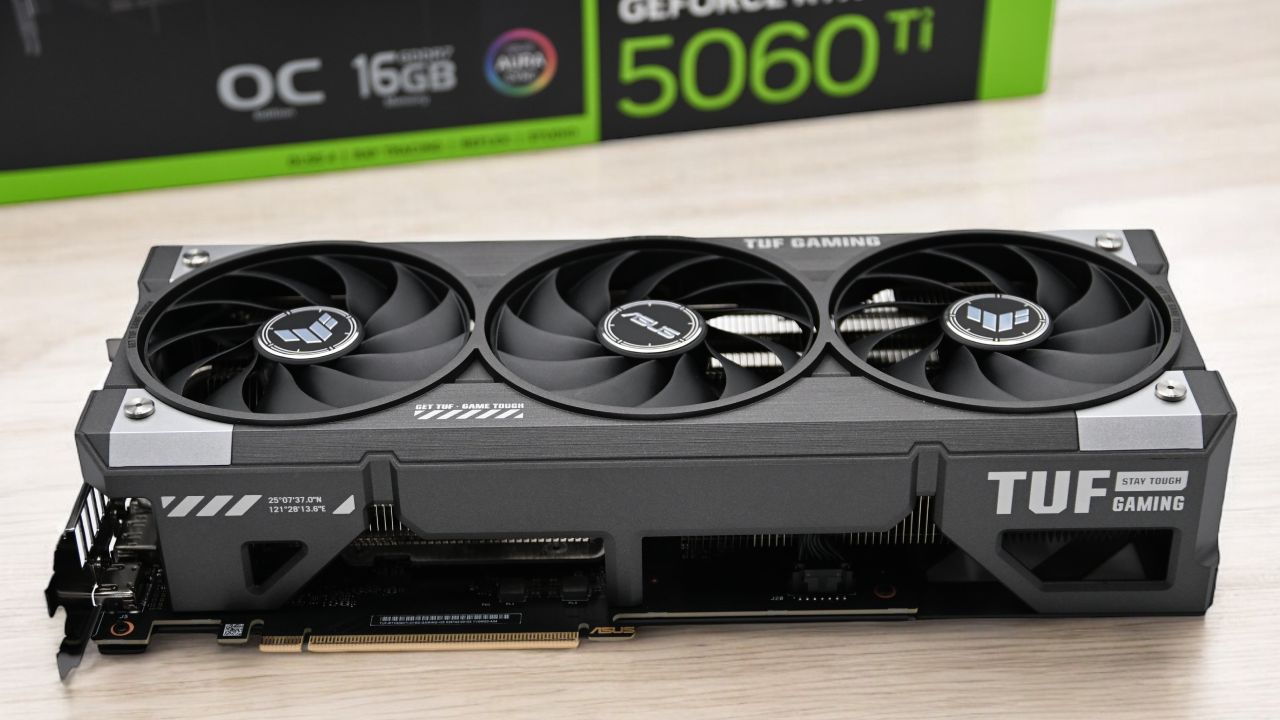
Far Cry 6 was also close to par between the platforms, with the 7700X3D seeing 118fps at 1080p and 138fps at 1% lows, compared to 132fps at 1% lows and 110fps at 1080p. 1080p testing is not yet in the realm of being GPU-limited either, as Monster Hunter World's 138fps to 130fps top-line number and 81fps to 78fps 1% lows showed.
The $329 price tag makes the 7700X3D fit seamlessly into the market, giving builders flexibility.
If they are putting more money into a higher-powered GPU, like the RX 9060 XT or RX 9070 XT, then that seems like a logical idea, given that the CPU is an eight-core model with plenty of room for compute-heavy titles such as Borderlands 4. 7700X3D and Core Ultra 7 270K Plus are solid choices in the $300 range.
The advantage of the AMD chip is the 3D V-Cache, which helps it in the gaming arena. Platform longevity is also in favor of AM5, as it can support boards from its launch through any BIOS update and is likely to continue supporting future Zen 6 releases, giving users the option to upgrade later without changing the motherboard.
One thing to keep an eye on is memory pricing, as older, lower-speed DDR5 memory modules with generic OEM branding that were just pulled out of the back of the truck will still work well in a 3D, since duesince due to all of its workload, the workload is being handled in the on-board cache. That trait allows builders to offer more affordable options as DDR4 and DDR5 prices continue to rise amid ongoing shortages.
Editor, NoobFeed
Gaming Hardware Updates
No Data.