
River City Saga: Journey to the West Review
Nintendo Switch 2
A mythic beat 'em up wrapped in pixel-art chaos and roguelike energy.
Reviewed by Asura Kagawa on Jun 07, 2026
The River City series has always been a good place for new ideas. It began in the late 80s as a rough-and-tumble side-scrolling combat game against the evil guys. It evolved into a world that would try RPGs, sports spin-offs, and ridiculous comedy. River City Saga: Journey to the West takes this idea even further, merging the series' trademark street fighting action with one of China's most important epics.
That makes the game seem both incredibly familiar and outrageously weird. Arc System Works has a pedigree of stylized fighters and nostalgic revivals, so they clearly grasp why people love the Kunio-kun series. The corporation isn’t into photorealism or big-budget theatrics. Instead, they focus on over-the-top characters, quick-paced combat, and brilliant pixel visuals.
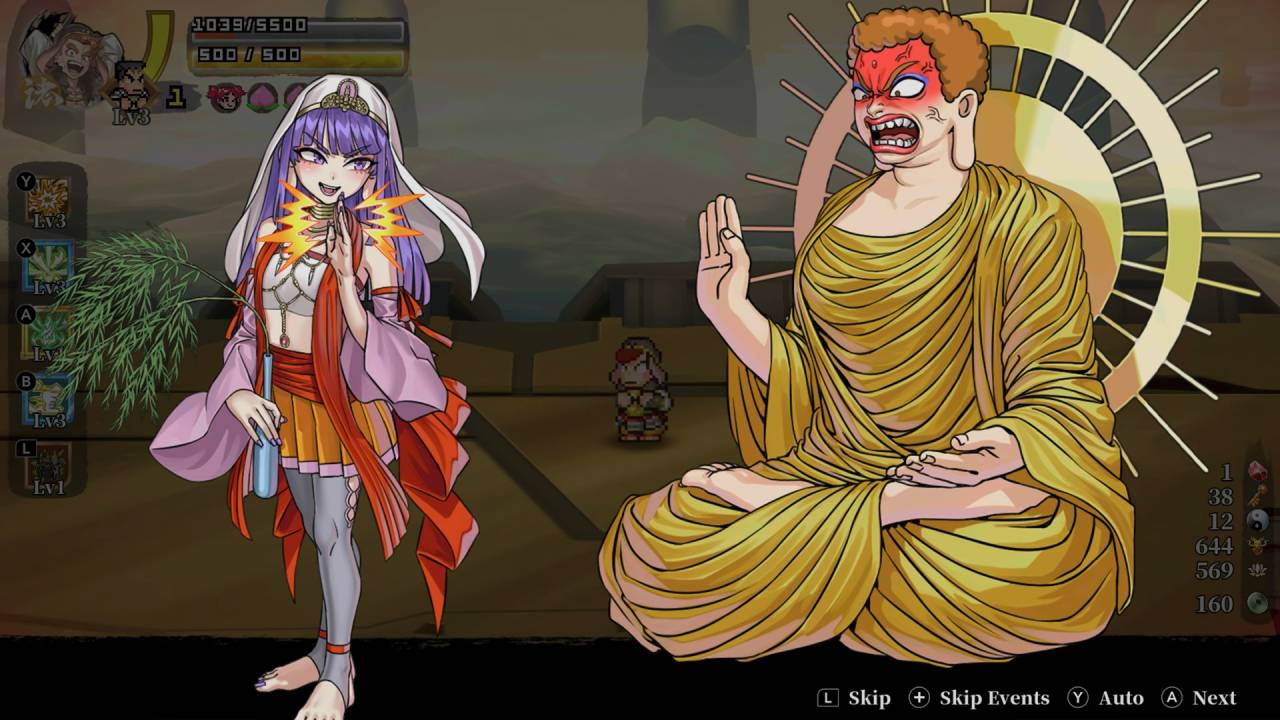
River City Saga: Journey to the West is no serious myth retelling.
It’s not that. It’s a fun mashup that uses classic stories as a backdrop for funny anarchy and arcade mayhem. The tonal mismatch may have led to the flop in the decision to retell Journey to the West through the residents of River City. But the game works because it doesn’t strive to be a true version. Kunio is like the wicked Monkey King.
The companions are like famous characters from the novel, and the plot is more about humor than historical truth. With this combination, River City Saga: Journey to the West stands out among a sea of increasingly more serious mythical action games. The core structure of the story is based on Journey to the West, although it doesn't stay locked in that structure.
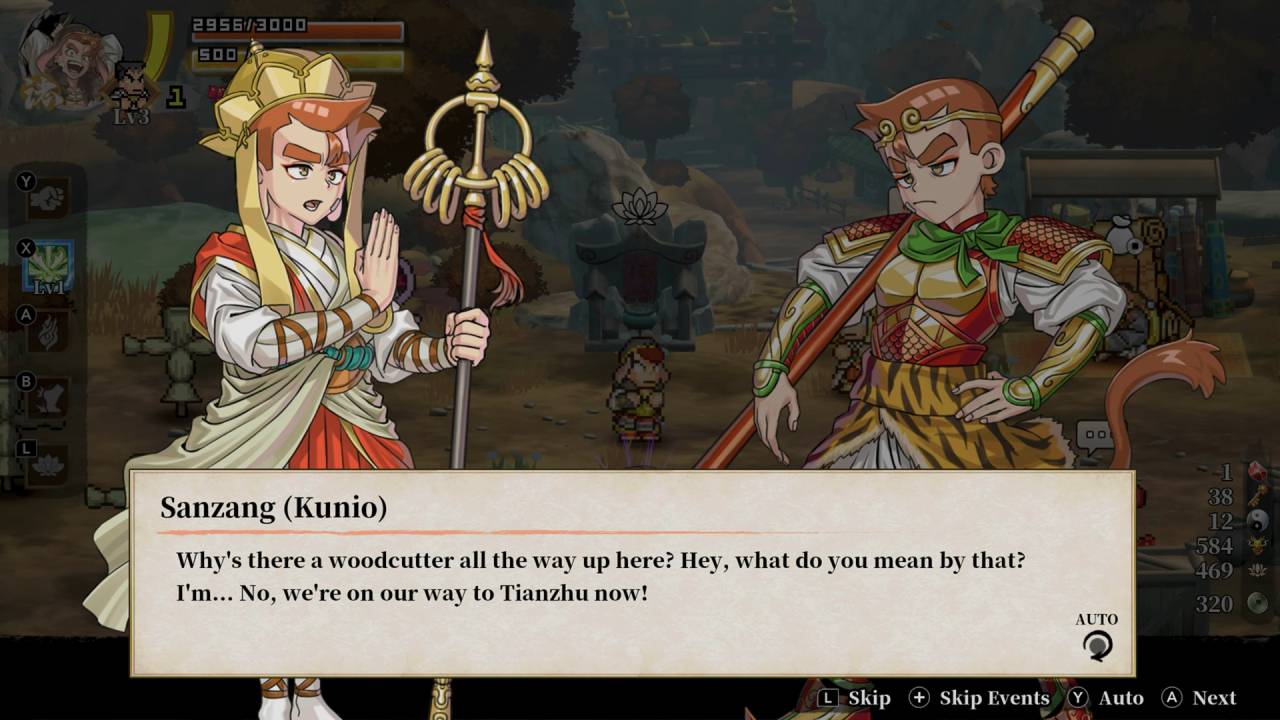
As Kunio and his weird companions trek towards Tianzhu, you will encounter otherworldly perils, weird characters, and more difficulty than they could shake a stick at. The plot has a lot of text-based discussion sections with over-the-top facial emotions and rapid jokes. This gives the game the rhythm of an old-school anime comedy, rather than an epic fantasy drama. The story works because it’s not afraid of being stupid.
River City Saga: Journey to the West doesn’t spend time dwelling on the fact that the bad people fighting are suddenly playing as mythological heroes. It just goes with the notion and moves on. The pace prevents the comedy from feeling forced, even when the story turns intentionally ludicrous with fart attacks, bad men gone wild, and gods who seem more bewildered than threatening.
But there is a price. For those seeking emotional depth or sophisticated character development, it could feel a bit light. The characters are more like comic stereotypes than real individuals, although the story doesn't dwell long on consequences or thematic depth. But that ease also suits the arcade-style pace of the game.
River City Saga: Journey to the West is less about presenting profound stories and more about inventing reasons to battle all the time.
I admire the world-building more than the character-writing. The combination of Chinese mythology and the River City design gives it a unique feel that most magical settings lack. The game takes place in temples, magic arenas, and against otherworldly foes, and features the series’ trademark cartoonish bravado. It creates a visual and audio style for the game that sticks with you long after the individual narrative points are forgotten.
River City Saga: Journey to the West is all about the adventure beat ‘em up. You enter short stages, fight waves of monsters, choose their rewards, and ultimately upgrade your characters with permanent upgrades and blessings that only appear on particular runs. The entire framework feels more like modern action roguelikes than the original River City adventures. Each stage features around ten short levels with boss battles.
The game loop is intentionally made shorter. A normal session means dashing fast between arenas, chaining melee strikes, dodging risks you can see, grabbing currencies and feeding those currencies into long-term systems for progression. Most runs take about 30 minutes, making the game easy to start up and play in small bursts. River City Saga: Journey to the West is clearly going for accessibility above a mountain of complexity.
There are three different fighting styles you can choose from. Sun Wukong for speed and agility. Zhu Bajie for stronger assaults. Sha Wujing for attacks from a distance. There are various variances, but the main manner all characters battle is the same. Stay mobile, sprint around a lot, and apply tremendous pressure to adversaries until they give up. In fact, the game is more about moving around than positioning yourself carefully.
The most interesting aspect of the game is the gift system. You are able to choose upgrades after key encounters, which can make a major difference in how a run proceeds. Some presents will increase damage or critical rates, while some will grant you totally new skills, like flame kicks, electrical effects, or portals that drop goods.
These upgrades add unpredictability to each game and keep the fighting from feeling entirely stagnant. But the system doesn’t let you experiment with builds in the manner that the best roguelikes can, which can dramatically alter your style of play.
Fighting is the most immediate satisfaction in River City Saga: Journey to the West.
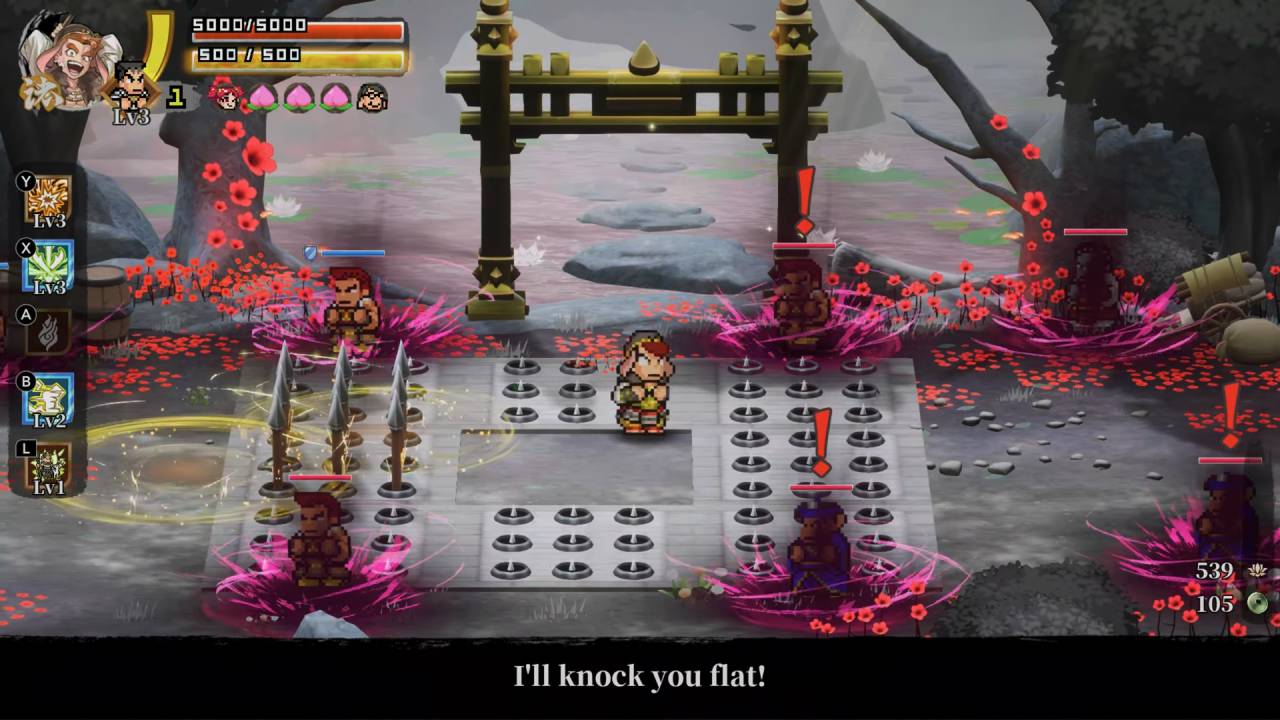
Battles are really fast and chaotic, and rely heavily on dashing. The glowing indications tell you when the enemy is coming, explosives are quite clear, environmental risks give you ample time to respond, and you don’t feel upset. This readability allows for quick entry into action even when locations are filled with foes and effects.
The tools are supposed to be straightforward to use. You avoid getting struck by punches, kicks, throws, special moves, and fast runs. It sets a cadence that invites spontaneity vs technical correctness. This game has a strong arcade feel: foes fly across the screen, supers explode with dazzling effects, and fights get crazier and crazier. River City Saga: Journey to the West knows that beat 'em ups are best when they are dynamic and exciting to play.
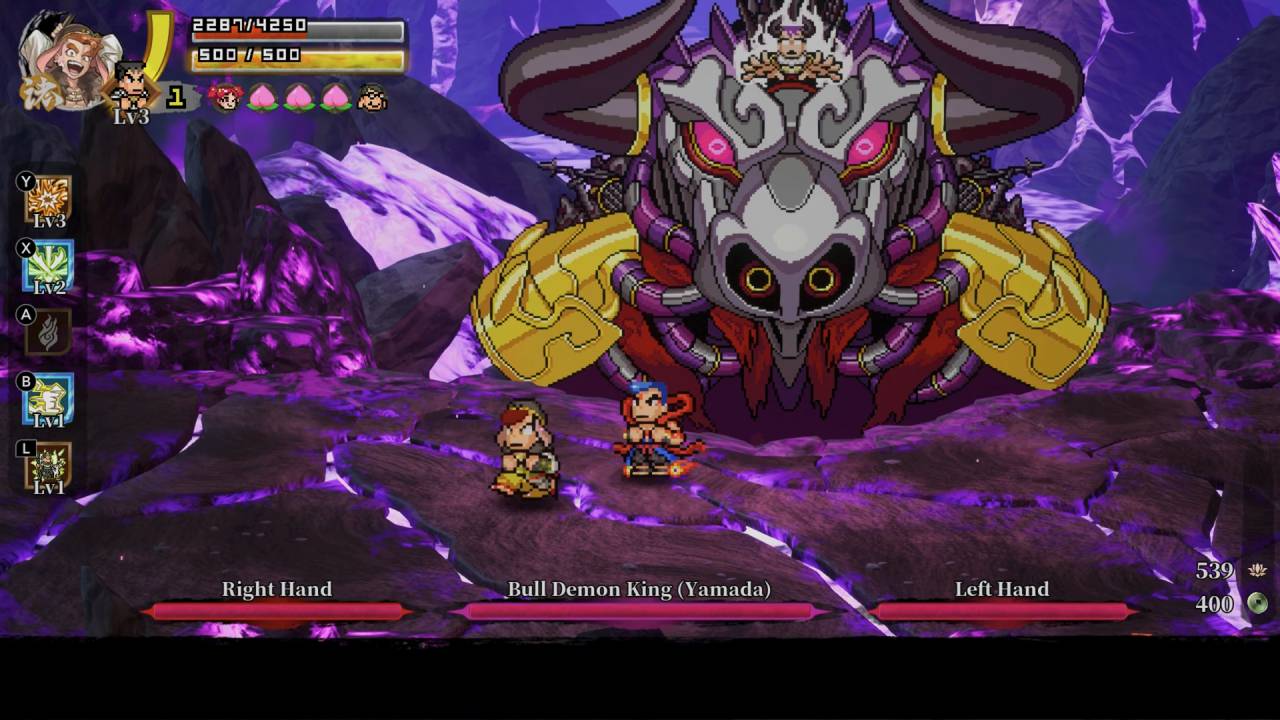
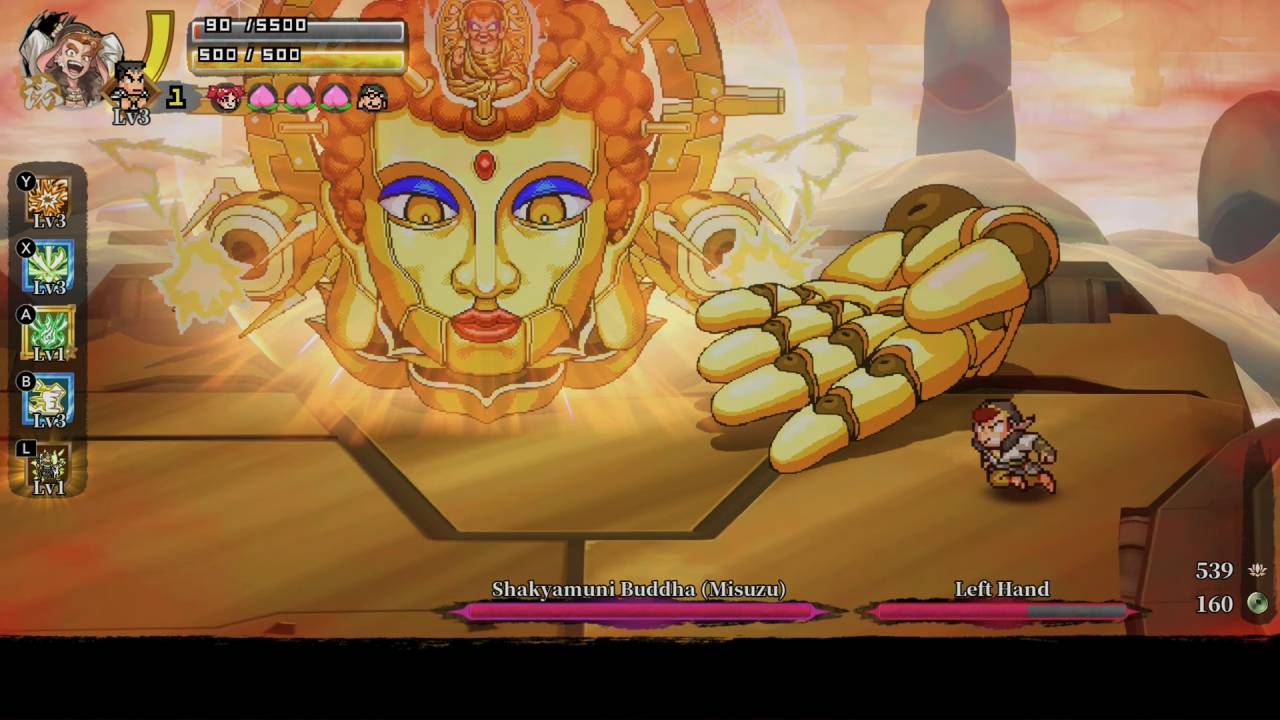
The boss fights are less fair. Most of the time, attackers are human-sized and have attack patterns that are easy to control. In some of the hardest encounters though, giant gods with detachable hands and huge weak places appear. These battles are fun to watch, but they can become repetitive after a time when the same dodge-and-punch maneuvers are repeated. Sometimes the game messes with scale and range.
Puzzles, however, are virtually entirely absent. It’s easy to explore and progress through, and there’s not a lot of emphasis on solving environmental puzzles or learning complex dungeon systems. If you're after cerebral puzzles, you won't find them here. River City Saga: Journey to the West is all about fighting, and every system ends with you coming back into war.
The fighting mechanism is fast, and that is the nicest thing. It’s a game you can pick up and play in minutes. It’s responsive to movement, and the frequent dashing gives you a satisfying sense of speed. Failures rarely seem random, but fair, because adversary blows are visible in advance. River City Saga: Journey to the West does a terrific job of offering you small bursts of insane enjoyment without making you spend hours learning the controls.
Another excellent thing is the variety of upgrades. Blessings and permanent unlocks allow you to alter their runs to suit your desired play style.
They can compound elemental effects, make knockback stronger, or employ movement skills to construct damage zones, for example. These systems make the game entertaining to replay and make you want to experiment with new things, especially early on in the game while new powers are still being discovered.
The bad thing is that the fighting can grow dull pretty quickly. There are some amazing effects and upgrade possibilities, but the basic strategy is still mostly just pushing buttons furiously and dashing a lot. There are not many new types of adversaries, and longer sessions illustrate how often encounters reuse the same attack patterns again and over. River City Saga: Journey to the West has lots of different improvements to gain, but the adversaries are not that deep.
There’s also a sensation of ennui with no interesting puzzles. There isn't much to explore, and the transitions between the fighting arenas are generally straight lines, so there aren't many occasions when you can do much other than fight. It works well as an arcade brawler, but it can be hard to keep playing for long, as too many of the systems are based on the same fundamental loop.
In River City Saga: Journey to the West, you don’t grind for the sake of grinding, but employ multiple currencies and lasting upgrades to progress forward. You can earn resources between runs that you can use to buff your health, attack power, skills, and survivability by clearing levels, defeating bosses, and completing optional activities. There is always a sense of progress, even after failed attempts.
The mechanism is pretty fair, by roguelike standards. You can also buy more rest points, enable instant revives, and massively power up their base stats, making their next run much simpler. In real life, this implies the game gets easier, not harder. River City Saga: Journey to the West is way more forgiving than a lot of roguelikes you see out there today.
There’s still more slogging to do, especially for those who want to collect all the improvements and mystery presents.
There are optional trials and challenge goals that add currency, encouraging running through previous stages more than once. But the grind doesn’t feel too harsh, with short runs and swift rewards. It’s a more respectful use of your time than many growth-oriented action games.
The easy upgrade method can make the long-term task less tough, which is a bad thing. Once you’ve acquired enough health boosters and revive options, the game becomes a lot simpler, which removes some of the tension that makes roguelikes so exciting. The more upgrades you receive, the less River City Saga: Journey to the West is about understanding systems and more about steadily getting past challenges.
River City Saga: Journey to the West is one of the nicest-looking things about it. The pixel graphics are vibrant and expressive, the motions of the characters are over the top, and the locations are a fantastic mix of cartoonish flair and traditional Chinese mythology. The game knows how to employ color and motion to make things attractive to look at even when fights become chaotic.
2D sprites + softly rendered 3D spaces combo works a lot better than I imagined it would. The two styles don't clash but work nicely together in giving the fight arenas depth while preserving the characters' nostalgic charm. Special movements are particularly flashy, covering the screen with dramatic effects that make the game even more thrilling without being impossible to understand.
The screen is often hard to see, especially during boss encounters with plenty of effects or massive waves of attackers. But the whole show hangs together because the art direction is so self-assured. River City Saga: Journey to the West is not trying to be realistic; it embraces stylization. This gives the game a classic vibe which many mid-budget games lack.
The character pictures and conversation art are really nice.
Over-the-top facial gestures and hilarious replies provide additional vitality to scenes that could otherwise feel flat. The visual approach sells the humor and keeps the narrative bits entertaining even if the text is not great.
Music in River City Saga: Journey to the West contains largely bouncy tracks as well as retro-inspired music that fits nicely with the game’s lighthearted tone. Battle themes keep things flowing during the fight, with lighter tunes keeping the hilarious vibe continuing in between rounds. The music might not be famous, but it always fits the action and doesn't get in the way.
Sound FX are faster. The punches feel amazing when they connect, the special move sounds are over-the-top, and the way the foes respond adds to the game's comic atmosphere. The sound design understands that beat ‘em ups are all about feedback and has enough punch to make battle feel alive and responsive.
The lack of voice acting matches the retro style, yet some gamers may demand vocal personality during critical story points. Instead, it uses sound effects and language that is how you feel to be hilarious and emotive. Ultimately, River City Saga: Journey to the West employs music as a means to help with speed and mood rather than making it the focal point.
If the practice continues for a long period, the soundtrack can turn blurry. None of the tracks strike out as something new or memorable, and repeated plays of these tracks illustrate just how little auditory variety there is. Still, the music package as a whole does an excellent job of maintaining the game’s identity as a fun, fast-paced arcade excursion.
River City Saga: Journey to the West is a vibrant blend of mythology, roguelike growth, and arcade battling, and there’s enough short-term enjoyment to be enjoyed with it. It’s very colorful, and fighting is so easy that you just enjoy it without thinking much. But it has repeated battles and no long-term purpose to make it unforgettable.
Staff Writer, NoobFeed
Verdict
River City Saga: Journey to the West delivers fast-paced roguelike brawling, vibrant visuals, and plenty of charm. While combat depth fades over time, its humor and personality make the journey worthwhile.
77
Related News
No Data.