
The Front Review
PC
A gritty debut that shoots for greatness but gets caught in its own crossfire.
Reviewed by Maisie Scott on Nov 06, 2025
When The Front launched, it arrived with the swagger of a game aiming to redefine the survival-crafting-shooter genre. The game was made by Samar Studios, a new team that was making its launch. It was supposed to combine the resourceful creativity of Rust and Ark: Survival Evolved with the tactical chaos of Battlefield.
It sounded like a big change in the genre on paper. The Front is an interesting paradox because it's both an ambitious and visually stunning survival game that often falls apart under the weight of its own promise.
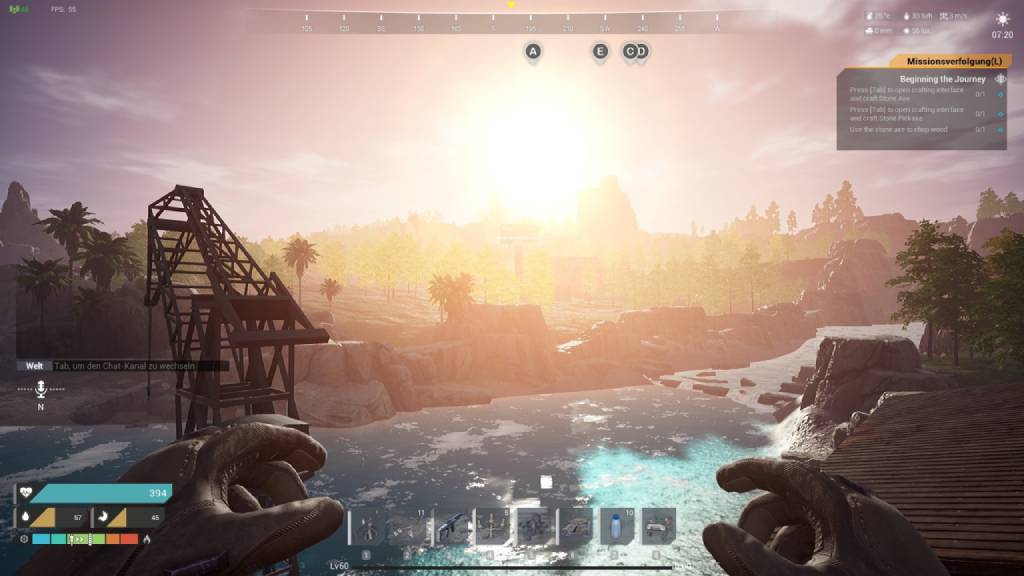
The Front was made in Unreal Engine and puts you in a future sandbox where industries are falling apart and the military is ruling without any rules. The last few people on Earth are stuck between rebelling and being controlled in this world.
The story is set up in a way that feels more dramatic than the usual naked-on-a-beach survival opener. Samar Studios' vision is clear: to create a survival shooter that's as much about building and tactics as it is about surviving. Yet as with most first projects from new developers, the cracks show. Beneath its scale and promise lies a game in dire need of fine-tuning, a diamond still buried deep in rough stone.
In The Front, you play as a resistance fighter who is sent back in time to change history by stopping the rise of a cruel kingdom. The idea alone makes it different from most survival games, where the story is less important than building a base and gathering resources. The setting is interesting here because of time travel and rebellion, but the story quickly fades into the background once the game starts.
The world of The Front is sad and haunting. It's a war-torn wasteland full of dictatorships, abandoned factories, and slaves working under the watchful eye of armed bases.
The story is told through environmental signs instead of cutscenes, and the effects of losing freedom are shown through the way the world is designed. It never fully lives up to the promise of its idea, which is a shame. Other than a few notes and hints at a background, the story feels like it's half-buried under the game's systems.
The idea behind this game is strong: a world to explore and a timeline to change, but Samar Studios hasn't quite figured out how to bring that world to life. There are NPCs, but they act in strange ways, going from being completely sleepy to being very accurate with a machine gun. What's at stake, why the player fights, and other emotional elements that could have anchored the experience are still not fully developed.
The Front feels like a world rich in history, but one where no one remembers how to tell it. At its core, The Front is a hybrid of survival crafting and tactical shooting. As a humble beginning, you gather sticks, stones, and other scraps to make your first set of tools. The first few hours are methodical and almost meditative as survival skills take over.
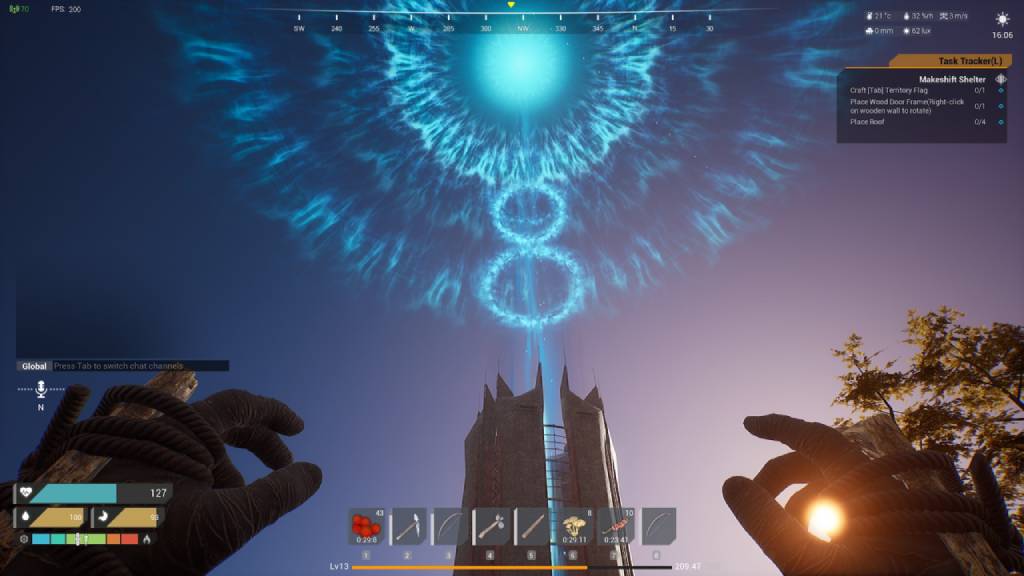
Every choice is always weighed against hunger and thirst, which forces us to be efficient and aware. It's familiar ground for veterans of 7 Days to Die or Ark: Survival Evolved, but The Front tries to push the envelope through scale and complexity.
The crafting system operates like a skill tree, where leveling up through experience unlocks new tiers of blueprints in the Tech menu. At first, progress feels good because each crafted item opens up new options, ranging from simple weapons to automated defenses and even fully working vehicles like tanks and helicopters. For a first version, this system has a lot of depth, but it's not very easy to use.
The user experience is bad, with menus that are hard to understand and key functions that are hidden behind too many clicks. The absence of a search feature in the Tech tree makes crafting unnecessarily tedious.
Movement, meanwhile, remains one of The Front's biggest stumbling blocks. Traversal feels sluggish, with sprint acceleration so slow it can't keep up with the urgency of combat. Vaulting is nonexistent, forcing awkward detours around obstacles that should be easily surmountable. This lack of fluidity seeps into the rhythm of the game, making discovery feel more limiting than fun.
But the goal is still clear. Samar Studios has made a huge playhouse that could get out of hand. Being able to outfit teams, build huge fortresses, and fight huge PvP battles suggests a unique game that might one day be as big and exciting as Rust and Battlefield. But until its mechanics catch up with its vision, that dream remains just out of reach.
Combat in The Front is both its greatest asset and its most glaring flaw. There's undeniable satisfaction in its arsenal: assault rifles, shotguns, sniper rifles, and mounted turrets populate a world primed for warfare. The weapon selection is impressive, and the variety of vehicles: armored trucks, tanks, and helicopters, is borderline audacious for a debut title. Yet none of it feels truly polished.
Firing a gun lacks weight. Recoil and impact are muted, sound design undercuts tension, and hit registration feels inconsistent. Even if you have a lot of Talents, the bullet spread can make firefights more like annoying games of chance than competitions of skill. AI opponents go back and forth between having amazingly accurate aim and being so bad at their job that it's funny. This makes battles feel unpredictable instead of exciting.
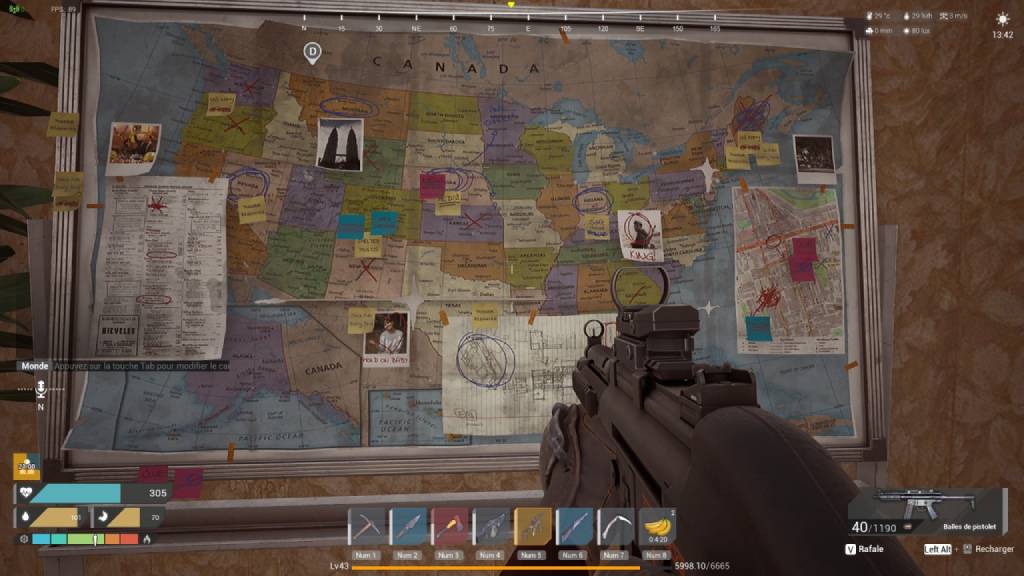
What works about The Front is that it can lead to chaos. When everything works, PvP battles can turn into amazing shows with players building makeshift defenses, ordering helicopter attacks, or planning tank attacks. Even though they don't happen very often, these times show the kind of brilliant adrenaline-fueled work that Samar Studios clearly had in mind. Unfortunately, jank always works against them.
Stuttering animation, late inputs, and AI behaviors that are hard to guess make the experience less immersive.
The lack of responsive movement makes the battle even less fluid. Strafing takes a long time, dodging takes a long time, and the collision recognition in the game can cause funny mistakes. Too often, battles that should feel like high-stakes battles end up being awkward exchanges of fire from behind impossible cover.
The good news is that The Front's combat systems are salvageable. Its foundation, a blend of tactical depth and sandbox mayhem, is strong. The presence of vehicles, fortifications, and weapon customization gives you multiple paths to dominance. Raids in PvE against AI groups can get really tense, especially when resources are limited and the stakes are high.
But there are too many flaws to ignore them. The battles are less exciting because the game's return loop is slow. Hits don't hit with enough accuracy, and the AI's overly large health pools make fights into bullet sponges. It seems like the mix between realism and responsiveness is off. The Front's world wants to feel grounded, but it often ends up feeling grounded in frustration instead.
Leveling in The Front ties directly to survival and crafting. Every action, like chopping trees, mining ore, and building traps, feeds into your experience meter. With each level, you can access more Tech Tree tiers, which give you more blueprints and powers. This gives a real sense of progress, as each milestone opens up new chances to try new things.
On top of this system are talents, which let you become experts in things like building, fighting, or gathering resources. It feels like progress is steady and straight. At a certain level, like 30, 35, 45, etc., you can use each skill. So, growth is no longer random, but can be predicted. Ether Shards are a high-level item that can be used to buy late-game materials. Their drop rates need to be changed because they don't drop very often from enemies and stores.
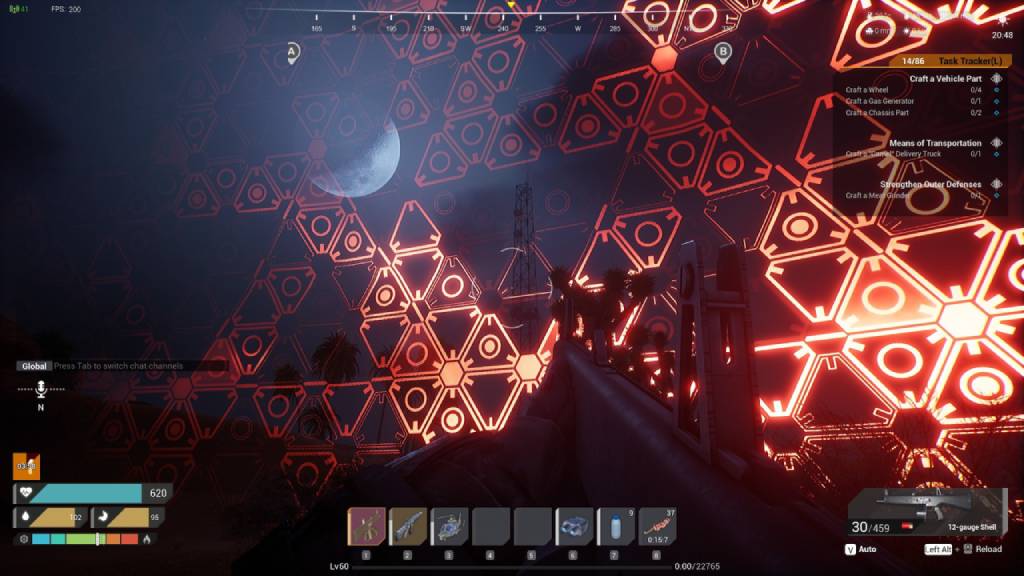
Long-term motivation is limited because there aren't strong XP modifiers for risky actions like defeating elite enemies or finishing complicated constructions. Progress is being made, but it doesn't feel like it's making sense. You do get stronger, but that doesn't mean you get better at what you do.
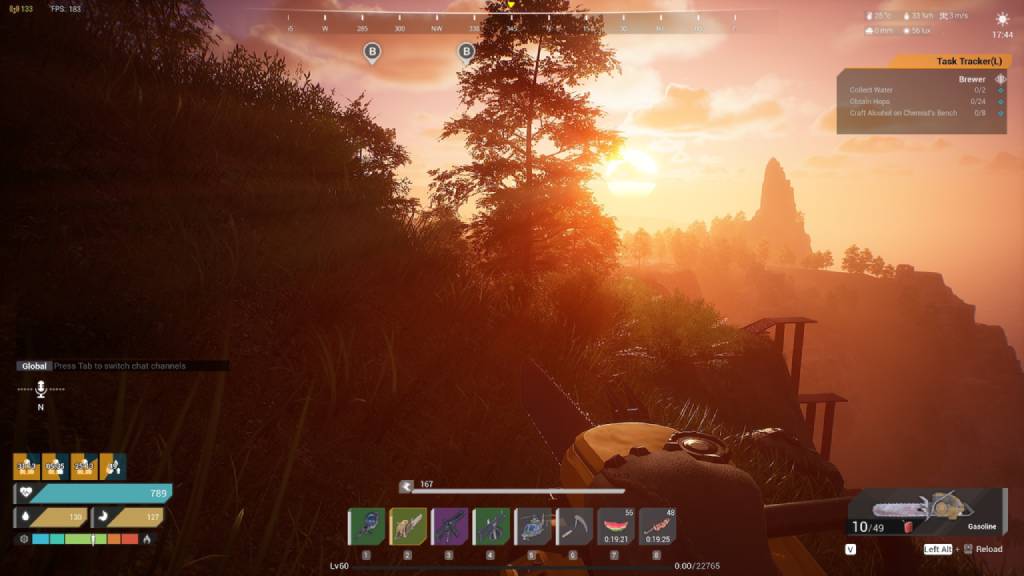
For a debut title, The Front is visually ambitious. The world designed by Samar Studios shows a scary dystopia with rusty machines, crumbling forts, and windswept fields. The Unreal Engine that it's built on promises great quality, and the game looks beautiful from a distance. But when you look more closely, things don't look so good.
It looks like the lighting isn't even, and the textures and shadows in the rooms don't have enough depth.
Despite boasting large environments, many areas feel empty, filled with potential, but devoid of character. On high-end systems like an RTX 4090, performance still fluctuates between 60 and 80 FPS at 4K resolution, occasionally dipping due to shader stutter and optimization issues.
The visual design succeeds in tone but falters in consistency. Some areas, like the coastal ruins and dense forests, are breathtaking. Other industrial corridors and settlements feel hastily constructed. The Front captures the scale of a dystopian war zone but struggles to populate it with life.
Sound design in The Front is a mixed bag of brilliance and blunders. The rustling of leaves, faraway gunfire, and haunting wind are all great examples of ambient sound. The music in the game makes you feel like a fight is about to happen. It gets louder when you're in danger and quiets down when you're exploring.
But the sounds of the weapons don't have the punch that you'd expect from a current shooter. Machine guns bark without bass, explosions feel muted, and vehicles, particularly buggies and trucks, emit flat, uninspired engine tones. The disconnect between the visual chaos of combat and the subdued audio feedback dulls excitement.
Environmental soundscapes remain one of Samar Studios' best achievements. From eerie nighttime howls to the creak of collapsing structures, the sound environment adds atmosphere where visuals sometimes falter. Voice acting, minimal though it is, serves its purpose without standing out.
It's easy to see that The Front is going to be a mess. Samar Studios has made a survival game with big goals: it wants to combine the freedom of Rust with the tactical accuracy of Battlefield. The world has a lot of atmosphere, the systems are complex, and the making loop is really fun. But for every clever mechanic, there's an annoying flaw that stops it from being perfect.
Combat is dull, moving is awkward, and optimization problems still show up even on the best hardware. Its AI goes from being dangerous to not doing anything, and its world is both beautiful and empty. But somewhere beneath all the mess and imbalance is a spark that should be taken care of. Samar Studios has made the basics of a sandbox game that, with time, updates, and polish, could be as good as the big names in its field.
For now, The Front is a good first album that is still very raw. It's rough and annoying a lot of the time, but it's clearly bold. Even in the survival game world, that goal is something that stands out. If there are regular updates and comments from the community, this could go from being a boring curiosity to a cult classic. There is a base here; it just needs someone with more stability to build on it.
Editor, NoobFeed
Verdict
Ambitious yet uneven, The Front combines deep crafting and large-scale warfare with clunky mechanics, a flawed debut bursting with potential and waiting for polish to match its vision.
53
Related News
No Data.