
The House of Hikmah Review
PC
An intimate journey through loss, legacy, and luminous knowledge that intertwines scholarship, memory, and Islamic history.
Reviewed by Zahra Morshed on Apr 11, 2026
The House of Hikmah is not a sequel to inherited mythology. It is the first original work from Lunacy Studios, an entirely remote and independent team whose first big statement is both culturally and emotionally accurate. This project's setting is important because most debuts talk about technical ambition or genre fluency.
This one, on the other hand, does something much harder and more memorable: it talks about identity, history and the true belief that games can carry scholarship with grace. In comparison of getting its prestige from well-known fantasy tropes, it draws from the House of Wisdom, Baghdad's educational center during the Abbasid era, and turns that history into an interactive way to remember.
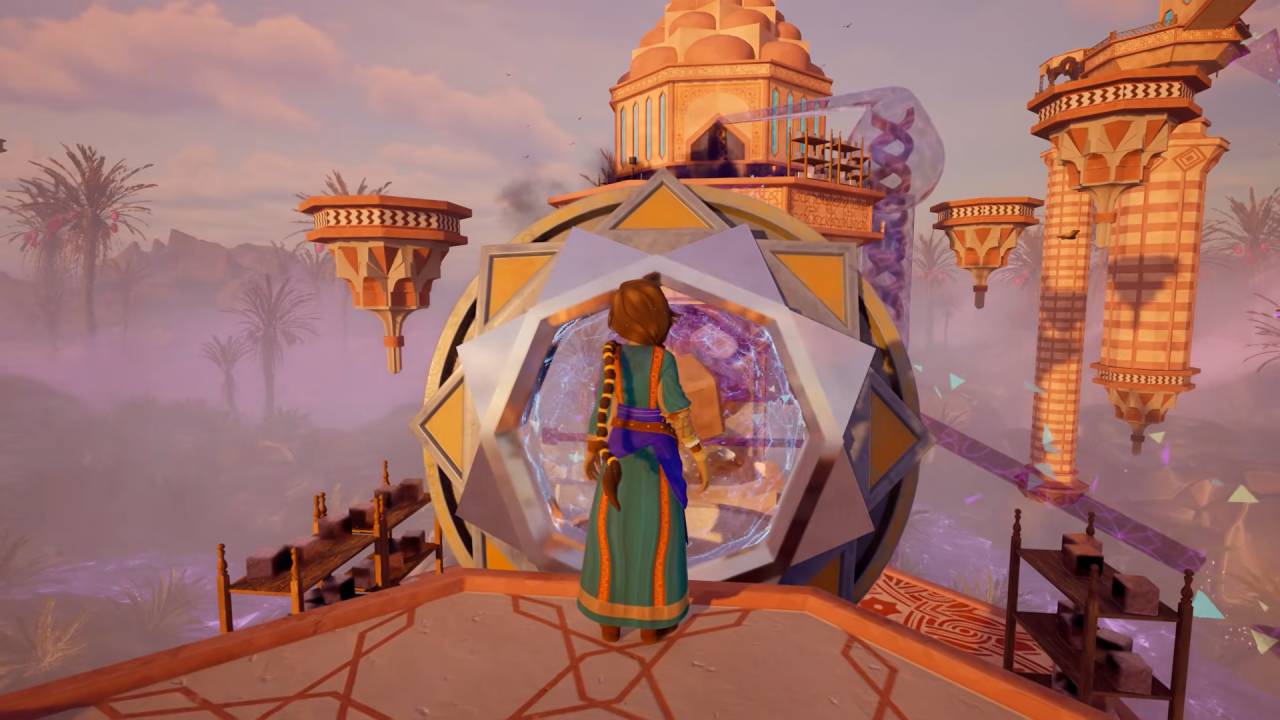
From the start, the way the game looks makes it clear that it's not just a puzzle game dressed up in fancy clothes. It's a carefully crafted work of cultural storytelling with current emotional tensions. Another good thing about The House of Hikmah is that it comes out at a time when players are looking for games that feel more like they were made by hand, and this project knows exactly how to fit into that talk.
There is beauty in almost every room, but it's not based on spectacle for spectacle's sake.
Instead, it's a well-balanced mix of story purpose, visual literacy and mechanically grounded symbols. The first game from Lunacy Studios isn't meant to shout, but to resound. They've made an experience that seems truly handcrafted, with each room, scholar and puzzle bolstering the overall emotional structure. That level of discipline gives the game an air of trustworthiness right away, even before its flaws and strengths become clearer.
In The House of Hikmah, Maya is the main character. She is 14 years old and is still dealing with the death of her father. She has a lot of unanswered questions, which is a normal part of grief. Her trip to the House of Wisdom is not a typical heroic quest. Other than that, it is an inward search that is disguised as an outward trek. Each room is part archive, part memory chamber and part spiritual test.
This structure gives the story power because it lets the mourning happen through action instead of explanation. It lets the player's finding, hesitation and emotional resistance become part of their voyage through the world. The story is very tender because it doesn't use pain as decoration and doesn't try to make healing look neat, commercial, or pretend as if a victory.
The writers go even deeper by showing past Islamic scholars as real people who lived and worked in this mysterious world, not merely names on a wall. These scholars are shown as smart, funny, sad and devoted. People like Ibn Sina, Fatima al-Fihri, Mariam al-Astrulabi, Jabir ibn Hayyan, and others are not just historical figures that are there to look nice; they are also involved in Maya's emotional growth and the game's greater argument about themes.
Their presence in the story takes it beyond a personal exploration of sadness and turns it into a larger reflection on legacy, knowledge, continuity and the duty to pass on wisdom after loss. At that point, the writing really shines, because it knows that history comes to life when it talks to us now, not when it's hidden behind silk rope.
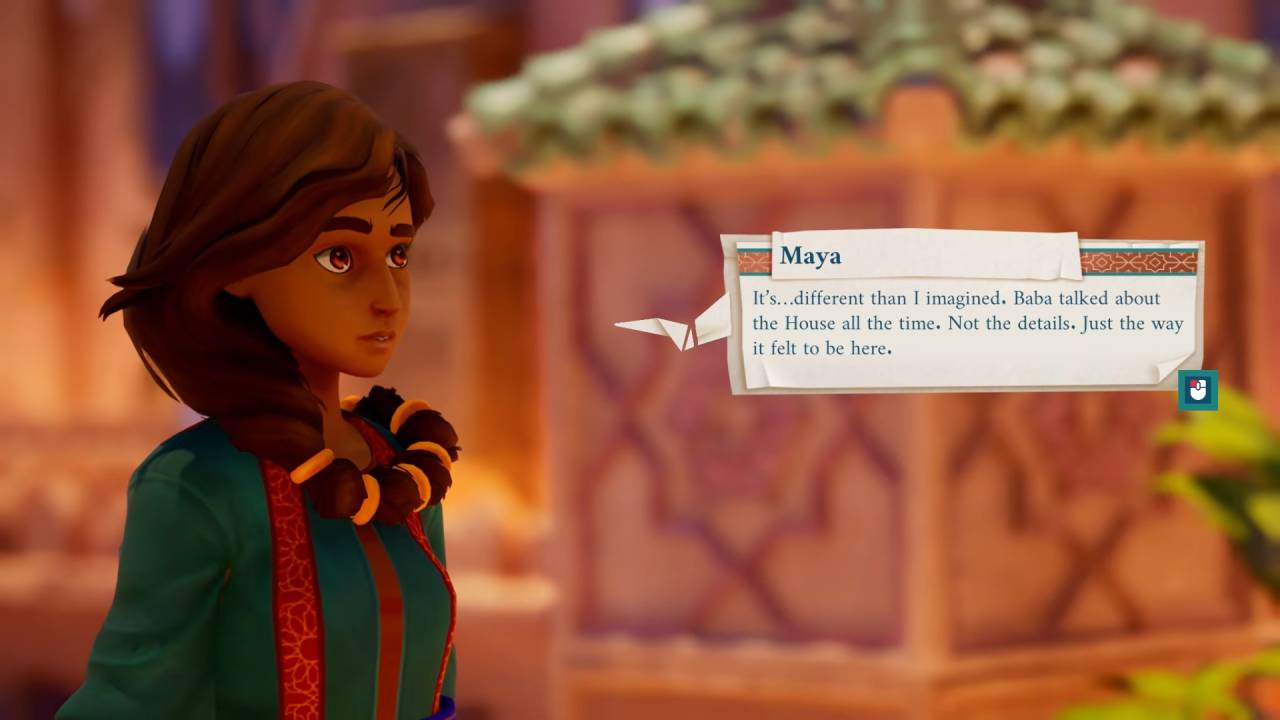
There is also a subtle political intelligence to the way the story is told, especially in how it accentuates SWANA research, pays tribute to women from the Islamic Golden Age, and avoids the flattening gaze that is so common in mainstream media depictions of the area. The fact that the game doesn't treat this like a lecture is exactly why it works so well; it confidently weaves representation into character design, dialogue, setting and dramatic focus.
It corrects the story in a way that doesn't lose its warmth or energy by focusing on scholars, people who build knowledge and women whose intellectual work is too often left out of popular culture. What makes the story feel not only moving but also important is that it brings back something that was unfairly dimmed compared to making something new valuable.
The House of Hikmah is a third-person narrative puzzle platformer at its core.
Its rhythm is built around exploring, talking, solving puzzles in the environment, and moving through scholar worlds with lots of different themes. Maya moves through the center hub of the Atrium, asking the scholars for help as she goes. She then enters their domains, finds hidden items and pages and gradually opens up new ways to change things using the Key, the mysterious device her father left behind.
The loop is beautiful because it doesn't feel crowded with extraneous systems. More so, it lets the player switch between being amazed, solving problems and immersed in the story at a pace that stays fun for most of the campaign. This gives the game a strong rhythm that feels carefully chosen rather than padded, even if its short length sometimes makes you wish there were a few more rooms, discoveries and secrets.
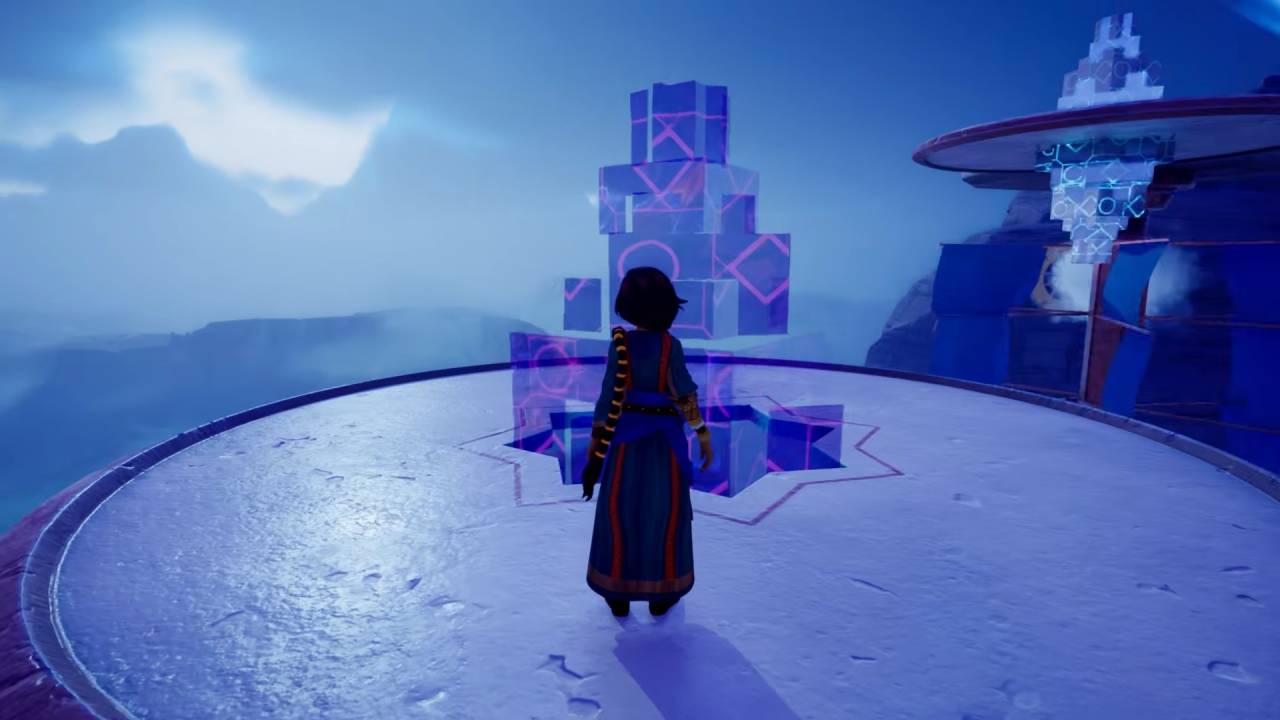
The Key is the most important part of the design, and rightly so: it turns contact into authorship. Maya can change the material properties of certain items to make them weightless, metallic, clear or reflective. This way, the game creates a tactile language for solving problems that is simple to understand and fun to build on. For every new material feature that is added, more complex situations can be created.
The best puzzles make these mechanics feel like they are part of a larger story, not just one-room tricks. That unity is one of the most amazing things about the game, because it turns an easy-to-understand set of rules into a real intellectual pleasure. There is no fighting going on here, and that's not a lack but a sign of trust. The game doesn't have any swordplay or enemy battles.
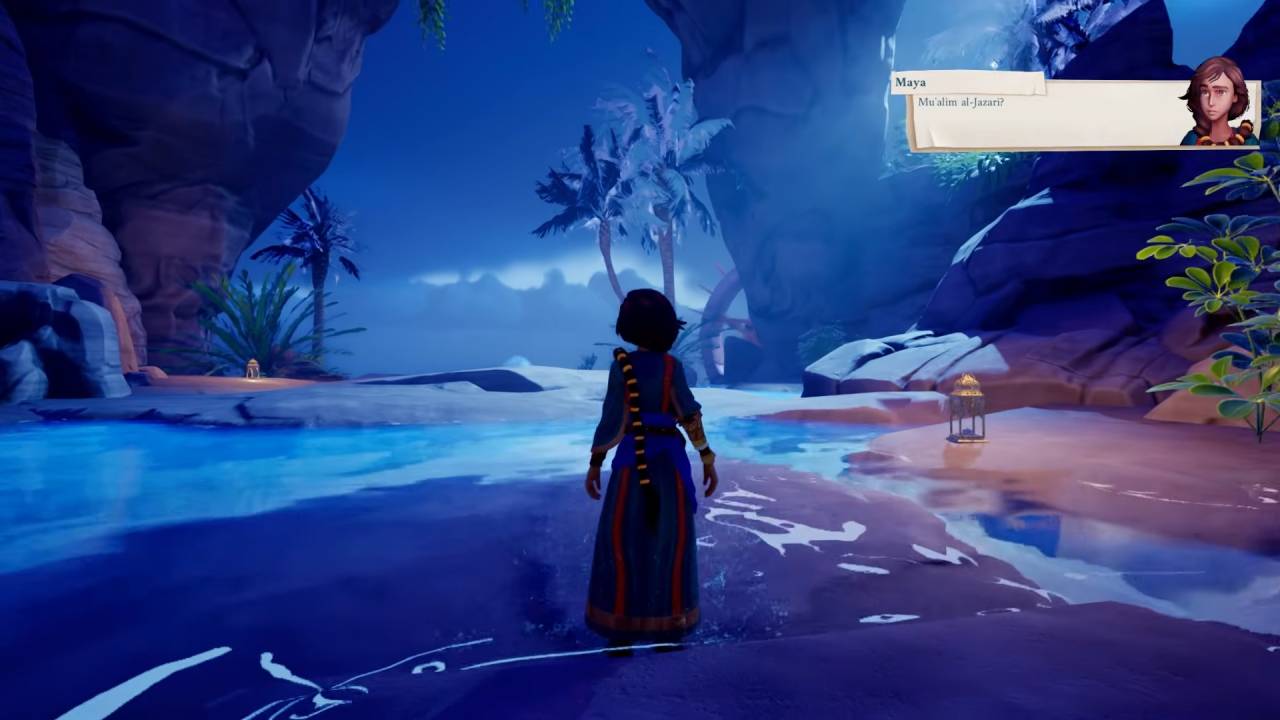
Besides, it's all about environmental logic. The player has to move platforms, change light routes, balance weight, phase through matter, ride air currents, turn on mechanisms and figure out how each scholar's domain is built. As a result, there is a type of progress that is driven by understanding. Instead of getting past a problem by force, progress comes from comprehending it, rethinking it and finally unlocking its quiet internal reasoning.
In a market that is still too quick to think of conflict as violence, this choice feels reassuringly sure. It's clear that The House of Hikmah knows that puzzles work best when their methods and meanings are very similar, and they use this idea very consistently. A scholar of alchemy lives in a world of scales, balance and change, while a master of engineering lives in a world of machinery, wind, motion and structural rhythm.
Each subject feels like an architecture thesis. The precise use of theme gives the puzzle design real narrative value, as the player is not just figuring out abstract machines, but also going through intellectual biographies made of space and matter. It's a clever way to tell a story about the environment that makes the player appear less like a tourist and more like a part of the minds that made history.
The best thing about the puzzle structure is that it always encourages thinking over guessing.
New abilities are presented clearly, and challenges get harder as you get better at them. Later rooms award observation, experimentation, and synthesis instead of punishing the player with random obscurity or designer vanity. When the game is working perfectly, you can tell that your intelligence is being appreciated and each answer feels like it was earned without having to be found through brute force trial and error.
That makes the experience engrossing, as all great puzzle games do, because it leads to a steady stream of discoveries rather than a parade of locked doors. The flaws are not in the idea behind the design, but in how it was put together in terms of movement and polish. There are reports in the source material of floaty platforming, finicky mantling, save or trigger problems that happen from time to time, pop-ins, crashes and times when objects or interactions don't run as they should.
These problems don't take away from how well the puzzles are made, but they do break the spell, and this game relies on long-lasting immersion to give all of its emotional and intellectual weight. The player is pulled from their reverie and back into the game when a ledge grab doesn't feel solid or when they have to restart a room because the progress recording stopped working. This is a costly break for a work that is built on atmosphere.
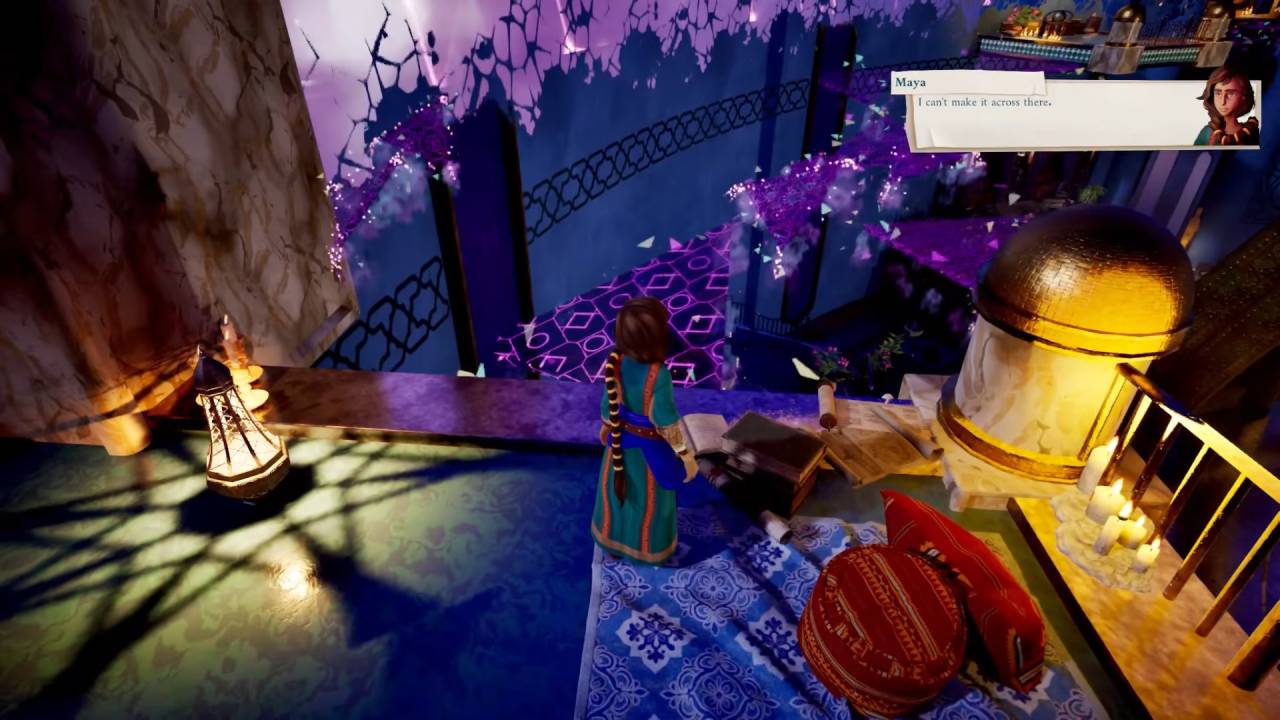
There is one more small but noticeable problem with how the conversation is shown visually in the game. The voice acting is good, and the writing is often beautiful, but the stiff staging and lack of lip movement can feel off at times, especially since the camera often shows conversations as dramatic focal points.
It doesn't ruin the emotional scenes because Maya and the scholars are played with seriousness and care, but it shows that there is more finesse that could have been used at almost every major plot point. That missing layer stands out more in a production that pays so much attention to texture, costume, building and symbolism than in a game with less of an emphasis on visuals.
This isn't a game where you have to grind experience, farm stats, or use progression economies to make every move a resource funnel. In other words, growth is based on learning new things, moving the story forward and gradually adding more tools to Maya's transmutation set. This means that the award loop is based on experience rather than numbers.
Each new scholar realm that is solved opens up new gameplay options and emotional layers. This lets the player learn more about both the game's systems and the story at the same time. That choice in design retains the focus where it should be: on finding, reflection and the fun of mastering a small set of rules, not on accumulation for its own sake.
Pacing is one of the game's quiet strengths because there is no standard grind.
Each new skill you unlock changes the way future rooms feel, and each new room feels more like a call to think outside the box than a challenge to level up. This makes the relationship between the player and the design better, where involvement comes from interest in the theme and not from duty, repetition, or the need to get loot. It's a good lesson that progress can still feel rich and exciting without burying the player in systems that try to fake value by adding a lot of them.
The House of Hikmah is beautiful to look at without ever feeling like it's trying too hard. It combines realistic details about the setting with stylized figures and a strong allegiance to architectural storytelling. The Atrium creates a unique air with its light, shade, palms, cushions, glazed surfaces and stone warmed by the sun.
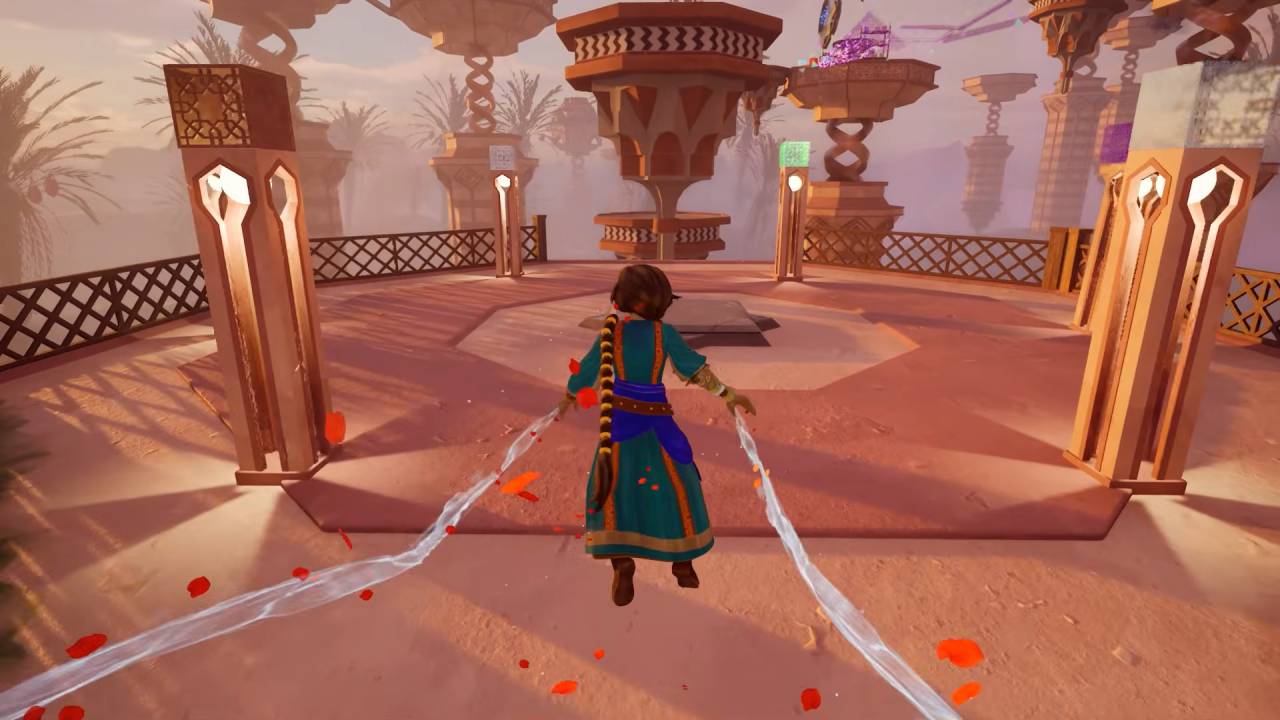
The Scholar Realms take this style and use it to create dreamlike spaces inspired by astronomy, libraries, machinery, the grandeur of the desert and symbolic geometry. The world has a lot of different textures, from drapery and carved surfaces to copper, alabaster and the soft shine of hand-made items. All of these things give a sense of place that seems like it was carefully studied rather than just generically exotic.
The art direction does more than just look good; it also supports the main idea of the game, which is that history, memory and fantasy can all live together without opposing. Character design is important because it shows how the characters are represented and how confident the artist is in their work. The scholars are dressed and shaped in a way that makes them feel both real and mythical.
Maya is not simply a vague sign; she is shown as a young Arab girl with presence, personality and a unique look. The actors' clothes, faces, body shapes and animation choices show their personalities without being excessively cartoonish, which gives the company a nice sense of worth. In a field that still treats SWANA identities in terribly unequal ways, this level of care feels important in more ways than just art direction.
One of the best things about the game is its music, which carries the experience with a softness that never becomes bland and a cultural identity that never feels like an afterthought. Traditional instruments like the oud and other sounds that are common in the area are mixed with a calm orchestral structure to create a musical landscape that is at once old, personal and healing.
The music doesn't take over with over-the-top theatricality. Rather, it moves through the rooms like air, easing tension, boosting beauty and giving silence a shape instead of an empty space. This is the right kind of music for this game because it doesn't leave you wanting to remember a playlist, but more so a feeling.
Voice acting is also important because it adds a lot of emotional weight to the story.
It's easy to feel Maya's sadness, impatience, doubt and final determination; the scholars' voices are different enough that the piece doesn't turn as a chorus of solemn explanations. The acts help the game avoid a common problem that happens when stories are meant to teach or honor a heritage: reverence can turn characters into lessons. The voices in this piece keep the writing real, and that realness is what makes the historical setting feel lived in instead of just put together.
A very few first games are like The House of Hikmah. These games show not only what a company can make, but also what it thinks games can do. There is a touching study of grief, a beautiful tribute to Islamic learning, a meaningful correction to the lack of SWANA-centered stories in games, and a puzzle structure that treats players with respect.
It does have some problems, mostly with technical stability, movement accuracy, coin tracking and some presentational gaps, but those problems don't take away from the beauty of the artwork at its core. When the credits roll, you won't remember a few rough spots; you'll remember how it felt to walk through a place that was made with love, intelligence and a level of cultural care that is rarely seen.
The best thing you can say about the game is also its worst thing: it makes you want even more of itself. Makes you feel there should be more realms, more scholars, better traversal, smoother performance and more time spent in this world. The base is strong enough to support more scale without losing intimacy.
For people who want a combat-heavy show or a system-driven sprawl, this might feel too soft, too short, or too focused on one goal. But for people who want a story-rich puzzle platformer with heart, this is a very rare find. This work is deep and meaningful to many cultures, showing that beauty in games is more than just how they look. It's also about how they make you remember things and why they are important.
Contributor, NoobFeed
Verdict
A stirring puzzle platformer with elegant mechanics, rich cultural authorship, and real emotional intelligence, slightly hindered by technical roughness, yet memorable enough to stand as one of the most meaningful narrative debuts in recent memory.
82
Related News
No Data.