
Titan Quest II Review
PC
Titan Quest II returns from the underworld, but is this mythical revival a divine comeback and ready for the throne, or just a mortal tease?
Reviewed by Zahra Morshed on Aug 03, 2025
Nearly two decades after the original made its mark on the ARPG scene, Titan Quest II arrives in early access with a promise to recapture the magic of its mythological roots. Developed by Grimlore Games, best known for SpellForce 3, Titan Quest II is positioned as both a tribute to the classic action RPG and a modern reimagining with enhanced visuals, deeper customization, and more reactive enemy design.
Yet, as it steps into a genre crowded with the likes of Path of Exile 2, Diablo IV, and Last Epoch, Titan Quest II opts for restraint rather than reinvention. It doesn't chase live-service complexity or endless currencies.
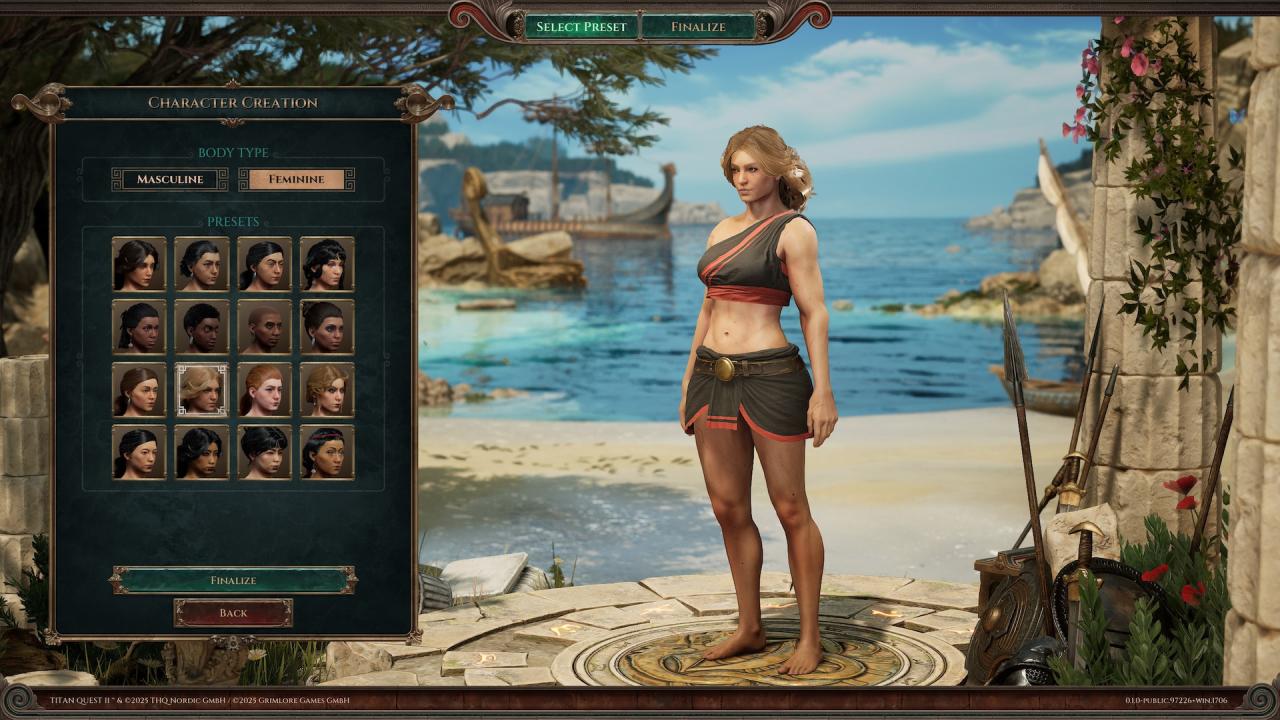
Instead, Titan Quest II channels a slower, more deliberate experience grounded in Greek mythology. But while its foundations are sound, questions remain about whether this early glimpse has enough substance to justify the price of admission.
The story of Titan Quest II takes a clever reverse approach from its predecessor. The player is no longer looking for imaginary enemies; they are now being hunted. Nemesis, the Greek goddess of revenge, is the bad guy. She goes after the main character because of a strange promise.
With this setup, Titan Quest II can fully immerse you in its Greco-Roman mythological setting, creating a tense and intense atmosphere. The world is teeming with narrative breadcrumbs, from eccentric NPCs to environmental lore. You will find yourself aiding resistance groups, confronting divine wrath, and piecing together the unraveling balance of the Olympian order.
What Titan Quest II does well is inject levity through humorous side quests and subtle satire. The dark premise is made less serious by the folkloric charm that runs through the conversation and the events of the world. But while some NPCs feel like long-term friends with room for growth, others still fall into the trap of just giving out quests.
There are dialogue options, but they don't seem to have a big effect on the story, which I think is a missed opportunity in the RPG world today. Still, the setting is full of legends, and the Greek mythological background is handled with a shocking amount of depth. Myth also shapes the world and the strife in it, so it's not just pretty on the outside.
Titan Quest II is a return to the way old-school ARPGs were made. Kill waves of monsters to get gear, level up, and make their builds better. The pace, on the other hand, is much steadier. Combat isn't about going very fast or having a lot of flashy visuals. Instead, it requires careful planning of where to stand, when to act, and how the enemy will act. It's hard to move around, and the dodge techniques are very important for getting through elite encounters and boss fights.
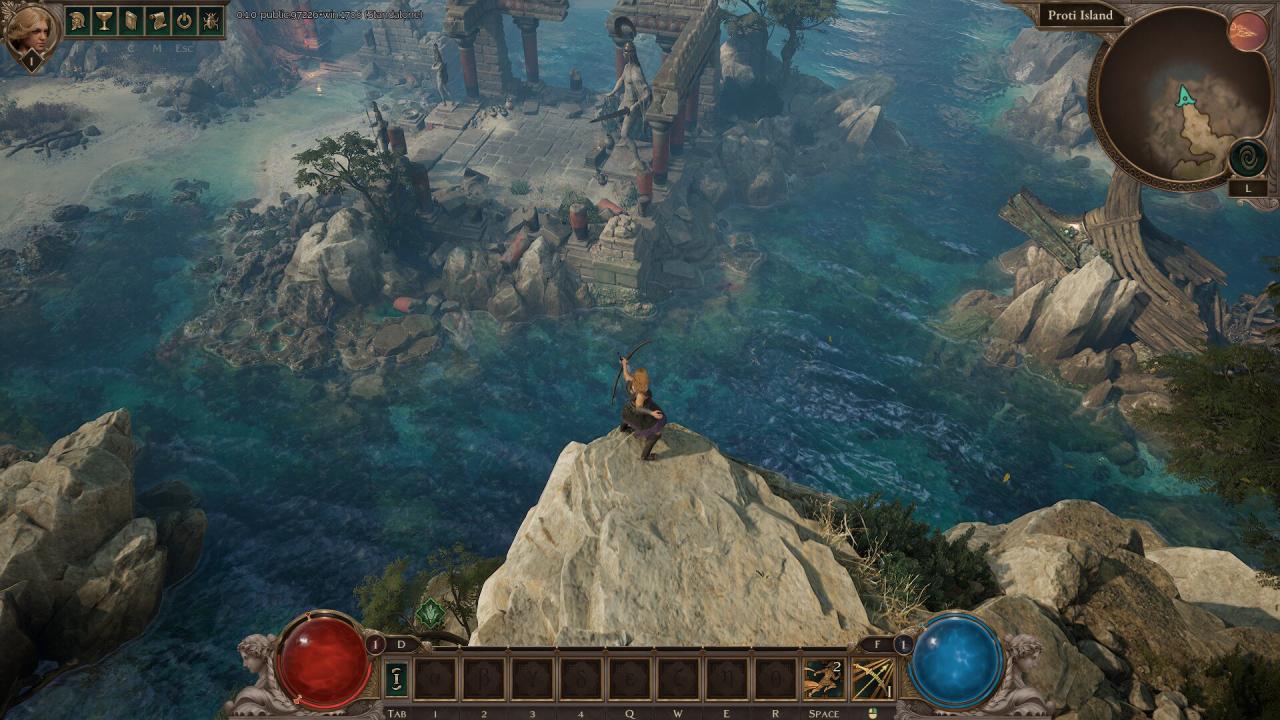
Character progression relies on a dual-mastery system, allowing you to combine two of four current masteries—Earth, Storm, Warfare, and Rogue—into hybrid classes. Each mastery includes its own tree of active and passive skills.
As you level up, you receive two active and two passive points per level, which can be spent across both chosen masteries. This method lets you try new things without making things too hard by using complicated trees that look like webs. Also, you need divinity points, which you can get from quests and boss fights, to gain higher levels of each mastery.
What elevates Titan Quest II beyond its conservative gameplay loop is the presence of skill modifiers. These allow each ability to be augmented in unique ways—turning a fireball into a melee flame fissure or changing a lightning storm's radius and duration. This modular approach to spell design adds real flavor and replayability. Gear upgrades also feel meaningful. Each new piece can noticeably alter performance or enable synergies that redefine how builds function.
Exploration is a big part of how the game flows. A lot of secrets, hidden riches, and optional encounters are hidden on the map. You go through winding roads, waterfalls, caverns, and ruins instead of straight zones. There's always a reason to go off the main path, whether it's for experience, loot, or story.
While Titan Quest II doesn't feature traditional puzzles, the combat itself functions as a strategic challenge. Battles rely on more than just gear scores or stat crunching. Enemies act with surprising intelligence. Crab warriors retreat and bait you into ambushes, shield-wielding fishmen enrage bats to create chaotic battlefield conditions, and factions use synergized tactics to create pressure from multiple fronts.
This AI behavior gives the impression of emergent puzzles—forcing you to adapt and prioritize threats mid-fight. The day-night cycle, the height of the land, and the types of enemies all affect how battles go. Even though boss fights are limited in this early build, they have complex features that test your timing, positioning, and how you use your cooldowns. Damage types like fire, lightning, physical, and poison must be matched against resistances, which makes the battle even more intense.
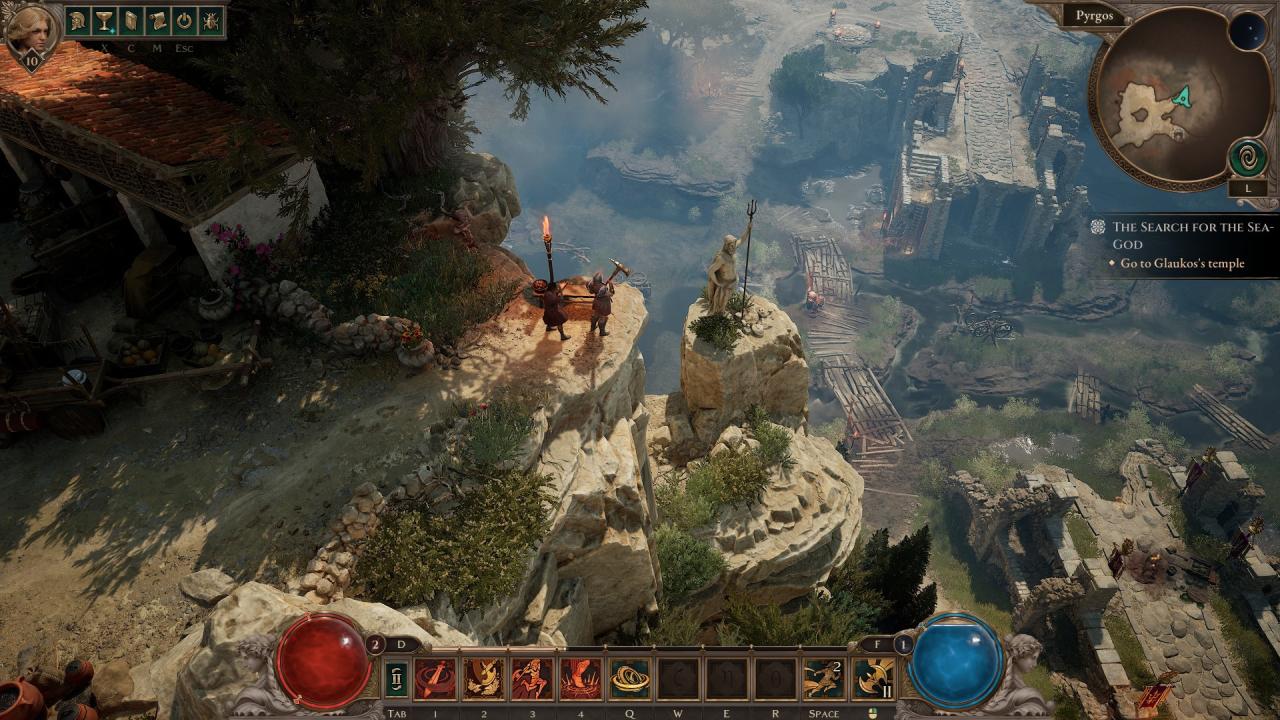
But not everything is perfect. Basic strikes aren't always very powerful, especially for melee classes. Sometimes the sound design is behind the graphics, which makes hits feel less powerful. Some enemy movements don't feel very heavy, which takes away from the tactile pleasure of battle. Even so, hybrid builds and special powers make up for this weakness in a big way.
Experience in Titan Quest II flows naturally from exploration, quest completion, and combat. You level steadily and feel rewarded without grinding. The dual-point system for active and passive abilities creates meaningful decision-making at each level-up. Divinity points further enhance character growth, unlocking new layers within each mastery tree.
The shrine system that changes the level of challenge is interesting. In zones that have already been cleared, you can raise the level of enemies or spawn bosses to get experience and loot. This method works like an endgame loop, but it doesn't use procedural dungeons. It gives you a way to grind XP that feels more like a choice than a chore. Attribute points, which are given to stats like Strength, Agility, or Knowledge, also change how gear is used, which adds a minor level of strategic planning.
Titan Quest II is a puzzle to look at. It's both beautiful and hard to make. The environments are incredibly detailed, with lots of lush plants, changing lighting, and Greek-style building flourishes. The game's mood is deep and full, ranging from sunny temples to creepy swamps at night. The day-night cycle, which drastically changes mood and sight, gives each zone a strong personality.
However, character models, enemy designs, and effects sometimes feel dated. While stylized, they don't always match the fidelity of modern ARPGs. Even on powerful computers, players have reported blurry graphics, problems with scaling the resolution, and frame drops in places with a lot of people. Even though these technology problems are understandable in early access, they need to be fixed if Titan Quest II wants to be on the same level as other big games in the genre.
The new transmog system offers more visual customization, which will make gear more appealing and keep you interested over time. At the moment, armor design is useful but lacks a unique look. The game world is still beautiful to look at. Exploration feels cinematic and real thanks to a lot of camera pans and set pieces in the world.
.jpg)
Titan Quest II's sound design is a mix of old and new in a subtle way. The orchestral music gives off a heroic and mythical vibe without being too much. As you switch between battle and exploration, the music changes in real time, making the sound flow smoothly. Especially moving and easy to remember is the main theme.
Sound effects are a mixed bag. Spell effects—especially lightning and fire-based abilities—crackle with energy and add punch to battles. However, basic attacks sometimes suffer from delayed or muted audio cues, undermining the impact of melee combat. Environmental ambiance, from chirping insects to distant waterfalls, enriches immersion during exploration.
Voice acting, while not a dominant element, is surprisingly competent. Key NPCs deliver lines with gravitas, humor, or warmth where appropriate. Dialogues are sparse enough to avoid fatigue but present enough to provide character and narrative texture. There's a familiarity to the tone that mirrors the original Titan Quest, with a touch more cinematic polish.
Titan Quest II is a heartfelt return to a mythical world. It was made with the goal of slowing down the action role-playing game formula and putting more emphasis on story, world travel, and building. In a field where speedruns, power creep, and making money are becoming more and more common, Titan Quest II is a welcome breath of fresh air. It is nostalgic without being stagnant, and modern without losing sight of its heritage.
There are, however, some growing pains in this early access build. The game doesn't have the depth or length you'd expect from a $30 RPG since you can only play one act at a time, and the main story takes about 6–10 hours to finish. There isn't a structured endgame, there aren't many mastery options, and there isn't a content roadmap, which may turn off players who want to get something right away.
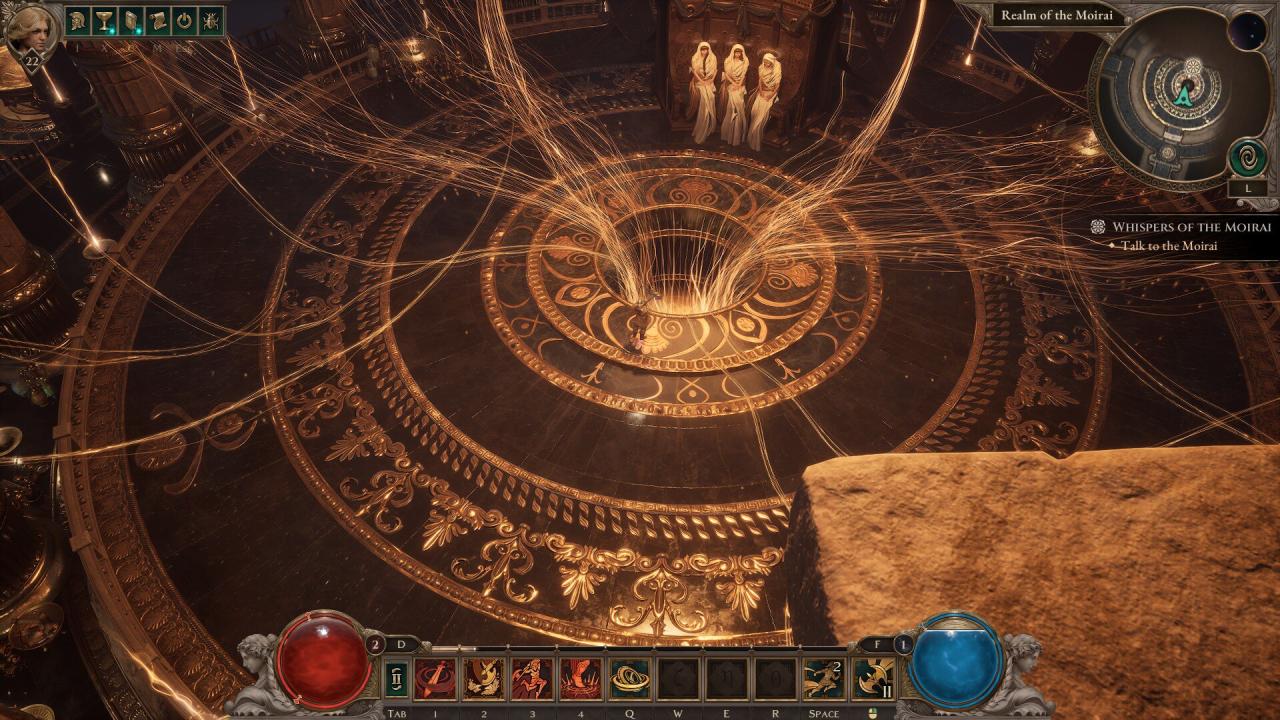
Yet the foundation is strong. Grimlore Games has committed to major quarterly updates, a DLC-free core, and zero microtransactions. These principles, combined with the flexible skill system and creative class builds, position Titan Quest II as a promising contender—especially for players who cherish character experimentation and mythological immersion.
There's work to be done. For long-term success, the game needs to be fixed up technically, have more content, and have an interest-holding ending. Still, Titan Quest II could become one of the most enduring games in the series if the developers stick to their plan and the community keeps posting comments.
Contributor, NoobFeed
Verdict
Titan Quest II reclaims its mythological legacy with heart and depth, but its early access offering lacks weight. With time, it could be a defining ARPG revival. Patience will be key.
77
Related News
No Data.