
TOKYO SCRAMBLE Review
Nintendo Switch 2
Dinosaurs beneath the subway and the fine line between tension and frustration.
Reviewed by Asura Kagawa on Feb 12, 2026
Tokyo Scramble didn't come quietly. It came out during a Nintendo Direct with a crazy pitch about a young girl, a subway crash, and dinosaurs living under Tokyo. That much faith in a brand-new IP is something to be proud of. There isn't a sequel or a well-known series to fall back on here. It's a new idea that's trying to get people's attention.
It has the energy of Dino Crisis mixed with current teen drama. People are expecting a lot from that bravery. You can expect greatness or disaster from a game that mixes prehistoric predators with the way Gen Z writes. There are hints of both in Tokyo Scramble.
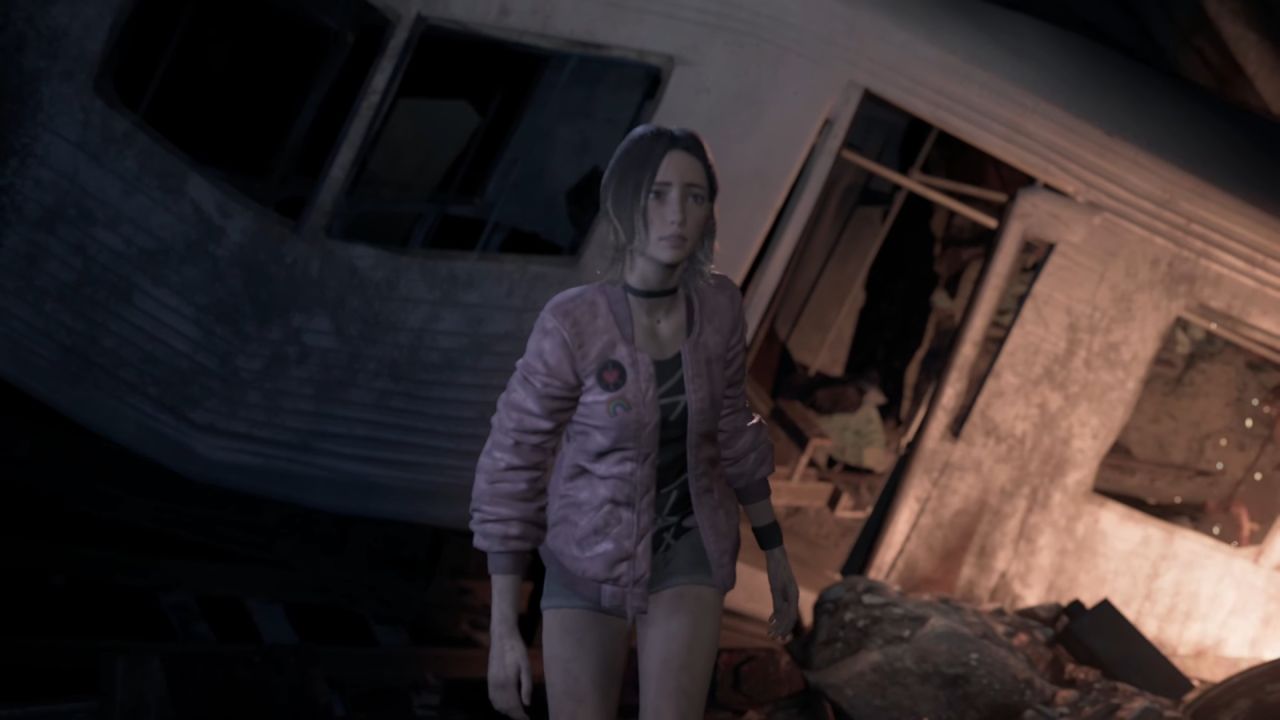
You follow Anne, a normal girl who is on her way to hang out with her friends, when something terrible happens. When she wakes up, the train has gone deep underground in Tokyo, and it has become a killing ground. The caves are full of dinosaurs, which she insists on calling "Zenos."
The setup works well. A city that is being attacked. A strange spread. One survivor is making their way through the dark. You lean forward at first, interested. Why do you think there are dinosaurs under Tokyo? How long have they been there? What took place on the outside?
The story does not go into that secret; instead, it focuses on teenage friendships, band drama, and relationships in crisis.
Text messages that appear between stealth parts are how Anne talks to her friends. These talks don't always seem to have anything to do with the life-or-death situation she's in. One minute you're almost eaten, and the next you're reading about crushes and small mistakes.
You can tell that the writing is honest. Anne's mental monologues are sincere, sometimes corny, and sometimes sweet. You could start to root for her just because she keeps going. Still, it's hard to ignore the difference in tone. The terrible dinosaur invasion isn't always the main problem; it's more like a background for character drama.
There are efforts to show emotional depth, especially when it comes to her brother and best friend, but the way they are carried out can feel forced. Scenes that should be important can fall apart due to poor shifts or staging. The story tries to be touching and deep, but it doesn't always live up to those expectations.
For some reason, though, its dedication is strangely strong. You never get a wink from the game. It has full faith in its after-school Jurassic dramatization. Even when it's awkward, that earnestness keeps it from being cynical.
Tokyo Scramble is a sneaky puzzle game at its core. These aren't the right ways to fight back. Anne isn't in the army. She moves more slowly than most enemies. She will die right away if she is caught. That's how things work.
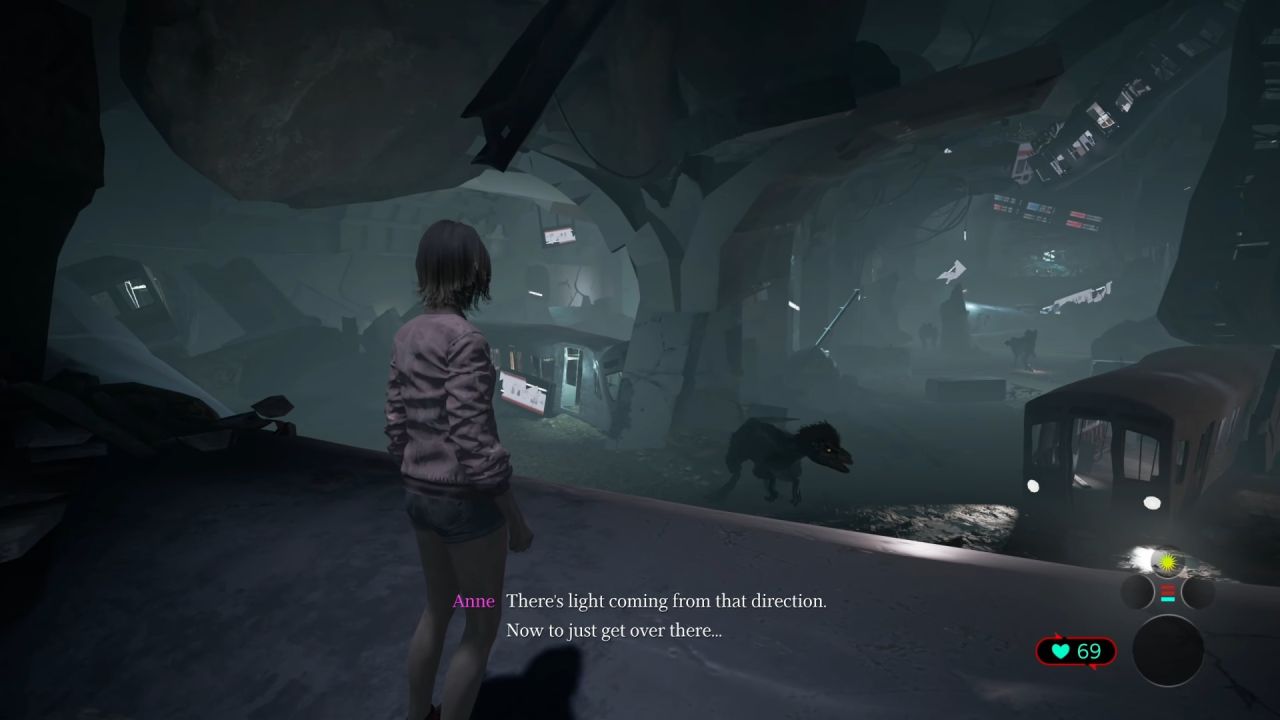
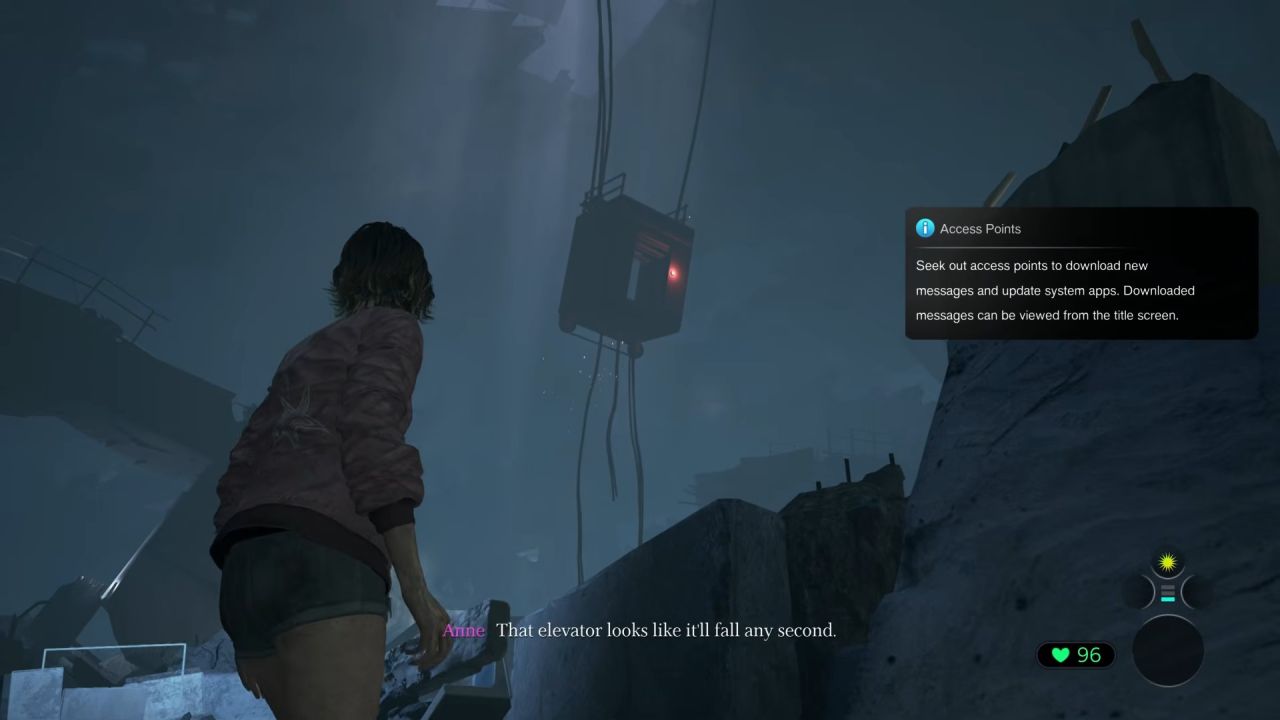
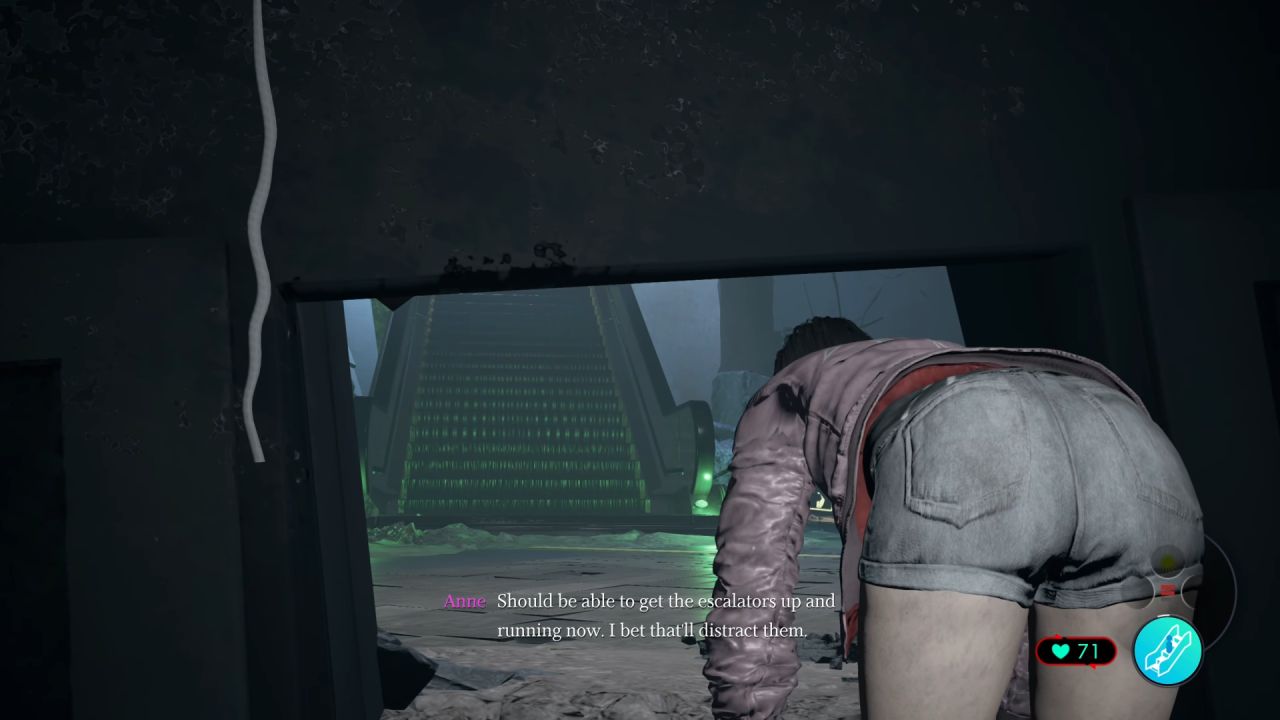
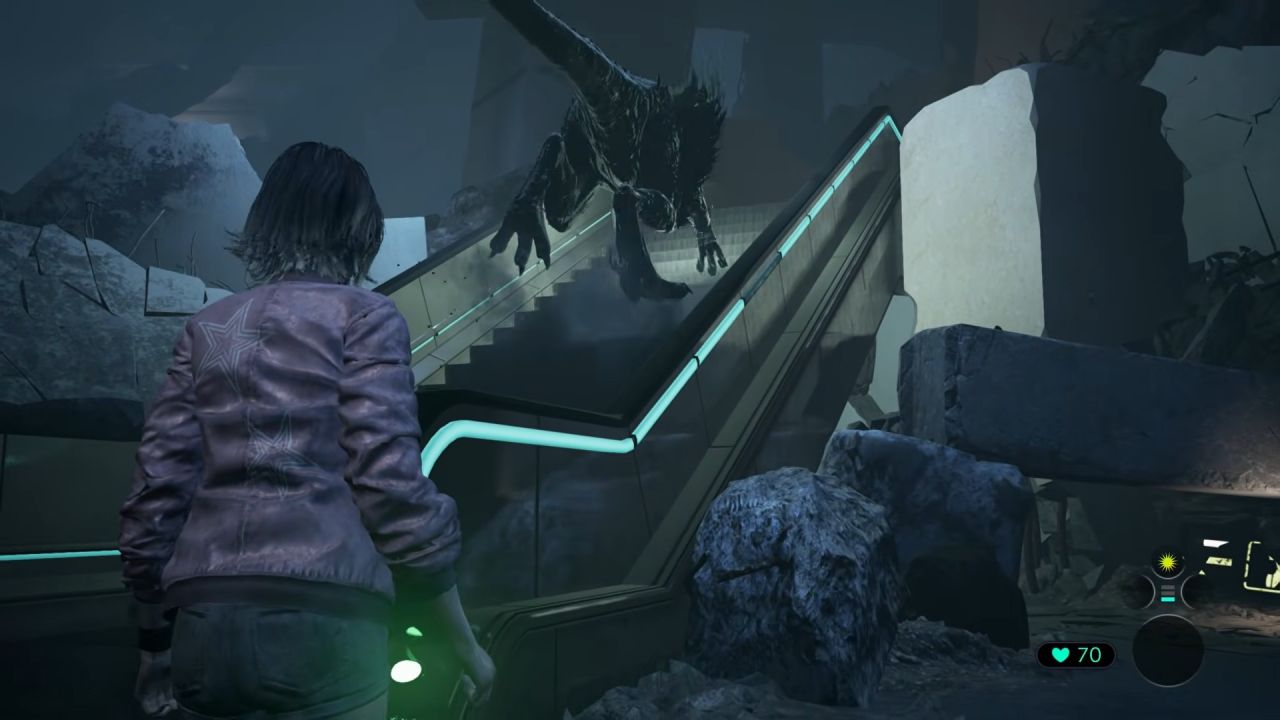
An app on your smartwatch is your main tool; it lets you change the world around you. You can use the escalators, set off alarms, run machines, and interact with items spread across each level. Think less direct fighting and more fixing problems in the environment. Levels are usually big rooms or places that connect and are full of enemies that can move around.
Your goal is easy: get to the exit. That's not at all what the road there is.
Sight and sound are used to find enemies. Anne's heart rate goes up when she sprints. She crawls to a stop when it gets too high. When things are tense, not managing your energy well is almost like a death sentence. Running also makes noise, which attracts animals with good hearing.
A flash can temporarily stun enemies, an alarm can lure them in, and other small powers can help you in battle. Charges are spread out across levels, and devices that aren't required can be used to make small improvements. These features add more depth to the game, but they often feel weak given how hard it is.
The puzzle part comes from figuring out how to move the enemies and change the surroundings at just the right time. There are some really clever set pieces. As a dinosaur runs down an escalator, you can turn it on and catch it on it like a treadmill. Cranes can be used to grab enemies in the middle of a fight. You can set off silly machines that stop threats in a way that feels almost silly.
It's great when these moments come together. You might find it funny to see an ancient predator running in place, unable to move. Success feels like it was won.
But there's a catch: Tokyo Scramble needs accuracy but doesn't always give it. Detection areas for enemies can feel all over the place. Cover doesn't always register right. Enemies sometimes act in strange ways, like staying still for too long or responding in strange ways.
Making mistakes is a normal part of the process.
There are parts where you move forward one meter at a time, die, reload, and repeat. There are checkpoints so far apart that failing them can be really frustrating. Mistakes are rarely fixable because Anne dies in one hit and can't get away from most enemies.
You are often forced into very specific answers instead of being able to improvise. Some environmental tools will only work if used in the way the game wants. Creatively trying new things can cause more trouble than it solves.
Still, there's a strong feeling of relief when you finally get through a tough part or sneak past a group of enemies with little help and perfect timing. It's a cycle of stress and release. Tokyo Scramble's problem is that it focuses too much on stress and forgets to let go every once in a while.
You get a grade after each level based on how well you did. Collectibles and optional goals, like text messages, help you get to know the characters better and make you want to play again. There are different tasks in the two difficulty modes, Hope and Despair.
The ranking system makes it look like success is possible.
You can try to get S-ranks, improve your routes, and refine your moves. But because so much of the experience is based on trial and error, the grade system doesn't always seem to reflect how crazy a run really was. There's also a special mode called "Game Share" that lets two or more people share control, making stealth a team challenge. It's more of a novelty than a requirement, but it could cause memorable chaos in the right place.
Time to finish varies. It might take about six hours to do a simple run, but ten or eleven hours to do a full playthrough with research and retries. It is possible to play again, which is great for people who like getting good at stealth games.
Tokyo Scramble looks like a bunch of different things. The monsters and characters are well-made. The dinosaurs and other animals move well and easily, and they stand out as the best parts of the game. They always look detailed, sometimes in a silly way, but always scary.
The environments, especially underground tunnels, are not as interesting. A lot of places look flat because the lighting doesn't give them any depth. Textures can look flat, and sometimes modeling issues make it hard to get into the game. Some parts outside the tunnels break up the show and bring it back to life.
Most of the time, cutscenes look better than gameplay parts because the lighting and shading are better. When you play normally, the Unreal Engine base doesn't feel fully optimized for the hardware. Frame rates are mostly steady, but some stutters and loading glitches make things less exciting.
Tokyo Scrambleknows that sound design is an important part of stealth. Sound cues let you know that the enemy is nearby and that you should be careful. Some animals make unique sounds that make people feel more anxious.
Voice acting, on the other hand, is either good or bad. The performances aren't terrible, but they also don't make the writing better either. There are times when awkward delivery makes the story's tone even more off.
The music does a good job of building tension, but it doesn't really stick with you. Anne's singing and long speeches may charm some people and annoy others.
Tokyo Scramble is a very rough game. It has a great, crazy premise: dinosaurs living under Tokyo, a young girl with apps, and a strong will. Some creative ideas can be seen in their natural traps. When it works, it's exciting, funny, and also kind of cute. But it's also too hard to forgive.
It's held back by AI that doesn't always work right, puzzles with fixed answers, and a story that tries too hard to balance the end of the world with teenage drama. It's clear what the goal is. The technique is not good. You might like how strange it is. You might clench your teeth during the rougher parts. You might even smile when you finish a tough run. But you'll likely feel the contact the whole way.
It's not dull to play Tokyo Scramble. It divides people. It's brave. It's not right. Depending on how well you handle trial-and-error sneaking, it could become a cult classic in your library or just something you're glad you got through once.
Staff Writer, NoobFeed
Verdict
A strong theory and clever ideas for stealth are undermined by a frustrating execution and uneven storytelling. Hard-core stealth fans could give it a try, but the game's sudden changes in challenge and tone make it an inconsistent experience.
45
Related News
No Data.