
Vivid World Review
PC
Souls, strategy, and sparkle—Asobism's dungeon crawler evolves beyond expectations.
Reviewed by Subaiyta Jahan on Nov 13, 2025
When Asobism initially released Vivid Knight, it stood out as a brilliant and unexpected indie jewel. The game combined gem-collecting, dungeon crawling, and team-building into a lively experience that hit the ideal balance of strategy and appeal. It was simple on the surface yet offered layers of depth for those who sought it.
Now, Vivid World, released on November 5, takes everything that made Vivid Knight special and elevates it. This sequel refines, expands, and matures nearly every concept from its predecessor, presenting a version of the series that feels confident, emotional, and masterfully constructed.
While the premise remains familiar—collect gems, build teams, and survive through labyrinthine dungeons—Vivid World manages to evolve beyond imitation. It turns what was once a clever experiment into something genuinely remarkable.
Asobism's most confident and ambitious effort to date appears to be Vivid World.
Vivid World feels like Asobism's most self-assured and ambitious work yet. It carries the addictive replayability of roguelikes such as Slay the Spire, the mechanical polish of Teamfight Tactics, and the fairytale melancholy of a fading dream. It's both nostalgic and daring, a storybook world layered with emotional and mechanical precision.
Rather than trying to reinvent itself entirely, Vivid World builds upon what works and polishes it to brilliance. The result is a strategy experience that feels deeper, fairer, and far more emotionally grounded than one might expect from a colorful dungeon crawler.
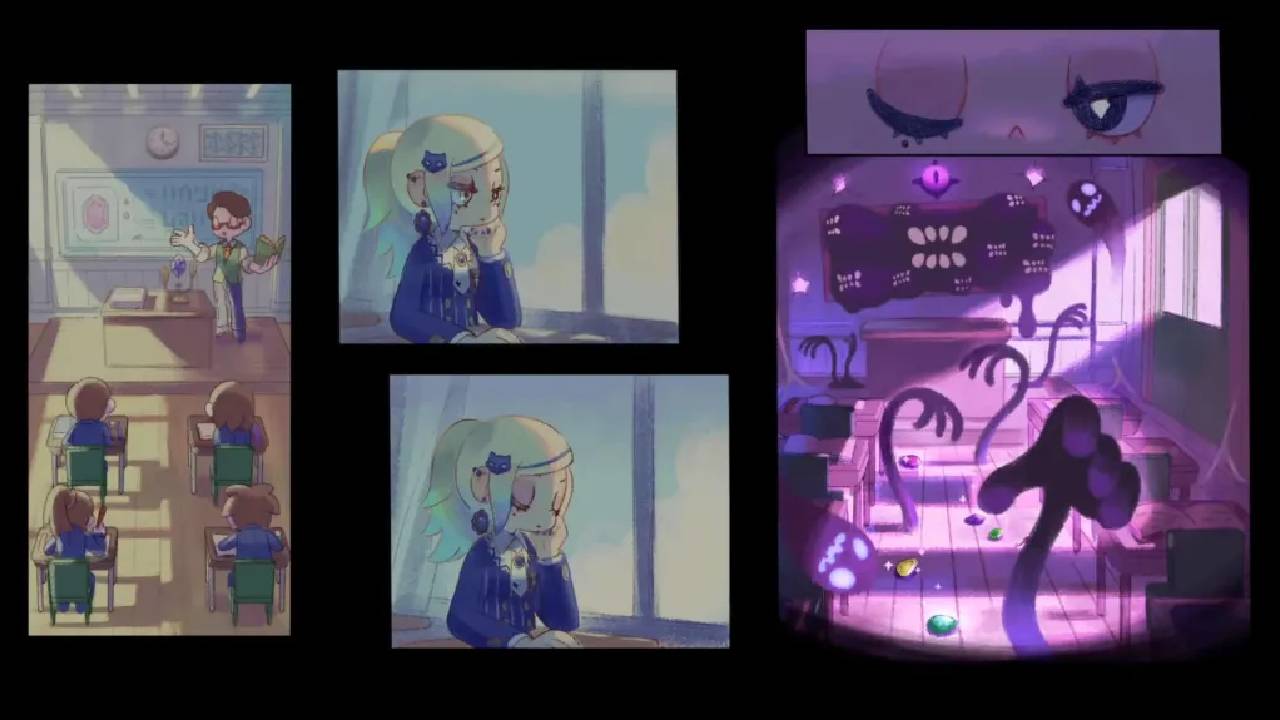
The story opens with Lamria, a high school girl who dozes off during class and awakens in an unsettling, hollow version of her school. The once-familiar corridors have grown eerie and empty; her friends are nowhere to be found. Before long, she encounters a grim, reaper-like figure who reveals that everyone she knew has died, and she now wanders within a strange afterlife suspended between memory and oblivion.
To uncover the truth and possibly return home, Lamria must collect Soul Gems—crystalized spirits of fallen heroes scattered throughout this fragmented world. Each gem embodies a distinct warrior: a stoic knight, a cunning pirate, a wandering samurai, or even mystical beings from forgotten lands. As Lamria journeys through warped dungeons that seem to bend reality itself, these souls become her companions and defenders.
What drives the emotional weight of Vivid World is not lengthy dialogue or cinematic storytelling but quiet, fragmented discovery. The plot unfolds through visual hints and fragments of dialogue. As well as an environmental narrative, which allows players to piece together the tragedy that connects these souls. Each gem feels like a memory trapped in crystal, and each dungeon floor whispers fragments of forgotten worlds.
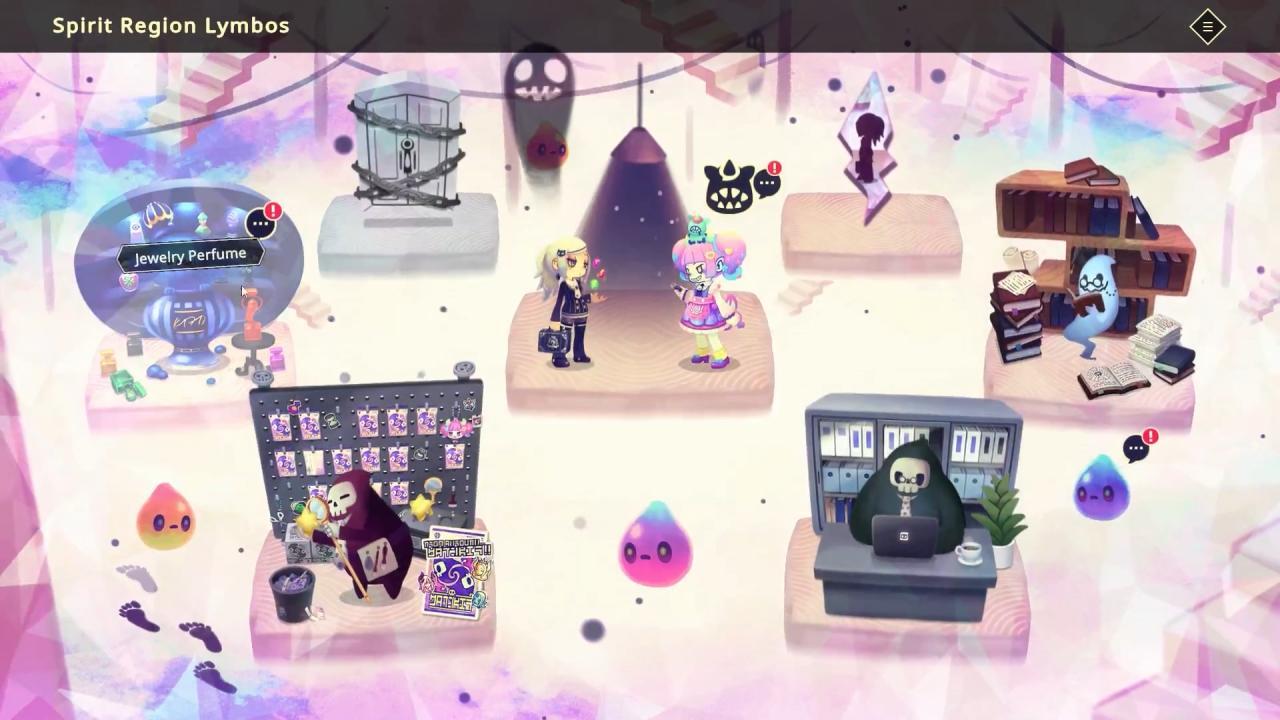
The tone perfectly mixes playfulness and sorrow. Beneath the glittering visuals lies a meditation on memory, loss, and the human spirit's resilience. This narrative depth marks a significant step up from Vivid Knight, giving Vivid World a resonance that lingers well after the final dungeon is cleared.
At its core, Vivid World is a hybrid of auto-battler tactics and roguelike dungeon exploration. The goal is straightforward—descend through multi-layered, procedurally generated dungeons, defeat enemies, gather Soul Gems, and survive long enough to rebuild strength for the next run.
But beneath that simplicity lies a delicate web of systems that intertwine resource management, synergy, and risk assessment. Every move Lamria makes costs stamina, represented by a limited action counter.
When the team's energy runs down, it has a big effect on them because they start to become sick, too. This simple technique turns discovery into a careful balance of risk and reward. It always makes you wonder whether you should keep going for vital things or turn back before you become too fatigued. Every choice you make changes how fast and stressful the trip is.
The procedural generation makes sure that no two times you play the game are the same. Dungeon layouts, prize drops, and recruitable heroes vary all the time; thus, players have to be able to think on their feet. Every area, from foggy ruins to scorching caves, has its own environmental dangers that make players rethink their strategies.
What truly defines Vivid World's depth, however, is its hero synergy system—a balance of colors and factions that dictates combat performance and long-term bonuses.
Team-Building and Progression
Each hero is assigned a distinct Color (Element) and Symbol (Faction), which determines their powers and synergies. The system first appears simple—combine heroes of the same type to earn stat boosts—but the complexities emerge as bonuses overlap and evolve.
Three Knights provide a team-wide defense boost. Five Vikings increase TP generation for faster skill use. Matching elemental colors, such as blue or red, amplifies specific combat stats.
The brilliance of this design lies in permanent upgrades. As heroes advance in rank—bronze, silver, gold—their faction bonuses remain active even after being rotated out of the party. This transforms each run into a valuable investment that guarantees that no progress is ever wasted.
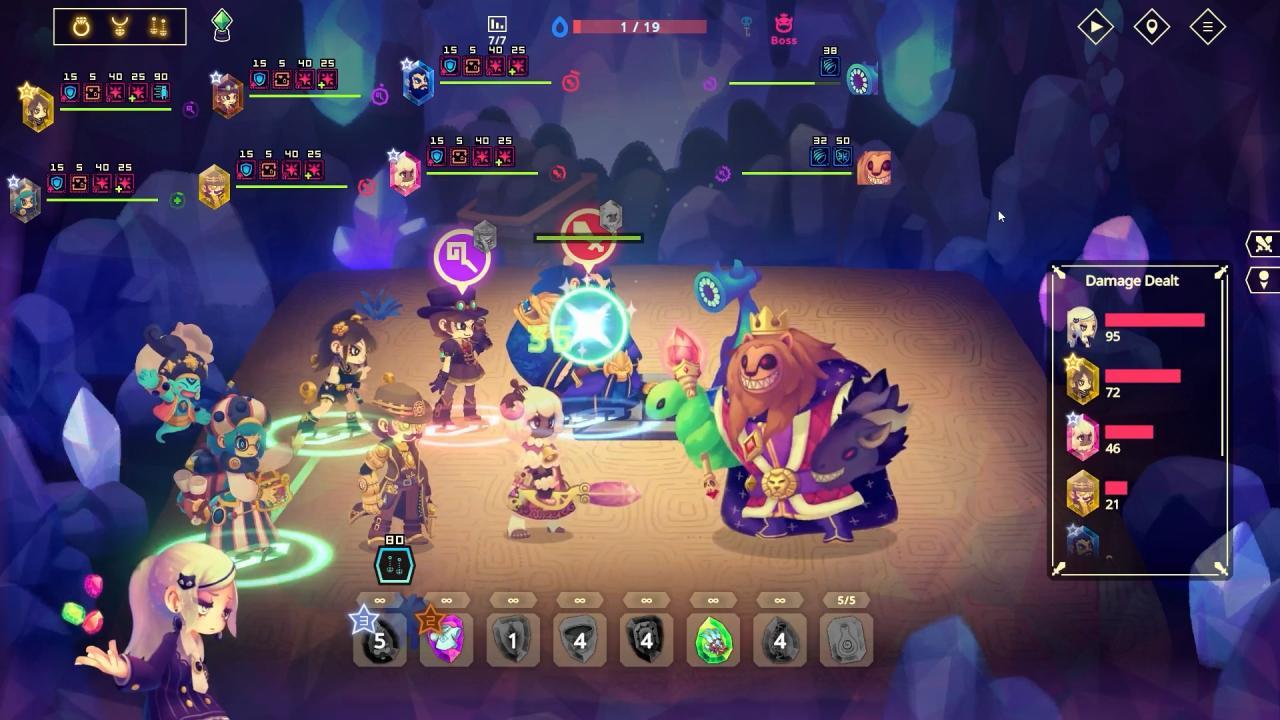
Balancing factions, maximizing color alignments, and deciding whether to merge heroes becomes a challenge in itself. Success is not about remembering abstract combinations; it's about being flexible and trying new things in a live system that prizes creativity and preparation.
Combat in Vivid World happens on its own, but players may still have an effect with Combat Gems, which are spells that can heal friends, protect troops, or attack adversaries directly. The restricted number of uses and cooldown intervals provides a continual level of tactical stress.
Every fight seems like a little tactical puzzle. When is the best time to employ a strong gem? Should you keep a healing gem for a later wave or use it right away to stabilize? The options are few but very important, and they frequently decide the result of longer runs.
The design encourages preparing ahead of time instead of acting on instinct. Being ready, knowing where you are, and being on time are what lead to success, not speed. The job becomes tougher as the game goes on. There is a strong slope in the middle that punishes players who are too comfortable and rewards those who are ready. Every time you win, you feel like you're becoming better, which makes it a lot more fun.
Like other roguelikes, Vivid World gets better the more you play it. Each dungeon exploration offers XP, treasure, and new hero unlocks, guaranteeing that even unsuccessful runs contribute to long-term progress.
Lamria receives XP via combat victory and exploration, which improves her personal stats and broadens her pool of available heroes. The Fusion function merges duplicates to make stronger versions. It not only enhances stats, but it also keeps passive bonuses. This structure maintains the significance of the progression loop: nothing is ever completely lost.
It encourages people to explore instead of punishing mistakes. Every attempt makes understanding better, which makes each step into the unknown more calculated and confident.
Vivid World looks awesome. Asobism improves its pop-up book style by adding charm and sadness to each frame. The character designs are based on chibis, yet they are surprisingly expressive. The Warriors seem classy, the Pirates look confident, and the Magicians look like they have a lot of energy.
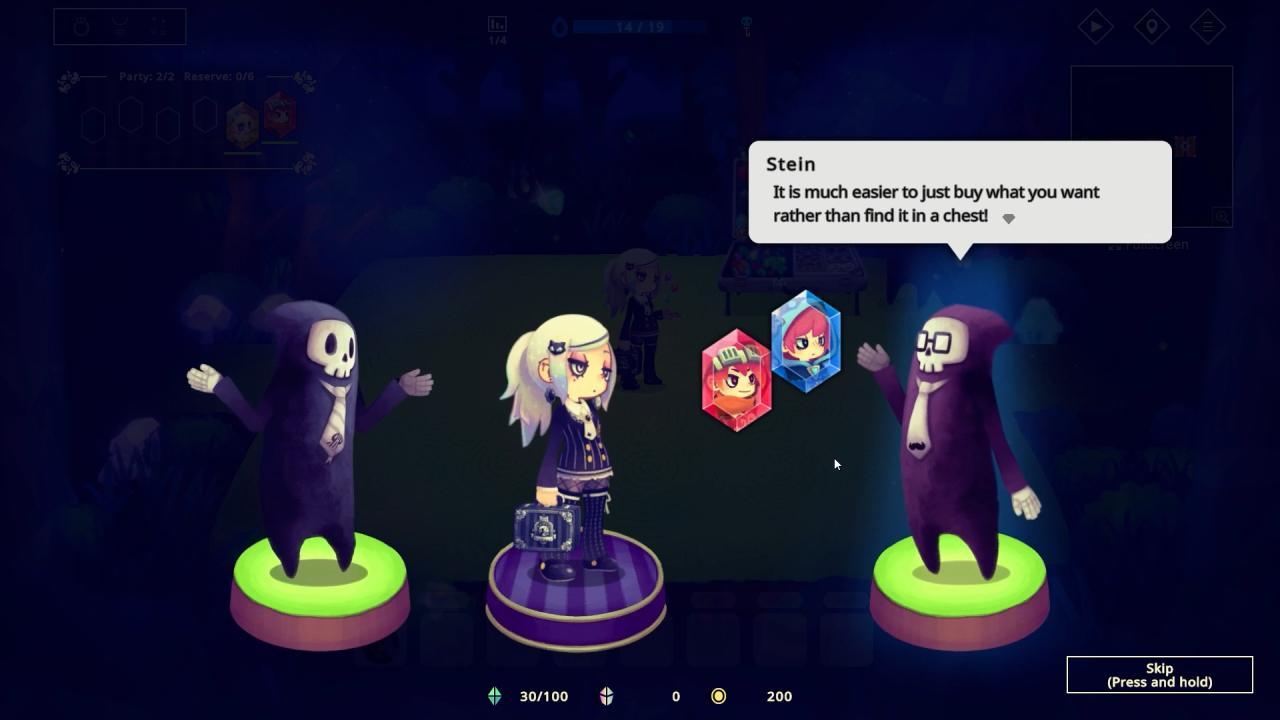
The area around you is lovely, with changing lights, ghostly mists, and glowing runes. Each dungeon feels alive, with tiny animation cues indicating that it is breathing, changing, and even talking. Despite the low polygon count, the environment has a great feeling of depth and mood.
Animation work merits special recognition. Every spell spark, gem activation, and fight sequence seems intentional. Even in hectic circumstances, visual clarity is preserved, resulting in a perfect combination of beauty and readability.
The auditory design complements the graphics with exceptional elegance. The music varies between peaceful ambient and tumultuous symphonic, portraying Lamria's fluctuating emotions. The story's emotional complexity is shown by the way the peaceful exploring melodies turn into intense combat rhythms and sad interludes.
The sound effects are clear and satisfying: swords strike with clarity, jewels ring with crystal-clear brilliance, and opponents growl resoundingly down the empty hallways. Even subtle cues—like the faint hum of Soul Gems or Lamria's footsteps—reinforce immersion.
What stands out most is the melancholic undertone within the score. Beneath the playful melodies lies a sorrowful resonance, mirroring the themes of loss and remembrance that define Vivid World.
Vivid World succeeds because it understands the balance between simplicity and complexity, strategy and accessibility, charm and darkness. It offers enough challenge to engage veterans while maintaining a rhythm that newcomers can gradually adapt to.
Someone who enjoys an active strategy to fighting could also be frustrated.
The game sometimes stumbles. Sudden increases in difficulty might overwhelm beginning players, and some ability descriptions rely too heavily on symbolic notation rather than plain numbers. Those who prefer a more hands-on approach to battle may also be frustrated by the little direct control available. However, these flaws are minor when contrasted to the game's overall greatness.
Every mechanic in Vivid World has a purpose, and every decision seems purposeful. It's a game that encourages inquiry, perseverance, and creativity. The game shows how small-scale design can provide huge experiences. It brings together roguelike replayability, auto-battler depth, and narrative nuance into a cohesive whole.
Every run tells a story, every diamond has a bit of a lost soul in it, and every triumph feels like it was earned. Asobism has developed a world that is both vivid and full of feeling. Underneath its silly facade lies a deep narrative about not giving up, finding things out, and the calm joy of living.
Contributor, NoobFeed
Verdict
Vivid World shines as a masterclass in strategic roguelike design. Its charming visuals conceal a deep tactical core that rewards creativity, patience, and foresight—an elegant evolution of Asobism's craft that both surprises and enchants.
82
Related News
No Data.