
AMD RX 9070 XT vs. NVIDIA RTX 5070 Ti: Mid-Range GPU Showdown
Mid-range graphics card rivalry intensifies as AMD RX 9070 XT and Nvidia RTX 5070Ti battle for dominance.
Hardware by Masaru Hoshino on Sep 07, 2025
AMD and Nvidia have released a pair of mid-range graphics cards, which are anticipated to achieve high sales volumes. Due to the limited availability and high prices in today's market, selecting the right GPU for your gaming PC has become more important than ever.
AMD RX 9070 XT faces off against Nvidia's RTX 5070 Ti in a battle that marks a significant moment for the mid-range segment in 2025.
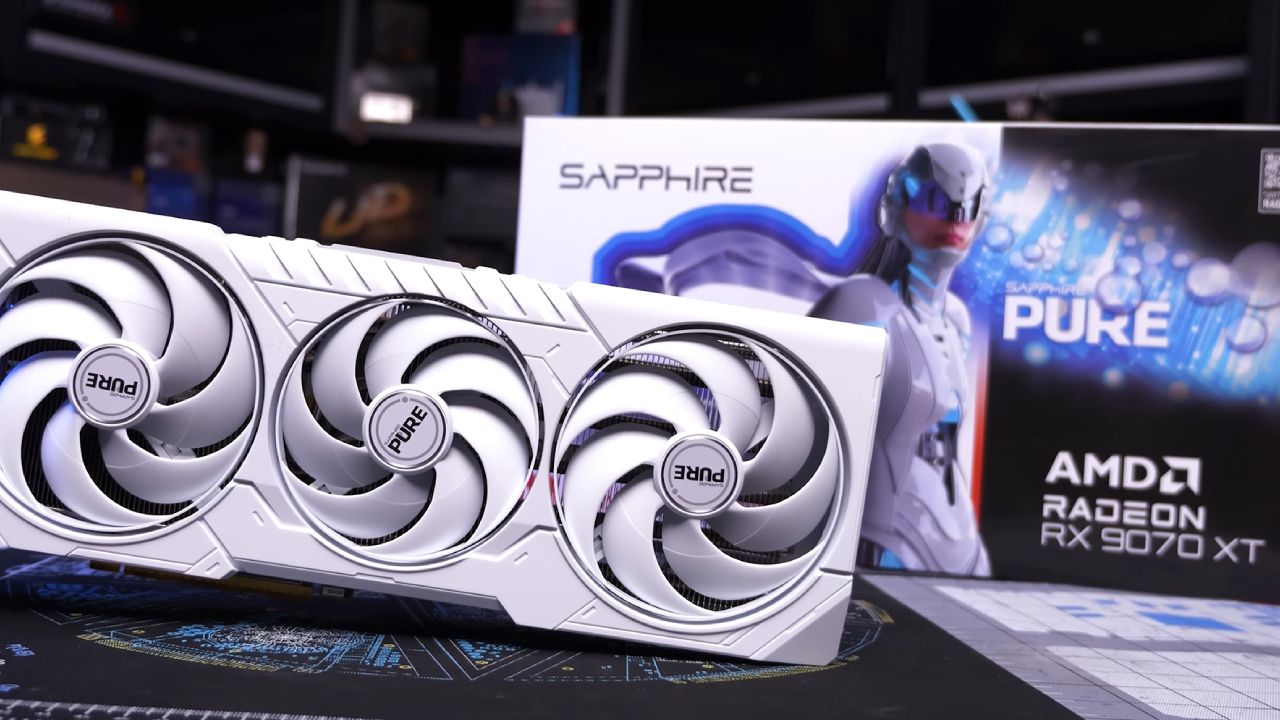
It has been some time since we've witnessed a true head-to-head between AMD and Nvidia. The Radeon RX 9070 XT has emerged as a serious competitor to Nvidia's RTX 5070 Ti. Historically, Nvidia has dominated the market, with AMD only competing effectively when ray tracing and upscaling were not considered key factors.
However, AMD has closed the gap on ray tracing and improved its upscaling capabilities, making it a tough contender due to an ultra-competitive launch price. Although RTX 5070 Ti retains its edge in crucial aspects like frame rate performance, the increasing similarity in price is bridging the divide between these two cards.
Specifications
About specifications, the two cards are closely comparable. While Nvidia has adopted RTX Blackwell, AMD utilizes the RDNA 4 architecture. The chips themselves are similar in size: 365mm² for the AMD RX 9070 XT versus 378mm² for the RTX 5070 Ti. Both feature advanced 4nm transistors from TSMC2.
One notable difference lies in the number of shaders, although direct comparisons are challenging due to architectural differences. Boost clock speeds on paper differ, but real-world testing shows both cards hovering around 2600-2700MHz, creating a level playing field.
Memory represents the largest disparity in raw performance. Both cards operate on a 256-bit memory bus and support 16GB of VRAM. However, the RTX 5070 Ti features GDDR7 memory running at 28 Gbit, while the RX 9070 XT uses GDDR6 at 20 Gbit, giving Nvidia 40% more memory bandwidth. This advantage is evident in high-resolution gaming, particularly at 4K.
Power consumption is another important factor. Both cards are rated around 300W, with the 5070 Ti at 285W and the RX 9070 XT at 304W. Practically speaking, the average power consumption is approximately 303W for Nvidia and 352W for AMD.
Nevertheless, due to the volatility of the GPU market in 2025, actual retail prices have become distorted. Practically speaking, the average power consumption is approximately 303W for Nvidia and 352W for AMD.

Pricing
Pricing remains a vital aspect. The RTX 5070 Ti has an MSRP of $750, while the RX 9070 XT debuted at $599. Ideally, this $150 difference would give AMD a clear edge.
At present, both cards can achieve a value of $900 or above, even with Prime member discounts taken into account. The launch price set by AMD was intended to serve as an introductory amount, with partners planning to raise prices immediately.
5070 Ti from Nvidia is also plagued by scarcity issues, which contribute to elevated prices. If you want to buy one of these GPUs at the moment, get ready for their inflated prices.
Performance
Gaming performance is where the RX 9070 XT truly impresses. AMD's RDNA 4 architecture emphasizes price-to-performance ratio, closing previous gaps in ray tracing and upscaling. While extreme ray tracing workloads, such as Cyberpunk, create noticeable performance differences, at most resolutions, the two cards are almost neck-and-neck.
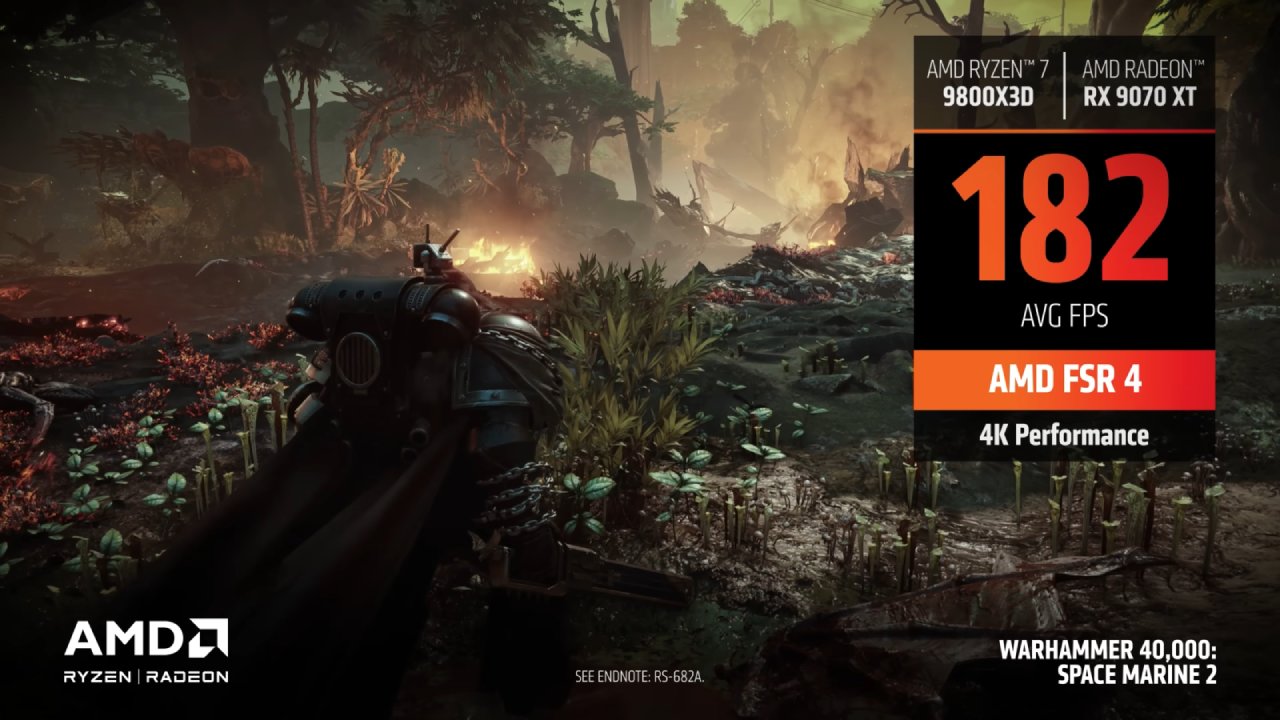
When using frame generation technologies, such as 2x frame gen on both cards and DLSS or FSR quality settings, even titles like Cyberpunk become a level race. AMD's FSR 4 now incorporates machine learning algorithms, but few games currently support it.
Nvidia still leads in image quality, thanks to its advanced DLSS and multi-frame generation, which can create up to three additional AI-generated frames per traditionally rendered frame. This results in smoother, faster gameplay, especially in supported titles.
Extreme MFG settings at very low native frame rates can introduce latency or visual artifacts, but at 60fps or higher, multiframe generation significantly enhances the gaming experience. Unlike FSR 4, Nvidia's MFG can be backported to existing games with frame generation support and is likely to be included in future releases with DLSS.
Overclocking
Overclocking modern GPUs has traditionally yielded minimal gains due to dynamic clock speeds, which are designed to maximize performance within thermal and power limits. This generation, however, allows meaningful improvements.
AMD benefits more from undervolting, providing additional thermal headroom to boost its clocks, while Nvidia gains primarily from increasing the clock speed offset. Either approach can deliver up to 10% higher frame rates with minimal impact on power or temperature. The difference between the two GPUs in achievable overclocking is negligible, with Nvidia showing only a slight edge of about 1%.
Final Thoughts
Drawing a final conclusion is surprisingly tricky. Initially, the RX 9070 XT seemed like the obvious choice, offering comparable gaming performance to the RTX 5070 Ti for $150 less. However, current pricing has made both GPUs outrageously expensive, often exceeding $900 to $1000.
If you are buying a card today and prices are similar, the Nvidia RTX 5070 Ti is the safer pick. It is more power-efficient, performs better in heavily ray-traced games, excels at 4K, and offers superior visual fidelity with DLSS and multiframe generation.
Looking ahead, if stock levels and prices normalize, the RX 9070 XT becomes the more attractive option due to its competitive performance and strong price-to-performance ratio.
AMD has produced a fantastic GPU that undervolts exceptionally well without requiring factory overclocked models. When pricing stabilizes, the RX 9070 XT could easily become the preferred choice for gamers seeking high-quality performance at a better value.
Both the RX 9070 XT and RTX 5070 Ti are excellent mid-range GPUs, hampered only by marketing, scalping, and high prices. For now, if costs are equal, go green with Nvidia. In the future, as pricing normalizes, the red team deserves the spotlight.
Check Our Other AMD articles:
- AMD Ryzen 9 9950X3D Review: Setting The Standard For 2025 Gaming CPU
- AMD Ryzen 7 9800X3D Review: 3D V-Cache Goes God Mode with Stunning Gaming Performance
- AMD RX 9070 Performance Review: Thermals, Clocks, and Real-World FPS
- AMD Ryzen 5 7600 Review: Best Budget Gaming CPU of 2025?
- AMD Radeon RX 7800 XT Review: RDNA 3 Power For Midrange Gaming
- Sapphire NITRO+ AMD Radeon RX 9070 XT Review: The Ultimate 4K Gaming GPU
- AMD Ryzen 7 7800X3D: Delivers Gaming Performance Far Beyond Expectations
- AMD Ryzen 9 7900X Review: Powering the AM5 Era with DDR5 & PCIe 5.0
- ASRock Radeon RX 7800 XT Challenger OC Review: Best Price-to-Performance GPU of 2025
- Intel Core i9‑14900K vs. AMD Ryzen 7 7800X3D: Power Profiles & Gaming Benchmarks
Editor, NoobFeed
Latest Articles
No Data.