
AMD Zen 6 High Clocks vs Intel Nova Lake IPC Advantage: Who Wins
Higher IPC from Intel meets significantly faster clock speeds from AMD, creating a balanced yet competitive next generation CPU landscape.
Hardware by Masaru Hoshino on Apr 07, 2026
Rumors are swirling that Intel's Nova Lake appears to have an IPC advantage over AMD's Zen 6, but there is a big caveat. AMD's processors, meanwhile, will run at higher clock frequencies, perhaps significantly higher. Without question, this is one of the most interesting next-generation processor battles in recent years.
Intel's raw core count will be higher, up to 52 cores in the highest-end configuration, versus 24 in Zen 6 Ryzen processors. However, Intel does not have SMT this time around. There will also be much higher power consumption on Intel's processors. Furthermore, both companies will now offer additional cache, alongside many architectural changes. Gaming performance and productivity are going to be very intriguing.
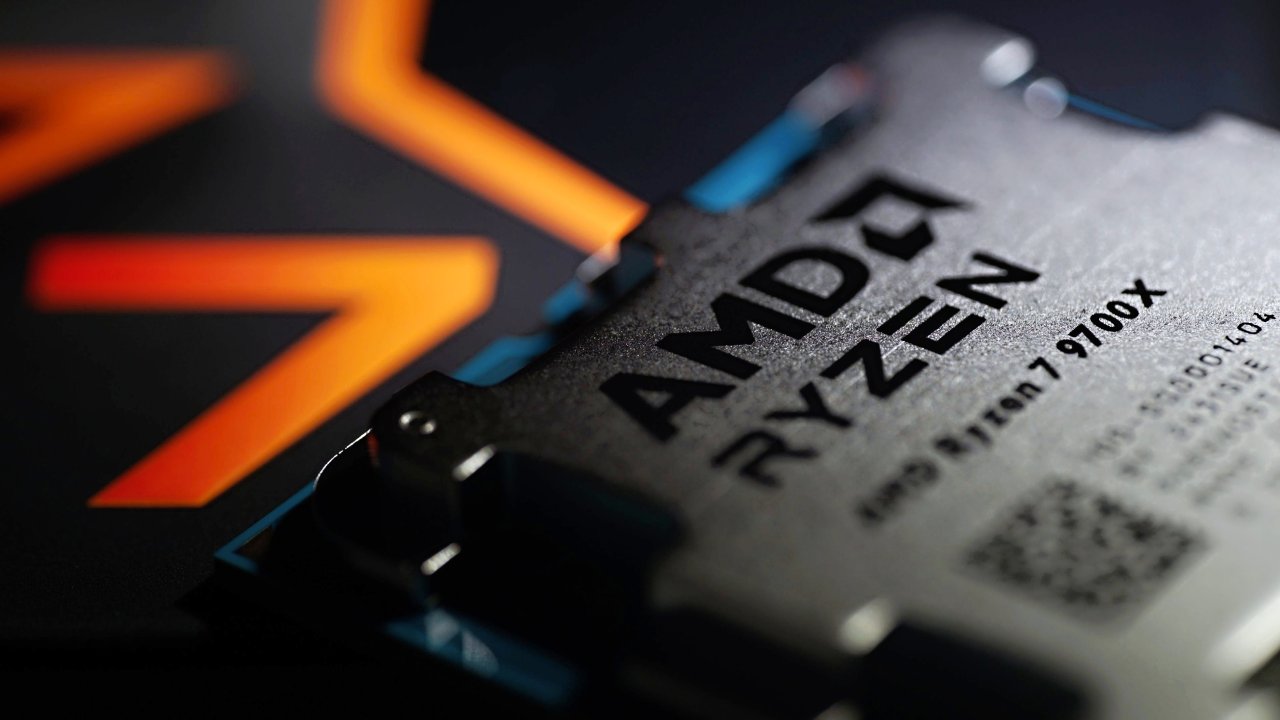
IPC vs Clock Speed: The Core Trade-Off
Rumor claims Intel's Coyote Cove P-cores for Nova Lake have higher IPC but lower clocks than AMD's Zen 6. This information suggests IPC favors Coyote Cove over Zen 6, while clock speeds favor Zen 6 over Coyote Cove. With Nova Lake, there will be two types of cores, P-cores and E-cores, continuing Intel's hybrid architecture approach.
When it comes to IPC, it is very difficult to get an exact figure. Different workloads stress different parts of the CPU, such as integer or floating point performance. Many applications push different instruction sets, making direct comparisons complex.
Based on available insights, Zen 6 IPC gains are estimated at around 10%-15%. However, some indications suggest averages closer to 7%-8% depending on workload.
Clock frequencies, however, are where Zen 6 becomes particularly interesting. Reports indicate AMD may target around 6.3GHz-6.4GHz, which is significantly higher than earlier expectations.
Zen 6 Architecture Improvements
Next-generation Ryzen CPUs will increase the core count per CCD to 12, a 50% increase over the previous generation. Correspondingly, L3 cache will rise to 48MB per CCD, also a 50% increase. X3D variants are expected, with 96MB of cache per stack and possibly dual-CCD configurations.
These improvements suggest a strong focus on both gaming and productivity performance. Higher clocks and more cache could lead to big improvements, especially in workloads that need low latency, like gaming.
Nova Lake: IPC Gains and E-Core Advantage
It is thought that Nova Lake P-core IPC is about 10% higher than Arrow Lake. Some sources say that the gains are bigger, but the average seems to settle around this number. Clock speeds are less clear, with some indications of slight regression compared to Arrow Lake, while best-case scenarios suggest marginal improvements. Overall, clock speeds may effectively remain similar.
The E-cores appear to be the biggest winners, with significantly higher IPC gains. This could have a major impact on multi-threaded workloads. However, how this translates to gaming performance remains uncertain.
Nova Lake will also benefit from additional cache through BLLC, providing parity with AMD's X3D technology. This could significantly affect gaming and data-intensive workloads.
Core Counts, Power, and Platform Considerations
The highest-end Nova Lake configuration is rumored to feature up to 52 cores. This makes me wonder about memory bandwidth and potential bottlenecks, but more cache might help address them.
Depending on the workload and configuration, power use is projected to be very high, possibly above 400W. Prices are also likely to be on the higher end.
For gaming builds, you don't need such high core counts. Many users may prefer mid-range CPUs, such as 8- or 12-core models. Platform considerations also come into play, as both architectures are expected to support up to 8000 MT/s of memory. However, the cost of such memory could be a limiting factor.
Upgrading decisions will depend heavily on existing platforms. Users already on AM5 or current Intel platforms may hesitate to invest in new memory and motherboards unless performance gains justify the cost.
Neural Texture Compression: A Major Shift in Graphics
Neural texture compression is another significant development. While heavily promoted by Nvidia, it is expected to become part of the DirectX standard in some form.
This technology allows massive reductions in texture size without noticeable quality loss. For instance, you may cut down 6.5GB of texture assets to about 1GB without losing any quality or even improving it.
The method uses tiny neural networks to show how things look. The system doesn't store full-image data; instead, it trains neural networks to dynamically rebuild textures on the GPU. This method moves the work from memory to computation.
The consequences are significant. Reduced VRAM usage could enable more detailed environments, higher resolution assets, and improved performance efficiency. It also plays a key role in pushing toward more realistic graphics in future games.
Future Outlook
This generation is especially interesting because both Intel and AMD are making big improvements to their architectures. The mix of IPC, clock speed, core count, and power use will determine how well it works in the real world.
AMD may be better for gaming, as it offers higher clocks and X3D cache benefits. On the other hand, Intel may be better for multi-threaded jobs because it has more cores and better E-cores.
At the same time, new technologies like neural texture reduction will change how games use hardware resources. This could lower the need for big VRAM capacity while boosting visual quality.
The combination of new CPUs and GPUs points to a period of significant changes in PC hardware and gaming performance.
Also, check our other hardware articles:
- AMD Ryzen 9 9950X3D Review: Setting The Standard For 2025 Gaming CPU
- Amazon Luna 2025 Review: Is Prime Gaming's Cloud Service Your Go-To For Casual Fun?
- AMD RX 9070 XT Review: AMD's RDNA 4 Champion for 1440p Gaming
- GeForce Now Ultimate: Ditching Your Gaming PC For Cloud RTX 4080 Power?
- NVIDIA GeForce RTX 5080 Review (2025): Still A 4K Gaming Powerhouse?
- Intel Core Ultra 9 285K Review And Performance Breakdown (2025)
- AMD Ryzen 7 9800X3D Review: 3D V-Cache Goes God Mode with Stunning Gaming Performance
- Intel Core Ultra 9 285K vs AMD Ryzen 7 9800X3D: In-Depth Gaming Performance and Benchmark Comparison
- NVIDIA GeForce RTX 5080 Super Performance In Cyberpunk 2077: Path Tracing & DLSS 4.0 Tested
- AMD Radeon RX 9070 XT In Cyberpunk 2077: Ray Tracing & FSR 4.0 Tested
- Intel Arc B580 Review: The $250 GPU Revolutionizing 1440p Gaming
- Intel Arc B570 Vs. B580: Value, Specs, And Real-World Gaming Performance
- RTX 5090 Laptop Vs. M4 Max MacBook Pro: Ultimate Raw Performance Vs. Battery Endurance
- Intel Arc b580 Vs. RTX 4060: Game Performance And Value Analysis
- RTX5090 Hell Is Us Demo 4K Ultra Benchmark: DLSS Vs. Native Performance Guide
- NVIDIA RTX 5070 Review: Mid-Range Muscle or Marketing Hype?
- Nintendo Switch 2 Review: Handheld Performance, Features & Value Breakdown
- RTX 5070 Ti Review: Performance, Thermals & Power Efficiency Tested
- Samsung Odyssey OLED G81SF Review 2025: Ultimate 32-Inch QD-OLED Gaming Monitor
- AMD RX 9070 Performance Review: Thermals, Clocks, and Real-World FPS
- AMD Ryzen 5 7600 Review: Best Budget Gaming CPU of 2025?
- AMD Radeon RX 7800 XT Review: RDNA 3 Power For Midrange Gaming
- Asus ROG RTX 5090 Astral OC Vs. Founders Edition: The 4K Gaming Benchmark
Editor, NoobFeed
Latest Articles
No Data.