

DLSS 4.5 Outperforms Native 4K and FSR 4 in Major Image Quality Test
Quality mode upscaling from 1440p to 4K reveals significant advantages for DLSS 4.5 in clarity and stability.
Hardware by Katmin on Feb 27, 2026
The debate over the best upscaler has been discussed many times, and a lot of people are not particularly taken with the whole concept of upscaling at all. It often turns into a “native resolution or give me death” type of argument in terms of how the commentary can sometimes descend.
However, ComputerBase has conducted a blind test comparing native 4K resolution rendering versus DLSS 4.5 versus FSR 4 in their respective quality modes. That means upscaling from 1440p, which represents one of the very best-case deployment scenarios for these upscalers.
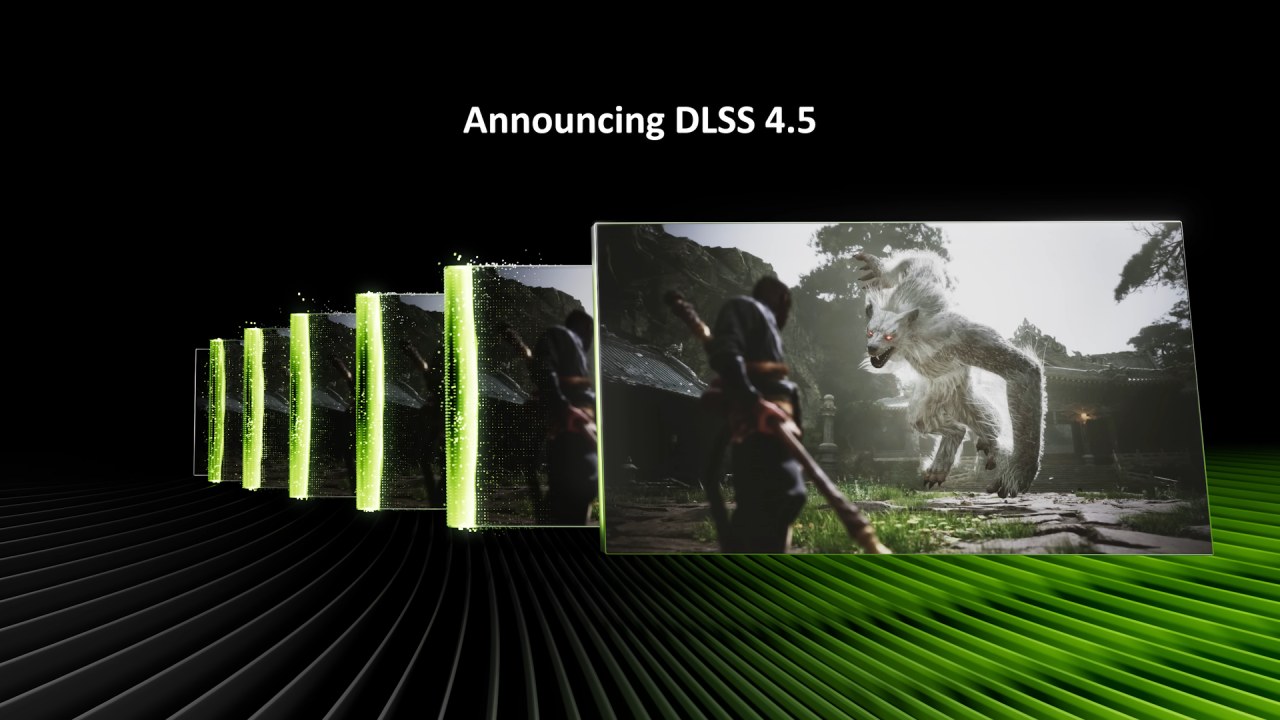
Ultimately, the results are quite clear. DLSS 4.5 appears to be way ahead of the competition, outperforming both native resolution and FSR 4.
Questions Around Methodology
One interesting point is the methodology behind the testing. Even after reviewing the report, it is not entirely clear whether DLSS 4.5 was running strictly in quality mode. FSR 4 clearly talks about quality mode, whereas DLSS 4.5's phrasing is a little less clear. It looks like both were tested with their own quality presets, but DLSS 4.5 usually turns on when the suggested settings are used, which can be either performance or ultra performance modes depending on how the system is set up.
The test asked users to choose the best image instead of giving them a specific ranking order. That difference is important. The test didn't ask them to rank first, second, and third; instead, it asked them to pick what looked best. It would be fascinating to get a full ranking breakdown, especially to see whose option frequently came in second or third.
DLSS 4.5, FSR 4, and Native 4K Compared
Based on what we have seen in prior testing, it is not surprising that DLSS 4.5 leads in overall perception. In terms of reduced ghosting and general clarity, DLSS 4.5 often appears at the front. However, the results regarding FSR 4 are more nuanced. In several cases, FSR4 did not perform as strongly as some might have expected compared to native 4K rendering.
Game reliance is a big part of this. FSR 4 can look quite close to the native presentation in several games. In certain cases, the distinctions are clearer. Results can be very different depending on the game engine and how it is set up. In some cases, FSR 4 may do a better job of ghosting than typical TAA solutions, even though it doesn't have as much fine detail.
We need to admit that stability and clarity are two sides of the same coin. In the past, visual stability has frequently been more important than sharpness. Native 4K with TAA may look stable when moving, but that stability can sometimes be caused by reprojection ghosting. Your options may change depending on how you value ghosting, clarity, and keeping tiny details.
Importance of Subjective Perception
The eye is a curious tool for people. People look at visual features in different ways and give different levels of emphasis to certain flaws or strengths. Someone can notice ghosting right away and not like it. Another person could care more about how clear and sharp it is. This is why blind testing like this is useful.
The results validate what has generally been observed since the introduction of DLSS 2.0: DLSS technology often delivers superior image quality compared to other reconstruction methods. Seeing that borne out in a controlled blind comparison strengthens that conclusion.
A Well-Executed Testing Approach
Beyond the results themselves, the testing approach deserves recognition. The comparisons retained image quality properties exceptionally well, and the implementation allowed detailed inspection of the output. The file sizes were substantial, often in the 300MB to 400MB range, ensuring that compression artifacts did not undermine the integrity of the comparisons.
From our perspective, this is a fantastic testing concept. If we had unlimited time, budget, and manpower, it would be something we would love to replicate. The execution was thoughtful and thorough, and it sets a strong example for future image quality evaluations.
What Comes Next
If anything, this raises further questions. Frame generation comparisons would be the logical next step, though they introduce additional complexity. To show frame generation realistically, you would need panels with very high refresh rates, maybe 240hz or higher, to show the differences in managing motion and latency.
The blind test confirms a continuous trend: DLSS 4.5 currently excels in perceived image quality when upscaling from 1440p to 4K under optimal settings. However, game-specific implementation, personal preference, and weighting of visual artifacts still play a significant role in how each solution is judged.
Also, check our other hardware articles:
- AMD Ryzen 9 9950X3D Review: Setting The Standard For 2025 Gaming CPU
- Amazon Luna 2025 Review: Is Prime Gaming's Cloud Service Your Go-To For Casual Fun?
- AMD RX 9070 XT Review: AMD's RDNA 4 Champion for 1440p Gaming
- GeForce Now Ultimate: Ditching Your Gaming PC For Cloud RTX 4080 Power?
- NVIDIA GeForce RTX 5080 Review (2025): Still A 4K Gaming Powerhouse?
- Intel Core Ultra 9 285K Review And Performance Breakdown (2025)
- AMD Ryzen 7 9800X3D Review: 3D V-Cache Goes God Mode with Stunning Gaming Performance
- Intel Core Ultra 9 285K vs AMD Ryzen 7 9800X3D: In-Depth Gaming Performance and Benchmark Comparison
- NVIDIA GeForce RTX 5080 Super Performance In Cyberpunk 2077: Path Tracing & DLSS 4.0 Tested
- AMD Radeon RX 9070 XT In Cyberpunk 2077: Ray Tracing & FSR 4.0 Tested
- Intel Arc B580 Review: The $250 GPU Revolutionizing 1440p Gaming
- Intel Arc B570 Vs. B580: Value, Specs, And Real-World Gaming Performance
- RTX 5090 Laptop Vs. M4 Max MacBook Pro: Ultimate Raw Performance Vs. Battery Endurance
- Intel Arc b580 Vs. RTX 4060: Game Performance And Value Analysis
- RTX5090 Hell Is Us Demo 4K Ultra Benchmark: DLSS Vs. Native Performance Guide
- NVIDIA RTX 5070 Review: Mid-Range Muscle or Marketing Hype?
- Nintendo Switch 2 Review: Handheld Performance, Features & Value Breakdown
- RTX 5070 Ti Review: Performance, Thermals & Power Efficiency Tested
- Samsung Odyssey OLED G81SF Review 2025: Ultimate 32-Inch QD-OLED Gaming Monitor
- AMD RX 9070 Performance Review: Thermals, Clocks, and Real-World FPS
- AMD Ryzen 5 7600 Review: Best Budget Gaming CPU of 2025?
- AMD Radeon RX 7800 XT Review: RDNA 3 Power For Midrange Gaming
- Asus ROG RTX 5090 Astral OC Vs. Founders Edition: The 4K Gaming Benchmark
Senior Editor, NoobFeed
Latest Articles
No Data.