
Farthest Frontier Guide | Best Crop Rotations & Soil Fertility Explained
Master fertility values, spoilage times, and stress losses to build reliable, high-yield farms.
Game Guide by Faviyan Mustafiz on Oct 27, 2025
Efficient farming in Farthest Frontier hinges on understanding what affects soil health and how long harvests actually last in storage. The in-game fertility icons can be confusing, but there are clear, static values behind every crop.
This guide explains the real fertility impacts, shelf lives, and stress risks so you can plan rotations that maintain soil quality, reduce waste, and keep your town fed year-round.
Fertility Rating vs. Real Numbers
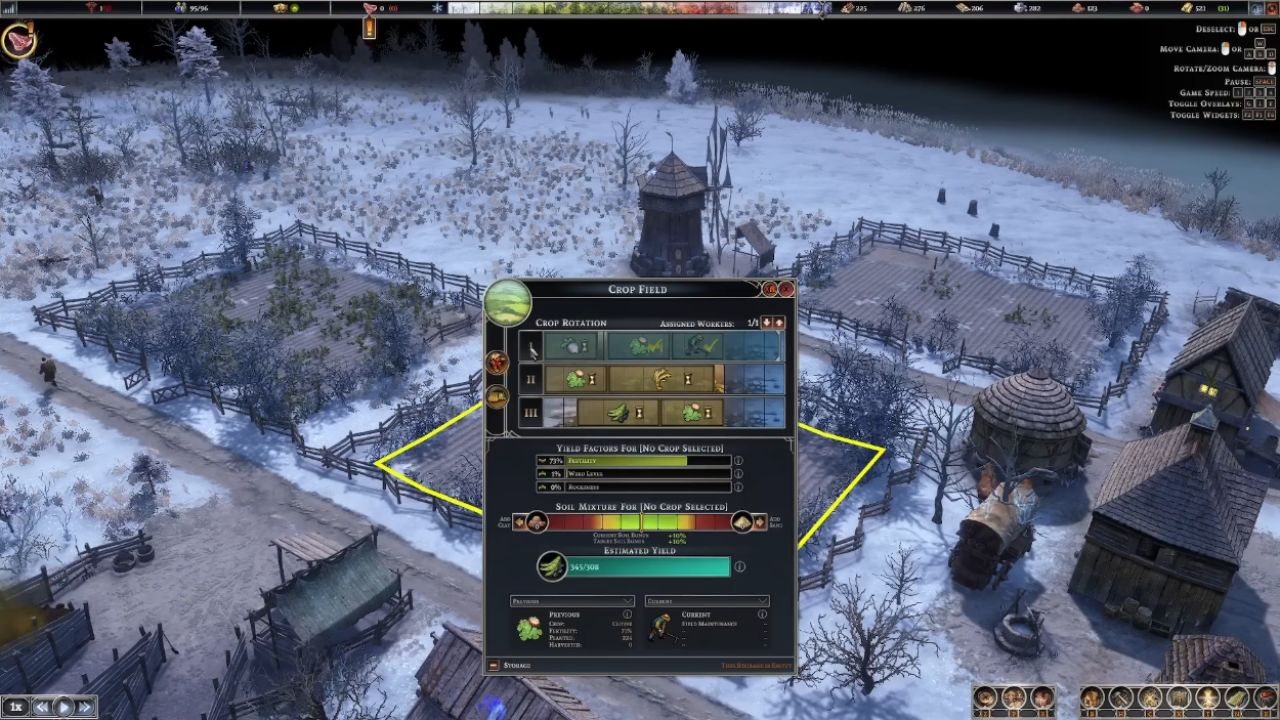
The "±5" fertility icon on a crop card is a simple quality rating, not a percentage or direct fertility change. A +5 icon is "very good," a -5 icon is "very poor." Actual fertility effects come from fixed values in the game data. Treat the icon as guidance and rely on the real numbers below when planning fields.
Baseline Fertility Changes by Crop
At baseline (before biome effects), crops apply specific fertility changes per harvest. Turnips reduce fertility by 2, Carrots reduce by 2, Wheat reduces by 6, Buckwheat reduces by 2, and Rye reduces by 5.
Beans and Peas each add 1 to fertility, helping fields rebound. Cabbage reduces by 4, Leeks reduce by 5, and Flax reduces by 3. Clover is the primary fertility booster, generally adding about 2 to 3 fertility per use rather than the "+5" implied by the rating icon.
Biomes, Initial Penalties, and Yield Multipliers
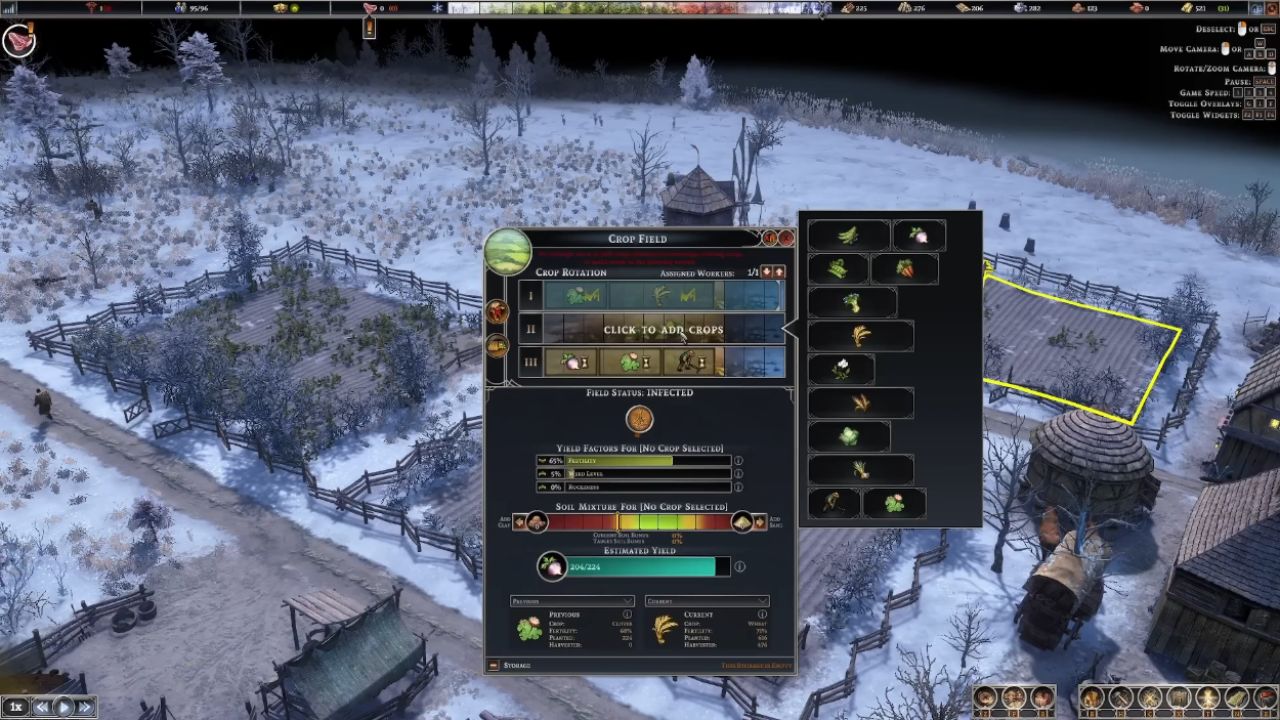
Map Biome introduces initial fertility penalties that influence early field performance. Yield multipliers also interact with initial fertility and may vary with biome.
The practical takeaway is to assume your first seasons will be slightly less forgiving on tougher maps and to schedule early fertility-positive plantings—such as Beans, Peas, or Clover—to stabilize soil before pushing heavy fertility drains like Wheat or Rye.
Spoilage Rates and Storage Planning
Crop category determines how long food lasts in storage, which should shape how much you grow and when you harvest. Root Vegetables—Turnips, Carrots, and Leeks—keep for about 12 months. Grains—Wheat, Buckwheat, and Rye—store for roughly 24 months. Beans and Peas hold for about 18 months.
Greens such as Cabbage last around 8 months. Flax keeps much longer, at roughly 36 months, while Clover is not harvested and has no spoilage window. Plan output to match these timelines so you avoid unnecessary spoilage and wasted labor.
Heat, Frost, Weeds, and Field Timing
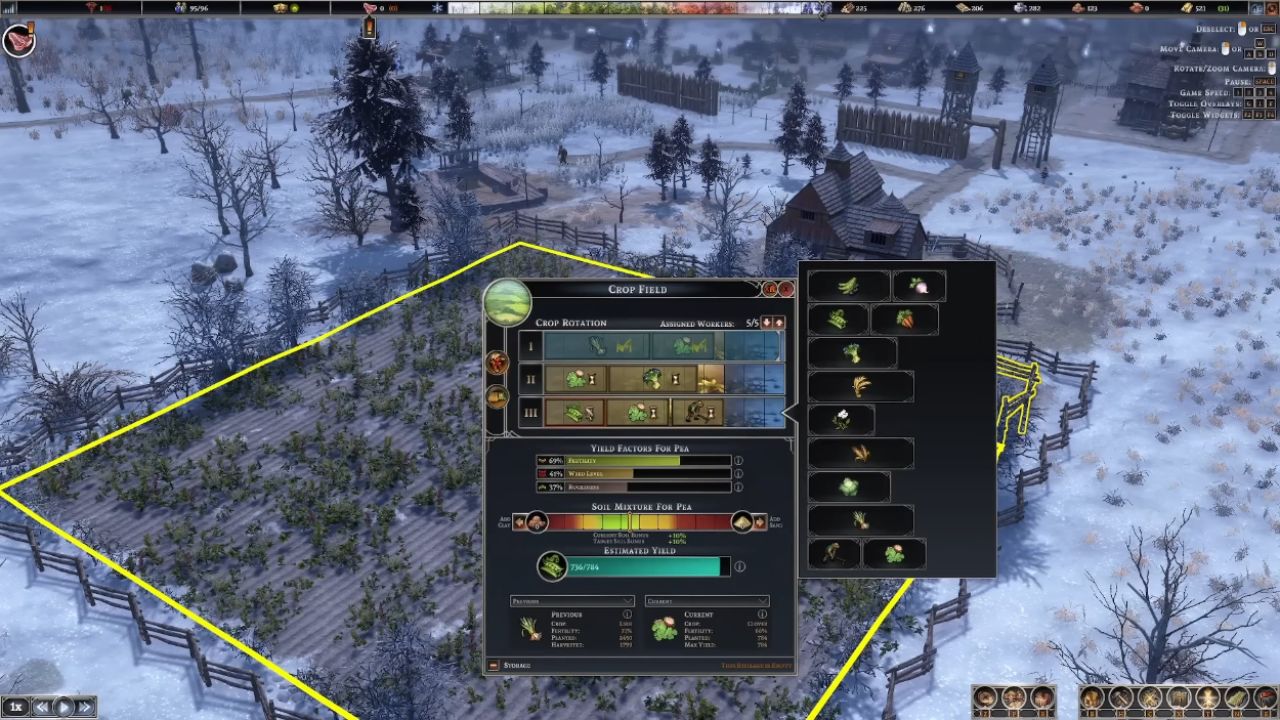
Environmental stress can significantly cut yields if crops aren't timed well. Carrots are especially vulnerable, with up to about a 50% loss from heat stress, no weed suppression benefits, and only a 12-month shelf life—making them a poor choice compared to Turnips or Leeks for most rotations.
Most crops also have practical windows for planting, time-to-maturity, and a "rot-on-field" period; aligning these windows with cooler or warmer stretches can prevent losses from heat or frost and protect your annual food budget.
Practical Rotation Strategy
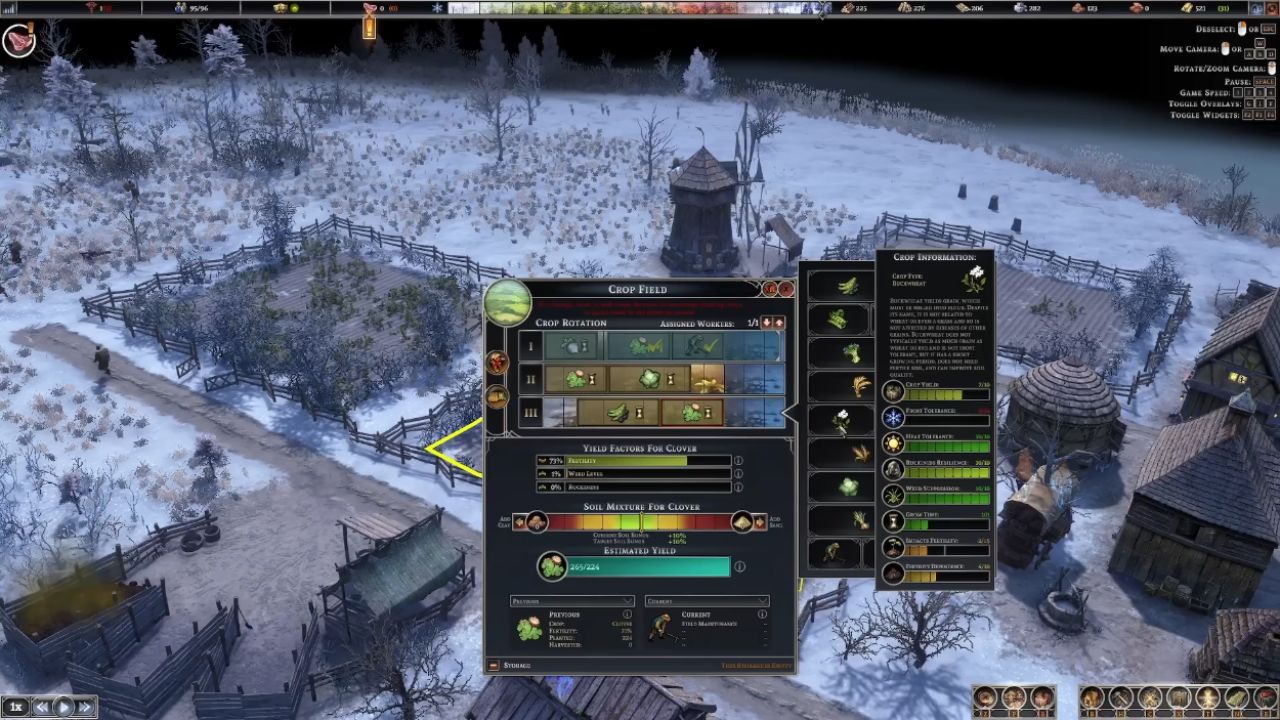
Use fertility-positive plantings to offset heavy drains while meeting food goals and storage realities. Scheduling Clover between nutrient-hungry crops steadily recovers soil by roughly 2–3 points per pass. Pair Beans or Peas with Wheat, Rye, or Flax to nudge fields back toward neutral without over-reliance on compost or grazing.
Favor Turnips and Leeks as your core roots and minimize Carrots due to their heat-stress risk and lack of weed benefits. Match production to the storage lifespans—lean on Grains and Flax when you need durable stockpiles, and grow Greens like Cabbage closer to when they will be consumed to reduce waste.
Making It Work Season After Season
The icon scores are just that—hints. Use the real fertility numbers to make your plans. Planting high-draining crops like Wheat, Rye, and Flax after a fertility boost and balancing plants against shelf life are some ways to keep the soil healthy. Your settlement's fields will stay healthy, useful, and strong as long as you plan ahead to avoid heat and frost.
Also, check our Farthest Frontier Review and other guides below:
Contributor, NoobFeed
Latest Articles
No Data.