
FSR 4.1 on Xbox Series S in GTA 6: Why is Series X Missing Out?
GTA 6 brings AMD's latest machine learning upscaling technology to Xbox Series S while leaving Series X waiting for an update.
XBOX by Nahe Yan on Nov 21, 2026
GTA 6 has become the first Xbox game to launch with AMD's FSR 4.1 upscaling technology, bringing machine learning-based image reconstruction to Microsoft's consoles. However, the budget Xbox Series S received the technology at launch, while the flagship Xbox Series X did not. The difference raises questions about performance requirements, development timing, and whether the more powerful console could receive an FSR 4.1 update later.
GTA 6 uses FSR 4.1 to keep all three of Rockstar's ray-tracing effects, including full-rate lighting, looking great even on a $300 console. When heavy scenes cause frame-rate dips, Xbox's hidden system-level VRR advantage smooths them out much better than the base PlayStation 5.
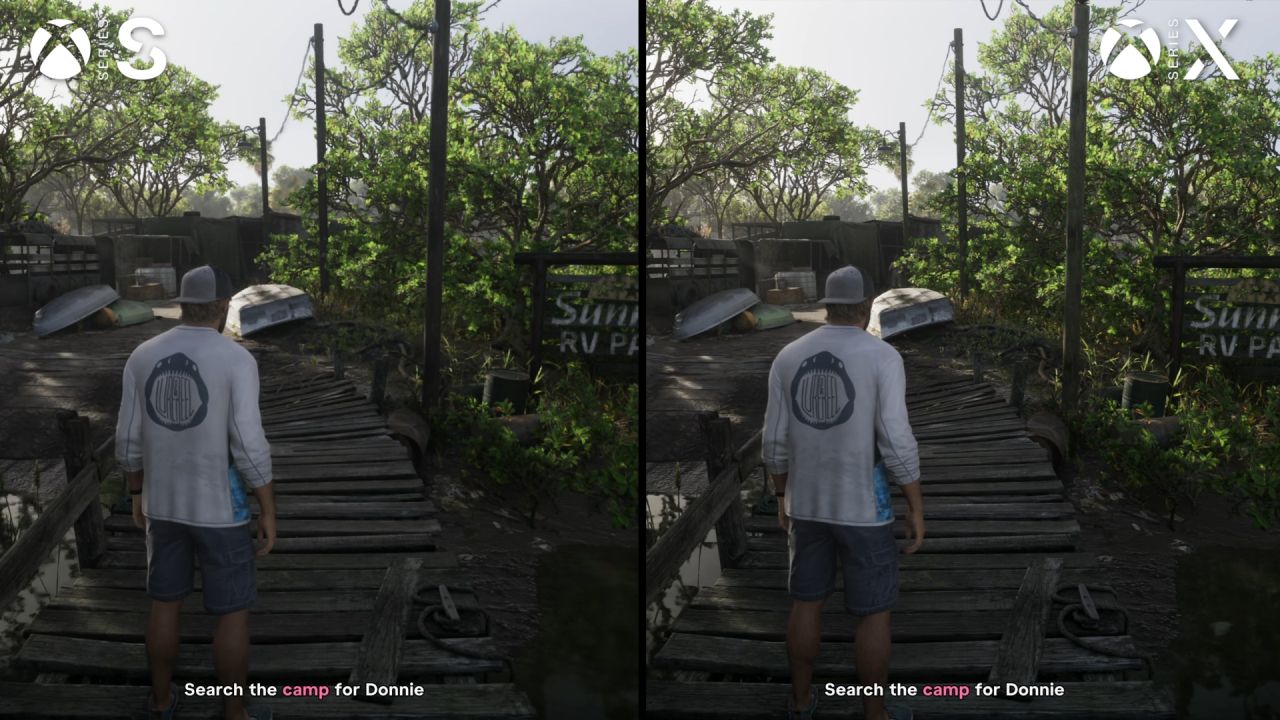
GTA 6 Uses FSR 4.1 to Maintain Ray Tracing
Rockstar confirmed that GTA 6 renders internally at 720p on Xbox Series S and upscales to 1080p using AMD's FSR 4.1. That makes GTA 6 the very first Xbox Series game to ship with INT8-based machine learning upscaling. And that choice paid off big time. By relying on FSR 4.1, Rockstar kept the same core ray-tracing features on Series S.
It looks great for the budget console. Rockstar could have stripped out heavy features like RTGI to keep the frame rate strictly locked at 30 FPS, but instead used FSR 4.1 to give the budget console a visual experience very similar to the bigger machines. Because Rockstar kept those heavy effects turned on, there are some issues during intense gameplay. And this is where Digital Foundry pointed out a hidden system-level advantage on Xbox.
Both Series S and Series X can run GTA 6 inside a 120Hz VRR container at the operating system level, including low-frame-rate compensation. This is not new. The VRR window has always been wider on the Xbox Series consoles than on PlayStation. This means even when the frame rate dips under 30 FPS, your TV stays synced and feels much smoother if you have a VRR display.
On PlayStation 5, system-level VRR only works above 48 FPS and offers no low-frame-rate compensation. So it does nothing in a 30 FPS game. Now, if FSR 4.1 works so well on the much weaker Series S, it makes zero sense, at first glance, that Rockstar left it off the flagship Series X. And that brings us to the two biggest questions: why did it skip Series X at launch, and when could it actually arrive?
Xbox Series X Was Left Out of FSR 4.1 at Launch
Right now, both Xbox Series X and base PlayStation 5 render GTA 6 at 1440p and upscale to 4K using Rockstar's own in-house TAA, while the PS5 Pro uses Sony's PSSR2. According to Digital Foundry, the primary reason comes down to strict frame-time math. Because GTA 6 runs at 30 FPS, Rockstar has a total budget of just 33.3ms to render every single frame.
According to Microsoft's official GDK benchmarks, running the full RDNA2 model of FSR 4.1 at 4K on Series X costs 3.88ms per frame, while the lighter FSR 4 Lite model still costs 2.75ms. Compare that to Rockstar's standard TAA, which costs roughly half that time. To afford those extra milliseconds for FSR 4.1 on Series X, Rockstar might have had to drop the internal resolution below 1440p.
Beyond that technical budget, two other very real possibilities explain the launch decision. First is the timing. Microsoft released the official FSR 4.1.2 development kit close to GTA 6's launch, so Rockstar may not have had enough time to test it at 4K on Series X properly.
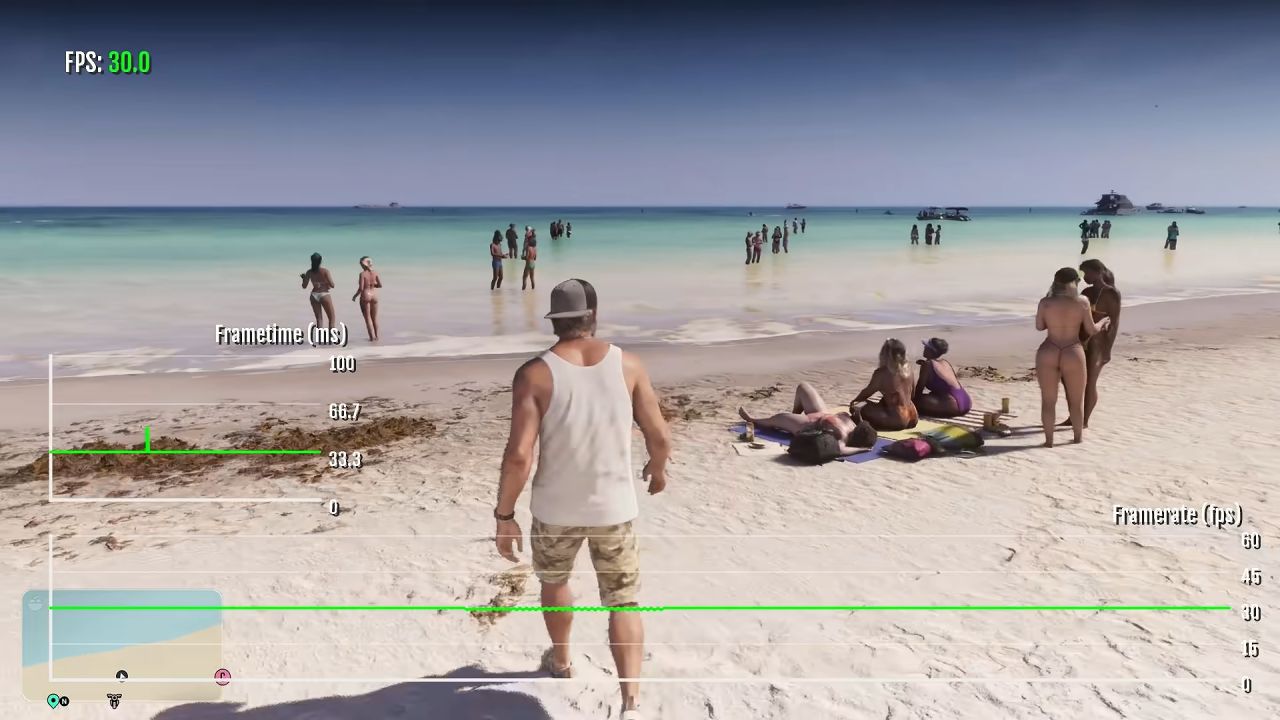
Second, we cannot rule out platform parity, especially given how much Sony has spent on the marketing budget. Because Series X uses hardware-accelerated INT8 instructions for FSR 4.1 while the base PS5 lacks that hardware path, a well-tuned Series X version could look noticeably cleaner than the base PS5, even with Sony's major marketing partnership.
Rockstar wouldn't necessarily have to run a heavy 3.88ms full model at native 4K output.
According to Microsoft's official numbers, FSR 4 Lite takes just 1.29ms to upscale to 1440p, 2ms to 1800p, and 2.75ms to 4 K. In theory, if Rockstar renders the game internally around 1080p or 1200p and uses FSR 4 Lite to upscale to 1800p or 4K, the upscaling cost stays right around 2ms.
Even with a slightly lower base resolution, FSR 4 Lite's machine learning reconstruction should produce a noticeably cleaner in-motion image than 1440p TAA, while staying safely within that 33.3ms frame budget. The FSR 4 Lite model looks very close to the full model during actual gameplay.
First, keep an eye out for the GTA 6 Online rollout over the next few months because Rockstar launched GTA 6 purely as a single-player story experience, with the massive multiplayer update still on the way. That major title update is the exact kind of core engine patch where Rockstar could slip in FSR 4 Lite for Series X.
FAQ
Q. Why does GTA 6 use FSR 4.1 on Xbox Series S but not Series X?
A. The decision reportedly comes down to frame-time limitations and development timing. FSR 4.1 requires additional processing time, which could force Rockstar to reduce the internal resolution on Series X. Microsoft also released the official development kit relatively close to GTA 6's launch, potentially leaving insufficient time for optimization.
Q. What resolution does GTA 6 run at on Xbox Series S?
A. GTA 6 reportedly renders internally at 720p on Xbox Series S and uses AMD's FSR 4.1 to upscale the image to 1080p while maintaining its ray-tracing features.
Q. Could GTA 6 receive FSR 4.1 on Xbox Series X?
A. Yes. A future update could introduce FSR 4 Lite, which requires less processing time than the full FSR 4.1 model. Rockstar could potentially use it to improve image reconstruction while staying within the game's 33.3ms frame-time budget at 30 FPS.
Q. When could GTA 6 receive FSR 4.1 on Xbox Series X?
A. The GTA 6 Online update or the PC launch window in Q1 2027 could provide opportunities for Rockstar to introduce FSR 4 Lite to Xbox Series X. Neither update has been officially confirmed to include the technology.
Editor, NoobFeed
Latest Articles
No Data.