
Intel’s Next-Gen Celestial GPUs Could Rival RTX 5080 at Half the Price
Intel’s Celestial GPUs are set to redefine desktop performance with massive architectural upgrades and next-generation efficiency gains.
Hardware by Tanvir Kabbo on Oct 18, 2025
Intel's upcoming Celestial GPUs are shaping up to be one of the most exciting developments in the GPU industry. These cards will replace the Intel Arc Battle Mage line, which was a big step up from the first-generation Arc Alchemist series.
Intel is ready to take on AMD and Nvidia in the desktop GPU market with the new Xe3 architecture, which has better efficiency, greater cache, and more cores.
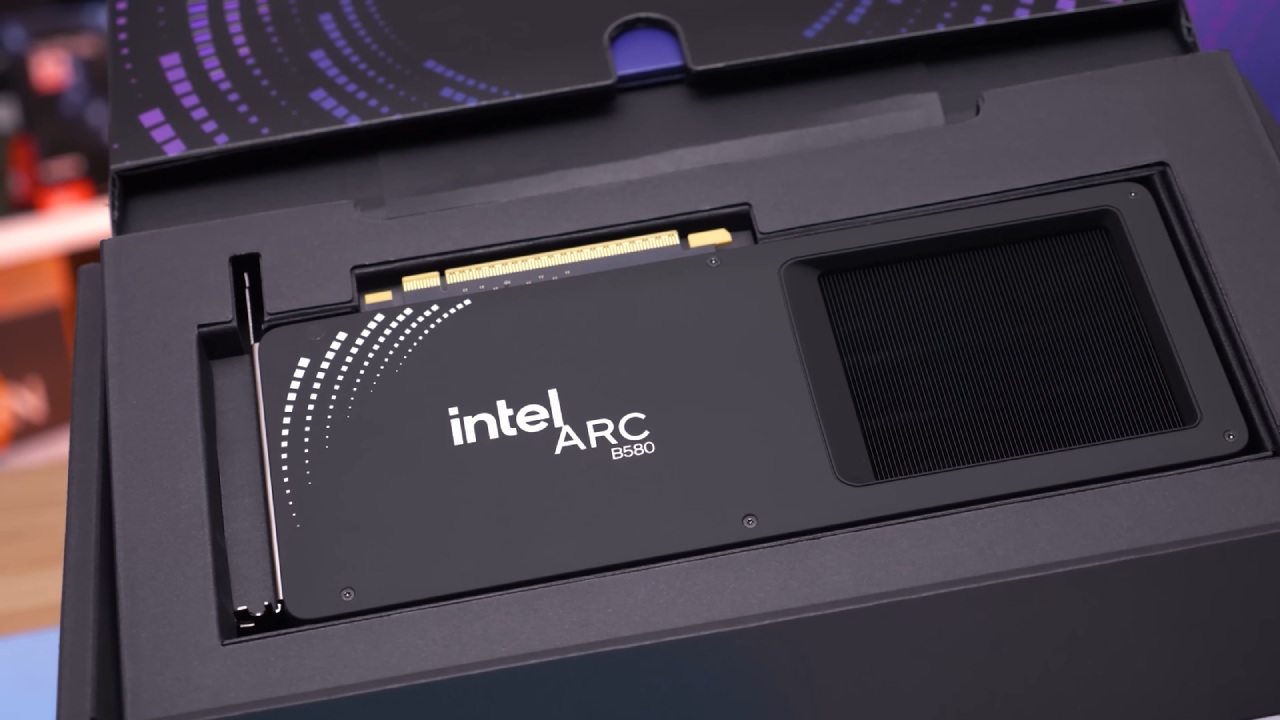
Evolution from Alchemist to Battle Mage and Beyond
Intel's time in the GPU business has been very interesting. The Arc Alchemist GPUs were their initial try. Then they made the Battle Mage line, which had huge gains in efficiency and raw performance. If you bought the Battle Mage B580 at its full price, for example, it became a powerful mid-range challenger.
Intel's Celestial GPUs, which are based on the Xe3 architecture, now want to take things even farther by making big improvements in design, performance, and architectural economy.
Understanding the Xe3 Architecture
The Xe3 architecture is at the heart of Intel's next-generation graphics products. It will debut with the upcoming Panther Lake mobile CPUs but is also designed for desktop GPUs, albeit with larger configurations, more cores, and more cache.
A particularly interesting highlight from Intel's internal slides involves improvements in geometry or triangle efficiency. According to microbenchmarks, Intel claims up to 1.9x–7.4x better performance in triangle handling.
This essentially means the GPU can process and cull unseen geometry far more efficiently, improving overall rendering speed. While this doesn't translate directly into a 7x boost in gaming performance, it does show a massive leap in GPU-level efficiency that impacts all types of games.
Additionally, Xe3 will handle textures more efficiently with improved anisotropic filtering and sRGB processing. The architecture focuses on better memory handling and caching—key factors in overall performance and power efficiency.
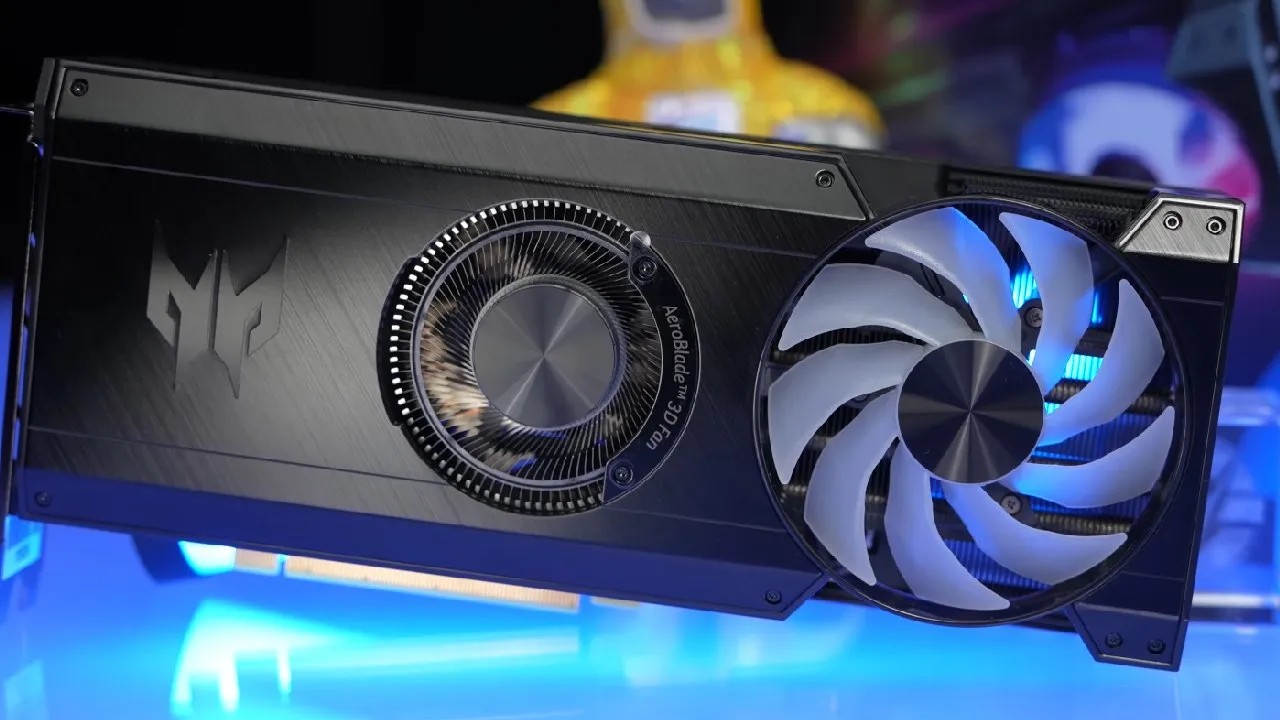
More Cores and Larger Cache
One of the most substantial changes with Xe3 is the increase in the number of Xe cores per slice—from 4 to 6. This represents a 50% increase in raw compute potential per render slice. For example, if the Battle Mage B580 had 20 XE cores, the equivalent Celestial GPU could potentially reach up to 30 cores or even higher.
Intel is also dramatically increasing cache sizes. The Xe3 architecture is expected to feature 33% more L1 cache and double the L2 cache compared to previous generations. This increased cache size reduces dependency on external memory bandwidth and significantly boosts ray tracing performance. It ensures that more workloads stay within the GPU, making memory operations faster and more efficient.
Expected Core Counts and Performance Scaling
Based on Intel's current trajectory, the flagship C780 desktop GPU could feature up to 48 cores, assuming the 50% increase in core count seen on the mobile variant carries over.
However, a more conservative estimate suggests a slightly reduced increase to balance performance, thermals, and production costs. Even then, a substantial jump in performance is inevitable.
It is predicted that the Battle Mage B770 and B780 will have 28 and 32 cores, respectively. The Celestial C770 could then add to that number by making it 36 cores. This GPU is going to have a much better performance because its clock speeds will go from 2.8GHz to about 3.1GHz and its L2 cache will be twice as big.
Intel's decision to maintain 16GB of VRAM but switch to faster GDDR7 memory running at 28GB/s on a 256-bit bus means bandwidth could reach 896GB/s—nearly 1TB/s.
This massive improvement will enable Celestial GPUs to handle ultra-high-resolution gaming and advanced ray-tracing workloads more efficiently.
The Celestial C780: Intel's Flagship Contender
The C780 is expected to be Intel's flagship GPU, built on TSMC's N4P advanced process. With potentially 42 cores or more, a 3.1GHz clock speed, and up to 96MB of cache, this card could deliver incredible performance levels.
It's also projected to feature the same memory setup as the C770, maintaining 16GB of GDDR7 VRAM on a 256-bit bus. Power consumption is expected to be around 330W, indicating a high-end performance tier.
Intel's internal data reveals that the XE3 architecture nearly halves render time compared to the previous Battle Mage architecture in Cyberpunk 2077.
The Battle Mage GPU reportedly rendered frames at 45.44ms, while XE3 reduced that to 22.84ms. When normalized for core count differences, this suggests an IPC improvement of about 1.326x—roughly 32.6% faster per core.
Performance Expectations and Market Positioning
If we apply that 1.3x IPC uplift across the lineup, the C770 could be up to 2.6x faster than the B580, while the C780 could deliver up to 3x higher performance. Intel could price the C770 around $399 and the C780 at $499, which would be highly competitive given the performance projections.
A release window between Q4 2026 and Q1 2027 seems likely based on current development timelines. If Intel delivers on these numbers, the C780 could rival or even outperform Nvidia's RTX 5080—at nearly half the cost.
That would be a massive shake-up for the GPU industry, giving gamers and creators more performance per dollar than ever before.
Why Waiting Might Be Worth It
Suppose you currently own a capable graphics card and aren't in a rush to upgrade. In that case, it may be wise to wait and see what Intel's Celestial lineup delivers. These GPUs could revolutionize the game since they promise better architecture, more efficiency, and lower prices.
But you can get great deals during seasonal specials, like Black Friday. In the short run, those might still be worth thinking about.

Final Thoughts
Intel's Celestial GPUs represent a major step forward in their quest to compete with AMD and Nvidia. With impressive architectural improvements, higher clock speeds, larger cache, and better efficiency, Intel seems poised to make a serious impact in the high-end GPU market. The Celestial C770 and C780 could redefine what consumers expect from mid-range and flagship GPUs alike.
We can't wait to see how these GPUs perform once they hit the market. If Intel's projections hold true, the next generation of gaming and creative performance may become far more accessible—and far more exciting.
Also, Check Our Other Intel Chips Articles:
- Intel Core Ultra 9 285K Review And Performance Breakdown (2025)
- Intel Core Ultra 9 285K vs AMD Ryzen 7 9800X3D: In-Depth Gaming Performance and Benchmark Comparison
- Intel Core i5-13400F Gaming Performance: Still Worth It in 2025?
- Intel Core i9‑14900K vs. AMD Ryzen 7 7800X3D: Power Profiles & Gaming Benchmarks
- Intel Core i9 14900K: Specs, Benchmarks, and Competitor Comparison
- Intel Core Ultra 5 245K Review: Gaming, Productivity & Power Efficiency Tested
- Intel Core Ultra 9 285 K's iGPU Gaming: In-Depth Benchmarks & Analysis
- Intel vs. AMD Gaming Laptop: Performance, Thermals & Battery Life Compared
- AMD Ryzen 7 9800X3D vs.7800X3D vs. Intel Core Ultra 7 265K: Gaming, Thermals & Price Analysis
Senior Editor, NoobFeed
Latest Articles
No Data.