
Mobile Gaming's 2026 Playbook: Live Service, Cross-Save Ambitions, and the Rise of Competitive Handhelds
Other by Aisaka Taiga on Apr 22, 2026
Mobile gaming entered 2026 as the largest revenue segment in interactive entertainment, and its internal rulebook has shifted noticeably since the 2022 slump. The combined pressure of tighter app-store economics, a handful of billion-dollar live-service hits, and a new generation of Android handhelds has pushed publishers into a more disciplined playbook.
Honor of Kings, Genshin Impact, PUBG Mobile, and Clash Royale are no longer oddities at the top of the charts. They are reference products whose update cadences, monetization grammar, and esports ambitions now shape how smaller studios plan a two-year roadmap.
The result, visible across the App Store and Google Play dashboards in the first quarter of 2026, is a mobile category that behaves less like a casual-download business and more like the live-service console market did a decade ago.

Mobile design discourse has also converged at the storefront layer itself. Any Google Play Top Grossing scroll in April 2026 moves fluidly between a Supercell battle-pass relaunch, a miHoYo event trailer, and the regulated real-money products available in legal states.
Product teams studying retention patterns across the highest-charting entries now routinely reference US casino apps as a comparison case when discussing session polish, reward pacing, and timer-driven return mechanics. That proximity changed the conversation.
The interactive-entertainment business has converged at the storefront layer, and products that share a shelf begin to borrow from one another even when their underlying business models differ. The mobile-gaming side of that exchange has been the larger beneficiary so far, because its designers were already fluent in the short-session retention language that the regulated category arrived at only later.
Live Service Is No Longer a Console Import
A live-service mobile game in 2026 carries a publishing schedule that rivals what Ubisoft and Blizzard produced on console during the 2018 to 2021 cycle. Genshin Impact's monthly 5.x patch train remains the reference cadence, with version 5.6 in April 2026 delivering a new limited-time region, a paired character banner, and a cross-character event chain stretching across six weeks.
Honkai: Star Rail, Wuthering Waves, and the competitive entrants Azur Promilia and Infinity Nikki followed similar forty-two-day update rhythms through late 2025.
The live-service discipline is now intrinsic to mobile, not a console idea ported across. Smaller studios without a fifty-person content team have adopted a compressed version of the same structure, which measurably improved their day-thirty retention numbers through the second half of 2025.
The Supercell Rebound Reset the Mid-Core Playbook
Supercell's 2024 and 2025 results reshaped mid-core thinking more than any single Western studio in recent memory. Clash Royale's October 2024 rework simplified chest progression and unified its evolution currency, reversing a two-year decline and adding fourteen million monthly active users by Q3 2025. Brawl Stars' hypercharge overhaul, rolled through across 2024, lifted it past Clash of Clans in quarterly revenue for the first time.
The pattern across both titles is the same: fewer parallel systems, cleaner primary goals on the home screen, and a willingness to remove mechanics that had accumulated during earlier live-service cycles.
Mid-core studios targeting 2026 launches have internalized the lesson. The last eighteen months produced fewer busy home-screen designs at soft launch and a clear preference for a single headline progression track backed by a lighter seasonal event.
Cross-Save and Cloud Gaming Arrive in the Real World
Cross-save functionality moved from slideware to shipped feature during 2025. Call of Duty Mobile, after its long-promised relaunch under the Warzone Mobile banner, now shares a unified account identity with its console and PC siblings, with matchmaking keeping input groups separate. Fortnite's rebuilt mobile client on both iOS and Android carries cross-save as a default.
NetEase, Tencent, and Square Enix shipped their own cross-save frameworks between March 2025 and February 2026. Cloud-gaming adoption has trailed cross-save but is measurably up, with GeForce Now and Xbox Cloud Gaming both reporting double-digit percentage growth in mobile sessions through the back half of 2025. The practical effect is a mobile library that no longer ends at the edge of the phone's hardware capability.
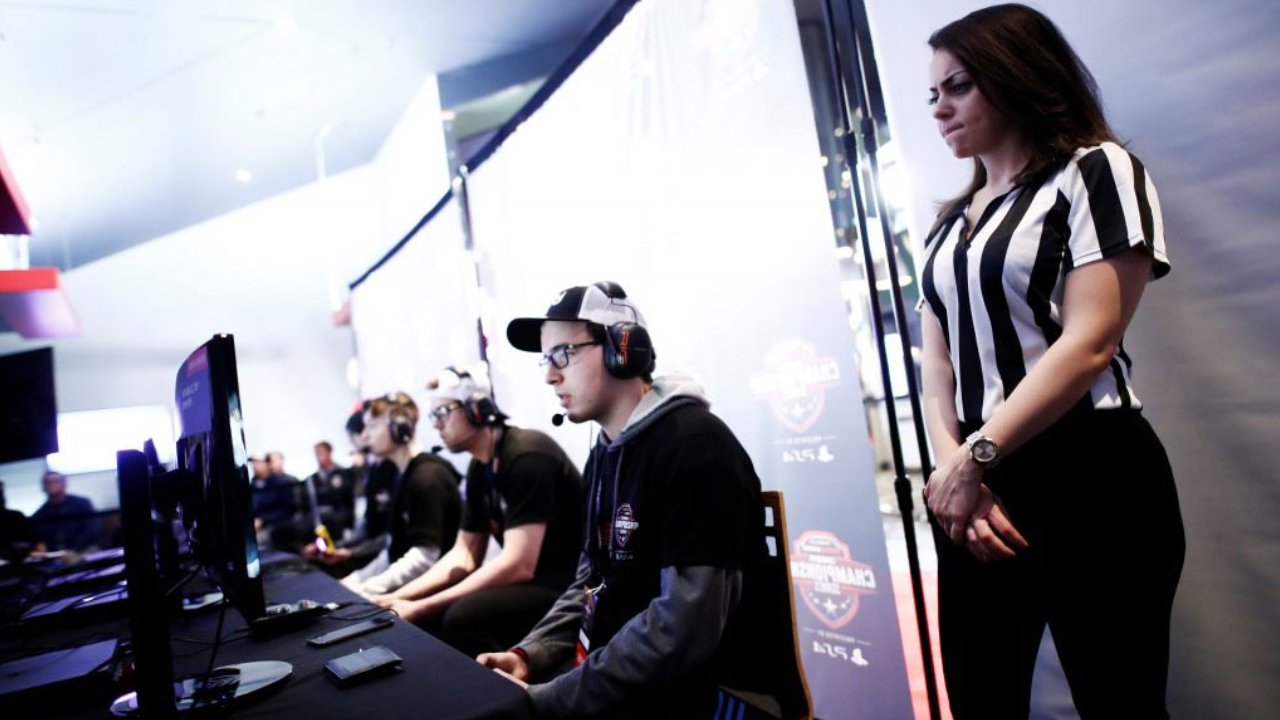
Mobile Esports Found a Sustainable Structure
Mobile esports spent most of the last decade searching for a model between the Riot-style franchised league and the open-bracket PUBG Mobile Global Championship circuit. In 2026 the answer looks like a hybrid. The Mobile Legends Professional League expanded to a ninth regional division in January.
Krafton's PUBG Mobile Global Championship 2025, held in Kuala Lumpur in December, posted peak concurrent viewership above four million on the YouTube and AfreecaTV simulcasts combined. Clash Royale's newly revamped King's Cup turned into Supercell's best-attended esports event since 2019. Viewership still skews toward Southeast Asia, Latin America, and the Middle East, where publishers have concentrated prize-pool and broadcast investment through 2025.
Hardware Is Finally Catching the Software
Handheld and accessory hardware spent 2025 catching up to the performance ceiling mobile software had already implied. The table below tracks the mobile titles that most consistently stress-tested consumer hardware during the 2024 and 2025 cycles, alongside the measured downloads and the hardware attribute each title made a public selling point.
|
Mobile Title |
Publisher |
2025 Global Downloads |
Hardware Stress Point |
|
Genshin Impact |
miHoYo |
Over 38 million |
GPU thermal sustained load |
|
PUBG Mobile |
Krafton |
Over 62 million |
120Hz display and thermal throttling |
|
Call of Duty Mobile |
Activision |
Over 29 million |
Low-latency input and haptics |
|
Wuthering Waves |
Kuro Games |
Over 24 million |
Memory bandwidth for open-world streaming |
|
Honor of Kings |
Tencent |
Over 41 million |
Network jitter resilience on 5G and Wi-Fi 6 |
The cohort above explains why the Backbone Pro, Razer Kishi V3, and the revised GameSir G8 Galileo all shipped with upgraded passive cooling clips during 2025. The hardware roadmap has shifted from a pure input-expansion story toward a thermal-management and display-parity story, which is where the most demanding mobile releases of the last two years have put the pressure.
That pressure is also pushing Android OEMs toward dedicated gaming flagships, with the Asus ROG Phone 9 Pro, Red Magic 10, and Samsung's overdue gaming-focused Galaxy variant all pitching vapor-chamber cooling and 165Hz display support as headline consumer features during early 2026 carrier launches.
Apple's A18 Pro silicon paired with MetalFX upscaling has narrowed the gap on iOS, but the Android handheld-parity narrative looks likelier to produce the bigger shift in developer attention across the remainder of the year.
F2P Monetization Has Quietly Matured
Free-to-play monetization in 2026 looks less like the loot-box-heavy designs of the late 2010s and more like a layered subscription-plus-pass system with transparent progression. The shift is well documented across the industry trade press, and a thorough read of how mobile gaming is redefining the future of play captures the broader contours of this transition, from cloud delivery to player-spending behavior.
The practical design changes are concrete. Battle passes now run forty-two or fifty-six days rather than the old thirty-day cycle, which reduces player fatigue while preserving seasonal beats. A cosmetic-forward store is the default for any release targeting Western markets, with a gacha or direct-unit-purchase system retained primarily in East Asian launches.
The dominant entry tier is a mid-priced monthly subscription that delivers predictable daily value rather than a single large one-time bundle, a shift that matches the day-thirty retention curves publishers are now optimizing against. Studios that held onto the older one-time-bundle model through 2024 saw weaker renewal behavior when their audiences were offered the new subscription tiers by competitors during the following calendar year.
.jpg)
Data Platforms Are Doing the Reporting Work
Measurement discipline has risen alongside the product maturity. Independent market-intelligence platforms have replaced publisher press releases as the reliable source for year-over-year comparison, and product teams consistently use the same dashboards inside planning meetings. Sensor Tower's 2025 mobile-gaming state report remains the canonical reference for revenue trajectory, genre share, and regional mix.
The report has been quoted across investor presentations from Take-Two, Electronic Arts, and Embracer during the 2025 earnings cycle. App Annie's successor data.ai, Newzoo's quarterly dashboards, and the AppMagic top-grossing feed now fill out the measurement stack.
The practical effect is that mobile-product discussions start with shared numbers, which has shortened the path from a strategy review to a shipped feature change across the publishers that were slowest to adapt in prior years.
Indie and Hypercasual Studios Are Publishing Smarter
Indie and hypercasual studios reset their approach after the late-2023 crunch that ended Voodoo's uncontested lead over the download charts. The list below covers the behaviors that defined the winning releases from 2024 through the first quarter of 2026, drawn from the launch sheets of studios that hit a million daily active users within their first ninety days.
- A shorter soft-launch window of four to six weeks rather than the older six-to-twelve-week cycle, with a single headline market rather than three parallel ones.
- Gameplay prototypes built around a fifteen-second satisfying moment that reads clearly in a creative ad without voiceover or text overlay.
- A first-week event framework that places the progression anchor on day three rather than day seven, which matches how casual cohorts actually churn during the opening session set.
- A monetization switch from interstitial-heavy designs to rewarded video plus a modest subscription tier, which reduced ad fatigue in player surveys across 2025.
- A willingness to cross-port into Nintendo Switch or PC via the low-friction Netflix Games or Apple Arcade channels after the mobile release has stabilized, rather than chasing a console deal at launch.
The behaviors above are not a comprehensive release blueprint, but they describe the meaningful difference between the indie and hypercasual releases that found an audience in the last eighteen months and the many that did not.
Studios that held to a narrower scope at soft launch and expanded only after a clean retention curve emerged saw a markedly better long-term trajectory than studios that tried to ship a full live-service feature set at day one.
What the Rest of 2026 Probably Looks Like
Three trajectories look most likely across the remainder of the year. The first is a continued expansion of the forty-two-day update rhythm as the default for AAA-budget live-service mobile releases, with the old thirty-day cadence retreating to specific casual and mid-core niches.
The second is a wider deployment of mobile cross-save at the engine level, which lowers the integration cost for studios that until now had treated the mobile client as a standalone product.
The third is a gradual normalization of controller support across the ten highest-revenue games, which closes the remaining input parity gap between mobile and handheld PC.
Those three shifts reinforce one another, and together they describe a mobile-gaming market that by the end of 2026 will look less distinct from the rest of interactive entertainment than at any point in its short history as a dominant segment.
Frequently Asked Questions
Which mobile game defined live-service discipline during the last eighteen months?
Genshin Impact remained the reference product for version cadence, event depth, and cross-patch narrative structure. Its 5.x patch train from mid-2024 through the 5.6 patch in April 2026 is the rhythm competing studios have benchmarked against when planning their own update calendars.
How large is mobile as a share of total gaming revenue in 2026?
Mobile sits at just over half of the global interactive entertainment consumer spend in Q1 2026, a share that has held broadly stable since 2023 even as console and PC posted recovery quarters through 2025. Industry dashboards continue to place mobile's category revenue in the hundred-billion-dollar annualized range.
Is controller support becoming standard on iOS and Android?
Effectively, yes, for the top-grossing releases. Call of Duty Mobile, Fortnite, PUBG Mobile, Genshin Impact, and Wuthering Waves all support MFi and standard Bluetooth HID controllers with full UI remapping, and the Google Play controller-optimized badge now appears on roughly thirty percent of the premium mobile catalog.
Why did hypercasual publishers struggle during 2023 and how did they respond?
The collapse of rewarded-video economics and tighter App Store identifier rules in 2022 and 2023 pushed cost per install sharply upward and cut predictable return-on-ad-spend. Surviving hypercasual publishers responded by shortening soft launches, shifting to hybrid monetization with modest subscriptions, and building richer retention systems earlier in the development cycle.
How quickly are mobile esports viewership numbers growing?
Growth is fastest outside North America and Europe. Mobile Legends: Bang Bang, PUBG Mobile, and Honor of Kings drive the majority of concurrent viewership, with Southeast Asia, Latin America, and the Middle East accounting for the bulk of recent peak-viewership records across the 2024 and 2025 seasons. Publisher prize pools in those three regions rose materially year over year, which points to a sustained investment pattern rather than a temporary campaign spike.
Moderator, NoobFeed
Latest Articles
No Data.