
NVIDIA DLSS 4.5 Ray Reconstruction Finally Arrives With Updated Transformer Model
DLSS 4.5 introduces updated ray reconstruction with improved temporal stability, lighting response, and particle detail handling.
Hardware by Nahe Yan on Jun 02, 2026
Exciting news for DLSS 4.5, as it's finally bringing updates to ray and path reconstruction. The update features a second-generation transformer model, lighting-response enhancements, temporal-stability enhancements, and particle-detail reconstruction enhancements. It will arrive in August, with support available for RTX users via game integrations and overrides in the NVIDIA app.
Ray reconstruction replaces hand-tuned denoisers with a neural network trained on Nvidia's supercomputers. It uses the DLSS super-resolution system within a single model to deliver better visuals for ray-traced and path-traced materials.
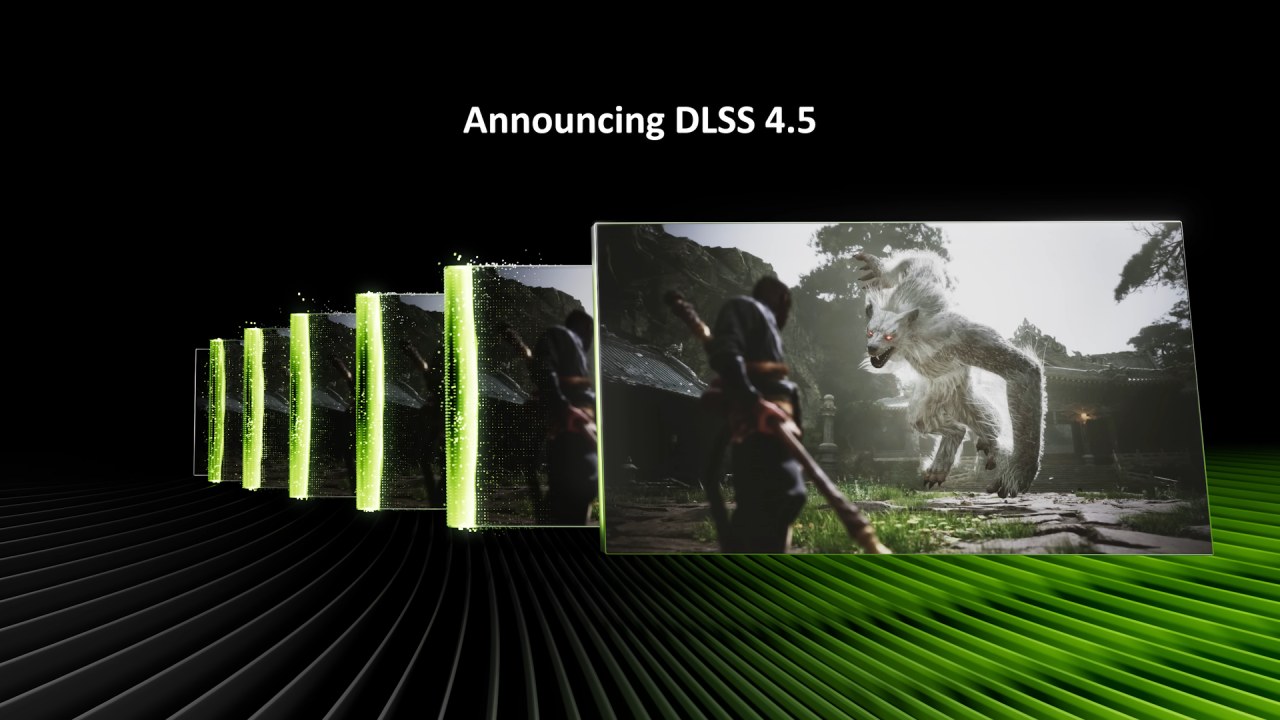
The advantages of Ray Reconstruction in DLSS 4.5
The new DLSS 4.5 ray reconstruction reportedly improves on the previous version and is based on a 2nd-generation transformer model. It provides 35% more compute power and has been trained on an enhanced dataset, delivering greater intelligence across scenes, the announcement said. At first glance, some of the enhancements are obviously there, but they'll need to be tested to see how they operate without the showcase comparisons.
In certain scenes, image reconstruction is closer to ground-truth illumination, with better lighting response and greater accuracy. But some lighting differences aren't immediately obvious, and in some comparisons they're less noticeable.
Root Cause Analysis and Improvements on Image Reconstruction
Based on the above, DLSS 4.5 is likely to recreate a ray-traced image more accurately. The examples suggest improved ghosting performance, clearer image rendering, and better handling of fine detail, such as particle effects.
When it comes to improvements, we're particularly interested in how they fare in games that struggle with visual instability, such as those with rain or heavy effects. Changes could make themselves more apparent in extended play sessions than in formal demonstrations if you have had problems with ghosting, boiling noises, or unstable reflections in a ray-traced game.
There is also a suggestion that temporal stability across frames is a focus. When there is visual noise, especially when moving or in scenes that have varied lighting, frame-to-frame consistency is important. In those instances, if DLSS 4.5 stabilizes them, the update may affect how ray reconstruction works during longer play sessions.
When will it be available, and when can you expect it?
All GeForce RTX users should be able to benefit from DLSS 4.5 ray reconstruction soon, via game integrations and Nvidia app overrides, which are anticipated to be available in August. We are assuming that the release date will coincide with previous releases and thus may be sometime in the second half of August. One widely held assumption is that August 22 is another possible launch date, although no date has been officially confirmed.
The update adds a second-generation transformer model that offers 35% more compute power, along with an upgraded dataset. If you have a better dataset, it can improve your image reconstruction, particularly in scenes with complex lighting, particles, reflections, and/or fast motion.
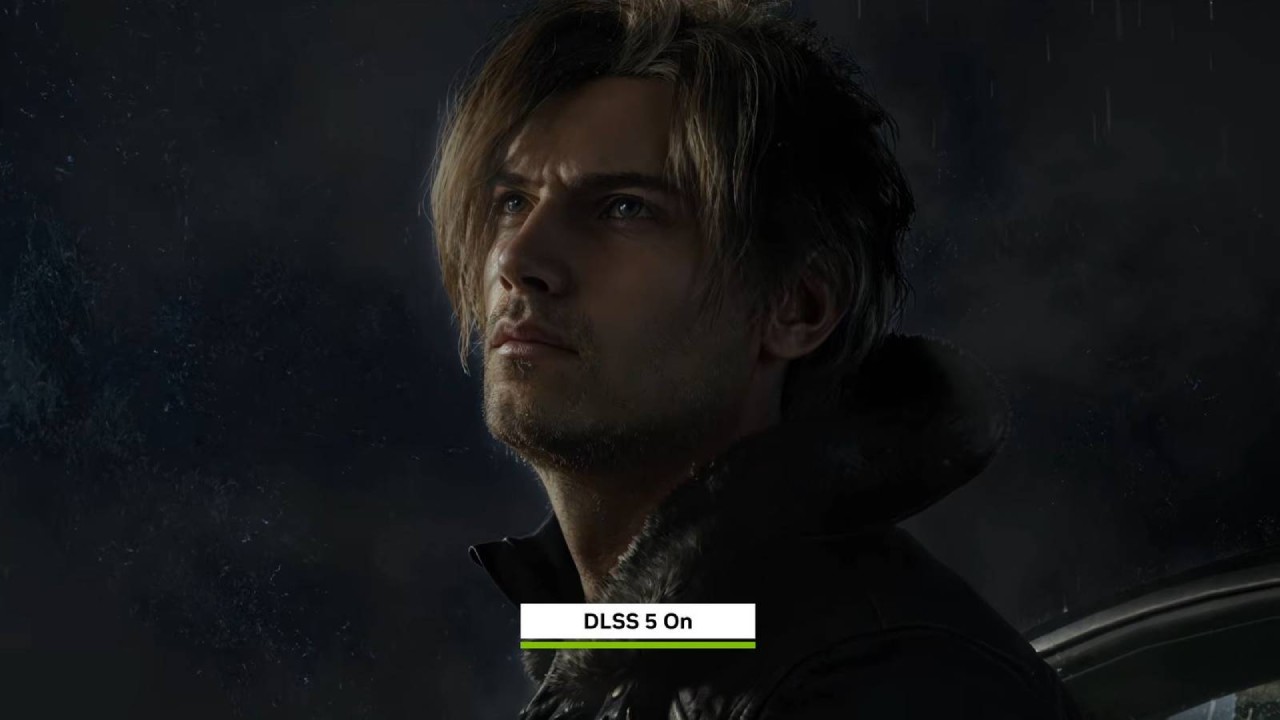
Meanwhile, there is a question regarding the impact on performance. There could be a performance impact if the dataset grows or the model is more demanding. It will be interesting to see how much extra performance overhead is observed in real-world use, as DLSS 4.5 already requires a performance sacrifice in certain scenarios.
When it comes to striking the balance between image quality and performance, testing will likely be as important as the improvements themselves. While improved reconstruction can enhance image quality, it is important to consider the trade-off if performance degrades beyond expectations.
Effects and noise from the boiling rain in more demanding titles due to DLSS 4.5.
It is useful to compare with scenes involving rain, as they tend to cause visual instability in reconstruction systems, thereby revealing strengths and weaknesses. The update might be most helpful for people who have had shimmering, unsteady reflections, or ray-traced effects that were too noisy. The noise from boiling should be eliminated or reduced.
This could make long periods of gameplay smoother, especially in scenes with lots of visual detail where reconstruction errors stand out. At the moment, it seems like a positive news update. The next step is to test the new neural model once it's available, see just how good it is, and determine whether the lighting, stability, and image reconstruction benefits seen in the tests translate to performance in games.
Editor, NoobFeed
Gaming Hardware Updates
No Data.