
Probably Stolen Guide | How to Breed a Rat Meat Empire
Here’s a guide on how to breed, raise, butcher, and sell rats for a Rat Meat Empire in Probably Stolen.
Game Guide by Jubair Baky on Nov 20, 2026
Rat ranching can turn a small starting group into a steady source of Credits, but only if you keep the colony fed, healthy, and out of overcrowded cages. Choose good breeding stock, use a Livestock Feed Dispenser, and harvest rats before disease or old age reduces their yield.
Unlock rat ranching and get your first rats
There are two ways to start. Choose the Rat Wrangler starting scenario when beginning a new game to receive an Animal Cage, rats, food, and a serum. If you already have another start, call Joe Wild and unlock Ranching through Wild’s Network. The current full-release price is 750 Credits at standard pricing. This gives you a Rat Ranching Starter Kit and access to the Retired Rat Rancher, who visits your shop with supplies.
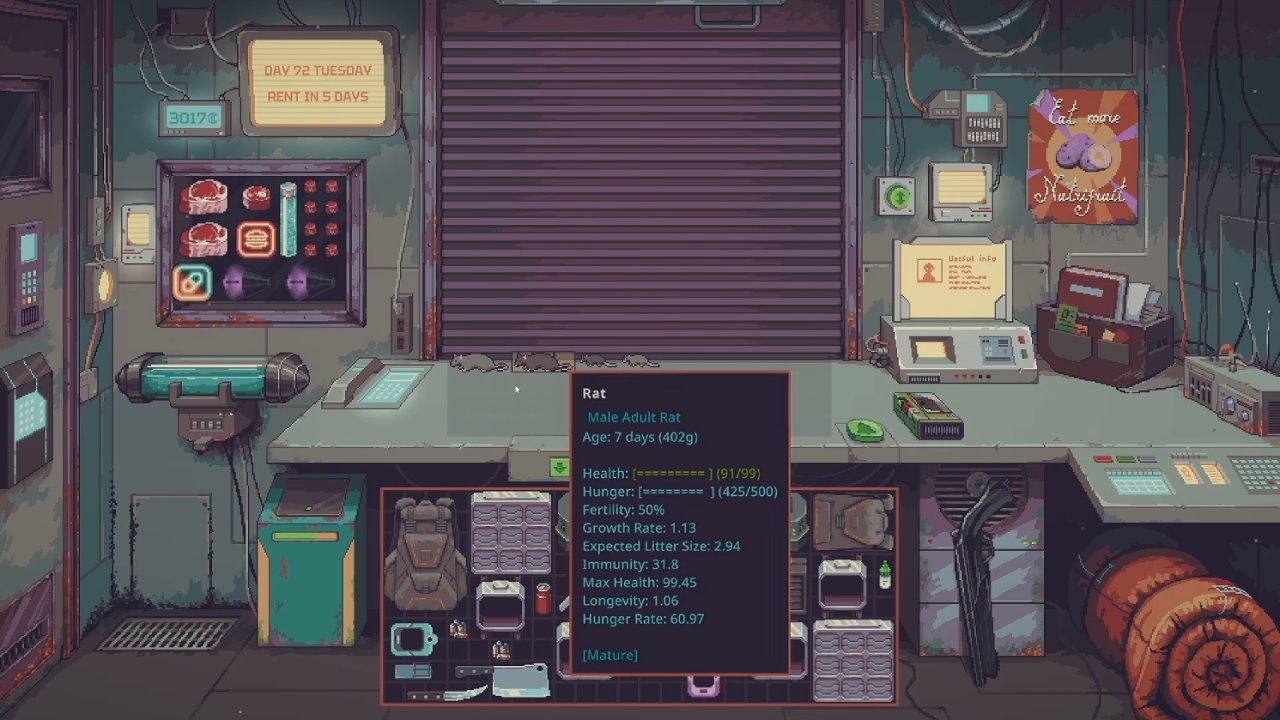
Put your rats inside the Animal Cage. They live and breed there, but the cage also collects waste, so it needs regular attention. Rats become mature at three days old. Younger rats will not breed, so wait until they reach the Mature stage. Weight matters because it determines how much meat you can harvest later.
Choose breeding stock with the Gene Scanner
The Gene Scanner reveals each rat’s full genetic details. With it enabled, you can inspect the two inherited alleles, LLA and LLB, behind each trait. The displayed stat is the average of those values. When two rats breed, each parent passes on one allele, creating four possible combinations. Each has a 25% chance, so a baby does not automatically inherit the better value.
Teal indicates a value within five percent of baseline, while green and red indicate favourable or unfavourable results, accounting for whether a higher or lower value is desirable.
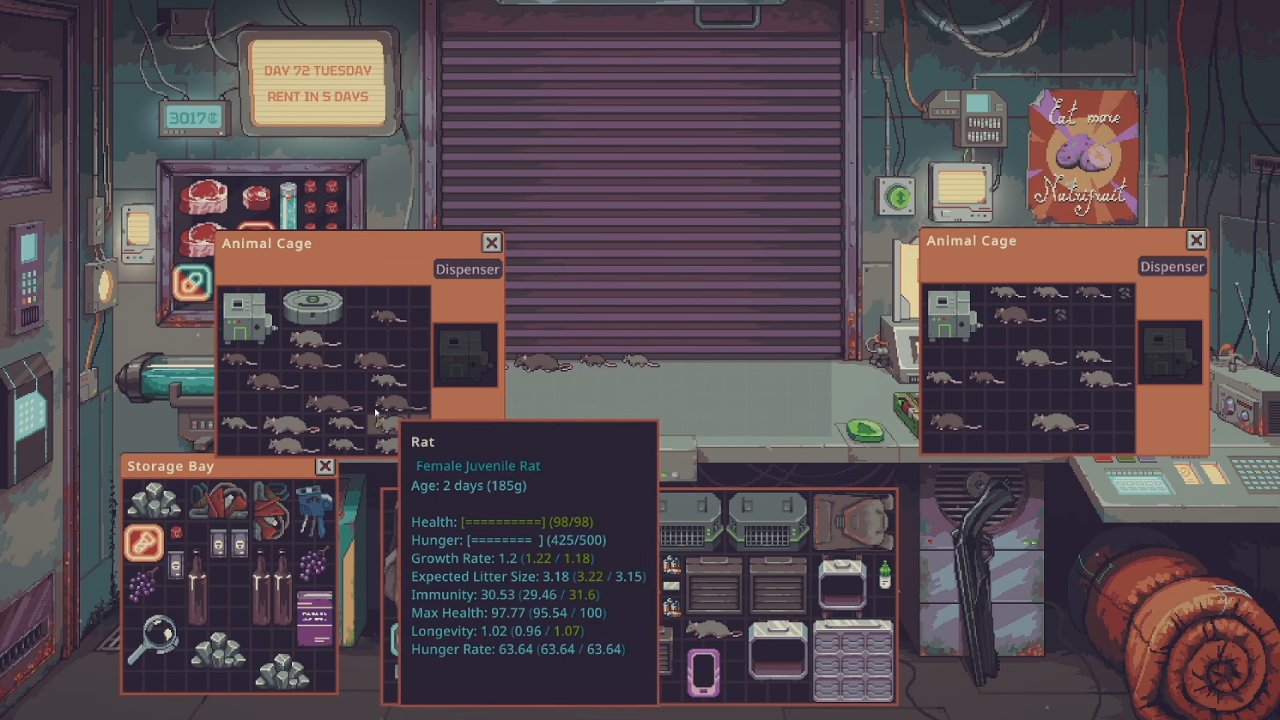
Prioritize Fertility and Growth Rate. Fertility determines the chance of pregnancy. The Fertility value of the lower-paired rats is used. Growth Rate means the rate at which a rat gains weight, allowing it to grow to good meat sizes quicker. Litter Size is important too because it determines how many pups a female can have. The integer is the expected minimum, the decimal gives a 1 in chance of an extra pup, and the game adds a random modifier of minus one, zero, or one.
Immunity is important because sick rats have lower Fertility and produce less meat. 50 or more Immunity protects against disease. Very Low Immunity causes nightly health loss. Longevity helps older rats live longer, but rats begin losing weight and fertility at around age 11.
Keep rats fed and healthy
Hunger affects growth and survival. Each night, a rat uses about 65 hunger points before eating. Low Hunger slows growth, so aim to keep the bar around 400. The maximum is 500, and a rat at zero becomes Starving. If it remains at zero overnight, it can die the next day.
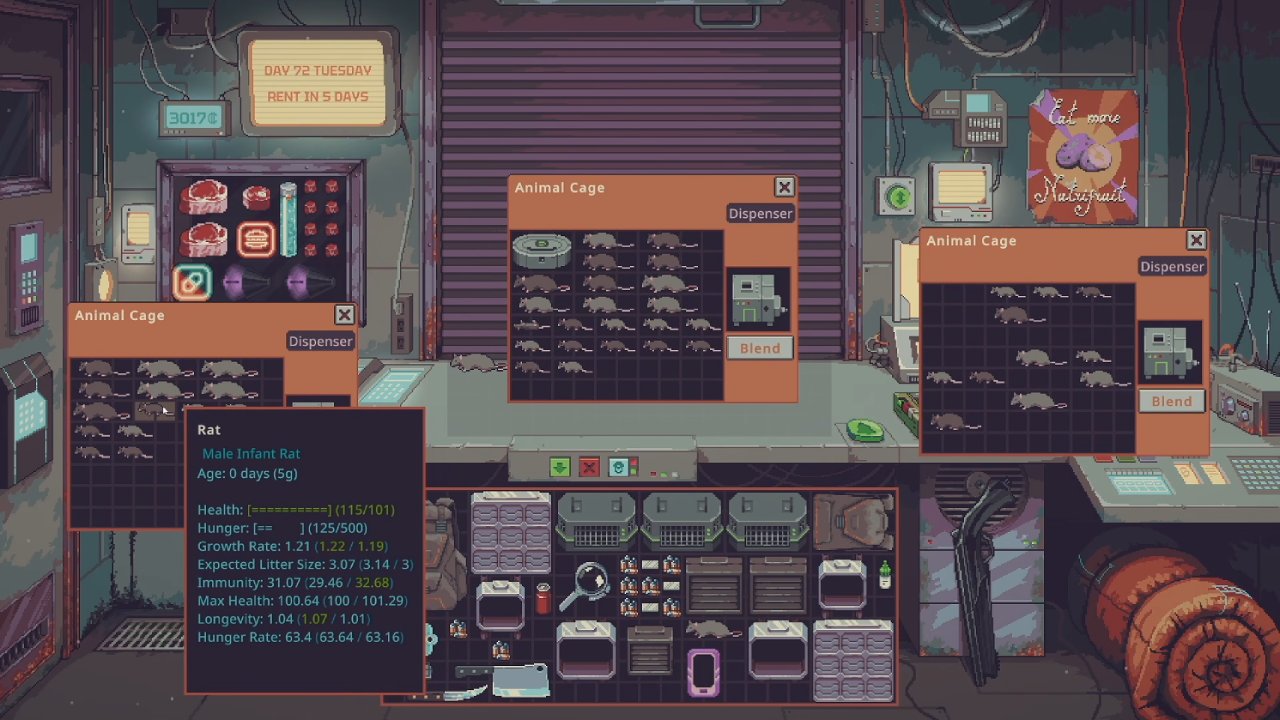
Before you own a dispenser, place food directly inside the cage. Rats eat whole food items, so excess calories can be wasted. Once you have a Livestock Feed Dispenser, place it inside the cage, add food, and select Blend or Start. It converts food into stored calories and feeds rats automatically, topping them up to around 425 Hunger.
Never feed rats rat meat. Eating it can cause Prion Disease, a permanent penalty to Immunity, Growth Rate, and Longevity. The condition can affect future generations, weakening your colony and reducing its value.
Clean the animal cage each morning. Waste also increases the risk of disease and lowers fertility and meat yield. Remove it by hand or use a charged Cleaner Robot for it. If you need more space, make the cage bigger with Metal Ingots. Fix durability with Scrap Metal; a badly damaged cage can let rats escape.
Avoid overcrowding. It begins when rats use more than 55% of the cage cells. Level 1 overcrowding increases cage wear, raises disease risk, and lowers Fertility. At higher levels, rats fight and can kill one another. Move some rats into another cage or butcher surplus animals.
Improve fertility and manage disease
Rats are paired each night randomly, and both need to be mature for breeding. The lower Fertility value of the pair determines the pregnancy chance. Keep high-Fertility males and females rather than relying on one excellent rat and one weak partner.
A Livestock Immunity Serum can temporarily improve a selected rat’s Immunity, helping protect its Fertility while it breeds. Apply it to valuable breeding stock before disease becomes a problem. A Livestock Steroid Serum increases Growth Rate but also increases Hunger Rate and reduces Immunity. Use it carefully: a faster-growing rat that becomes sick may lose the advantage through lower fertility and reduced meat yield.
Butcher rats at the right weight
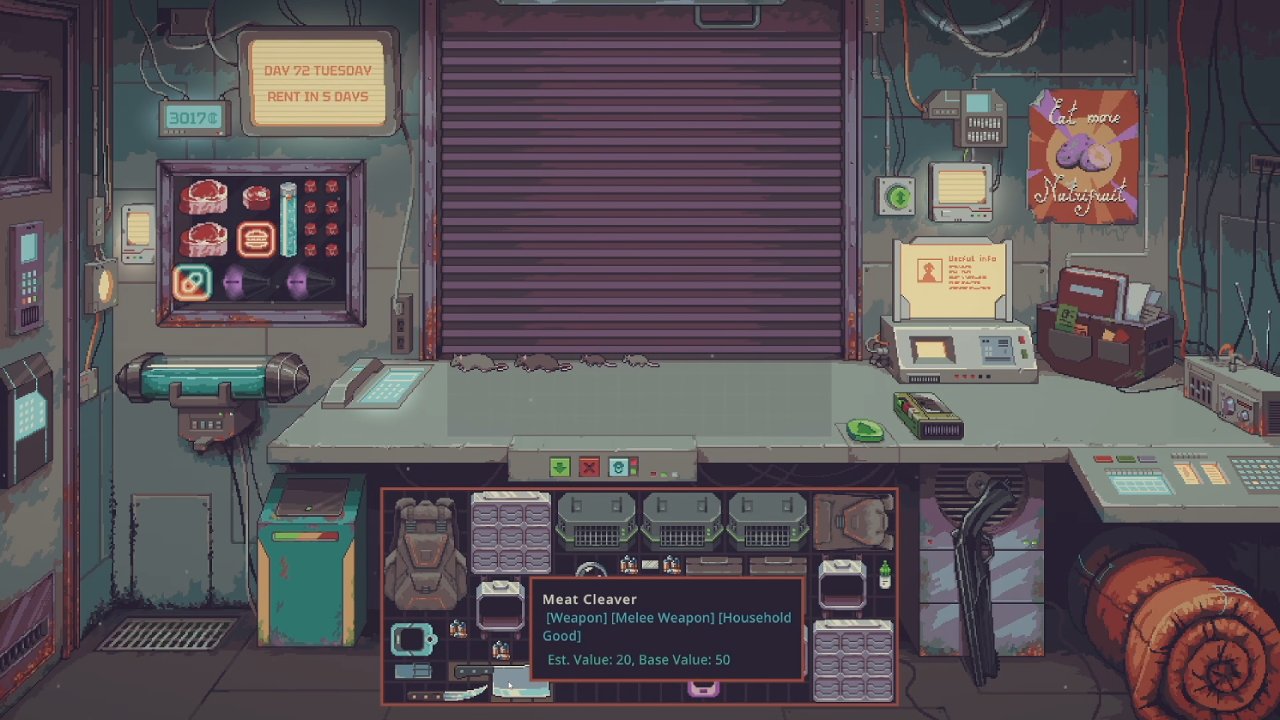
When a rat is ready for harvest, equip a Meat Cleaver and use it to kill the animal. Use a suitable blade on the dead rat to butcher it. After you have butchered 100 animals, you unlock the Skinning Knife, which can also be used for harvesting.
Weight determines the cuts you receive. In the current full-release values, 400 g produces one Raw Meat (Standard), 200 g produces Raw Meat (Small), 100 g produces a Morsel, and 50 g produces a Small Morsel. Their base values are 159, 65, 30, and 15 Credits, respectively. Larger cuts are more valuable, so avoid harvesting a healthy rat too early if another night of growth will move it into a better tier.
Disease reduces usable meat weight by 25%. A sick rat that looks heavy enough for a larger cut may therefore produce smaller pieces and less money. Check health before harvesting, and prioritise healthy rats with good Growth Rate. Do not keep rats too long, either: older rats begin losing weight and Fertility, so waiting indefinitely does not improve your return.
Sell meat to higher-value customers
After butchering, place the meat in your Display Case. A low-value display attracts basic food buyers, while a combined display value of 145 to 349 can attract an Expedition Supplier. After Day 14, a display worth more than 350 can attract an Upper Level Private Chef, who has a much larger budget. Three Raw Meat (Standard) pieces are a simple way to pass that value threshold, but smaller cuts can also work if their combined value is high enough.
Any combination of food items that reaches the required value can attract a higher-level buyer. Keep the meat you want to sell in the Display Case and use the buyer’s budget to decide how much to offer. A Food Neon Sign can improve the chance of attracting food-related visitors, but it does not guarantee that every visitor will bring food.
Keep the colony supplied
When you run low on feed, use several sources instead of letting the rats go hungry. Food brought by a Food Thief can be added to the Livestock Feed Dispenser even if it is stolen or carries Heat, provided it has calories. Blend it into the dispenser to add its calories to the reserve. Items with no calorie value, such as drinks and Zero Chew Tabs, cannot be processed this way.
The Underground Exchange and Commissary are useful backups. Turn on Janitorial Service to send ammunition from the trash for food returned the next morning. Plan because this takes overnight. At the Commissary, trade tokens for food. Processed Milk gives the best calorie return, with Peat close behind; Juice, Nutrifruit, and Galaxy Blend are other options. The Commissary may be empty during a famine, so do not rely on it as your only food supply.
The best route to a Rat Meat Empire is to breed mature, high-Fertility rats, keep them well-fed and healthy, harvest them at valuable weights, and use your Display Case to attract higher-budget food buyers.
FAQ
Q. How do you unlock rat ranching in Probably Stolen?
A. Choose the Rat Wrangler starting scenario or buy the Ranching upgrade through Wild’s Network. The current standard price is 750 Credits, and it provides a starter kit and access to the Retired Rat Rancher.
Q. At what age do rats start breeding?
A. Rats become mature at three days old. Their Fertility becomes relevant at that stage, and the lower Fertility value of the randomly paired male and female determines the chance of pregnancy.
Q. What happens if you feed rats their own meat?
A. They can develop Prion Disease, which permanently reduces Immunity, Growth Rate, and Longevity. The penalty can affect offspring, so use other calorie-bearing food instead.
Editor, NoobFeed
Latest Articles
No Data.