
Should You Invest in 16GB GPUs in 2025?
From F1 25 to Spider Man 2, learn how extra VRAM and full PCIe lanes sustain smooth gameplay
Hardware by Tanvir Kabbo on Jul 28, 2025
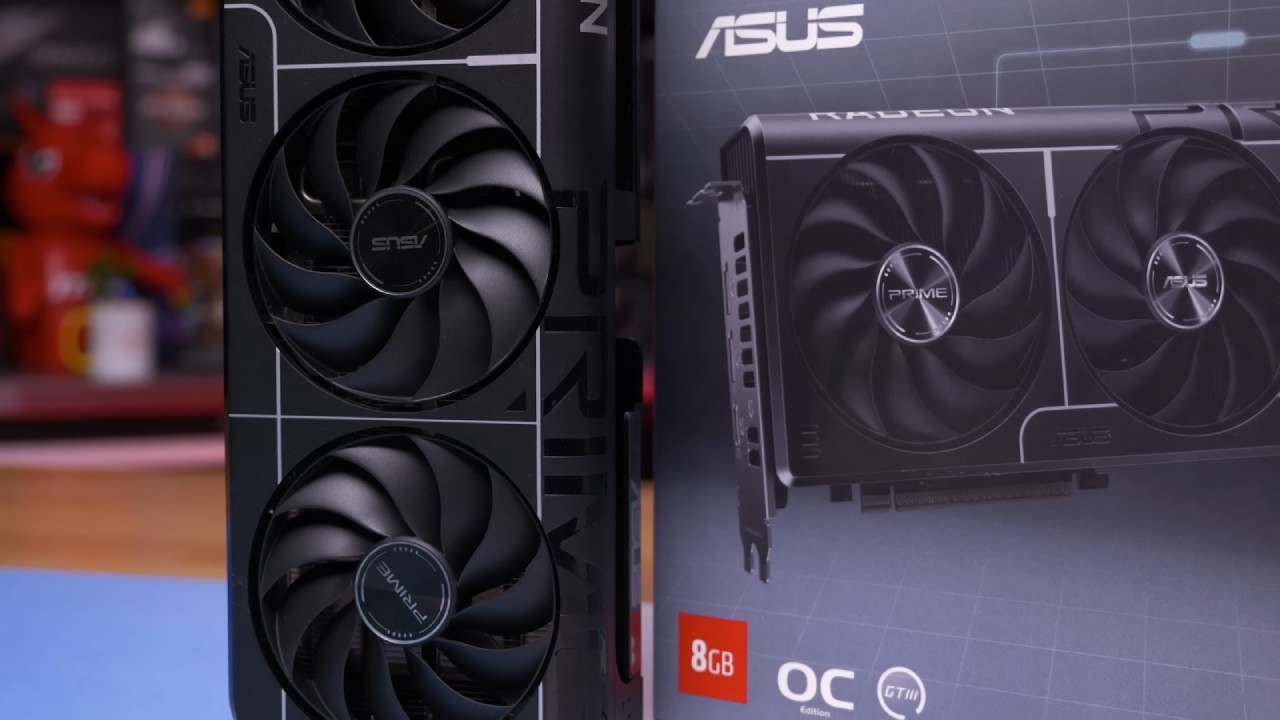
Over the past few months, extensive testing of new 8GB graphics cards from AMD and Nvidia showed that they struggle to deliver the performance expected in modern titles. In contrast, their 16GB counterparts consistently provide playable frame rates and smoother experiences, even under demanding conditions.
To explore how viable these 8GB models are in 2025—and under what circumstances—we dug into detailed comparisons using PCIe 5.0, 4.0, and 3.0 systems across several popular games at 1440p.
.jpg)
Challenge of 8GB VRAM and PCIe Bandwidth
Modern games frequently exceed 8GB of VRAM when using high or ultra presets at 1440p. While lowering visual quality can restore playability, it isn’t an ideal solution for a brand new purchase or for longevity.
We also observed that PCIe bandwidth can further impact performance: AMD’s Radeon cards maintain all 16 lanes of PCIe bandwidth, whereas Nvidia’s GeForce models are often limited to eight lanes. This discrepancy becomes pronounced when VRAM limits are exceeded.
Test Methodology
We compared 8GB versions of GeForce RTX 5060 Ti and Radeon RX 9060 XT using identical hardware except for the PCIe spec.
Each card was tested on PCIe 5.0, 4.0, and 3.0 motherboards, with presets chosen to push VRAM usage beyond 8GB while still allowing the 16GB models to remain playable.
All averages are based on three run averages, and we focused on both average frame rates and 1% lows to capture frame time consistency.
F1 25 Performance
Using the High preset, 8GB 9060 XT delivered notably higher 1% lows than 8GB 5060 Ti across both PCIe 4.0 and 5.0, thanks to its full 16 lane bandwidth.
When we dropped to PCIe 3.0, 5060 Ti’s 1% low plunged well below 60 fps, whereas 9060 XT still averaged 95 fps.
Even including the 16GB models tested on PCIe 3.0, 9060 XT averaged 190 fps—13% faster than its 8GB sibling on PCIe 5.0 and up to 45% faster when both ran on PCIe 3.0.

Marvel’s Spider Man 2
With Very High settings at 1440p, 8GB 9060 XT approached 90 fps average on PCIe 5.0 but suffered 1% lows below 60 fps. 8GB 5060 Ti, however, was effectively unplayable—even on PCIe 5.0—due to just 8 lanes of bandwidth.
On PCIe 4.0, 9060 XT remained borderline usable, while both 8GB cards fell apart on PCIe 3.0.
16GB 9060 XT held a clear advantage: 26% higher average fps and 18% stronger 1% lows compared to 16GB 5060 Ti.
Monster Hunter Wilds
On the Ultra preset at 1440p with quality upscaling, both 8GB cards were already crippled under PCIe 5.0. 16GB 9060 XT managed 67 fps average with 54 fps 1% lows, while the 8GB model dropped to 50 fps average and erratic lows.
Surprisingly, reducing PCIe bandwidth sometimes stabilized the lows as average frame rates fell, but performance remained far below acceptable levels.
8GB 5060 Ti was consistently broken under these conditions, even though its 16GB version outpaced 9060 XT in average fps.
Ratchet & Clank: Rift Apart
At Very High settings, we saw 8GB 5060 Ti produce a higher average fps than 8GB 9060 XT on PCIe 5.0, but with far worse 1% lows.
Dropping to PCIe 3.0 amplified the issue: 5060 Ti became completely unusable, while 9060 XT was merely very poor.
In contrast, 16GB 5060 Ti outpaced 16GB 9060 XT by 5% in average fps, though the Radeon card again delivered 21% stronger 1% lows.

Indiana Jones and the Great Circle
On Very High settings, 8GB 5060 Ti could not run the Ultra preset at all without manually reducing texture pool size—a downgrade not required for the 16GB cards.
Even on PCIe 5.0, 8GB 5060 Ti was broken, while 9060 XT remained usable on both PCIe 5.0 and 4.0. On PCIe 3.0, neither 8GB card provided a satisfactory experience.
16GB 9060 XT led by 17% in average frame rate over its Nvidia rival.
Dragon Age: The Veilguard
Under Ultra at 1440p, neither 8GB card could deliver playable performance; both averaged well below 60 fps with horrific 1% lows. Interestingly, the 8GB 5060 Ti recorded slightly better lows than the 9060 XT in this title, but neither was acceptable.
Among 16GB models, 5060 Ti was 8% faster on average, though 9060 XT again boasted an 11% advantage in 1% lows.
Six Game Geomean
Calculating the geometric mean across these six titles at 1440p, 16GB 9060 XT was only 2% faster on average than 16GB 5060 Ti, but its 1% lows were 22% stronger. Both 8GB cards failed to maintain 1% lows above 60 fps, averaging closer to 30 fps.
Although 8GB 9060 XT “annihilated” 8GB 5060 Ti in head to head average fps, it remained unusable in several games without quality compromises.

Final Thoughts
In scenarios where you exceed 8GB of VRAM, 8GB 9060 XT outperforms 8GB 5060 Ti primarily due to full PCIe lane support.
At typical street prices of around $300 for the 8GB models, Radeon is the lesser evil, and at discounted prices near $250, it becomes a tempting bargain despite its limitations.
However, paying a premium for a 16GB graphics card is the only way to ensure a more future proof experience.
We recommend opting for 16GB 9060 XT, even at $20–$30 above MSRP; it will deliver smoother performance today and maintain viability over the next 3–4 years.
Also, check our other hardware articles:
- AMD Ryzen 9 9950X3D Review: Setting The Standard For 2025 Gaming CPU
- Amazon Luna 2025 Review: Is Prime Gaming's Cloud Service Your Go-To For Casual Fun?
- AMD RX 9070 XT Review: AMD's RDNA 4 Champion for 1440p Gaming
- GeForce Now Ultimate: Ditching Your Gaming PC For Cloud RTX 4080 Power?
- NVIDIA GeForce RTX 5080 Review (2025): Still A 4K Gaming Powerhouse?
- Intel Core Ultra 9 285K Review And Performance Breakdown (2025)
- AMD Ryzen 7 9800X3D Review: 3D V-Cache Goes God Mode with Stunning Gaming Performance
- Intel Core Ultra 9 285K vs AMD Ryzen 7 9800X3D: In-Depth Gaming Performance and Benchmark Comparison
- NVIDIA GeForce RTX 5080 Super Performance In Cyberpunk 2077: Path Tracing & DLSS 4.0 Tested
- RTX 5090 Performance Testing In GTA 5 – 1080p, 1440p, and 4K Max Settings Benchmark
- AMD Radeon RX 9070 XT In Cyberpunk 2077: Ray Tracing & FSR 4.0 Tested
- Intel Arc B580 Review: The $250 GPU Revolutionizing 1440p Gaming
- Intel Arc B570 Vs. B580: Value, Specs, And Real-World Gaming Performance
- Intel Arc B570 Review: Efficient Xe2 Performance At An Affordable Price
- RTX 5090 Laptop Vs. M4 Max MacBook Pro: Ultimate Raw Performance Vs. Battery Endurance
- Intel Arc b580 Vs. RTX 4060: Game Performance And Value Analysis
- RTX5090 Hell Is Us Demo 4K Ultra Benchmark: DLSS Vs. Native Performance Guide
- NVIDIA RTX 5070 Review: Mid-Range Muscle or Marketing Hype?
- Nintendo Switch 2 Review: Handheld Performance, Features & Value Breakdown
- RTX 5070 Ti Review: Performance, Thermals & Power Efficiency Tested
- Samsung Odyssey OLED G81SF Review 2025: Ultimate 32-Inch QD-OLED Gaming Monitor
- AMD RX 9070 Performance Review: Thermals, Clocks, and Real-World FPS
- AMD Ryzen 5 7600 Review: Best Budget Gaming CPU of 2025?
- AMD Radeon RX 7800 XT Review: RDNA 3 Power For Midrange Gaming
- Asus ROG RTX 5090 Astral OC Vs. Founders Edition: The 4K Gaming Benchmark
- ASUS ROG Astral RTX 5090 OC Edition Review: 32GB GDDR7 & 4K Gaming Benchmark
- Intel Core i5-13400F Gaming Performance: Still Worth It in 2025?
- ASUS GeForce RTX 5090 LC Liquid Cooled GPU Review: Unmatched Silence & Speed
- ASUS ROG Ally X Handheld Review: Double the Battery, Double the Comfort
- Lenovo Legion Go S Review: The Ultimate Steam Deck 2 Alternative
- Sapphire NITRO+ AMD Radeon RX 9070 XT Review: The Ultimate 4K Gaming GPU
- Alienware 16 Area 51 Review: The Ultimate 2025 Gaming Laptop
- Alienware Area-51 Review: Unmatched 4K, Thermal, and Acoustic Performance
- AMD Ryzen 7 7800X3D: Delivers Gaming Performance Far Beyond Expectations
- AMD Ryzen 9 7900X Review: Powering the AM5 Era with DDR5 & PCIe 5.0
- Intel Core i9‑14900K vs. AMD Ryzen 7 7800X3D: Power Profiles & Gaming Benchmarks
- Intel Core i9 14900K: Specs, Benchmarks, and Competitor Comparison
- ASRock Radeon RX 7800 XT Challenger OC Review: Best Price-to-Performance GPU of 2025
Senior Editor, NoobFeed
Latest Articles
No Data.