
Triangle Strategy Guide | How Good is Travis
A practical breakdown of Travis’ kit, role, upgrades, and battlefield use so you can decide where he fits in your roster.
Game Guide by Faviyan Mustafiz on Aug 24, 2025
This guide explains what Travis brings to the table: straightforward melee damage, advantageous repositioning, and one standout AOE delay that defines his competitive value.
The text walks through his stats, abilities, upgrade priorities, recommended equipment, battlefield placement, and how to use his skills to create combos and shutdowns.
Read this to know exactly when to field Travis and how to get the most out of his kit.
Overview & Stats
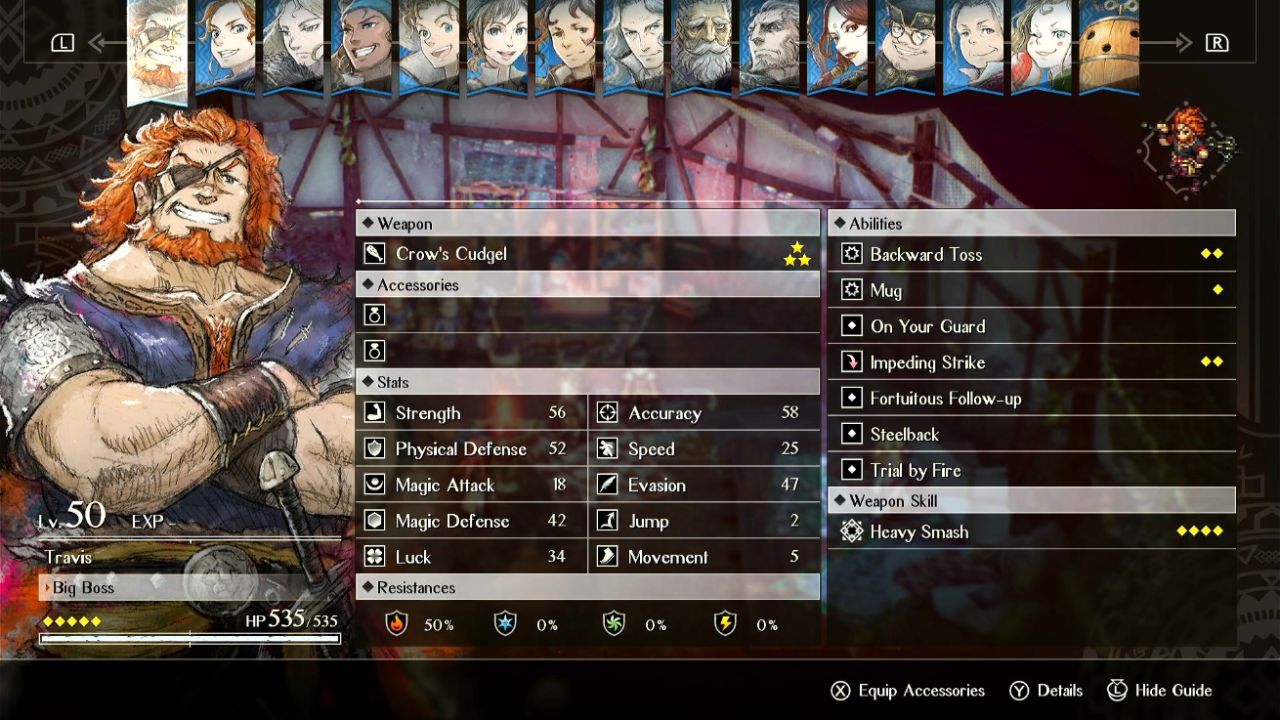
All of Travis’ stats are pretty average overall. His magic attack is low, but he does not rely on magic. Movement is five and Jump is two, which is standard for most melee units.
Health sits at 535 at level 50, making him moderately tanky for a midliner. Basic attack power is 229 damage per smack, which is solid—most units land around 170 power—so Travis hits relatively hard right out of the gate.
Core Abilities and What They Do
Backward Toss is a substantial repositioning and damage tool. It deals 309 power and flips an enemy behind Travis. It can drop enemies a bit in height (roughly minus two height at most), but cannot throw foes off cliffs.
Use it to reposition enemies for follow-ups or to spike them; it costs one TP with an upgrade and remains one of his best moves.
Mug costs one TP to smack an enemy for damage with a chance to steal. The average steal chance is 42 percent.
In practice, this tends to steal gold, though some enemies have equipment like jump bangles that may be stealable in some instances.
This ability can be used for extra economy, but it deals less damage than Backward Toss even when boosted, so it is usually secondary.
On Your Guard decreases damage taken when no allies are nearby. This is a flat damage reduction that applies to all sources, including magic.
Testing shows the reduction is roughly 11 damage (for example, an attack that dealt 127 with nearby allies dealt about 113 with On Your Guard active), so expect about a ten-to-eleven point reduction.
Impending Strike is the ability that makes Travis competitive. It behaves like a multi-target delayed strike: it can hit and delay up to three enemies in a single activation.
The delay amount matches the delay from Sarah Noah’s delay, so when there are many units on the board, the delay can become very large.
Impending Strike can also crit when enemies are facing away and can trigger follow-up attacks, making it excellent for creating shutdowns and chaining considerable damage.
Combined with Backward Toss, it allows Travis to set up and punish enemy formations consistently.
Other kit pieces are more situational. Fortuitous Follow-Up provides a chance to steal an item during a follow-up attack; this is mainly useful for extra cash and otherwise not core to his combat role.
Steel Back reduces damage taken from hits to the back; estimates put this at roughly 10–25 damage reduced, depending on circumstances.
Together, Steel Back and On Your Guard help Travis stay alive longer against combos, follow-ups, and rear attacks.
Trial By Fire grants +3 Strength and fire resistance; the Strength gain is minor (three points) and generally not worth building around—treat it as a free but weak buff and avoid deliberately sending Travis into fire for it.
Heavy Smash is an AOE with a one-turn charge. The charge makes it unreliable for fast-paced combat.
Still, it has one key use: if Travis is facing the same direction as a group of enemies that are also facing that direction, Heavy Smash will apply back-crit status to those enemies when it activates.
With proper setup and tandem or fast-acting supports, Heavy Smash can back-crit a cluster of enemies for extensive damage, though the charge leaves it vulnerable to interruption.
Upgrades & Priority
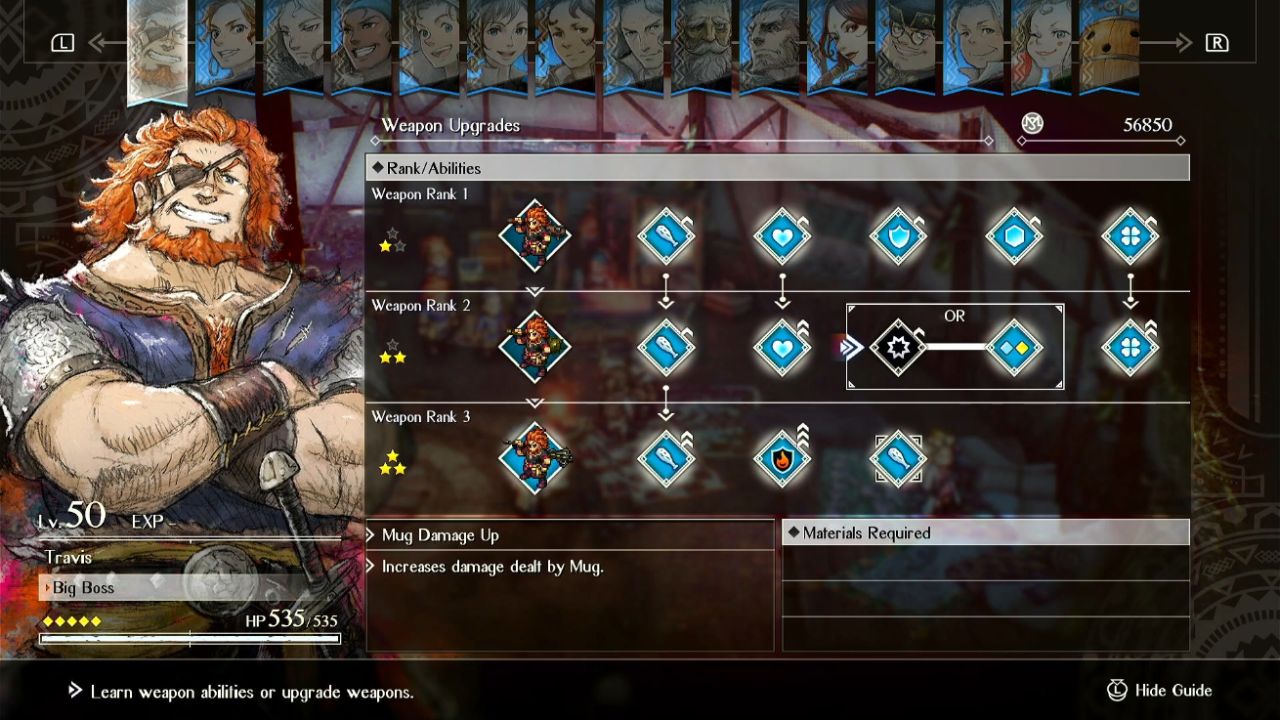
Because Travis is a melee damage dealer, prioritize damage and health upgrades. He has two +5s and a +10 for health—these are valuable since he operates near the front and midline.
Defensive upgrades that increase survivability on the front line are also necessary. Luck and random crit upgrades are hit-or-miss; crits are unpredictable even at high luck values, so it is reasonable to skip luck-focused upgrades if resources are tight.
For his TP-cost abilities, the enhancements that decrease TP cost or increase Mug’s damage exist, but Mug remains inferior to Backward Toss in most damage scenarios—the boosted Mug tested at about an 11 damage increase, which still leaves it weaker than Backward Toss.
Fire resistance upgrades (e.g., +50 fire resist) are functional situationally against fire mages.
Recommended Items & Build Notes
Equip Travis as a midliner with some health and strength accessories. Strength bracelets and speed items are commonly used to push his speed toward ~28 and add damage.
If you want Travis to stay in the fray more often, consider giving him a resilience accessory like a Res Earring or items that raise his defense and resistances.
Distribute rare accessories carefully across the team; Travis benefits from defensive and damage-boosting gear, but it is not the exclusive priority compared to primary tanks or squishy mages.
Battlefield Role & Positioning
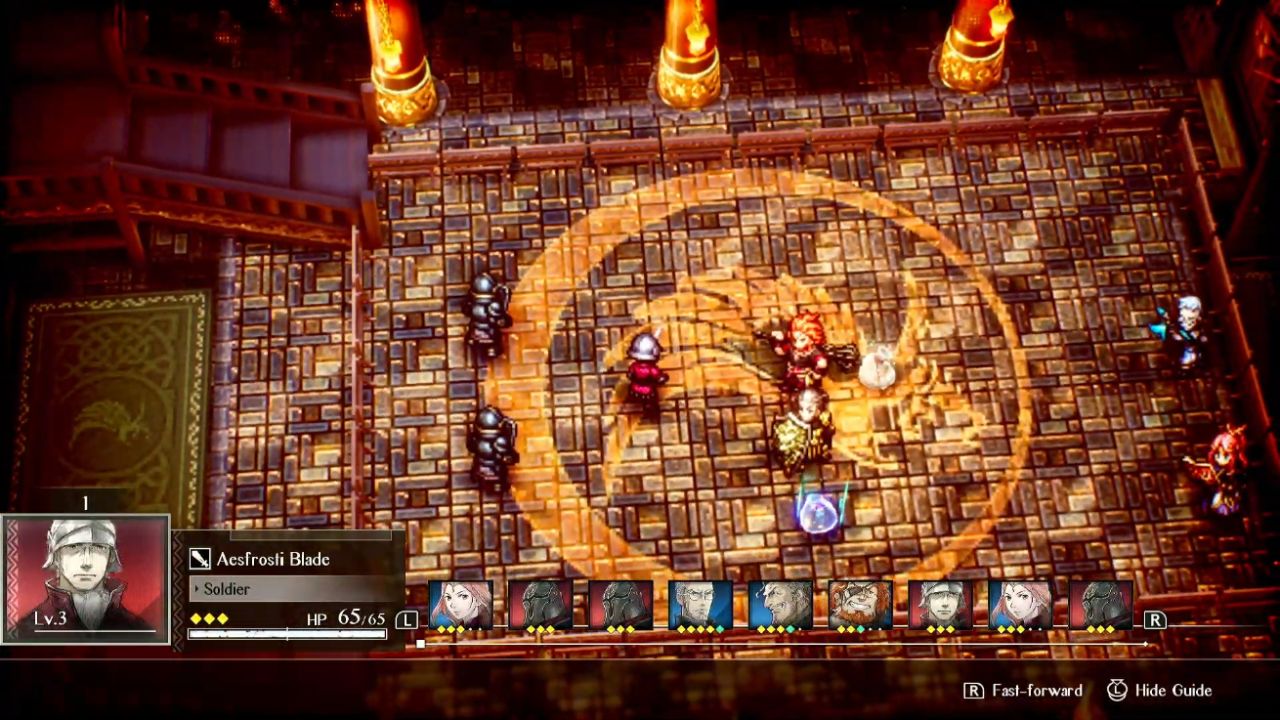
Travis functions best as a midliner. Place tanks like Eredor or occasionally Flanagan in the front, with Travis one row behind so he can move in to reposition enemies or use Impending Strike.
He can survive three to four hits in many situations, but after sustained focus, he becomes vulnerable.
The most significant value comes when enemies can be lined up in straight lines or clusters: Travis can delay multiple targets or flip and spike single targets into follow-up combos.
If Travis catches someone with Backward Toss and places them into a damage funnel, other units such as Anna or the team’s spike damage can finish them off safely.
Skill Usage, Combos, and Practical Tips
Use Backward Toss to reposition threatening enemies into danger or to create opportunities for allies to spike them.
It is also helpful in disrupting enemy positioning. Impending Strike should be spammed for shutdown potential—delay up to three enemies and create large windows where foes cannot act.
When setting up Heavy Smash, arrange for multiple enemies to face the same direction and then charge the ability while preparing follow-up turns from allied units; when it lands, it can apply back-crit to several targets at once.
Note that the charge on Heavy Smash can be interrupted if Travis is moved during charge, so time it with support abilities such as Light Wave, Tandem, or fast-acting buffs.
Light Wave and Battle Cry are valuable tools to reposition Travis or accelerate charged skills; for back-crit setups, ensure Travis ends up directly behind enemy formations and facing their backs to trigger backstab indicators on Heavy Smash or other attacks.
Backstabs from AOE will only register when Travis is positioned behind affected enemies (being adjacent to the side will not register as a backstab).
Notes on Reliability and Playstyle
The kit centers on two reliable elements—Backward Toss and Impending Strike—that enable both damage and crowd control. The rest of the kit provides situational utility and survivability.
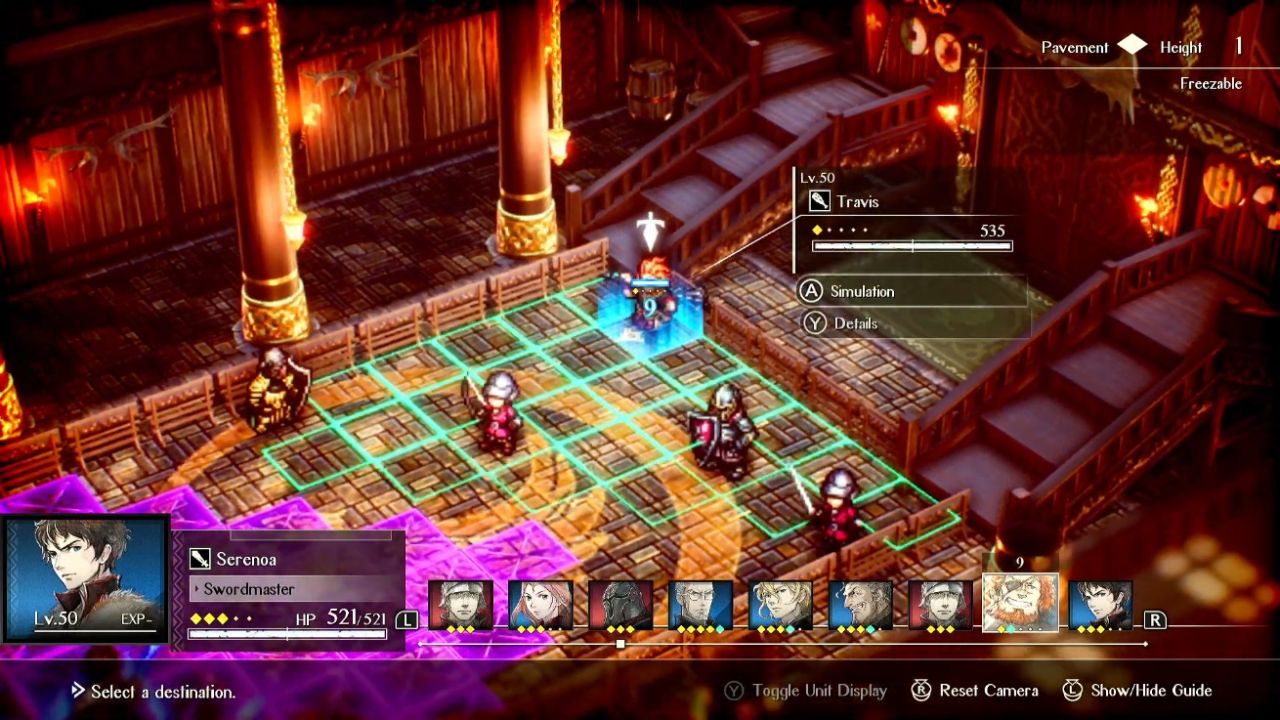
Random crit mechanics and specific follow-up steal effects are inconsistent, so plan builds assuming the core utilities are repositioning and multi-target delay rather than crit-dependent damage.
Travis is simple to play: focus on lining up enemies, delaying groups, and using repositioning to set up lethal follow-ups from the rest of the team.
Tier Placement Consideration
Travis can be placed in a competitive tier due to Impending Strike’s multi-target delay and the repositioning power of Backward Toss.
His effectiveness is map- and comp-dependent: on maps where enemies can be aligned and there are opportunities for multi-target delay, Travis’s value increases significantly.
With reasonable defensive support and health upgrades, he can operate as a durable midliner who disrupts enemy plans and creates openings for the rest of the squad.
Contributor, NoobFeed
Latest Articles
No Data.