
Unified Memory Architecture on Desktop PCs: Will Rising Memory Costs Drive Adoption?
Rising memory costs continue influencing hardware decisions across the PC industry, shaping discussions around future unified memory possibilities.
Hardware by Tanvir Kabbo on Dec 22, 2025
Rising cost of memory is still affecting hardware design across the board. This has led to discussions about whether vendors might bring unified memory architecture to desktop PCs, especially for higher-end models.
The idea may sound good, especially given devices that already use unified memory pools. But the truth is much more complicated.
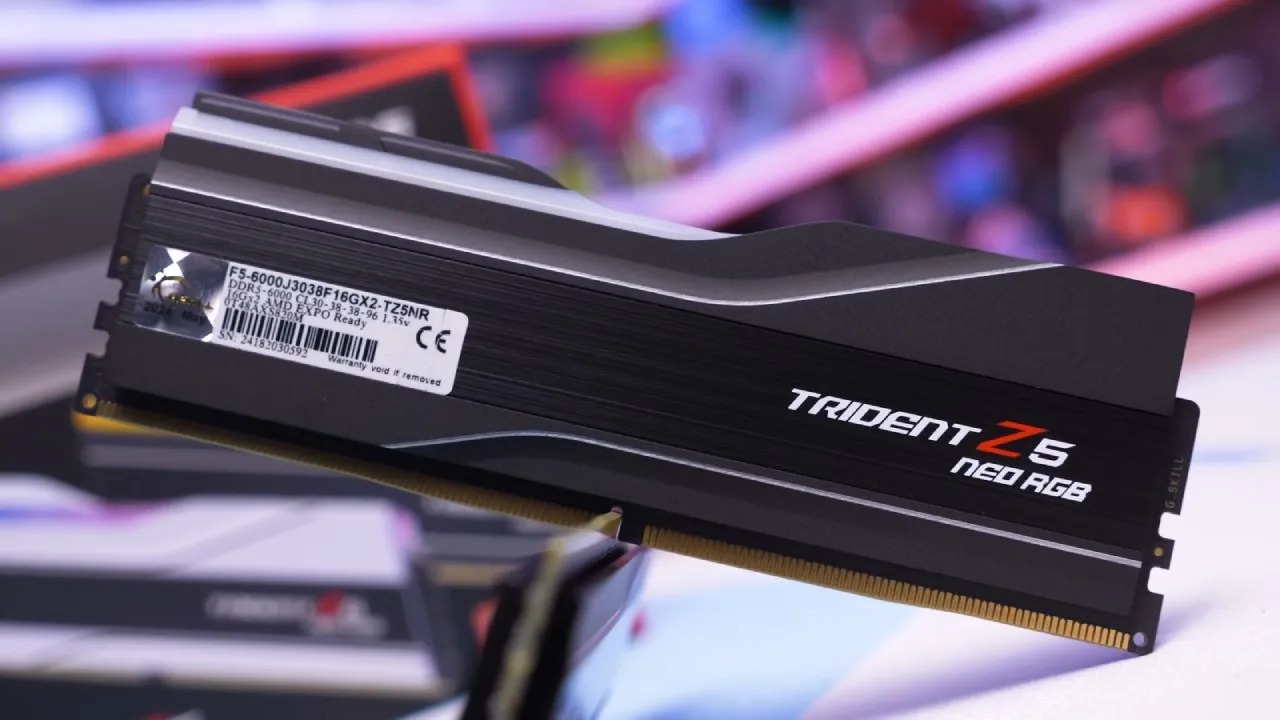
Understanding the Impact of Rising Memory Costs
The rising cost of memory affects products that already use unified memory architecture. However, this does not mean that desktop PCs will switch to unified memory. Unified memory is used in systems like Strix Halo, and previous attempts like Steam Machine hardware are fascinating to compare.
Some devices may have more total memory than consoles like the PS5. However, they can still experience issues, such as lower texture quality. The situation is still complicated.
PC Landscape and How Windows Addresses Memory
On a PC, devices technically have a unified memory pool at the hardware level. Still, Windows doesn't handle memory that way. Games don't treat system and GPU memory as a single big pool either.
As a result, many devices that share memory require you to manually allocate memory, usually in the BIOS, where you decide how much memory to allocate to graphics and how much to the rest of the system. Because PC games aren't designed with unified memory in mind, they can't automatically take advantage of that hardware architecture.
We also see this limitation in DirectX. For instance, DirectStorage still puts data in system memory before delivering it to GPU memory across the PCIe link.
Even though it would be best if it did, it doesn't feed assets straight into GPU memory. It will probably take a long time for DirectX to transition to a genuine unified memory model because it takes a long time to change how DirectX works.
How Texture Data and Mirroring Inflate Memory Usage
As it is now, textures that are stored in GPU memory, such as 4GB of textures on an 8GB GPU, are also stored in system memory. Depending on compression, buffering, and how far ahead the system gets ready for future frames or surrounding gaming locations, they could be bigger or smaller.
This means additional system memory is consumed to shuttle data more efficiently over PCIe, not because the game fundamentally needs more memory. If memory could be addressed in a unified way, as on consoles, we would use less memory overall, and consumers might need to buy PCs with less total memory at a lower cost.
However, desktop hardware currently does not offer motherboards designed to solve this. Without a platform that treats memory as a cohesive shared pool at the system level, and without OS and API support, we should not expect unified memory to appear widely in desktop PCs soon. At best, implementations resemble taking laptop-style hardware and placing it into a desktop chassis.
.jpg)
APUs, Dynamic Allocation, and Upgrade Challenges
Users can set aside a portion of memory for the frame buffer on Ryzen APUs and add more RAM as needed. But there are limits to that dynamic growth. Developers can't count on system memory being consistently accessible to the GPU, since other game tasks can also use it. This makes unified memory behavior less predictable for PC gaming.
We still have not solved the challenge of creating an upgradeable system that uses unified memory architecture. The only scalable path is adding more DRAM. Still, the GPU cannot directly access that memory without routing through PCIe, which remains suboptimal.
Why a Desktop Push Is Still Unlikely
Even though unified memory would reduce the need for additional memory, make it easier to share resources between the OS and the GPU, and maybe lower prices for users, the ecosystem is not yet ready. Games don't work with unified memory. DirectX does not really support it directly.
Motherboards and platforms that could enable it do not exist in a standardized, mainstream form. And unless GPUs can access DRAM without PCIe bottlenecks, unified memory on desktops for power users is unlikely to happen anytime soon.
We can talk about these ideas and whether they will help performance. For now, though, distinct system and GPU memory architectures will still be the standard.
Also, check our other articles below:
- Intel Core Ultra 9 285K Review And Performance Breakdown (2025)
- Intel Core Ultra 9 285K vs AMD Ryzen 7 9800X3D: In-Depth Gaming Performance and Benchmark Comparison
- Intel Core i5-13400F Gaming Performance: Still Worth It in 2025?
- Intel Core i9‑14900K vs. AMD Ryzen 7 7800X3D: Power Profiles & Gaming Benchmarks
- Intel Core i9 14900K: Specs, Benchmarks, and Competitor Comparison
- Intel Core Ultra 5 245K Review: Gaming, Productivity & Power Efficiency Tested
- Intel Core Ultra 9 285 K's iGPU Gaming: In-Depth Benchmarks & Analysis
- Intel vs. AMD Gaming Laptop: Performance, Thermals & Battery Life Compared
- AMD Ryzen 7 9800X3D vs.7800X3D vs. Intel Core Ultra 7 265K: Gaming, Thermals & Price Analysis
Senior Editor, NoobFeed
Latest Articles
No Data.