
Xbox Ally X Maintains $999 Price as Handheld Costs Rise
Xbox Ally X Maintains Its $1,000 Price While Competing Handhelds Continue Seeing Significant Price Increases.
Handheld by Shinji Okazaki on Oct 05, 2026
The AMD Z1 Extreme chipset has received mixed reviews from PC and handheld users. It is often seen as only a small improvement over the original Z1. That evaluation doesn't account for broader market factors affecting new handhelds right now, such as tariffs and the ongoing RAM shortage, both of which significantly affect how each device should be judged.
We think the XBOX Ally occupies a distinct position in the handheld market because of Microsoft's involvement. Official support from one of the major console manufacturers gives the device a sense of legitimacy its competitors lack, even though it remains, at its core, a Windows handheld with an XBOX skin layered on top.
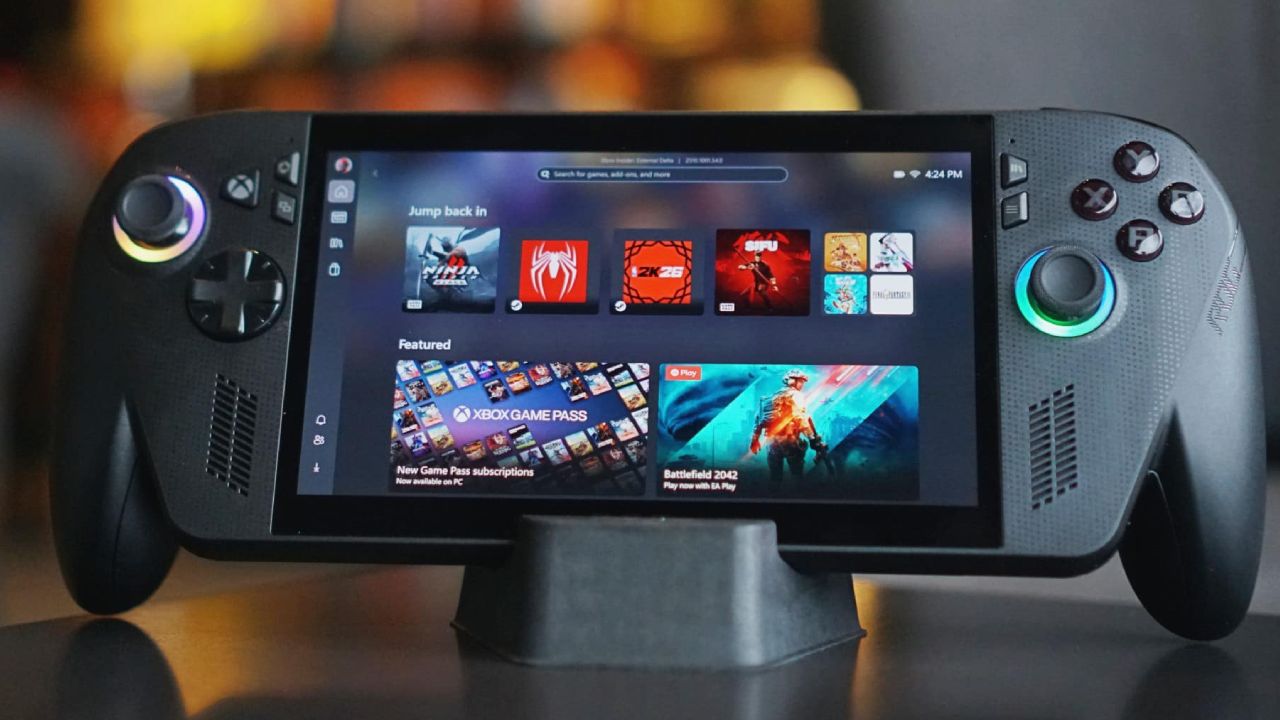
Microsoft's Backing Sets The XBOX Ally Apart
It is not dramatically different from other PC handhelds on a technical level, but that extra layer of marketing and financial backing changes the dynamics of the space. You can see this most clearly in pricing, since the Xbox Ally X is one of the few handhelds released in the past couple of years that has not seen a significant price increase.
It launched at $1,000 in October of last year and remains at that same $1,000 price in the US as of this recording. Some regions did see increases of around $200, but the US price has held steady throughout. You can pick one up at a major retailer for a flat $1,000, which places it among the better values remaining in a segment that has otherwise been squeezed hard by the RAM crisis.
We suspect Microsoft's involvement plays a direct role in keeping that price stable, likely through negotiations with chipset manufacturers and support in securing supply chains rather than simply lending its name for marketing purposes. That kind of backing dates back to when the device was first pitched in the "this is an Xbox" campaign led by former Xbox CEO Phil Spencer.
That broader marketing push did not land the way it was intended. However, the XBOX Ally X still carries the branding and visual identity to back up the name, reinforced by a limited OLED version with updated Xbox branding and a design nod to the older XBOX 360 logo. However, that version is difficult to find and priced well above the standard model.
Specs That Prioritize Practical Value Over Excess
While competitors like the Legion Go and the newest MSI Claw have both seen significant price increases over their prior generations, the XBOX Ally X has held its line, and we see that consistency as a key reason to recommend it. You won't have to worry about the price jumping from $1,000 to $1,500 overnight, since a shift like that would likely come with some warning through leaks or rumors ahead of time.
The device itself carries a 7inch 1080p 120Hz VRR display, an ergonomic design, an 80Wh battery, and 24GB of shared memory split between the system and the integrated GPU. That memory configuration strikes a practical balance, since going beyond it toward 32GB or 64GB would be excessive for a device using integrated graphics.
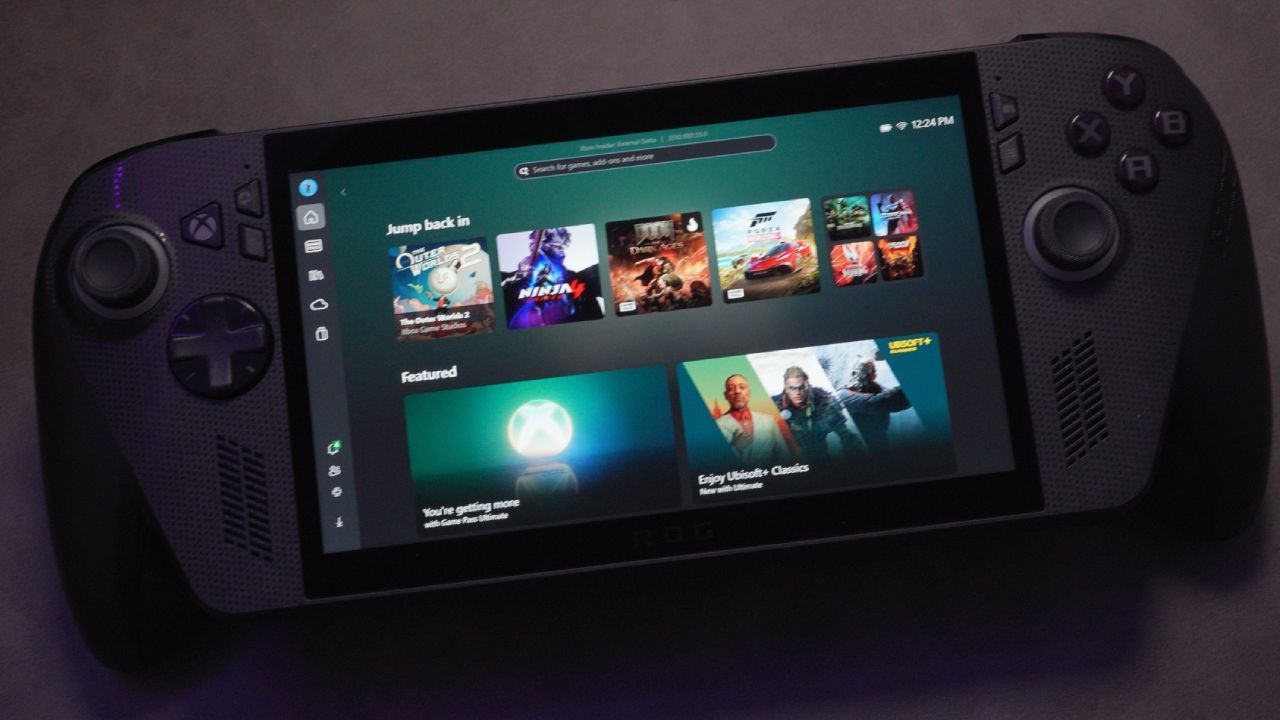
The controller has a bulkier, screen-in-the-middle look that not everyone likes, but it works well for long gaming sessions and stays comfortable for up to three hours. That contrasts with devices like the Legion Go, where you can feel the seam where the controller attaches to the main unit. This detail becomes noticeable when you hold the device casually, even if it rarely affects gameplay.
Alongside the Ally X, the standard white XBOX Ally remains one of the few budget options still priced under $700, occasionally dropping below $500. During a recent Prime Day sale, it was available for around $485, a strong price given its performance is close to a Steam Deck, which currently costs closer to $900 or $1,000 depending on the model.
Microsoft's involvement has kept the XBOX Ally X price stable since its $1,000 launch.
Getting Steam Deck-level performance at a meaningfully lower price makes the white model, and by extension the XBOX Ally X, a compelling pick among current handhelds, since the tradeoffs mostly come down to screen size rather than raw capability. Choosing the XBOX Ally X over pricier alternatives like the Legion Go 2, which starts around $1,500, comes down to whether an extra 1.5 inches of OLED screen is worth $500 more.
For many buyers, it is not, even though the OLED display on the Legion Go 2 has convinced some to rule out the XBOX Ally X entirely based on panel type alone. We remain fairly forgiving of the lack of OLED given how much value the rest of the package delivers at a stable, predictable price point.
Editor, NoobFeed
Latest Articles
No Data.