
Xbox Ally X vs X20: How Much Faster Is the New Handheld?
Xbox Ally X and X20 benchmarks reveal performance differences driven by cooling improvements, driver optimizations, and OLED display technology.
Handheld by Tanvir Kabbo on Oct 19, 2026
The Xbox Ally X and X20 contain similar underlying hardware, albeit they differ from the display onward. The X20 has a new cooling system, better drivers, and a wider variable refresh rate range, which should help with gaming performance. Benchmarks across three titles show where these upgrades make a difference and if the X20 offers enough improvements to justify upgrading from the Xbox Ally X.
Xbox Ally X vs X20: Benchmark Methodology
Performance comparison: Intel PresentMon is used to log average FPS and 1% lows during gaming. We tested each game on a manually selected route, repeated over 60 seconds to ensure the same conditions on both handhelds.
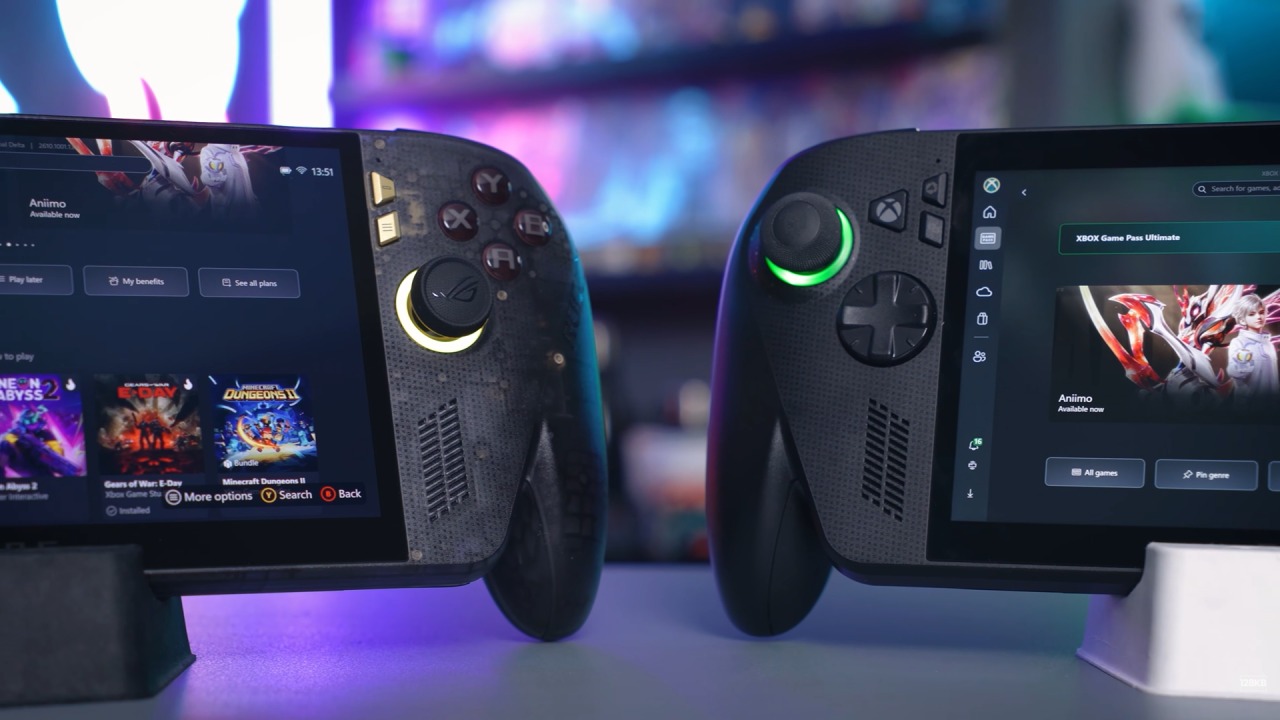
We tested four power profiles: 13W, 17W, 25W, and 35W. We ran each benchmark at least twice, and ran more if the results were unexpected. We set up both devices identically to isolate variations due to hardware and drivers. Rather than focusing only on Cyberpunk 2077, we picked three recent releases to better gauge how the handhelds handle diverse workloads.
Star Wars Galactic Racers Shows Mixed Results
The first benchmark was Star Wars Galactic Racers at native 1080p on the same graphics parameters. The X20 averaged around 28 fps at 13 W, compared to the Xbox Ally X, which averaged 24 fps. This is a performance gain of over 16%. The X20 also produced better 1% lows, indicating benefits beyond just average framerates.
The results varied dramatically at 17W. Both devices averaged around 33fps with similar 1% lows. At 25W and 35W, the performance was almost comparable, around 38-39fps. The data suggest that more power doesn't necessarily mean higher frame rates. Above 25W, gains diminish, and heat output may increase. Or maybe a custom 20W profile would offer a better performance-to-power ratio.
Control Resonant Delivers Modest Improvements
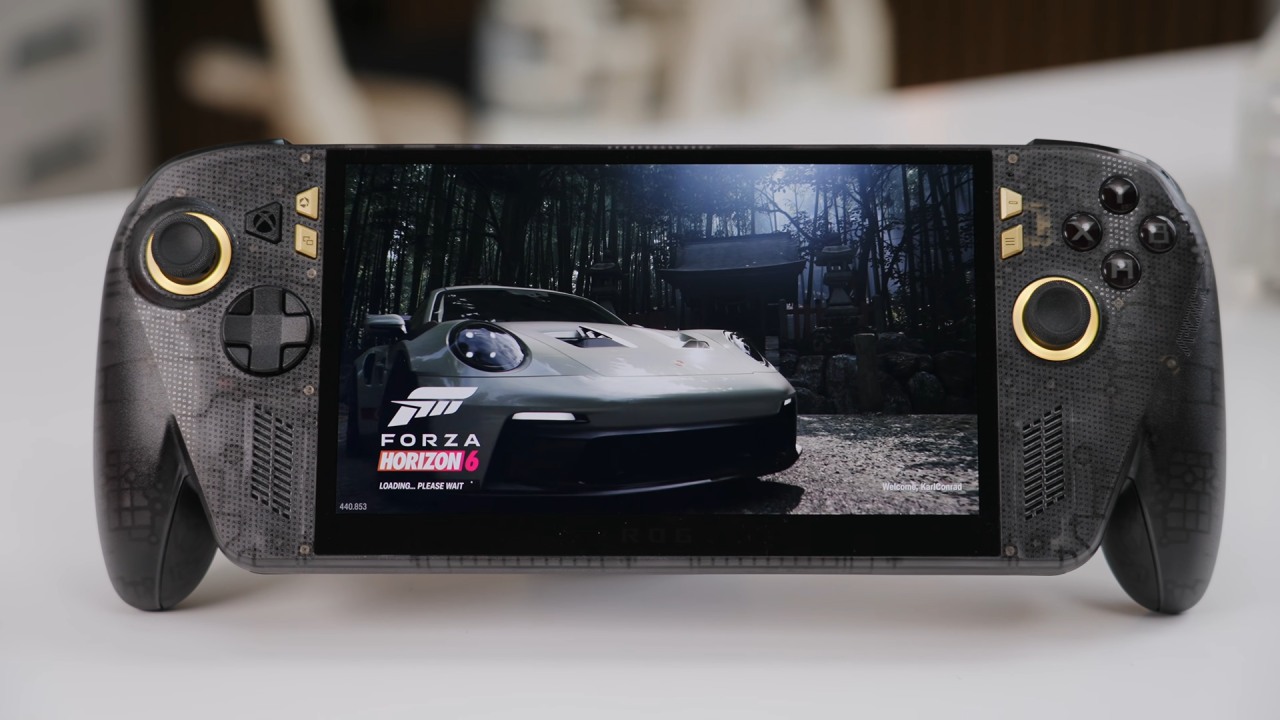
Control Resonant likewise generated mixed results. At 13W, the X20 had a 7% advantage, or about 1 fps. That discrepancy is within the possible margin of error. But at 17W, the X20 delivered roughly 15% better average performance, adding around 3 fps. Its 1% lows also improved, suggesting more consistent performance under this particular workload.
At 25W, the X20 maintained a smaller advantage of about 7–8%, delivering around 28 fps versus 26 fps on the Xbox Ally X. At 35W, the two handhelds returned to broadly similar results. Although these improvements could benefit gameplay when combined with upscaling and frame generation, they don't consistently deliver a performance advantage across every power profile.
Gears of War E-Day Reveals the Biggest Gap
Gears of War E-Day produced the most significant differences between the handhelds. At 13W, the X20 averaged approximately 13fps, compared with 11fps on the Xbox Ally X, representing an 18% improvement. However, the 1% lows stayed effectively the same.
The X20 averaged about 21 fps at 17W, while the Xbox Ally X averaged 17 fps. That's a 23.5% performance advantage. The X20 ran at roughly 25 fps at 25W, compared to 22 fps for the competition, a 13.6% lead. Increasing the restriction to 35W gave little more. The variation in average FPS, especially at 17W, suggests game-specific optimization may be affecting the findings.
Redesigned Cooling and Drivers Could Explain the Difference
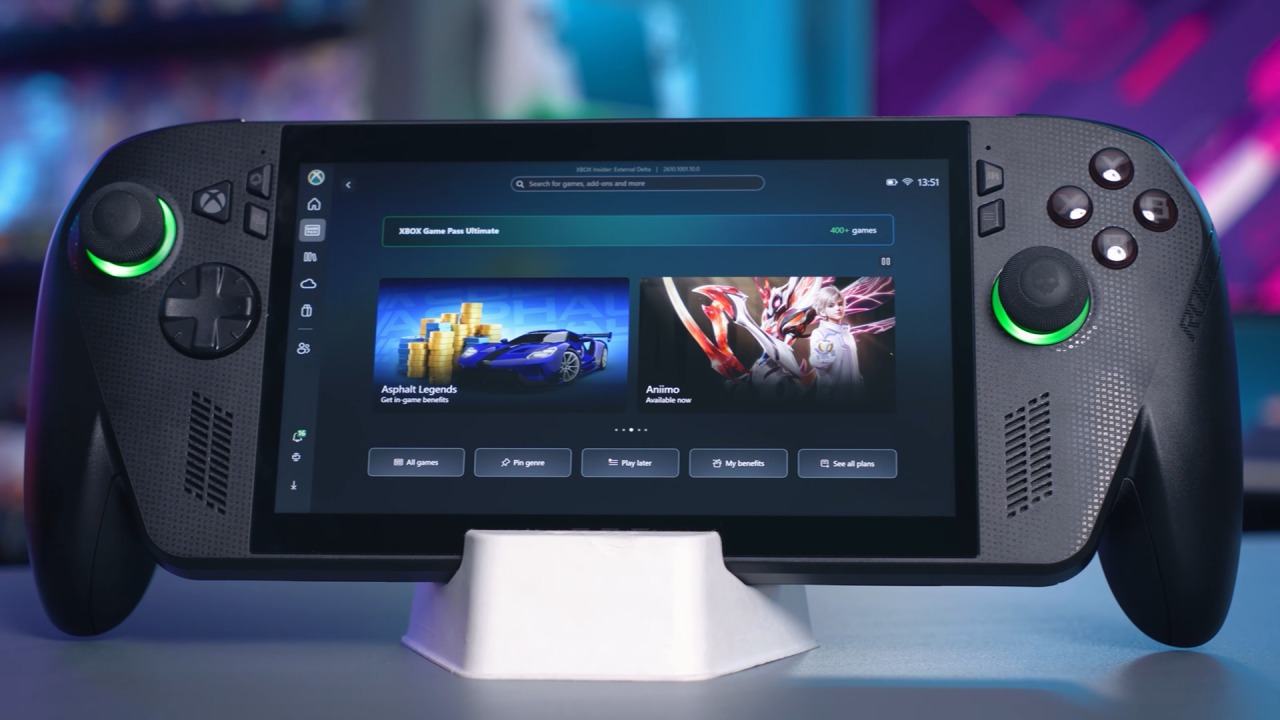
The X20 has a new chassis and cooling system to support the OLED screen. Its cooling system is said to deliver a 20% upgrade over the Xbox Ally X, which could help the hardware maintain performance during intensive tasks.
Some benchmark differences may also be due to driver differences. During the original testing, the latest publicly available Xbox Ally X driver dated back to July and ended in 2002, while the X20 arrived with a different driver ending in 8002.
Because the X20's driver was not publicly available during testing, its exact optimizations were unclear. A later update put both devices on a more equal driver footing, so the original results may not fully reflect their current performance. Both handhelds use the AMD Ryzen Z2 Extreme processor and 24GB of RAM, so cooling and software optimization matter when interpreting the differences.
OLED Refresh Rate and Upgrade Considerations
The X20's OLED display also supports variable refresh rates from 30Hz to 120Hz, compared with 48Hz to 120Hz on the Xbox Ally X. The older device uses low frame rate compensation below 48fps. At the same time, the X20 can operate at lower refresh rates natively. This can make demanding games that struggle to keep pace with higher frame rates feel smoother.
Overall, the X20 delivers real display improvements and a few performance gains, especially in Gears of War E-Day. However, results vary between titles, even though both handhelds share the same basic hardware platform. The OLED screen is the biggest enhancement for existing Xbox Ally X users. Performance improvements are sporadic and don't improve display quality, so they don't justify the X20 as a generational jump.
Senior Editor, NoobFeed
Latest Articles
No Data.