
Xbox Reveals the Vision Behind Project Helix in 25th Anniversary Magazine
In a new feature, Xbox executive Jason Ronald discusses the next-gen console's blend of PC and console gaming, simplified game security, and breaking down the walls between players and their libraries.
XBOX by Mahi Araf on Nov 15, 2026
Xbox has started to give us a glimpse of what's to come, and its 25th anniversary magazine offers an interesting insight into what the company hopes to achieve with Project Helix. While Microsoft has already confirmed that Project Helix is its next-generation gaming hardware, plenty of questions remain about what the device will actually offer. Fortunately, a new feature in the anniversary magazine provides some useful insight into the company's direction, with Xbox Vice President of Next Generation Jason Ronald explaining the philosophy behind the upcoming hardware.
The feature, titled "The Soul of Project Helix," was written by Joey Scrivens and Jeff Rubenstein. It's less about the hardware specs and more about how Xbox wants to approach its next generation of gaming. One of the biggest takeaways is that Microsoft doesn't seem particularly interested in defining its next console by traditional performance targets such as 8K resolution or 240Hz refresh rates. Instead, the company aims to build a gaming platform that makes it easier to play games, whether you're using a console, PC, handheld, or another supported device.

Before discussing Project Helix, Xbox CEO Asha Sharma also shared a message about the company's future. She explained that games are always changing, discovering new players and creators and shifting between generations. They can be altered, remade, and rebuilt into something totally different.
After 25 years, Sharma says Xbox should still be flexible. The company is responsible for protecting what makes its games special, without keeping them from evolving. She also stressed taking creative risks, developing new experiences, and meeting players where they choose to play.
That philosophy appears to carry directly into Project Helix.
According to Ronald, the primary goal is to build the ultimate gaming machine, one that removes the barriers that have traditionally separated different gaming platforms. He said players should be able to access all their libraries, keep their progress across generations, and play all four generations of Xbox games without extra hassle. Microsoft also wants to remove the arbitrary boundaries between console and PC games, allowing both libraries to exist within a more connected experience.
It's particularly interesting because it gives you a better sense of what Microsoft is really trying to achieve with its next console. Rather than abandoning the traditional console experience to build another gaming PC, the company appears committed to creating a console-first device that can also run PC games.
Ronald clarified that Project Helix is designed as a console that can play PC games, rather than a PC that happens to support console games. That distinction could matter for players who want access to PC storefronts without the usual complications of using Windows.
Ronald also explained that familiar technical measurements won't define the next generation. Xbox is focusing on gameplay innovation, deeper immersion, and technologies like neural rendering instead of just higher resolutions or refresh rates.
The idea is to increase visual fidelity with more efficient techniques, without constantly demanding more computational power and memory. Microsoft also believes advances in hardware and silicon could unlock entirely new genres of games, opening up experiences that past generations could never deliver.
But getting the fundamentals right will be just as important as introducing new technology.
"The magic of a console is that your games are instantly available and you're ready to play," Ronald said. You shouldn't have to waste time installing drivers, updating software components, or fiddling with operating system settings before you can get into a game. Project Helix will likely pursue that simple experience, but it will also offer additional customization for those who want more control over system settings and performance.
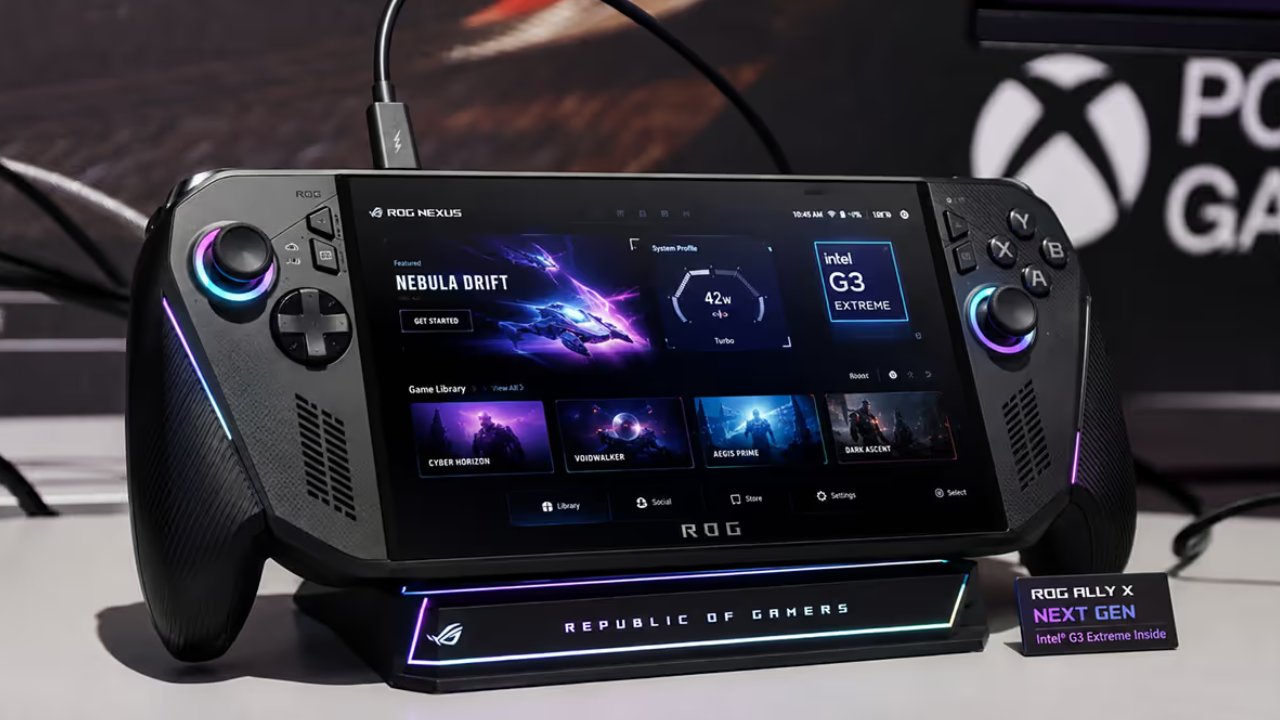
The ROG Xbox Ally seems to be a big part of Microsoft's prep for this approach. The handheld already combines multiple PC storefronts and game libraries in a single, Xbox-centric interface. So, when players play games from different platforms like Steam and Epic Games, they will have a more unified experience.
But the current Windows integration and driver updates still make the experience feel more like using a PC than a traditional console. Project Helix could take the lessons learned from the handheld and deliver a cleaner interface that hides much of that complexity.
Microsoft also recognizes that gaming habits are changing. Ronald pointed out that players no longer necessarily identify themselves as console, PC, mobile, or handheld gamers. Younger generations have grown up using smartphones, touchscreens, streaming devices, and multiple screens, so they naturally expect their content to follow them between devices.
Xbox believes gaming should move in the same direction, letting players access their experiences without being tied to one piece of hardware.
The company also wants to make player creation a bigger part of that future. Ronald said creator-led development will remain important, but games that let players build their own experiences are becoming increasingly popular. A clear example is Roblox, and games like Fallout with user-created content and Minecraft show the potential of giving communities more freedom to create. Microsoft wants Project Helix to support this growing category, potentially simplifying the process for players to build worlds, stories, and experiences that they can share with others.
Some financial pressures are also shaping Microsoft's plans. Traditionally, consoles have been one of the cheapest ways to get into gaming, but Ronald said the current component crisis is pushing hardware prices higher. This makes it harder to build powerful systems while keeping them accessible to a broader audience. "It's a challenge, and it's an exciting situation, because it forces hardware designers to find new ways to improve performance without just adding more expensive components," he said.
That's why Microsoft is particularly interested in exploring technologies like neural rendering.
Generating frames by different techniques could help improve visual quality without the same increase in computational power or memory. Ronald believes the gaming industry will see more innovation in the next three to five years than it has in the last 10 years. That could have a major impact on both hardware development and the types of experiences available to players.
Game preservation is another major priority for Project Helix. Ronald explained that the next console shouldn't represent a complete break from previous generations. Rather, it should be a bridge, ensuring players can still access their existing libraries even when they buy new hardware. Game preservation is a serious responsibility, especially since many older games were not designed for long-term compatibility.
Microsoft has already made progress by bringing original Xbox games to PC and handheld devices for the first time. The company also wants backward compatibility to influence how it develops future hardware and works with its partners.
The objective isn't simply to make older games playable today, but to ensure games released now can still be experienced 20 or 30 years from now.
Alongside preserving existing libraries, Microsoft wants your game progress to move with you. Ronald used an 80-hour role-playing game as an example, explaining that players should be able to switch devices and immediately continue from where they stopped.
This kind of cross-device progression is becoming increasingly important, particularly as gaming platforms become more connected. Xbox's broader ambition is to make your library and progress independent of the hardware you're currently using.

The user interface will also evolve to support this approach. Although Project Helix will have its own interface, Microsoft doesn't want players to learn an entirely unfamiliar system just to access their games. The experience should remain recognizably Xbox while adapting to different screens, whether you're playing on a television, console, handheld, or PC.
A larger display with a keyboard and mouse will naturally require a different layout from a smaller handheld screen, but the overall experience should remain familiar.
Ronald also confirmed that feedback from the ROG Xbox Ally has already influenced Microsoft's plans. By developing the handheld, the company could test different input methods, different game libraries, and a unified gaming interface with players. The feedback was crucial for Xbox to understand what worked and what didn't, making the Ally an important step toward Project Helix.
The end goal is to make Project Helix a console that breaks down traditional barriers between gaming platforms. The key to its success won't be the longest list of technical specifications, but delivering an experience that feels simple, connected, and accessible. Backward compatibility, shared game libraries, the ability to progress across devices, and a greater emphasis on player creativity all suggest that Xbox is building its next generation around the idea that your games should follow you, not the other way around.
Senior Editor, NoobFeed
Latest Articles
No Data.