
AMD HDMI 2.1 Linux Progress Game Requirements Change and x86 APX Innovation
Linux HDMI 2.1 support progresses as AMD overcomes licensing barriers through kernel patches and industry pressure from Valve.
Hardware by Nahe Yan on May 06, 2026
The PC hardware ecosystem is also changing in its structure due to new standards, new development practices, and cooperation between long-standing rivals. With the constraints of display technology on Linux, the changing demands of games, and significant architectural changes, several factors are changing the way hardware and software interact.
It's finally happened. Following a year-long struggle, AMD appears poised to add HDMI 2.1 support to Linux. When HDMI 2.1 was initially announced, it had shifted the key features to much more stringent NDA and compliance regulations. This posed a significant issue for AMD, since its Linux stack is completely open source, which is why these licensing requirements prevented it from using HDMI 2.1 on Linux.
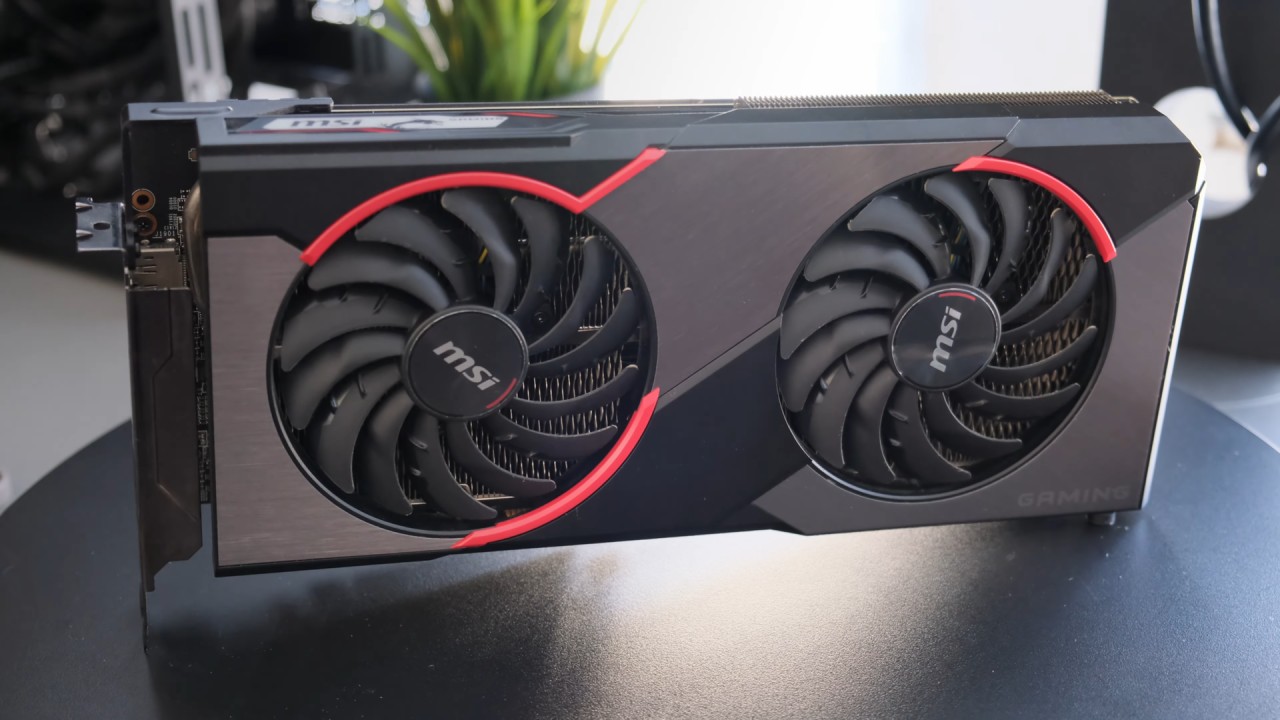
Linux HDMI 2.1 Support at last Makes Progress.
The HDMI Forum, which oversees the HDMI standard, didn't like AMD's plan for an open-source driver as early as February 2024. This means that you can't use HDMI 2.1 with an AMD graphics card in Linux, even if the graphics card supports it. NVIDIA GPUs haven't had this issue because they mostly use their own drivers.
This has been a big issue for Valve and its second release, the Steam Machine. As it runs Linux and uses AMD graphics, the lack of HDMI 2.1 support is a major drawback for a console-like device. Valve is also reported to have been lobbying the HDMI Forum to endorse AMD's strategy. Progress has been made, with the current AMD submitting a kernel patch targeting a feature not supported by HDMI 2.0.
Incentives were instrumental in this case. Valve stood to gain a lot in advocating this change. AMD had already been developing it, but when one product depends on it, the priority is higher. To Linux users, support now seems to be on the run.
Game Requirements are Changing with Upscaling
New games are becoming increasingly opaque about their PC system requirements. Consider the next Lego Batman game that has just announced its needs. Even the minimum specifications list FSR or XeSS on balanced mode, with frame generation enabled.
On the face of it, the need to upscale 1080p 30fps in a Lego game appears illogical. Nevertheless, the real GPU specifications are not very high. It may not be that it is not being optimized very well. Hardware requirements are being reduced by developers who consider upscaling in the baseline.
They are not telling you what hardware natively runs the game at a lower internal resolution with upscaling on; they are telling you what hardware will run the game at a lower internal resolution with upscaling enabled. This marks a shift. Upscaling and frame generation were intended to be optional features to add to performance, but are now treated as requirements.
This enables older hardware to run newer games, but it also erodes comprehension. You are no longer aware of what hardware is required to support native resolution. The developers have now made upscaling a normal part of the experience, rather than an improvement.
DDR3 Bids Back in the Wake of Memory Pricing Problems
The problem of memory pricing has reached the point that old standards are returning. Colorful is also reintroducing H81 motherboards, which were originally launched in 2013. Meanwhile, 16GB of DDR3 is approximately $46, not ideal but relatively competitive with newer memory standards.
If you want to use this platform, you would only be restricted to older CPUs, such as fourth-generation Haswell processors like the 4790K. On the AMD side, it would imply pre-Ryzen processors, such as the FX-8370. Storage would be limited to SATA, and the PCI Express lane availability would be limited.
This arrangement cannot be utilized in gaming. Nevertheless, it is commercial markets where cost is more important than performance. Even businesses that cannot afford the existing prices of memory can still run on older platforms. Nevertheless, DDR3's return also shows how dire the situation with memory has become.
Intel and AMD Merge in x86 Evolution
AMD and Intel have collaborated to counter ARM by working on the x86 architecture. To work together on future developments rather than individually, they organized the x86 Ecosystem Advisory Group. The result is a new instruction set called APX (Advanced Performance Extensions). This represents one of the biggest changes to x86 since the move to 64-bit computing.
The general-purpose registers increase to 32 (up from 16) in the APX. Registers are the fastest type of memory within a CPU core, so augmenting them directly affects performance. This results in 10% fewer loads and 20% fewer stores during code compilation, improving efficiency and reducing power consumption.
The update adds three-operand instructions that eliminate extra move operations.
With these changes, execution speed improves without significantly increasing silicon area or power requirements at the base level. Since the CPU generates less unnecessary data movement, the actual power consumption during the workloads is reduced. Meanwhile, legacy compatibility is preserved so that older software still works.
A new standardized matrix acceleration feature, known as ACE, has also been added. It enhances the performance, scalability, and energy efficiency of matrix multiplication, which is particularly important for AI workloads on CPUs.
Both AMD and Intel CPUs should expect tangible performance and efficiency improvements when these updates are implemented, and applications are recompiled to use them.
Editor, NoobFeed
Gaming Hardware Updates
No Data.