
Future of Upscaling: How FSR 4 Emulation Could Influence Steam Machine Upgrades
FSR 4 development momentum influences expectations for future SteamOS hardware and broader compatibility across multiple RDNA GPU generations.
Hardware by Tanvir Kabbo on Nov 29, 2025
In the last several months, there has been more talk about the Steam Machine, especially about the possible use of AMD's FSR 4 upscaling technology.
VK3D Proton 3.0 adds early support for FSR 4, raising questions about how well it will work with older GPUs, what will happen to Redstone features in the future, and how new RDNA architectures might change device behavior.
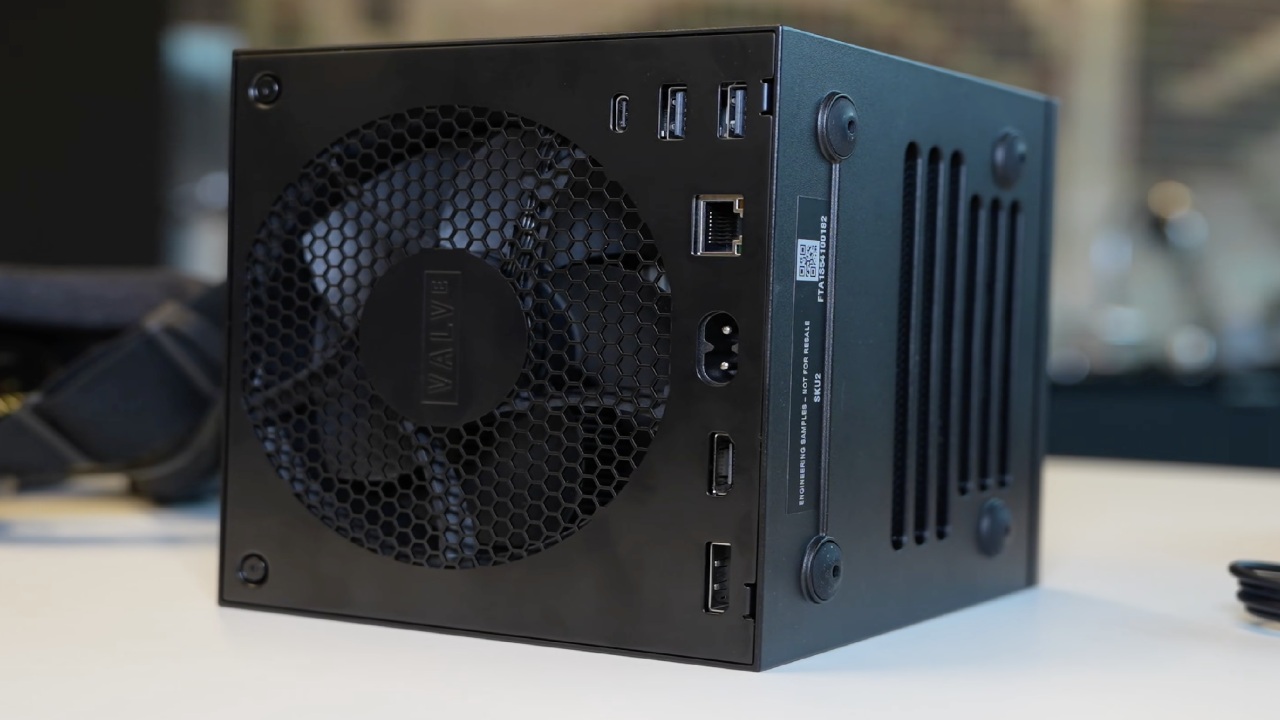
FSR 4 Support and the Steam Machine
Okay, then, one of the big topics surrounding the Steam Machine was prospective support for FSR 4 upscaling. And this was not confirmed by Valve, but it does seem as though something might be brewing. VK3D Proton 3.0 is bringing AMD FSR 4 to Proton. And here's the interesting thing, right? Everything we seem to have been told about FSR 4, and indeed FSR Redstone, is that it's for RX 9000-class GPUs only, which would preclude the Steam Machine.
However, there's experimental support for FSR 4 built into this new Proton, specifically designed for older GPUs. Could this be foundational work for including FSR 4 into the Steam Machine?
Experimental Support for Older GPU Architectures
We see that the big development here is obviously FSR 4 and RDNA 4 GPUs. But, as you said, there is experimental support for older RDNA 2 and RDNA 3 GPUs. But reading through this, it's not the native version; it's the modded, leaked native version. It's using FP16 and INT8 emulation of FP8 operations to work on the cards, in some approximation, because those cards obviously don't have hardware FP8 acceleration, which is necessary for doing FSR 4 in its native FP8 format.
And that's not the same as doing the INT8 version of FSR 4, which was leaked some months ago and would presumably be more performant.
Indeed, they warn of significant performance penalties with this version of FSR 4 running on those older cards. So we do think that getting this into performance shape will take the INT8 version of FSR 4, which does seem to be in reasonably good shape on RDNA 3 GPUs, though somewhat less than on RDNA 2 class GPUs.
Valve's Potential Implementation Path
We did ask a question about the situation at Valve regarding the INT8 version of FSR 4. But in that case, we were poking around a little bit more to see if they had any kind of release timeline for FSR 4 INT8, and less about the technical specifics of how they would implement it.
We feel fairly confident that they would implement it if they had the opportunity, and this certainly shows that that's very likely to be the case. We hope the INT8 version of FSR 4 is officially released at some point, reasonably soon, and that we get good support for it in SteamOS and games.
We hope that's the case, but this particular move may signal something else, namely that they're ramping up FSR 4 support in SteamOS. Maybe that indicates some RDNA 4-based products or RDNA 5-based products down the line running SteamOS. That would be very satisfying, especially for people like us who are growling and a little upset about the GPU category the Steam Machine ended up in.
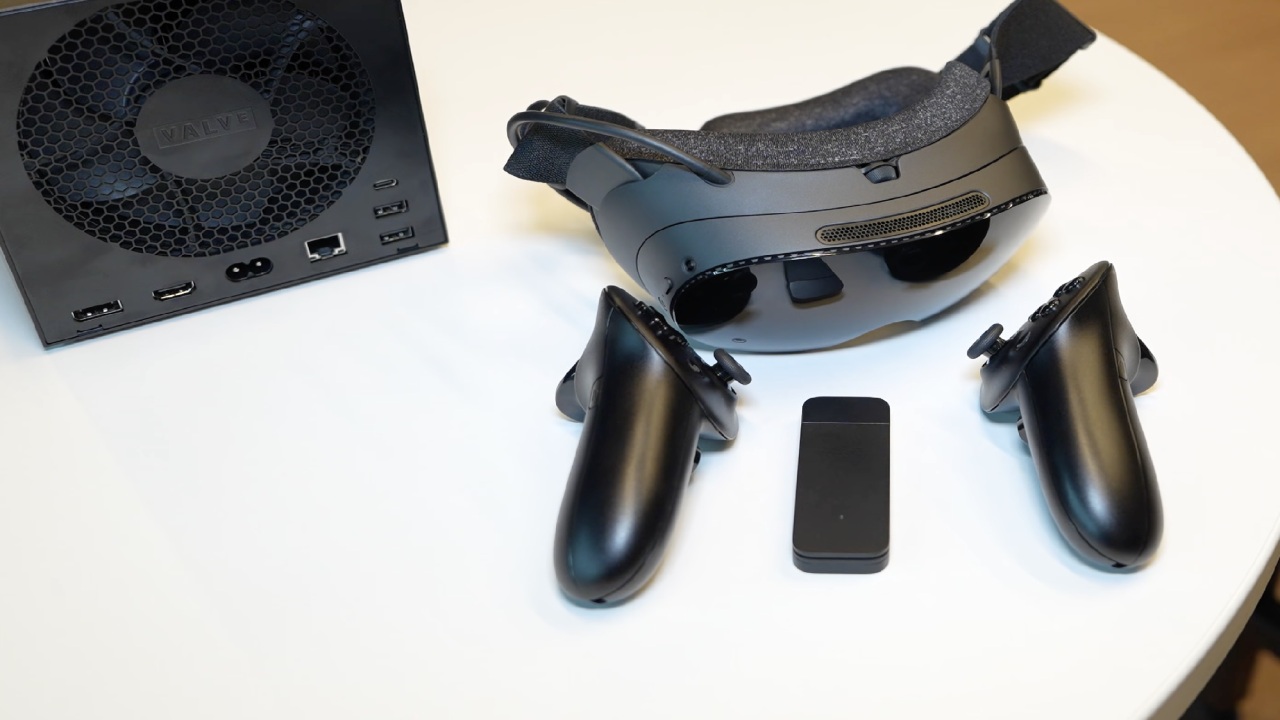
Future Hardware Considerations
Maybe they could ship a 16GB GPU with a 9060 XT spec at the very least, if not significantly faster than that with something like a 9070 or 9070 XT, in a category we'd actually be happy running high settings in modern games, ray tracing dialed up, all those nice bells and whistles.
We could get that along with FSR 4 with a faster GPU. That's something that maybe not Valve but one of Valve's partners could be equipped to deliver.
Current State of Proton Integration
At this point, we think this is more like something added by people to Proton at some point and now in mainline, as we understand it, and it still doesn't compile with this support unless manually flagged. So it isn't even necessarily tied to Valve. We're talking about the emulation path for RDNA 2 and RDNA 3. The FSR 4 part is actually still part of that for RDNA 4. But this development doesn't seem directly related to Valve. It feels more like a happy coincidence around the Steam Machine discussion.
If this proves popular, it's just more pressure on Valve and AMD to move in this direction and deliver a good version of FSR 4. The branding is a big problem for AMD, as well as the desire to ship new GPUs. How do they brand this? Intel struggled because it had two versions of XeSS sharing the same name.
Users often don't realize that the XeSS version on Intel GPUs is dramatically better than the one running on Nvidia and AMD GPUs. That confusion harmed Intel even though the idea was strong.
AMD would face a similar situation: two versions of FSR 4 with the same name. They would need a different naming convention, possibly similar to Nvidia's DLSS 3 and DLSS 4, which use a CNN/Transformer approach. Suppose people are happy with a lower-quality FSR 4. In that case, the question becomes: how do we entice users to upgrade to RDNA 4 and RDNA 5 GPUs if they already have access to a similar software feature set?
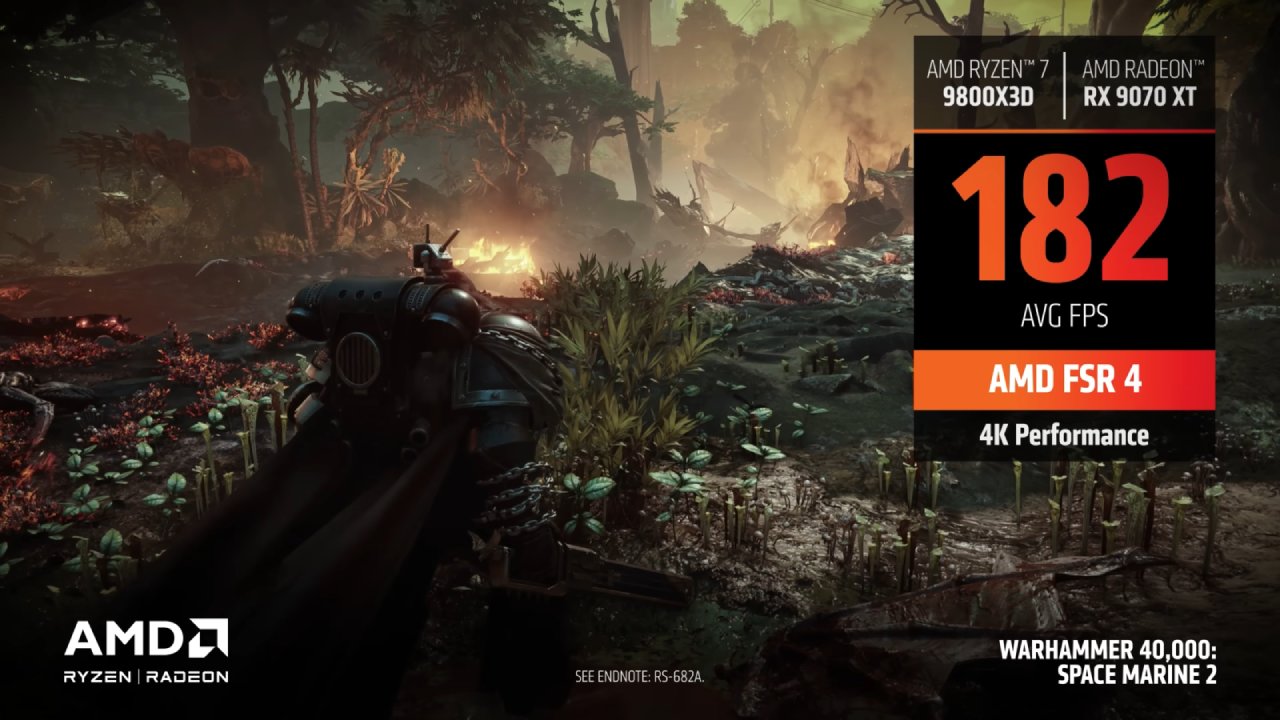
Redstone's Uncertain Rollout
We've all seen the December 10 update for FSR Redstone. It's going to be interesting to see what that amounts to. They've flagged that it's RX 9000 cards only. But we know an INT8 version of FSR 4 exists and performs better than FSR 3 by quite some margin. So are they not going to release it? Is it deprecated? Just an experiment? The whole FSR Redstone experience has been unusual so far.
We're not sure what December 10 is about because Redstone has already been released in some form. More components may be involved beyond latency generation—like neural radiance caching and ML frame generation. These are supposedly elements of Redstone. If they release Redstone fully, we might hope to see those components in action.
Radiance caching mainly applies to path-traced games, typically the diffuse layer. It would have to target existing path-traced titles like Alan Wake, Cyberpunk, or Indiana Jones. It's less likely to apply to something like a UE5 title. Realistically, Cyberpunk seems like the most probable candidate. It would be quite useful, though hardware limitations mean RDNA4 can't deliver the same spectacle Nvidia did with massive 4K 240Hz demos.
More likely, a 1440p output with ML frame generation becomes the preview scenario, which is less exciting but still useful.
Challenges Around Game Partnerships
Adding Redstone features to games like Alan Wake, Cyberpunk, and Resident Evil seems unlikely because all of them have strong Nvidia affiliations. Particularly in Cyberpunk, AMD features take a long time to arrive.
We don't really know what's coming on December 10. There will probably be more games, and we hope they're better than what we saw with COD.
Community Questions on INT8 FSR4 and GPU Confusion
One question asks about the likelihood of INT8 FSR 4 for the Steam Machine. The recent RDNA12 driver "confusion" doesn't inspire confidence. We've seen FSR 4 INT8 running with Optiscale on Steam Deck, and there's no reason why, even if AMD does nothing, the leaked DLL wouldn't work on Steam Machine as well—likely more performantly since it's RDNA 3. Even if AMD does nothing, that leaked version will keep working, though it won't improve.
Surely after putting in the effort, AMD would do something. And considering the number of RDNA 2 users unhappy right now, you'd think they'd respond.
.jpg)
VKD3D Proton 3.0 Additions and Impact on SteamOS
Another question concerns VKD3D Proton 3.0, adding FSR 4 and anti-lag support. With fallback modes for older GPUs, how big a deal is this for SteamOS and Steam Machine? It does feel like a shame that Steam Machine is on RDNA 3; waiting another year for low-end RDNA 4 SOCs might have been better. But waiting might have meant competing with the incoming Magnus Xbox, expected to be significantly more powerful.
We think this work is for broader RDNA hardware support rather than specifically the Steam Machine. Its usefulness will depend heavily on how performant the emulation path is. If it's not performant, users may just be paying a high computational cost for better anti-aliasing rather than major image improvements.
Importance of Supporting RDNA 2 and RDNA 3 Users
We'd love to see this happen. AMD is shipping many RDNA 2 and RDNA 3 products, from small PCs to handhelds to laptops. These devices could strongly benefit from FSR 4.
The technology seems possible; the real issue may be branding and messaging. It should materialize soon because it's important for Steam Machine and many RDNA 3 devices. And Strix Halo should logically offer Halo-tier features.
Also, check our other Console articles:
- PS5 Pro vs. PS5 Slim: Frame‑Rate, Graphics & Performance
- PS5 Pro vs. Radeon RX 9060 XT vs RTX 5060 Ti: Ultimate $700 Gaming Showdown
- ASUS ROG Ally PS5 Remote Play | How to do Remote play on PS5 Using Sony's Official Remote Play App
- Stream PS5 Games on Steam Deck OLED: Step-by-Step Installation and Configuration
- AI Upscaling on PS5 Pro: Can PSSR Finally Match DLSS?
- PS5 Pro vs. PS5 Slim vs. PS5 — Design, Storage, Specs, and Gaming
- PS5 Pro vs. Xbox Series X: Specs, Price, Storage, Customization, and Gaming
- PS5 Pro vs. PC Gaming: Comparison of Graphics, Frame Rates, and Price
Senior Editor, NoobFeed
Gaming Hardware Updates
No Data.