
Gaming Laptops vs. Handhelds Performance Value and Practicality in 2026
Handheld devices prioritize portability, while gaming laptops deliver desktop-class experiences with greater versatility and power.
Hardware by Tanvir Kabbo on Feb 25, 2026
Debate has begun over the usefulness of gaming laptops in 2026, as gaming handhelds and home consoles are becoming more powerful.
Many people wonder whether gaming laptops still have a place in the modern gaming world, given devices like the Steam Deck and next-generation consoles that offer such great experiences.
The Handheld and Console Argument
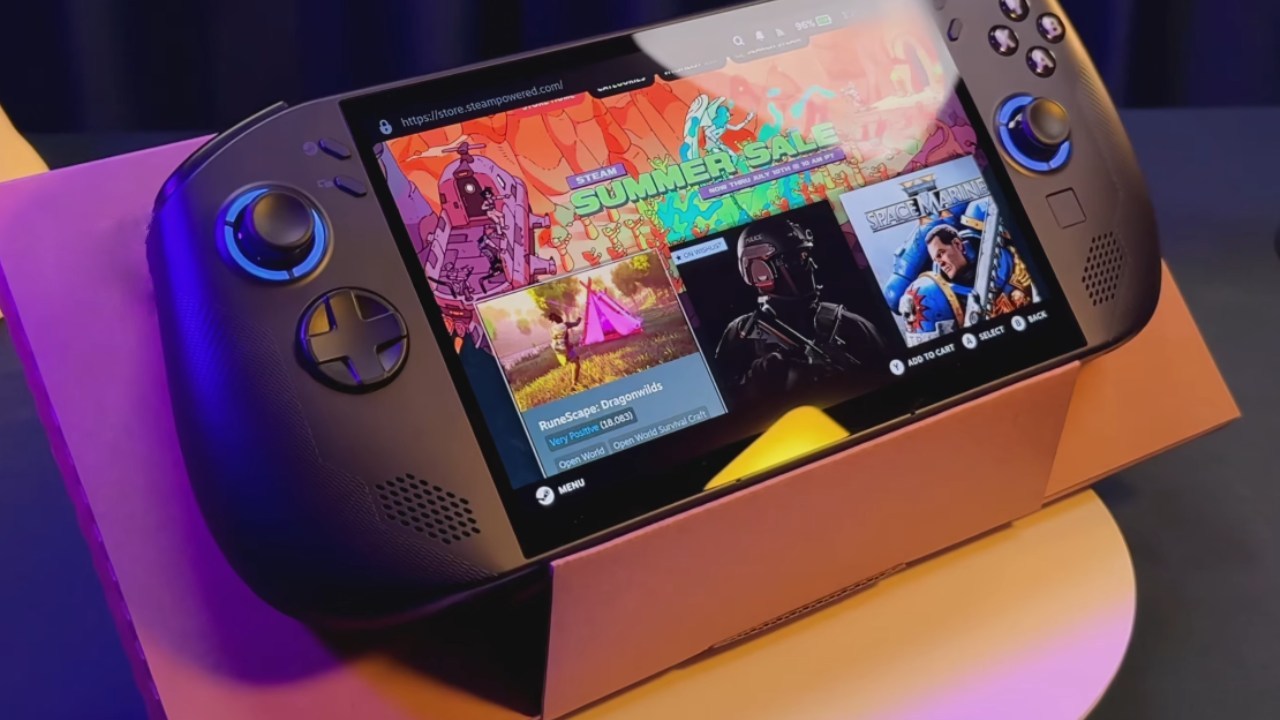
At first sight, it seems like skipping a gaming laptop would be a good idea. A Steam Deck or a Switch 2-style gadget seems like the best choice for gaming on the go. They are small, made for a specific function, and easy to use. A PS5 or a desktop PC is a better deal for high-end gaming because it has greater graphical capabilities and is more like a traditional gaming setup.
From that perspective, the gaming laptop appears caught in the middle. It is not as portable as a handheld, nor as powerful or cost-efficient as a desktop. So why does it continue to sell in large numbers?
The Reality of Laptop Demand
We hate to break it gently, but a significant portion of modern PC gaming growth is being driven by laptop purchases. Gaming laptops equipped with Nvidia GPUs have sold in huge numbers, and that momentum continues to build.
A major reason is practicality. Younger users, especially those heading to college, often do not have the space for a full desktop setup. Dorm rooms and shared apartments rarely accommodate a tower, external monitor, keyboard, and mouse comfortably. A gaming laptop becomes an all-in-one solution that handles both coursework and gaming.
You may prefer separate devices, but many people simply want one machine that does everything.
The All-in-One Advantage
A gaming handheld is great at gaming. However, it is not ideal for productivity tasks like writing papers, coding, or taking lecture notes. A laptop can handle all of that seamlessly.
We also have to acknowledge usability. It gets harder to see small screens up close as we get older. Handheld gaming systems are great in theory, but using them for long periods of time can be unpleasant or require special eyewear. A laptop fixes that because it has a bigger screen and a normal viewing distance.
Modern gaming laptops now ship with high-quality displays, and OLED panels are becoming common. That level of screen quality is not yet standard on handhelds. The difference in visual experience can be quite stark.
Changing Economics and Hardware Realities
For the longest time, many of us would advise against buying a gaming laptop due to the monetary divide. Building a desktop with separate parts was simply more affordable and more powerful. But in today’s hardware market, especially in what some call “memory apocalypse times,” that affordability gap has shifted.
In some cases, buying a laptop gives you a screen, processor, and GPU with dedicated VRAM in a semi-affordable package. You do not necessarily need to jump into the ultra-high-end mobile 5090 tier. Mid-tier and lower-tier gaming laptops can deliver a very solid experience.
That said, we still need to be careful. Mobile GPUs do not line up directly with their desktop counterparts. Specifications differ, and VRAM capacity remains a concern. If you are buying a gaming laptop, we strongly recommend looking for a configuration with more than 8GB of VRAM whenever possible. Some mobile GPU variants can be surprisingly limited compared to what their names suggest.
Price Comparisons and Value
When you compare the cost of high-end handheld PCs, sometimes approaching $1000, it becomes easier to justify stepping up to a gaming laptop. Around major sales periods, entire laptops with RTX4050 or RTX4060-class GPUs have been available in similar price ranges.
From a gaming quality perspective, we think many users would prefer the laptop in that comparison. You get a larger screen, more traditional controls, and significantly more flexibility.
A Fundamentally Different Experience
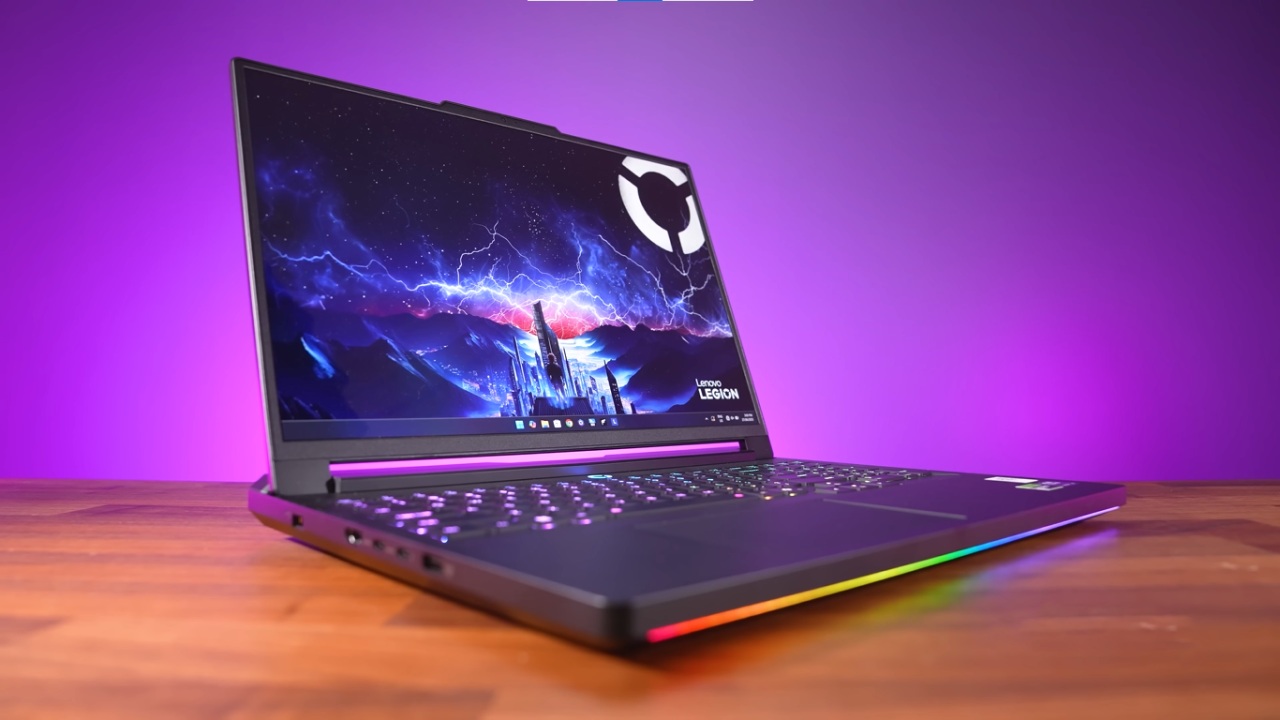
We need to recognize that gaming laptops and handhelds deliver fundamentally different experiences. A gaming laptop acts as a desktop replacement. It is a powerful PC that you can use on almost any surface.
When playing on a gaming laptop, you are using a mouse and keyboard, or a gamepad if you prefer, on a larger display. The experience mirrors desktop PC gaming far more closely than a handheld does. Not everyone wants to hold a small device near their face with integrated gamepad controls.
Handheld gaming is fun and convenient, but it is different. Laptops provide larger screens, more powerful hardware options, and broader functionality.
Slim Designs and Battery Improvements
Gaming laptops have also evolved dramatically. Older models were massive, thick, and heavy. Some early desktop-replacement systems even used desktop CPUs like a Pentium 4 3.6GHz, featured modular GPUs, RAID0 storage setups, multiple optical drive bays, and upwards of seven fans. They were engineering marvels, but they weighed an absolute ton.
Today’s machines are far slimmer and lighter. Many gaming laptops are sleek enough to use comfortably as everyday productivity devices. Battery life, when not gaming, is perfectly reasonable. They no longer look overly aggressive or impractical in academic or professional environments.
Final Thoughts
We love the diversity in today’s hardware landscape. Different devices serve different needs. If you already have a powerful desktop and only want something ultra-portable for occasional gaming, a handheld may be perfect for you.
But if you need a single device for school, work, and gaming, especially in a limited space, a gaming laptop makes a lot of sense. It offers performance, flexibility, a larger display, traditional controls, and the ability to handle both productivity and play.
Gaming laptops in 2026 are not redundant. They simply serve a different purpose than handhelds and desktops. And clearly, a lot of people are still buying them.
Also, check our other hardware articles:
- AMD Ryzen 9 9950X3D Review: Setting The Standard For 2025 Gaming CPU
- Amazon Luna 2025 Review: Is Prime Gaming's Cloud Service Your Go-To For Casual Fun?
- AMD RX 9070 XT Review: AMD's RDNA 4 Champion for 1440p Gaming
- GeForce Now Ultimate: Ditching Your Gaming PC For Cloud RTX 4080 Power?
- NVIDIA GeForce RTX 5080 Review (2025): Still A 4K Gaming Powerhouse?
- Intel Core Ultra 9 285K Review And Performance Breakdown (2025)
- AMD Ryzen 7 9800X3D Review: 3D V-Cache Goes God Mode with Stunning Gaming Performance
- Intel Core Ultra 9 285K vs AMD Ryzen 7 9800X3D: In-Depth Gaming Performance and Benchmark Comparison
- NVIDIA GeForce RTX 5080 Super Performance In Cyberpunk 2077: Path Tracing & DLSS 4.0 Tested
- AMD Radeon RX 9070 XT In Cyberpunk 2077: Ray Tracing & FSR 4.0 Tested
- Intel Arc B580 Review: The $250 GPU Revolutionizing 1440p Gaming
- Intel Arc B570 Vs. B580: Value, Specs, And Real-World Gaming Performance
- RTX 5090 Laptop Vs. M4 Max MacBook Pro: Ultimate Raw Performance Vs. Battery Endurance
- Intel Arc b580 Vs. RTX 4060: Game Performance And Value Analysis
- RTX5090 Hell Is Us Demo 4K Ultra Benchmark: DLSS Vs. Native Performance Guide
- NVIDIA RTX 5070 Review: Mid-Range Muscle or Marketing Hype?
- Nintendo Switch 2 Review: Handheld Performance, Features & Value Breakdown
- RTX 5070 Ti Review: Performance, Thermals & Power Efficiency Tested
- Samsung Odyssey OLED G81SF Review 2025: Ultimate 32-Inch QD-OLED Gaming Monitor
- AMD RX 9070 Performance Review: Thermals, Clocks, and Real-World FPS
- AMD Ryzen 5 7600 Review: Best Budget Gaming CPU of 2025?
- AMD Radeon RX 7800 XT Review: RDNA 3 Power For Midrange Gaming
- Asus ROG RTX 5090 Astral OC Vs. Founders Edition: The 4K Gaming Benchmark
Senior Editor, NoobFeed
Gaming Hardware Updates
No Data.