
NVIDIA Faces Pressure as GPU Scams Rise and AMD Gains Ground
Growing GPU fraud cases highlight increasing risks for buyers as counterfeit hardware becomes more sophisticated and harder to detect.
Hardware by Tanvir Kabbo on Jan 23, 2026
NVIDIA seems to be under a lot of stress right now as big changes are happening in the CPU and GPU industries.
At the same time, buying graphics cards is becoming riskier for customers, and new competitive dynamics are forcing corporations to quickly reassess their plans.
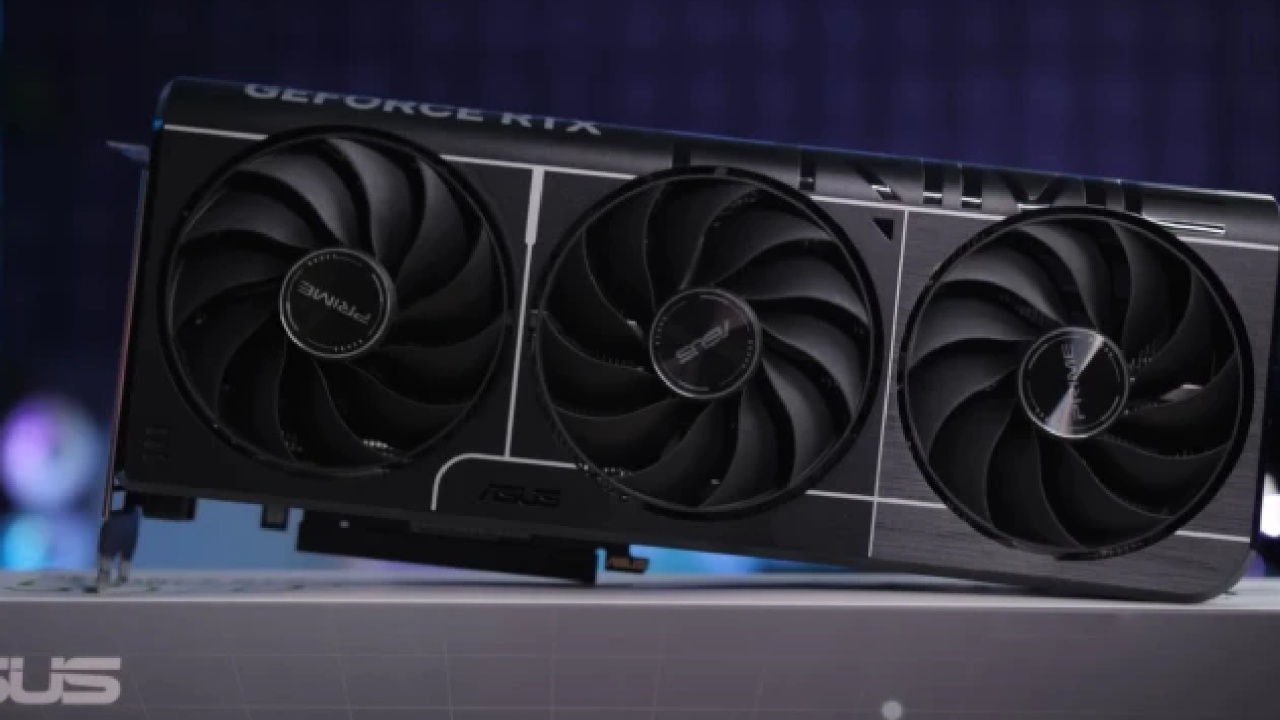
Check Your GPUs for Scams
We always remind you to check your GPUs when you buy them because scammers are everywhere. A recent Reddit post highlights a perfect example: someone bought what was advertised as an RTX 5080 on Amazon. The box was labeled correctly, but the GPU inside had only a single 8-pin connector.
Obviously, this was not a 5080. It looked to be a 5060 Ti. What's so nefarious is the effort put into making it look legitimate. The scammers used the same brand and card version, just a lower-end model, and even placed the stickers from a 5080 onto the GPU itself.
Only someone who knew the 5080 should have a 16-pin connector—or checked the card in software—would have noticed. A lot of people could have installed it and never known.
We suspect someone purchased a 5080 and a 5060 Ti, swapped them, and returned the box with the lower card inside. If it was sold as new, that's unacceptable from Amazon. Some people claim Amazon repackages used products as new fairly often, and while we hope that's not true, scams like this show why we must all stay vigilant.
If you’re considering pulling a scam like this, screw you. Just because a company has a massive valuation doesn’t justify stealing from them. It hurts regular gamers who buy the end product and forces companies to raise prices to offset losses. Always check your GPU when you buy it.
Prices Are Rising on New Nvidia GPUs
We have been expecting it, and Nvidia has now informed board partners that GPU prices will rise in the coming weeks. According to Benchlife, Nvidia officially notified AIC partners that bundled GDDR6 and GDDR7 memory packages will increase in price. While they won’t specify final pricing, they claim the cost is still lower than what AMD provided to its board partners.
This aligns with earlier reports suggesting Nvidia was trying to absorb memory costs for gamers. That part is good—kind of. Price increases will still affect everyone.
Unfortunately, we also have tough news regarding one of AMD’s GPUs. A Hungarian tech source reports that AMD is shifting focus heavily toward the 9070 XT and away from the non-XT model.
Both variants use the same chip and the same amount of memory, but the XT version brings in more revenue. Many gamers prefer the XT version anyway, but we appreciate the non-XT model because it offers similar performance at a lower price. Either way, expect higher costs and fewer options.
NVIDIA’s First Real Consumer CPU Is Almost Here
NVIDIA is finally preparing to launch its first real consumer CPU. Recently, we discussed a shipping manifest referencing one of these chips inside a Dell notebook. At the time, we weren’t sure whether the line was continuing, especially with Nvidia’s new partnership with Intel. Now, DigiTimes reports that notebooks using the N1X will debut in Q1 2026.
While the report focuses on notebooks, three additional versions are planned for Q2, leaving open the possibility of a desktop-positioned version—though it could still end up as a mini PC chip.
We already know this CPU closely resembles what’s inside the DGX Spark, which includes 20 ARM cores and a powerful integrated GPU with 6,144 CUDA cores. That matches the CUDA count of Nvidia’s desktop 5070, so it’s no joke.
Even more interesting, Nvidia is already planning its next-generation N2 series for Q3 2027. NVIDIA clearly isn’t treating this as an experiment—they expect these chips to play a major role.

NVIDIA Revises Vera Rubin Again Amid Competition
NVIDIA seems to be in panic mode because competition has returned. AMD recently secured a major deal with OpenAI for future chips, and AMD’s CEO stated that many companies are seeking similar partnerships. This suggests AMD is gearing up to challenge Nvidia’s dominance in high-end compute GPUs.
During Nvidia’s CES presentation, they announced that the next-generation Vera Rubin GPUs are in full production and scheduled to launch later this year. What they didn’t emphasize is that the specs are being revised multiple times—mainly to maintain a lead over AMD’s upcoming Mi450X.
Tom’s Hardware confirmed earlier reports from SemiAnalysis that Nvidia increased Rubin’s TGP by 500W, going from 1800W to 2300W. This was reportedly necessary to stay ahead of AMD’s performance targets.
But Nvidia isn’t stopping there. A new SemiAnalysis post claims Nvidia has yet again revised Rubin—this time to address AMD’s memory advantage. Rubin was originally announced with 13TB/s memory bandwidth. Later, it became 20.5TB/s. Now, Nvidia is said to be pushing it to 22.2TB/s—a massive 71% jump from the original design.
Strong competition forces companies to deliver better hardware. When AMD steps up, Nvidia steps up, and when Nvidia pushes harder, AMD does too. We all benefit from that.
Looking Ahead
So, are you more enthusiastic about Nvidia's consumer CPU or the end of their monopoly? Prices for GPUs may go up, the number of possibilities may go down, and competition is getting tougher faster than before. Please tell us what you think, and have a great day as always.
Also, check our other NVIDIA articles below:
- NVIDIA GeForce RTX 5080 Review (2025): Still A 4K Gaming Powerhouse?
- NVIDIA RTX 5070 Review: Mid-Range Muscle or Marketing Hype?
- RTX 5070 Ti Review: Performance, Thermals & Power Efficiency Tested
- ASUS GeForce RTX 5090 LC Liquid Cooled GPU Review: Unmatched Silence & Speed
- MSI GeForce RTX 5090 32GB SUPRIM SOC Review: Power Efficiency, Cooling, and Gaming Performance
- INNO3D RTX 5060 Ti 16 GB X2 Review: Gaming Benchmarks, Temps, and Power Efficiency
- HP Omen 45L Review: RTX 5090 Performance, Thermals, and Value Analysis
- ASUS TUF Gaming GeForce RTX 5060 Ti Review: DLSS 4, Power Efficiency, and Gaming
- ASUS Prime RTX 5060 Ti OC 16GB Review: DLSS 4, Ray Tracing, & Thermals Tested
- NVIDIA GeForce RTX 5060 Review: Specs, Gaming, and Cost per Frame
- MSI GeForce RTX 5090 GAMING TRIO OC Review: A Monster Power GPU
Senior Editor, NoobFeed
Gaming Hardware Updates
No Data.