
NVIDIA RTX Spark: Why It's Perfect For Gaming and AI Workloads?
NVIDIA RTX Spark combines Blackwell graphics, Grace CPU cores, unified memory, and AI acceleration for Windows PCs and gaming.
Hardware by Nahe Yan on Aug 21, 2026
NVIDIA introduced RTX Spark, a new PC platform built around its Blackwell GPU and Grace CPU architecture. The system is designed to handle AI workloads, gaming, and Windows applications while bringing unified memory and RTX acceleration into a compact PC platform. At Computex 2026, NVIDIA announced RTX Spark as a PC platform designed for the era of personal AI agents.
NVIDIA says the system is built for AI creation and gaming, while also supporting applications that run on Windows and NVIDIA software. An NVIDIA Blackwell RTX GPU with 6,144 CUDA cores and fifth-generation Tensor Cores with FP4 precision is built into RTX Spark. The GPU is paired with a 20-core NVIDIA Grace CPU, creating a single platform for both computing and graphics work.
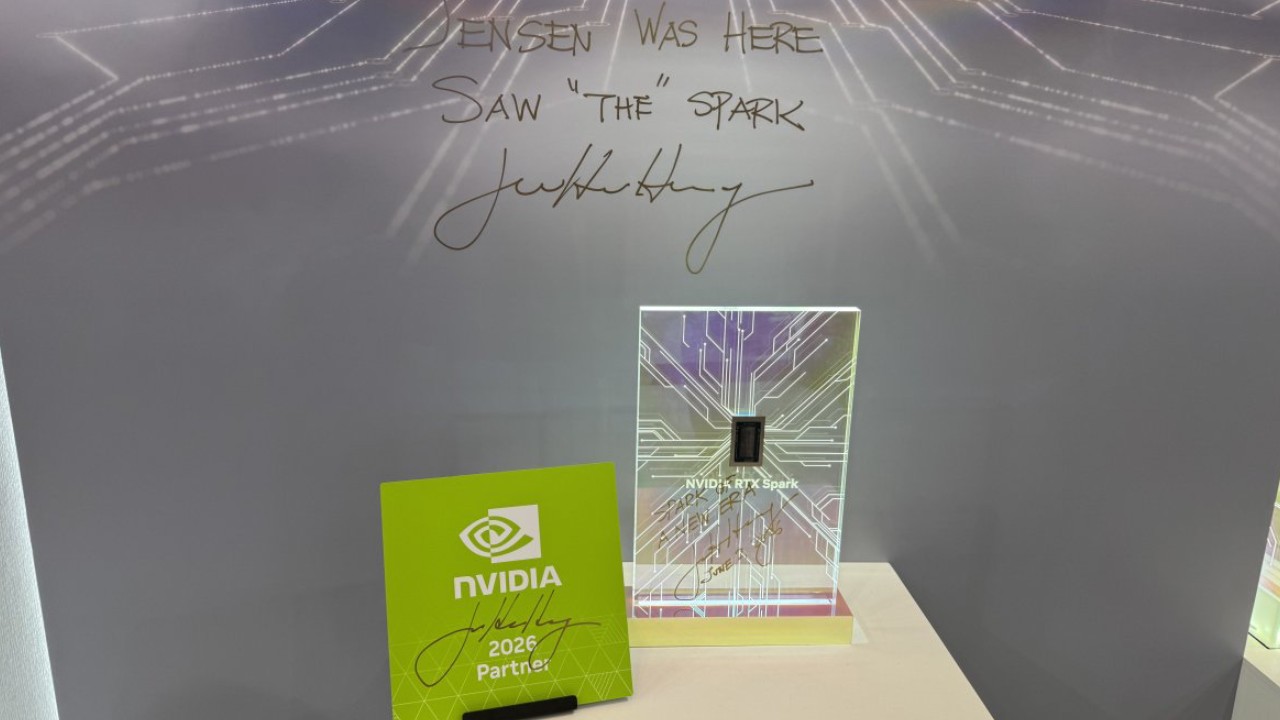
NVIDIA RTX Spark
The system ran games including Indiana Jones and the native ARM build of Alan Wake 2. We also tested it with LLM and agentic workloads. Formal benchmarks weren't possible in the testing environment, but the demonstrations showed the platform's potential. One demonstration focused on Adobe Premiere and showed a performance difference between two versions of the software running on the same RTX Spark hardware.
Both systems used RTX Spark with 60GB of memory; the only difference was the Premiere version. The demonstration used edit detection to find cut points in video clips. As the clips were analyzed, the RTX-accelerated version completed the task almost twice as fast.
The demonstration also showed RTX Spark handling ray-traced effects while maintaining performance and fluidity. The Blackwell GPU and unified memory allow the system to work with large scenes and levels while keeping the workload on the same platform.
RTX Spark also ran a game with DLSS Super Resolution and DLSS Frame Generation.
NVIDIA demonstrated the features working without requiring a separate porting effort from Epic Games. The demonstration showed the game running through emulation, with DLSS Super Resolution and Frame Generation working on the RTX Spark platform. This gives the system a way to run existing software while using its Blackwell GPU's capabilities.
RTX Spark has the hardware to be relevant for AI and gaming, but pricing and independent performance testing will matter. Without real pricing details and independent benchmark results, it is still difficult to determine where RTX Spark will fit among existing PC platforms.
The demonstrations show what the combination of a Blackwell RTX GPU, Grace CPU, and unified memory can do. Still, real-world testing will determine how the platform performs across gaming, AI, and everyday Windows applications.
Editor, NoobFeed
Gaming Hardware Updates
No Data.